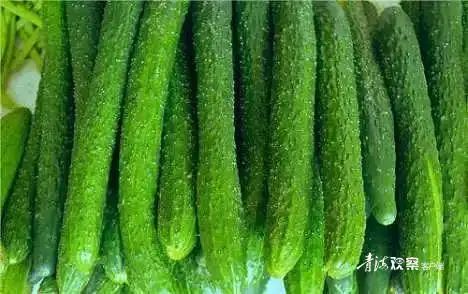
Four seasons of beans are famous in the south for being grown four seasons a year, and are called beans, beans, lentils, beans, etc. The beans are short-lived and easy to cultivate and are the most common of them. In the spring, four seasons of beans are grown in the same and different places compared to the bean bean bean bean, depending on their growth characteristics. To that end, a number of measures should be taken。
I. Flow bottom fertilisation and nitrogen increase
The four seasons are deep, the leaves are thick, the beans are to be harvested in batches, and because of the high demand for nutrient absorption in the growing process, it is important not to believe that the plant has a nitrogen-fixing capacity, thereby neglecting the application of fertilizers, especially nitrogen fertilizer, which could otherwise be reduced by the lack of nutrients, which would lead to malnutrition in the plant, causing flowers to fall and fall. In order to meet the requirements of the four-season beans, the application of bottom fertilisation is not only based on the application of organic fertilizers, but also, and more importantly, on increasing the use of nitrogen. In general, organic fertilisers are applied in three quarters per acre, with a compound weight of three dollars 40 kg and urea 15 kg. In addition, the four-season bean requirements for organic fertilizer are stringent and must be fermented with decomposition, otherwise maggots may occur。

Scientific seedling
(1) fulfilling: the emergence of four-season bean seeds requires more moisture, usually 100 to 110 per cent of the seed's own weight, in order to produce a normal seed, and if soil moisture is scarce and does not meet the requirements, the seeding can be “strung to death”. If the soil is overwatered and lacks oxygen, the seeds can rot and not germinate. The standard humidity is slightly larger than the other pulse plants, judged by taking 5 cm of soil below the surface of the ground, holding it in groups with hands and dispersing it with its waist high. The soil is considered not to be wet enough before seeding and can be sowed three to five days before the next planting, when the surface is white, and not soaked with heavy water。
(ii) leaching: four season beans have a habit of streaming dry seeds, changing air in the early springs, soil damp and wet, low temperatures, increased seeding and leaching. The method is to immerse the seed with 35 degrees of warm water for two to four hours, so that the seed can be found when the skin wrinkles. Due to the thinness of the bean skin during the four seasons, prolonged impregnation causes the internal nutrients of the seeds to seep and affect the seed sprouts。
(3) depth of seeding: the four seasons of beans cannot be broadcast in depth, because of the size of the leaves and the difficulty of the topsoil, which can be broadcast at a shallow level, usually 2-3 cm。
(4) rigorous periods: it takes 7 to 10 days for the four seasons of beans to be planted, and around 15 days for kiyami to arrive. It is appropriate to sow them 10 days before the frost break, and farmers have experience of “sowning before the frost and seeding after the frost”. In some years, however, this experience has not worked in the face of cold spring weather, and in order to ensure that seedlings are not affected by cold air, the four seasons of beans are best spread in the yellow zone, where planting is safer in early april。
(5) density: low temperatures in the pre-birth period for spring species, slow growth of the main tubers, favouring the development of side branches and can be sown appropriately. Depending on the strength of the ground and the variety used, the number of acres is around 4,000. Spring seed should not be too dense to prevent field depression and the emergence of long light and no masonry。
Iii. Field management
1. Cultivated seedlings
The four-season beans appear from seedlings to the first bouquet, with a minimum of two plantings, the first on the first, and the second on the third to the fourth, at depths of 6 cm or more, with a shallow or non-challenged edge, so as not to hurt the root. In the first two pre-neutical periods, the main purpose of the cultivation was to obtain seedlings and to promote deep expansion of the root system. No fertilisation or watering during the incubation period has served the purpose of pre-control and of preventing the long-standing strains. When the first bouquet grows, it ends。
Two, water
The principle of four season bean moisture management is “pre-control backward”. Shrimp periods are water-sensitive and poorly watered, which can easily lead to long leaves, early gravitational growth or large amounts of flowers, and few or no thaws. So the use of the "dry flower moisten" in management is to water the herds without draught, without water until they open, and to control. Land temperature is increased by medium-culture, root system development is promoted and the foundation for flowering is laid. If the soil is dry and watered once before the flower begins to bloom, it will be necessary for the flower. If soil moisture is good, water will be poured after the berries。
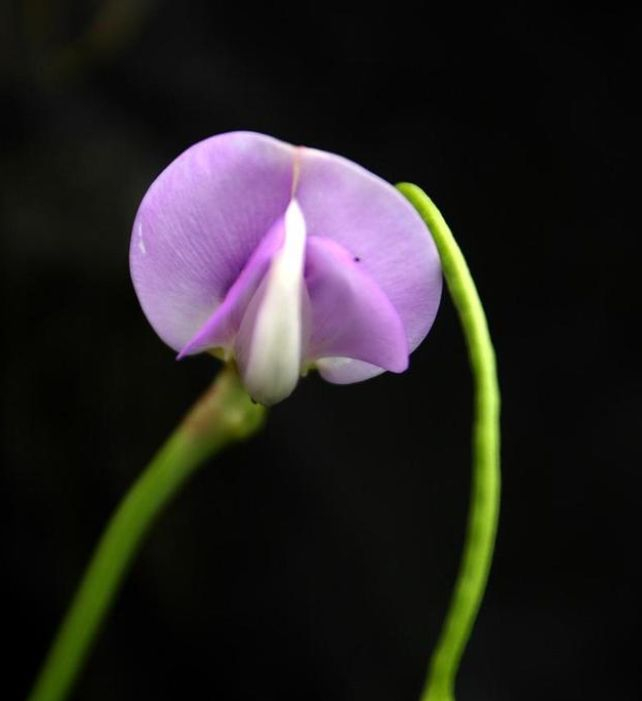
From the start of the nested nuts, the growing nutrients and reproductive booms are gradually carried out, requiring large amounts of moisture and nutrients, and when the basalts are about 3 cm in length, they start to be fertilized. Water is poured every three to five days to maintain the soil in a wet state to meet the water requirements of the plant。
3. Fertilization
Weak nitrogen fixation capacity of the quatian root tumor, combined with large amounts of nitrogen required for acupuncture formation, has contributed significantly to increased production. The fertilization was carried out three times, with 10 kg of urea per acre for the first time in the three-to-four-leaf period, which boosted the growth of the seedlings, and 15 kg of compound fertilization per acre for the second time after the end of acupuncture. For the third time, after the first harvest, 10 kg of compound fertilizer per acre was applied。
Four, the fight
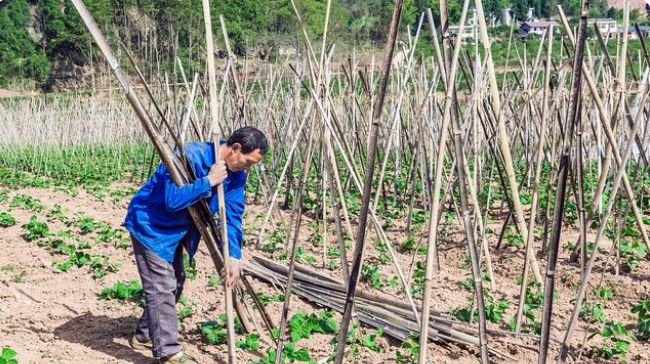
When four leaves are planted for chicken, the chicken is drawn into the frame, which is equal to 1. 5 to 2 metres. The frame cannot be too late to prevent the chickens from climbing among themselves to influence the bouquet。