Whatever vegetables are grown, water is required after seeding, but many vegetable beginners tend to water randomly and irregularly. Overwatering results in the rotting seedling of vegetables; or the soil is too dry to affect the growth of seedlings. Before planting a vegetable, there must be an understanding of its growth habits in order to be better managed. Do you want to learn about garlic or drought? How does garlic pour water? Teach us a few tricks。
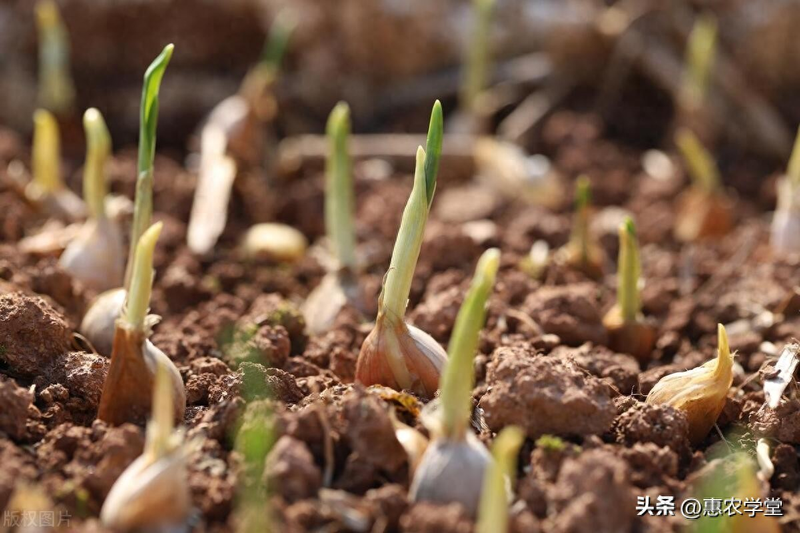
Garlic water or drought
Garlic is somewhat drought-resistant, and in short-term water shortages, the wax layer of its leaves and its own mechanisms of regulation can reduce water loss and thus sustain basic growth. However, if drought is prolonged, the leaves of garlic will gradually be yellow and root systems will age, with serious consequences for their yields。
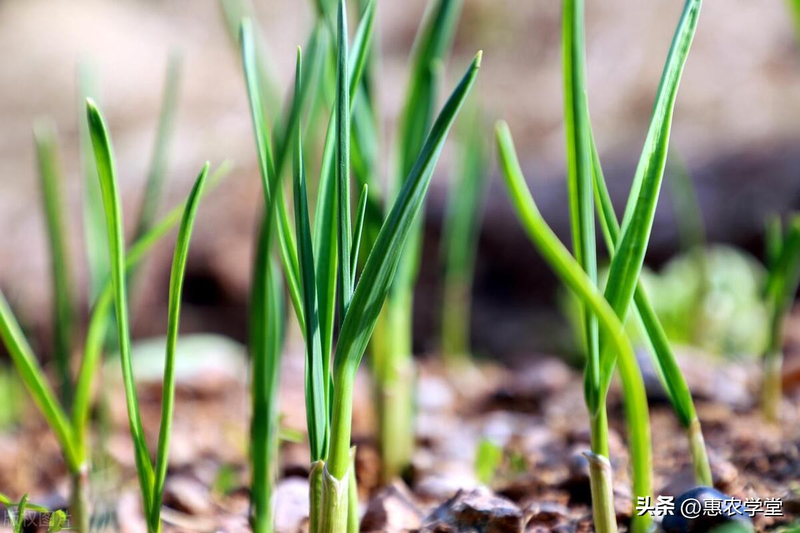
Garlic needs water
First of all, the leaves of garlic are flat, and the surface is covered with a thin layer of wax, which is like putting on a little waterproof coat for the leaves, which can effectively reduce water evaporation. However, the gas holes on the leaves open during the day to breathe, especially when the temperature is high and the sun is full, the water is lost faster. So, when the garlic leaves are seen to be a little obfuscated, it's probably not because of water shortages, but because plants are protecting themselves and reducing water evaporation. At this point, do not rush water and check soil moisture。
Again, the roots of garlic are in the nuclei and are distributed in the soil surface, with most of the roots concentrated within 5-20 cm underground. The root system is characterized by a very rapid absorption of moisture, but the ability to store it is poor, as is the use of gauze to absorb water, which can be absorbed quickly, but the sun is easy to dry quickly. As a result, garlic is particularly sensitive to water changes in the soil, fearing both drought and water accumulation。
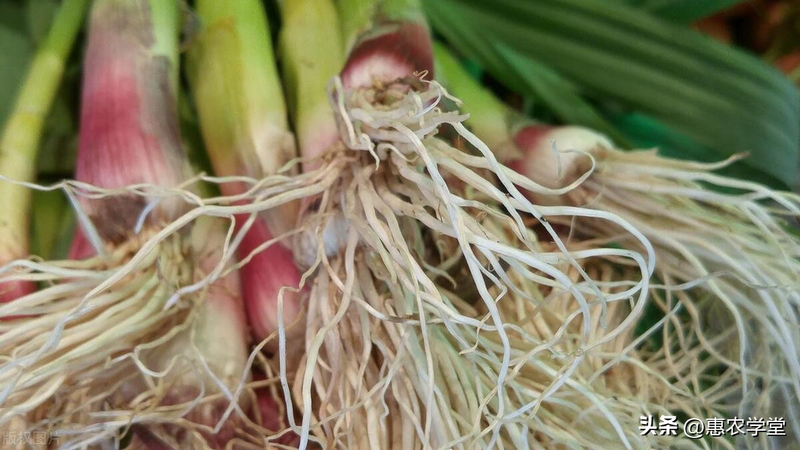
Garlic watering attention
1. Before seedlings
Soil moisture must be maintained from garlic to seedlings. If the soil is dry, a seedling will have to be watered once in order to contribute to the growth of garlic and seedlings. Because garlic sprouts and seedlings require adequate moisture, soil drought can lead to slow, slow and incomplete growth. It is therefore important to avoid soil drought before garlic is sprouts。
2. After seeding until winter
Unless the soil is extremely arid, water should be watered as little as possible. Overwatering and soil moisture can lead to yellowing and weakening of leaves and can lead to premature decay of garlic mothers, which is detrimental to garlic growth. Garlic seedlings are mainly based on root promotion, root breeding and seedling, following the principles of “dry roots, wet leaves” and giving priority to root growth. Developed root systems not only enhance resilience to cold, but also are essential for growth and production in the coming year. Therefore, as long as the soil is not dry, water should not be used frequently。
Three. After the gurus and the gust
This phase has moved away from garlic and into a long-term boom and increased demand for water fertilizer. This should be done with appropriate water and fertilization to ensure that the soil is not arid and fertile. When the spring returns to the youth, a combination of fresh water is used to catch up with fertilizer and to ensure sufficient fat. Shortages of fertilized water can affect the sprouts and sprouts and reduce the rates and yields。
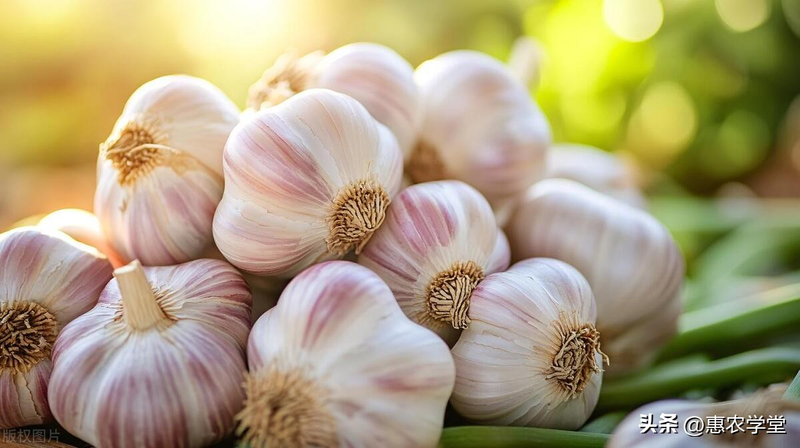
Four, suction and garlic swelling
The soil is wet, as the supply of fat water is essential from the start of the spiking, and sufficient water fattens the garlic to make it thicker and more full. However, maintaining soil moisture does not mean frequent watering, but rather avoiding soil drought. Overwatering is counterproductive and leads to poor growth。
5. Winterwater
If winter water is not watered at will, garlic will not only not be safe for winter, but may also rot. Therefore, the decision whether to water the winter is to be taken in the light of the damp soil. If the soil is not dry, it may not be watered; if the soil is dry, it may be watered once before winter, but not too much. The soil is wet and prone to freezing during the winter, and seedlings are not well grown。
In short, the watering of garlic needs to be judged in a flexible manner, depending on its long-term nature and the dampness of the soil, in order to ensure that the garlic grows well. Water should not be poured directly into the root so as not to break out of the roots or lead to a slab. In the summer, water should preferably be given at 7-9 a. M. Or 5-7 p. M., when temperatures are lower and water and soil temperatures are similar and do not stimulate root systems. In winter, water is proposed for noon, as it is warmer to avoid freezing roots。