Analysis of the application of the facility to pollinate tomato bear bees without harmful cultivation techniques
♪ the song ♪
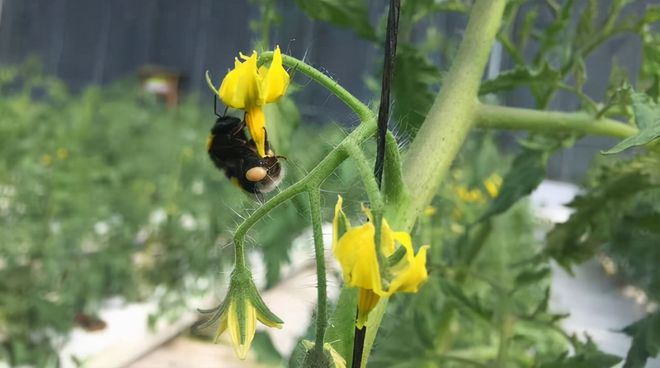
A bear bee is a bee-head, a multi-eat insect, a major pollinator of many plants, especially legumes and eggplants. Pear bee pollination is an entirely natural method of pollination, which has been widely applied in recent years to plant vegetables in facilities and has become a new technology to improve the quality of the product. Pear bee pollination can help fruit and vegetables to fertilize naturally, and the technique is used in the plant tomato cultivation, which can significantly improve the production and quality of tomatoes, reduce the use of plant regulators and manual pollination, and reduce the occurrence of abnormal fruit and the contamination of the production environment by hormones. As a result, the installation of tomato bear bee pollination is an important measure for the production of non-publicly harmful vegetables, providing consumers with quality tomatoes。
1 the advantages of a greenhouse tomato being pollinated with bear peaks
1. 1 increased pollination efficiency
Bear bees have the ability to identify mature pollen, and therefore, in pollination, they usually collect only the most mature pollen, which allows plants to be fully fertilized, since bear bee pollination is timely at the most dynamic time of pollination, and the rate of bear peak pollination is over 90 per cent, while artificial pollination is difficult to ensure at this best time。
1. 2 improving yields and quality
Pear bee pollination can promote a positive, balanced, solid and tasteful fruit. The results of the experiment show a 10 per cent reduction in the rate of culinary tomato malformation at bear peaks, a 20 per cent reduction in the rate of hollow heart fruit and an increase of about 15 per cent, which significantly increases economic and social benefits。
1. 3 effective prevention and treatment of grey disease
Pear bee pollination has its own advantages, so it can replace artificial sprouts, reduce the humidity of the shed and the plant, while avoiding mechanical damage caused by manual operations and ensuring the normal growth of tomatoes. The natural fallout of petals after bear peak pollination can be effective in preventing the occurrence of ashilosis and reducing pesticide application by more than 30 per cent。
1. 4 cost savings
The use of bear bees for pollination can save significant labour and labour costs, and is important for the protection and improvement of the agro-ecological environment and for safeguarding the quality and safety of agricultural products。
2. Facilities for tomato bear pollination without harmful cultivation techniques
2. 1 implementation of high-temperature shacks
During the cultivation of tomato facilities, there were more severe pests and diseases, which had a serious impact on tomato growth. Therefore, in order to combat pests and diseases effectively, high-temperature shacks need to be implemented. The method is to lower the amphibious membrane and the hypothermia and to treat the facility at high temperatures to remove the fungus and eggs left behind in the facility. Before the shed, weeds should be removed from the facility, the soil should be poured through and the shed should be fumigated around 30 d。
2. 2 choice of excellent varieties and seed treatment
2. 2. 1 the choice of a good variety is the guarantee of production and quality, whether the tomato is an autumn, winter or early spring. Good new varieties with high monolithic colours, good tastes, disease-resistant and resilient properties should be chosen, taking into account market demand and durable transport. This increases production and quality, and is in line with consumer needs, such as those of finnbori and ty, which are characterized by low temperatures, a strong plant and a high capacity to sit on a continuous basis, with easy to sit, with a single weight of 260 to 300 g, a beautiful fruit and high production。
Good breed
2. 2. 2 seed treatment precipitate 10-15 min with 50-55 °c hot water or impregnate 15min with 1,000 times potassium permanganate. The hot water is constantly mixed during the hot-water sprouts, and when the temperature is reduced to 30°c, the 6-7°h is immersed and then extracted, and sprouts are placed at 25-28°c. During the sprouts, the water is washed once a day and sowing is possible when most seed embryos are white。
2. 3 cave seedlings
Tomato breeding can be done using cave-cubing techniques. In order to promote the growth of the seedlings ' roots, the cavity selects, to the extent possible, larger cavities and more seedlings, depending on market availability. The introduction of cave-breeding techniques can reduce the harm done to the root of seedlings by hand during planting, while reducing the human cost of seedlings. In addition, new root systems are formed more quickly after planting, with a marked reduction in the slow-growing period and an effective increase in the survival rate of the strain。
2. 3. 1 before seeding, low flats are made according to the specifications of the lavender. First, disinfect the chassis and matrix used, then load the matrix into the chassis, then place it in the pane, and be careful that before it is placed into the lasagna, the flat tablets will be flattened with a plank, one seed per lasagna will be placed, the seed will be soaked, and the film will be sprayed with a sprayer and then covered with the sheet film, which will facilitate the smoothing of the seed。
2. 3. 2 shrimp management autumn plantings should be carried out in laminates with high temperatures and heavy rainfall during the period, covered by sunnets, permeable around them, seedlings and the removal of sunnets, together with anti-worm nets. In the early spring hours of winter and winter, due to early and late temperatures and high midday, seedlings should be planted in greenhouses. At noon, ventilation should be observed and the temperature reduced, usually at 16-28°c. In addition to proper watering, there are also two to three sprayings of pharmacists to prevent the occurrence of adhesive and sudden disease。
2. 4 emplacement
The whole area is pre-planted at 15 d and tomatoes are produced with a full dose of bottom fertilization over the long term. It can be applied to farmers about 52. 5 t/ hm 2, but must be high-temperature, decomposition, followed by a combination of 300 kg/ hm 2 and 150 kg/ hm 2 urea. After applying fertilizers, plough about 20 cm and remix around 1. 2 m wide and 25 cm wide. The tomato plant is based on a two-way planting method, with a capacity of 45 cm or so and a den of 20 cm or so. The plant is set to take place in the middle of the morning, with water pouring through the cave, waiting for full penetration of the water, and a strong seedling to be placed in the den, which is put back in order to flatten the den with fine soil and cover the membrane after 7 d。
2. 5 field management
2. 5. 1 facility support management is to be completed at the end of september-early october by sealing the roof of the shed and the wind vents along the front line of the shed with an anti-verbicide network for 40-60 purposes, with cedars in the shed, approximately 40 cm from tomatoes. When the temperature in the shed is above 28 °c, ventilation is required in a timely manner, otherwise tomatoes will fall and fall, affecting yields and quality。
2. 5. 2 fertilizer management 2-6d watered once after planting and 15 d after tomato planting in autumn. When the fruit starts to expand, rapid fertilization of 120 kg/hm 2 is applied with water, and the whole productive long-term soil cannot be dry or wet, which can affect the demand for water for tomatoes, and can cause disease. Calcium-containing fertilizers should be applied to the first flower。
2. 5. 3 plantation adjustments the varieties of tomatoes that are currently grown are multifarious and of unlimited growth. Plantation needs to be adjusted to achieve higher tomato production. The result is usually to remove the branches and avoid competition for nutrients between the branches and the fruits. The whole branch should take place in the clear sky so that the main branch is not harmed and the wound can heal. For a well-growing tomato plant, five to seven siblings are usually kept, and a strong side branch is kept and managed when the last one sits。

2. 6 use of bear bees for pollination
2. 6. 1 bear bees shall be prepared for work before entering the greenhouse (1) to examine the occurrence of pests and pests in the tomato greenhouses and to conduct targeted integrated treatment. During the second day of the treatment, the wind vents are opened to replace hazardous gases in the room and the beehives are not moved into the greenhouse until the pesticide residual period has passed. 2) check the integrity of the plastic sheeting, the ventilation vents and the anti-worm nets of the vents. 3) check the presence of sprayed sprayers and packages of obsolete pesticides in the greenhouses to ensure that the interior is free of toxic substances and odours and to prevent the death of bear bees from poisoning。
2. 6. 2 choose the right time for bear peaks to enter the room. The beehive needs to be horizontally placed and the door is headed south. Select to move the beehive into the greenhouse at nightfall and open the nest door after 1 h in order to adapt the bee to the new environment as soon as possible。
2. 6. 3 number of bear bees and their placement: the total area of each solar greenhouse shed is approximately 1 acre, and the whole pollination process can be completed by a group of bear bees (the number of bees is 60-80). Place the beehive in the middle of the greenhouse or in the ventilator, above the 40-80 cm stand on the ground, with the movement being carried lightly so as not to cause the herd to move and then to build a shade above the beehive。
2. 7 bee feed
2. 7. 1 timely recharge of sugar water in order to ensure that bear bees are adequately nourished, when they pollinate for more than two weeks, the timely artificial recharge of sugar bee is delayed. Usually, about 50 per cent of sugar water is used and the canteen is poured into the beehive to facilitate the detection and consumption of bear bees, replacing it once every 2 d. At the same time, small grasshoppers are placed in the plate for the bear's summit to climb and prevent it from drowning while the bear is eating。
2. 7. 2 during pollination, the environment and hygiene within the beehive shall be regularly inspected and cleaned up. The excreta in the beehives and other miscellaneous items are mainly cleaned out. The clean-up time is selected for most bear bees when out of the box, after cleaning the case with dry cotton etc. To keep the case clean and dry。
2. 8 management during bee pollination
2. 8. 1 temperature and humidity regulation when bear bees are pollinated, the temperature of the greenhouse is generally at 15-25°c, which is too high or too low for the survival of the bee, affecting its activity and even causing its death. At the same time, care must be taken not to overwhelm the sheds, otherwise the pollen may not be easily dispersed, thus affecting the normal pollination of bear bees。
2. 8. 2 the screening of the bee can be judged by the number of bear peaks. The number of bear peaks entering and leaving the nest gate is observed mainly at 9 - 11 a. M. On a sunny day, if there are more than 8 bear peaks within 20 mins, indicating that the bear peaks are in normal condition and that the abnormal bees should be replaced in a timely manner。
2. 8. 3 pest prevention. Bear bees are particularly sensitive to pesticides, so they can be locked in bees in a beehive before they are administered in the shed 1d and then moved to a well-ventilated security environment. The beehive will be moved back to its original location after the interval of application, but the door of the nest will not be opened immediately and 30 centimetres will be required to remain silent. Biopesticides or low-toxic pesticides should be used as far as possible for indoor drug use in the shed, and no further plant growth regulators should be sprayed when pollination is done with bear caps。
2. 8. 4 distinguishing the method of success of pollination the success of bear bee pollination is illustrated by changes in the colour of the gnawing “dark brown” on the luminum when the bee is pollinated. About 80 per cent of the flowers with this mark are on spring and summer festivals。
2. 9 pest management
The prevention of tomato pests and pests should be based on the principles of prevention and integrated management. It is necessary to understand the characteristics of the disease and to treat the disease, otherwise it can lead to a reduction or even a loss of production. Common and more serious diseases include asymptomatic diseases and white lice, and pests are leaf flies. In order to reduce the source base, tomatoes are to be removed from their leaves, flowers, and fruit, which is conducive to ventilation in the lower part of the plant; in order to improve their efficacy and prevent resistance, the application must be rotated, rotated or mixed, with an interval of 7-10 d required for their use, and the application will be based on the centre's perimeter, the lower part of the plant and the back of the leaf。
3 collection and conservation
Tomatoes are collected when they are evenly coloured and meet dietary standards. It is not appropriate to carry the fruit when harvesting, and it should be light and careful not to damage the plant. The harvest is followed by sorted packaging, which is then put on the market or preserved. It is important to select lower temperature storage or cold storage. Regulated harvesting methods and scientific conservation measures would effectively improve the economic efficiency of tomatoes。