Ministry of agriculture and rural development, department of plantation management
Expert guidance on vegetables from the ministry of agriculture and rural development group
At present, the northern solar greenhouses are in the harvest phase of the autumn and winter seasons and winter seasons of vegetables, and the solar greenhouses of the winter springs and the plastic sheds of the spring are growing early vegetables during the planting or planting period, a period in which production management is highly technical and vulnerable to adverse weather conditions, such as spring winters. In order to strengthen the management of vegetable production in the spring, strengthen disaster weather prevention, reduce disaster losses and stabilize the market supply of vegetables, the following technical advice is provided。
I. Daylight greenhouse vegetable management
In the northern region, which is prone to sudden disasters such as cold temperatures, rain, snow and wind in the spring, the production of permeable vegetables in the solar greenhouses should be preceded by preventive measures: first, timely attention to the weather. Keeping abreast of weather changes and taking precautions is an important element in ensuring the smooth running of agricultural production and avoiding economic losses. The second is the reinforcement of the shed. In order to prevent the destruction of the structure of the facility by wind and snow, the response should be based on the condition of the shed, with early reinforcement of protection. The greenhouse skeletons are checked in a timely manner, the steel pipes are badly rusted or the bamboo poles are broken; the snow and snow-loaded sheds need to be reinforced with poles at an early stage. Third is disaster weather prevention. The back of the house behind the earth wall sun-light room is covered with film to prevent snow from leaking into the wall; snow-clearing tools, such as artificial snow shovels, snow-cleaners, etc., are prepared in advance in order to remove snow from the shed in a timely manner。
(i) vegetable management during winter in the solar greenhouse
The vegetables are in the harvest phase, and in the fields are mainly fruit-based vegetables such as tomatoes, cucumbers, sauerkraut, eggplants, peppers and beans. The management focus is on responding to low-temperature and weak light environments to ensure that plants grow robust and delay ageing。
1. Temperature management
The temperature in the day shed is at 26 to 32°c, at 18 to 20°c in the middle of the night, at least at 13°c in the morning and at around 10°c in the night. In early march, the relatively low temperature in the north, in order to reduce the adverse effects of ventilation on the crops in the sheds, and to ensure the appropriate temperature in the sheds, could be met by measures such as the presence of a film on the front door of the sheds and on the front face of the sheds, the suspension of a buffer film on the lower side of the vents; in the event of rain and snow weather, the protection of the temperature should be covered with plastic film; in the event of extreme weather events, multiple layers of coverage may be used, depending on the actual conditions, or by the use of heating blocks, electric heaters, automatic heaters, etc. For emergency heating blocks, 10 pieces of land per acre will be lit around 1 a. M.; automatic heaters can also be used for 1 to 1. 5 hours at 10 p. M. And 2 a. M., respectively。
2. Light management
In the spring, as the external temperature rises, as early as possible and as late as possible, when the temperature in the room is guaranteed to be suitable, the guillotine temperature is prolonged to allow for longer light. The membranes are often cleaned and kept clean; in the event of continuous snowy weather, the temperature is pulled up as long as it does not rain and the crops are used for light co-operation using scattering light. Conditionally, it is proposed to install a lighting light, which should be accompanied by an improvement in the temperature of the temperature in the room; a proper half of the temperature should be set around midday (back-to-back management) to avoid the loss of water from the plant。
3. Humidity management
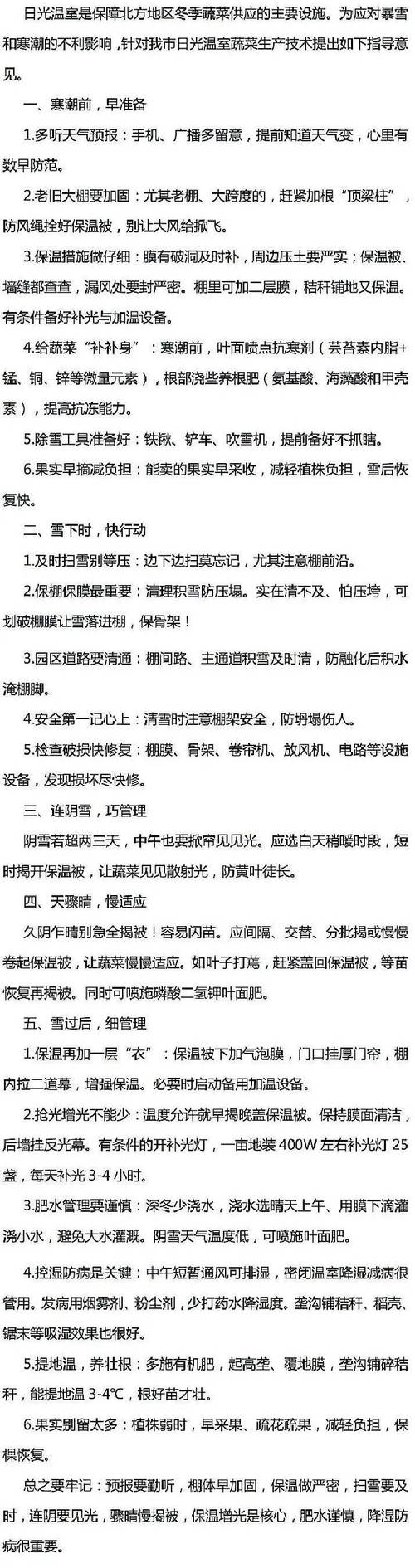
Care should be taken to reduce the humidity in the sheds, where temperature protection is generally opened for short-term ventilation for up to 20 minutes, followed by ventilation management based on crop growth and temperature in the sheds, requiring the gradual opening of a buffer film under the vents to avoid wind damage to the crops under the vents, and continuous rain and snow conditions allowing ventilation for up to 10 to 20 minutes during the maximum temperature of the sheds at 12-13 p. M. Crops need to be watered with rational moisture management, low water can be poured under the membrane, or with sub-membrane dripping or micro-jet irrigation。
4. Fertilizer management
In principle, a small number of times. The root suggests the use of algae acid, fish protein, biobacterium, crustacean, etc., and the selection of large amounts of elemental water soluble at different levels of potassium nitrogen phosphorus on a long-term basis at 2-5kg/acre. At the same time, leaf-faced fertilizer is sprayed early and late and is not recommended for application at noon in the middle of the day in order to avoid evaporation and enrichment, with the option of algae algae, fish protein, crustaceans, etc., and small and medium-sized elements, such as zinc iron, in order to facilitate the separation of buds and improve yields and quality。
5. Plantation adjustment
Vegetables grown during the long winter season, with rapid rises in the spring shed temperature, are highly vulnerable to an imbalance between the upper and lower ground, with early decay and shrinking growth points. At this point in time, harvests, whole branches and chickens, the removal of old leaves and fruit with no value for commodities, proper fruit-cutting, reduction of the upper load of fruit on the ground, balancing of the scavenging relationship, the use of promotion of roots and the avoidance of premature decay. Special attention is paid to the conservation of root systems and the supplementation of fattening in case of growthless chickens。
6. Pest management
In order to avoid increased humidity in the shed as a result of spraying over a period of more than three days and to prevent the use of fumigants and micropowders, new application devices, such as wide spectrum aerosols or powder dispensers, heat smoke machines and so forth, are recommended to reduce indoor humidity. The timely application of leaf pasta and broad spectrum microbicides after the sun is cleared to prevent hypothermia and disease。
Fungial diseases: frostic disease, night disease, septic disease, use of frostilated acid, alkyl, fluoride, cyanide, fluoroethylene, etc. Plasmosis, fungi nuclei, grey leaf spectrosis, which can be treated with a combination of aphrodisiac, amphibian and fluoride. Pencil can be treated with a combination of baccalaurea and cormoli, and under the “preventive and integrated approach” approach to plant protection, five to seven days of one and two to three consecutive times。
Bacterial diseases: bacteric agonism, morbid decomposition, ulcers, ailments, etc., can be combated with fungamine sulfate, sulphate, sulphate, copper sulphate, melanin, etc., with different drugs depending on the occurrence of the disease, indigenous diseases are administered with rooting, the above-ground disease is administered with spray or powder, drugs are used before or during the onset of the disease, drugs are used for 5-7 days and 2-3 consecutive times。
Insect pests: insect pests such as aphids, white ticks and parrots will increase in this period, with attention to early prevention. Pollboards, blueboards, baited insects can be held in the shed and be sprayed with aphids, aphids, brominated cyanide, avermectin, ethyl esters, ethyldomicides, etc., for 5-7 days and twice in a row。
(ii) daylight greenhouses, winter and spring vegetable management
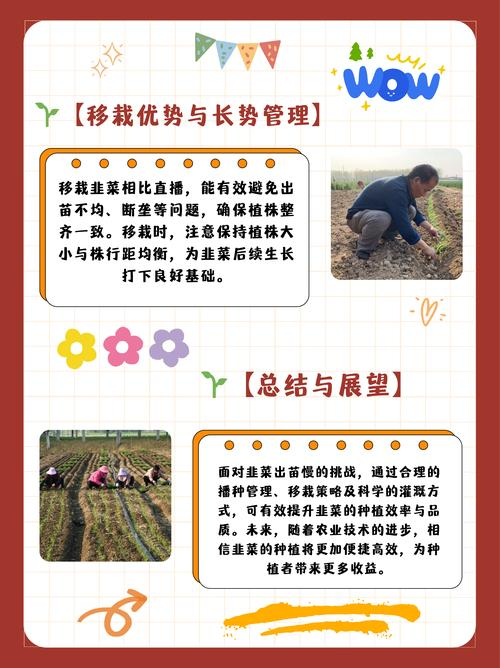
Daylight greenhouses are generally established before and after spring seasons, and recently planted vegetables are managed with a focus on promoting the normal separation of roots and buds, reconciling conditions such as soil, fattening, water, temperature and light, and the early prevention of pests and diseases。
1. Temperature management
The pre-growth temperature of guacamole vegetables is managed at 28-30°c during the day and at a minimum temperature of 13-15°c at night, depending on the variety and strength of the species, with a strong ability to reduce the temperature at night and a weak ability to increase it at night。
2. Light management
A reference can be made to the winterization of the solar greenhouse for spring light management measures, but, unlike winterization, the plant's plume will not be a key constraint to crop growth following the warming of the weather in march, but should focus on the light, especially near the northern wall, where the light is weak and the temperature is high, and where the plant is easy to grow, and can reduce the difference between the north and the south by improving the light during the day by putting a reflection film on the northern wall。
3. Fertilizer and moisture management
The seedlings are established with proper water control, with a surface covered with a membrane of white or black and white, and a row covered with rice shells, corn straw, etc. Water can be used with minimal water before the fruit, and if the soil is dry enough to water it with fertilizers such as sea algae and biobacterizers, the fertilizer can be replenished with leaf cover when water is not required, with attention to phosphorus, calcium and boron fertilizer supplements. If plant growth occurs at long intervals, proper water control, nitrogen control, night temperature control can be adjusted and high-prevalence drugs carefully used。
4. Physically transmitted diseases
In production, the application of insufficiently decomposed manure or soybeans fats, such as soy leaves, etc., are commonly used for root burning, fumigation, yellow leaves, use of algae fertilizers with biobacterizers, and application of algae acid on the side of the leaves with mild elements containing zinc iron, etc., with attention to ventilation in the morning and evening。
5. Infection of sexually transmitted diseases
The primary prevention of tubular, root and bacterial diseases is the choice of virulent or methyl tobuzines, and the rooting of gahmamine or zinc. As the temperature rises, the virus is prevented。
Ii. Management of plastic shed vegetables
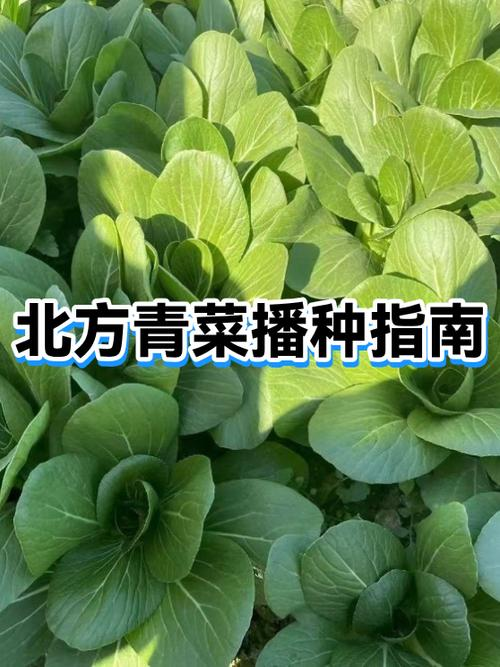
Early planting of vegetables in the plastic sheds of the north, with variations in temperature protection techniques in different regions and in the use of different techniques, has varied in the timing of planting, but has been concentrated in march-april, when the cold and the heat are frequent, and when the spring falls, production is focused on temperature management, as follows:
(i) early detachment to raise temperature
In non-production areas during the winter season, fog-proof multifunctional film is covered 20-30 days in advance, contributing to a return to the temperature of the earth; soil temperatures at 10 cm or more need to be stabilized at more than 12°c for most of the fruit vegetables to be planted; and pre-temperature and seedling growth is facilitated by the use of high-steal or high-steal membrane cover。
(ii) temperature protection during preplant periods
Sterilization periods minimize ventilation, with temperatures of 25 to 32°c during the day and above 10°c at night. At night or during extreme weather conditions, temperature can be maintained by the addition of two curtains in the shed and by the addition of small arch sheds in the sheds, for example, during the period of tampulation and before growth。
(iii) extreme weather temperature management
In extreme spring and cold weather, the cold can be temporarily covered by light cover materials, such as swirlless, sunnets, film sheeting, etc., directly to protect the vegetable fields from cold; under conditions of multi-layer coverage to protect the temperature; and in cases where it is still difficult to satisfy the minimum temperature of fruit and vegetables, temporary heating, such as burning of hot blocks, candles or showers, can ensure that plants are not frozen。
(iv) other technical measures
Choosing seedlings or strong seedlings; increasing the application of fully decomposed, high-quality organic or high-carbon composting; early spring ventilation is dominated by a backwind, avoiding a background wind (terrestrial wind) and preventing the planting of ground wind damage to the plant; in the event of a series of rainy weather conditions, light can be provided; slow growth of low-temperature root systems can be used to emaciate acids or algae fattening, increase the activity of the root system and promote the growth of new leaves; and the growing of long and weak strains can spray sugar, amino acid-based leaf-based fertilizers, such as glucose or amino acid water, can also be applied to plant growth regulation agents, such as the application of cedar esters, and enhance crop resistance to cold。
(v) pest management techniques
By reference to the solar greenhouse。