Corn is an important food crop and feed crop, as well as a crop of total world production. How do you grow corn to produce more? Why didn't you grow corn so high? Why is it so productive? The following maize plant protection specialist, in the order of management of maize cultivation, points to the 10 fault areas in which farmers manage maize and looks at what you have:
I. Misplacement of maize seeding:
Views:
General seeds can be used for single seed planting. Many farmers are comfortable with the seeds that are planted in single grains, and think that ordinary seeds can pick small grains and be seeded in single grains。
2. A random line spacing has no concept of density and is considered to be more dense than rare. There are a number of machine retrofitters that are randomly structured to plant at 50 cm range. The distance was set at 17-18 centimeters。
Three is good。
4. Drowning the water with water covered with water。
It's too shallow to sow, and it's as deep as possible。
Explanation: every year, farmers suffer losses. Single seeding is a new technology, and the success of single seeding is not a simple improvement of a single chain, but a new technology of a system. Why did it not exist a few years ago? What is the reason why many farmers used to sow on hand and without the current seeding
The success of single seeding requires the following elements。
1. High-quality seeds, with a purity level of not less than 98 per cent, and a sprout rate of not less than 95 per cent, are less likely to meet this requirement. A hand-pick is not an option。
2. The success of single-particle seeding is the achievement of scientific planting density, where a species can produce only at a reasonable density and not at a high rate of density. High density can also result in invertedness, empty poles, disease, etc., and in varying degrees of reduction in production. It also reduces production if it is too thin, but it does not raise the problem of falling-off poles。
3. The planting of seedlings is key, and inappropriate seeding practices can affect yields by causing loss of seedlings and thus affecting density. Fertilizers are burned and the problem of seedlings is the main factor contributing to the shortage. Only unirrigated plots must be broadcast in depth to reduce the impact of drought on seedlings, and plots that can be watered at any time must be sorely broadcast at depths not exceeding 5 cm and 3 cm。
Irritation and flooding can cause seeds to rot without breathing, seeds and fertilizer to be properly applied, and fertilizer to be used more severely。
Ii. Misuse of maize herbicides:
Views:
1. The type of maize herbicide and the period of its use are unknown and are sprayed indiscriminately。
2. Herbicides are used in combination with organophosphorus pesticides and microfertilizers。
3. Increased volume of medicines at random, not at prescribed level。
4. Cheap purchase of herbicides of the obsolete type。
5. Map speed application by mobile sprayer。
Six: spray it after it's over。
Explanation: every year, farmers lose maize due to herbicide. The underlying reason is that farmers are not aware of herbicides and do not have the relevant knowledge. Corn weeding can be divided into three periods, each of which uses different herbicide types and must not be misused。
Herbicides are commonly known as herbicides before seeding, and are of the following types: alachlor, alachlor, alachlor, acetamide, acetamide, and diazine。
Land plots for weeding before seedlings should be sensitive to the following:
One is that soil moisture is greater. After maize is sowed, it is largely inoperable to spray after rain or water, such as when the soil is dry or when weeds grow。
Second, this herbicide is not used when wheat stubbles are high and field wheat grass covers the ground, as we cannot kill weeds that graze the top soil without the surface being shaped to the surface。
The third is the early use of herbicides and the short-term effects of the herb, which will soon grow and will require a second dose of other herbicides and a waste of human and material resources。
Fourth, herbicides tend to make maize leaves yellow, especially when at high temperatures, and to cause injury to roots. In view of the above, weeding before seedlings are now gradually replaced by weeding after seedlings。
Weeds are mainly eliminated before 2-5 pages of seed production. Herbicides used at this time are typically concentrated on sulfur and sulfur composition, and complex formulations are mainly accompanied by the addition of atrazin (landazine), e. G., biggest. Weeds tend to turn yellow about seven days after application and die of weeding about 20 days。
In the second half of the crop, spray can be sprayed throughout the field with good weeding and high sex. There are also individual varieties that are sensitive to herbicides and plant leaves are yellow but recoverable in about a month without affecting yields. Some varieties of sweet corn, field-planting, corn and seaborne are highly vulnerable and should be carefully used。
In particular, it is cautioned that a corn field sprayed throughout the field should be within five leaves, not sprayed after more than five visible leaves, and that organophosphorus pesticides should not be used for seven days before or after the application or otherwise directed spray. In northern china, plumes are vulnerable to drug abuse if they are applied with a valid ingredient of more than 3 grams per acre。
The use of such herbicides can be harmful in cases of high temperatures, high levels of use, repeated sprays, late periods of use and drug injection into maize heart. The six-to-nine leaf periods are sensitive periods for maize herbicides, and the application of this period can cause a drug hazard, over which low-dose, directed spray can be considered for grass。
Note: post-plant herbicides, consisting of 2,4-d butyl and dimethyl tetrachlorodichloride, are not used and are highly vulnerable! Symptoms of corn medicine are reduced or wrinkled maize leaves, cardiac curls in the form of a straight rod, or heart leaves that are difficult to extract and present in the form of a cow's tail. It's twisted, it's soft, it's hard to fold, it's thick, it's broken. Severe strains are stunted in upper growth, upper lobes are deformed, male ears are underdeveloped and female is deformed。
In the middle and later stages of maize growth, when grassland occurs in the middle and later stages of maize, the option is to use paraquat, with a 20% concentration of 150 times the fluid, and a protective shield for directed spray. Because it is a highly lethal, fast-track herbicide, even if the fluid “sprays” onto the corn leaves, it is only local drying and does not result in “dead trees”。
It is important not to use glyphos-methyl for this period, which is an insecticidal internal herbicide, which is used mainly for multi-year weeds, mostly in orchards, canals, border crossings, weeds, and also after planting and before seeding. If the medicine is used in the mid-term later stages of maize, because of its internal inhalability, it is slightly unwittingly transmitted to the whole plant as a result of the damage to the lower leaves, resulting in the death of the corn and a severe reduction in production。
Misuse of fertilizers:
1. Misdirection of urea use. Urea should not be mixed with ammonium carbonate, resulting in slow urea transformation and subsequent volatilization and loss; no surface spraying, with most nitrogen being volatilized during the conversion of urea to ammonia, with a 30 per cent utilization rate; no fertilisation, with a small reduction of urea containing a toxic effect on seeds and seedlings, affecting the growth of seed sprouts; no immediate watering after urea use, with urea transformation taking 2 to 10 days to complete, and immediately water being watered with urea solution。
2. Excessive fertilization, believing that more fertilization can lead to more food. Excessive fertilization can result in fertilizer residues and soil sheeting. The effects of increased organic fertilizers on maize production, such as proper application of zinc fertilizers, are evident。
3. Time of use for fatting. Controlled fattening (lower fattening) is a component that controls the time of release of nitrogen from fertilizers and contains nitrogen that is slowly released depending on the stage of maize growth, and therefore has a one-time fertilization character that is valid for a season. Qualified fertilizers are able to grow corn at a later stage. Fertilizer control is used 20 days after maize is grown. Go in the ditch。
Four: one-sided belief in the effects of leaf fat。
There are a number of types of folate, divided into four categories:
1. Nutrient foliage such as urea, potassium dihydrophosphate, etc.
2, is a regulated leaf fertilizer consisting of hormones or growth agents such as thallone, erythrin, polyecin, etc.
3. Biochemicals of the leaves are amino acids, nitrogen-fixing bacteria, decaying acids, etc.
4. Combination of the leaves and various combinations of the above. This is the category。
Leafing can be effective in mitigating the symptoms of deficiency when the corn roots provide inadequate nutrition and can improve maize growth and production. However, it should be used reasonably on the basis of soil science fertilization to avoid a reversal of the present end. Fabrication on the side of the leaf should be sensitive to the following issues: mastering the suitable species of corn-leaf fertilizer, mastering the appropriate concentrations, mastering the method and period of application of the selected fertilizers, and avoiding high-temperature afternoon spraying. It's an ideal effect。
V. The miswatering area。
One, water and fat. Explanation: water should not be watered before the runoff, except in times of excessive drought
2. Corn drums are not watered. Explanation: the period of pregnancy and slurries is a critical period for the water needed for maize, which is watered in the absence of rain during the drought。
Vi. Chemical control agents are not expected to be sprayed early。
The chemical control agent, which is one of the foliage fats, should be sprayed at the time required by the instructions, and late spraying should not have the effect of reducing the area by increasing the resistance to inverts, and the spraying time should be cleared before 9 a. M. And after 4 p. M., when the sun is chosen。
The link between fruit and production。
Views: it is considered that daeho is more productive, that daho is more productive than koho, and that the haho is more productive than koho。
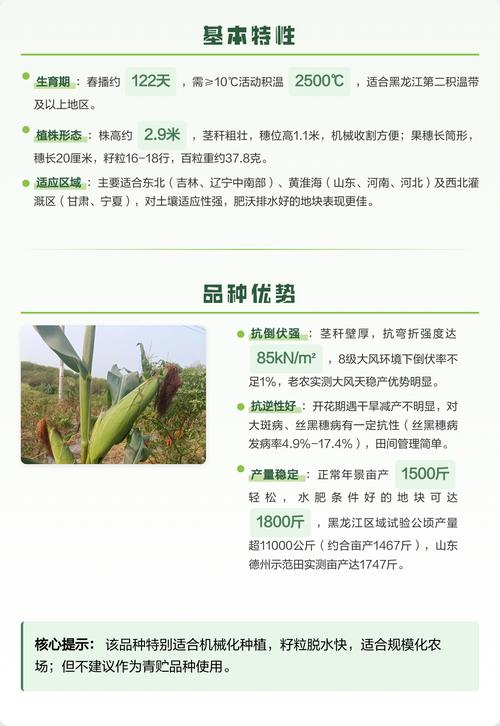
Explanation: the determinants of high maize production include acre density, thousands of grain weights, oscillation weight, seed yield, etc. Neither factor is likely to be productive. In order to determine whether or not a single advantage is determined by the high yield of a single species, it is important to combine factors. A piece of land is flat and has a reasonable density, which is generally high if seeds are grown。
Viii. The shortage of particles in empty poles is the poor quality of seeds。
Perceptions: empty poles and missing particles are problems with seed quality。
Explanation: there are a number of reasons for the empty maize poles and the lack of grains, and when fertility is inadequate, the nitrous phosphorus structure is not rational and results in empty poles; overdensity and poor ventilation, and competition for water between plants can result in some of the empty poles due to competition for fertilizers; the lack of hot and dry soil before the spill period can affect the flowering of males and female silks, resulting in the loss of flowers and the introphy of flowers and empty poles; exposure to prolonged rain conditions during the scavenging periods can cause a burst of pollen and the loss of vitality can lead to the emergence of empty poles。
Fertilizers and herbicides are not applied for a reasonable time, and sterility can occur during the sensitive period of female-to-male corn; pest hazards can also lead to the creation of empty poles. There has been a significant improvement in the quality of maize, the purity of seeds can meet national requirements, and empty poles due to purity are decreasing。
Nine: falling is the problem of seeds。
Perceptions: the fall of corn is that the species is invincible and the seller is responsible。
Explanation: the time of development varies slightly from one species to another, and to improve the resistance of the species, maize-controlled nutrients are required to be sprayed during the 6-8 leaf period (from half to one metre high). The same type of scientific spraying control is more resistant than the absence of spraying and the unreasonable duration of spraying, with few inverts。
Scientific farming requires that water fertilizer management should be scientific and that there is no inverted species, all of which can withstand inverts if managed in a scientific manner. In order to increase the resilience of maize, attention should also be paid to the following: do not overcomposed; apply science-based composite fertilizers; do not concentrate too heavily; combat pest hazards in a timely manner; and spray chemicals on time。
X. Mistakes in harvest time。
Views:
One, the white skin is ripe, and the harvest is ready。
2 cuts to collapse can have the same effect as late harvests。
We'll take it when it's too late。
Explanation: it takes about 52 days for maize to pollinate to be ready, it takes about 10 days for maize white skins to finish the masturbation phase and it takes about 10 days for waxing, which is a critical period for the millennia of maize and has a significant impact on its quality。
The perfect feature is the formation of a black embryo layer at the base of the seed grain, during which the conversion of maize starch has been completed, the seed grain is full, and it weighs thousands of particles and yields. Comparative tests show an increase of more than 10 per cent over 10 days. Recommendation ** corn is harvested around 0 days and should be harvested in due course after 1 october in the middle of the rainy weather in september. After the maize plant was cut, it did not have a significant effect on corn ripening, and when everybody was late, there was no fear of late harvests。
In order to speak of science, much of what is considered good is not necessarily scientific and may result in loss of production. High yields of maize require three elements: seeds, fertilizers and climate. Seeds account for 30 per cent of the three factors, fertilizer 30 per cent and climate 40 per cent. Management measures are part of the fertilizer element。