I. Varieties selection:
The selection of high-quality hybrid maize species such as: “small 808”, “new jade 801, “tang yong yu 1”, “weather gold 3”, “small jade 3”, “prime farmer 889”, “smart 808”, etc。
Ii. Technological routes
Full implementation of the five-year harmonization, i. E. Harmonization of varieties, harmonization of nursery, harmonization of technical norms, harmonization of key technical measures such as management of fertilizers and harmonization of pest and disease control. (b) universal access to good hybrids with high-yield resistance to disease-resilient planting, nursery transfer techniques, single-directed plaster cultivation, soil fertilization, seed wrappings, and insect and vermin pest management techniques. Actively promoting the “one plus four” of maize (i. E., one increase: a reasonable increase in planting density; four changes: a change to a high-yielding product type; a change to a net crop; a change to a corrosive formula; a change in techniques such as artificial planting, harvesting to mechanized operations, membrane cover, and straw restoration. Seven key links are captured, such as proper seeding, breeding, rational planting, single-directed age-appropriate planting, re-fertilization of bottom and ears, early fertilization of seedlings, re-fertilization of particles and major pest control。
Key technical links
Unified seeding
In accordance with the weather characteristics and variety characteristics of the sandu districts, in combination with warm seedlings, seedlings are distributed early and in due course, with the former sheltering from the effects of drought, drought, autumn winds and prolonged nutrition. The demonstration film is suitable for planting maize at 10-12°c when temperature is stabilized, with planting occurring in late march and early april。
2. Nutrient earth formulation
The formulation of seedlings for planting nutrients is mainly based on the “11522” formulation, which normally uses 1,000 kg of sifting soil per acre of honda bed (15 square metres), 1,000 kg of fine, high-quality scavenger farmers ' fattening, 5 kg of scavenger water, 20 kg of calcium and 2 kg of zinc fat, and which is then fermented with well-prepared nutrients, then fermented into nutrient blocks, nutrient balls or pallets about 10 days in advance。
3. Deplanting
Full implementation of single-directed age-appropriate transfer. In the event of a warm dry climate, the two-leaved-to-one-heart-to-one-to-one-to-one-to-one-to-one-to-one-to-one-to-one-to-one-to-one-to-one-to-one-to-one-to-one-to-one-to-one-to-one-to-one-to-one-to-one-to-one-to-one-to-one-to-one-to-one-to-one-to-one-to-one-to-one-to-one-to-one-to-one-to-one-to-one-to-one-one-to-one-to-one-to-one-to-one-one-to-one-one-one-one-one-to-one-one-to-one-one-to-one-one-one-one-to-one-one-one-one-one-to-one-one-one-one-one-to-one-one-one-one-one-one-one it is carried out in strict hierarchies, with a higher strength and a weaker plant. After two to three days of planting, the seedlings were found to be replanted in a timely manner. The early application of seedling fattening for the weak seedling plant after planting promotes convergence of seedlings, lowers high differences in the plant and increases production throughout the field. At the time of planting, it is carried out at a distance, such as by stretching ropes, combining planting with planting and broad-scale cultivation。
4. Unified density
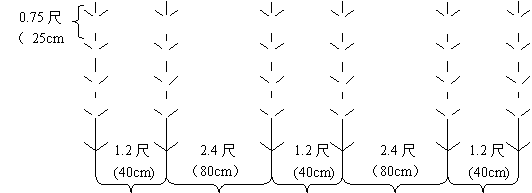
A wide-range orientation plant with specifications (2. 4+1. 2)/2 x 0. 75 feet and acre density of 4445。
5. Fertilisation
The principle of “organic inorganic combinations, balanced fertilization, foot bottom fertilization, early fertilization of seedlings, middle- and back-up of seed fertilization” is upheld. Using the target yield method, the use of maize-specific fertilizer is recommended for rational use in soil measurements。
Bottom manure: 1,500 kg of certified organic fertilizer applied in acre, 45% of tnt compound fertilizer 40 kg, 60% of potassium chloride 20 kg. When the seedlings fall off the ground at the same time, they are isolated from the seedlings so that they do not burn。
Shrimp fattening: in the case of maize seedlings, which are used in six to seven full-leave leaves (15 to 20 days after planting), the small seedlings can be fed once more, so that they can reach the small seedlings to catch up with them, catch up with the weak and grow up with them, pursue 10 kilograms of urea in acre and combine with the cultivation of chemical grass。
Earnings: during the mouth of the cornea horn (12-13 full leaves, see 16-18 leaf periods), deep-seated nests were dug between corn lines (10 cm) and fertilized with earth, followed by urea of 20 kg。
Pumps of fat: when fruit-eating silk is found, small amounts of fat can be applied when appropriate. Acres are followed by urea at a depth of 3 to 5 kg or foliage is sprayed with urea of 0. 5 kg to water with potassium phosphate of 150 to 200 g/acre。
Integrated management of pests and grasshoppers
In keeping with the “preventive, integrated” approach, small tigers, small and small diseases, stripping diseases, rusty diseases, maize troubles, sticky insects and other pests are the main targets of each model area。
7. Controlled seedling cultivation
High yielding factors are more dense and, depending on the maize saplings, crop varieties are properly controlled by the local application of maize hyenas, moss, hyenas, eugenics, etc. In the medium-term of maize growth (11-12 leafs)。
Viii. Received respects
The harvesting of maize seed grains after they have reached full maturity can reduce their water content rate, increase their weight by 100 and increase their yields。
Agricultural technology extension station, sandu aqua autonomous district