It's hot in march, and tomatoes are red。
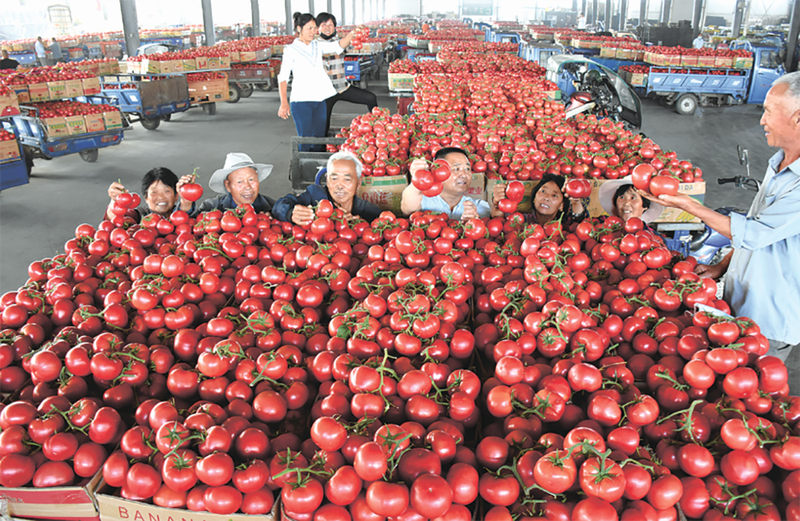
At 4:30 a. M., the wholesale market for celery and vegetables in the town of porraine in the east sea county of liangdong city was already in the air。
A light-fire lighted the trading shed, and a three-wheeler farmed with tomatoes full of dew. The bargains, the boxes, the engine booms were intertwined and played the hottest morning song in the town at the subeinan border。
“toolin's tomatoes, fresh, hard, saliva, shanghai people recognize them!” a guest from zhejiang is directing the workers to load the vehicles. He was surrounded by a box of tomatoes with higher sizes than humans, and that morning the tomatoes would appear at the point of the shanghai river bridge wholesale market。
This is a vivid reminder of the transformation of the tomato industry in yundong。
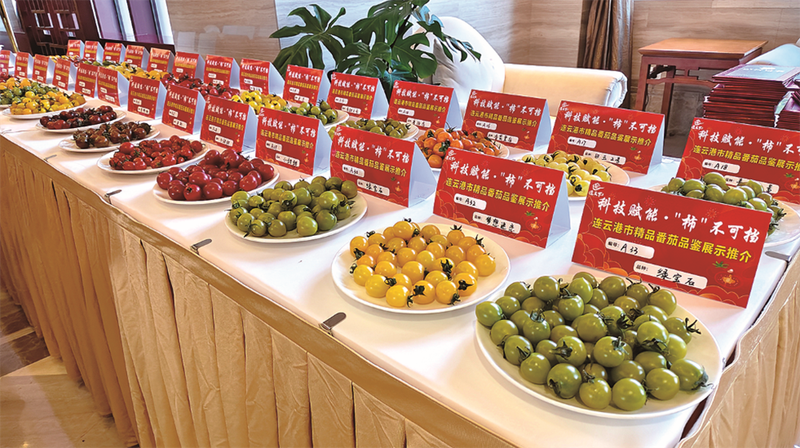
In recent days, a city-wide training course on the exchange of high-quality tomato development technologies and the evaluation of the 2026 refined tomato was inaugurated in the east sea. During the hong kong tomato's “communication”, journalists walked into the fields and looked for changes in the industry behind a little tomato。
From small to large and strong
150,000 acres of "red"
At some point in time, tomato cultivation in the city of liangdong was a “side business” behind the farm house, with a single and scattered variety. Today, a new map of the city's tomatoes is provided by a set of data: 150,000 acres are grown throughout the city, of which 50,000 acres are grown in east china county alone, with an annual production of 200,000 tons and a value of 700 million yuan。
From punan, haizhou, to the top of the city, from the eastern peaches to mount yuny, tomato cultivation has been expanding to form special industrial blocks
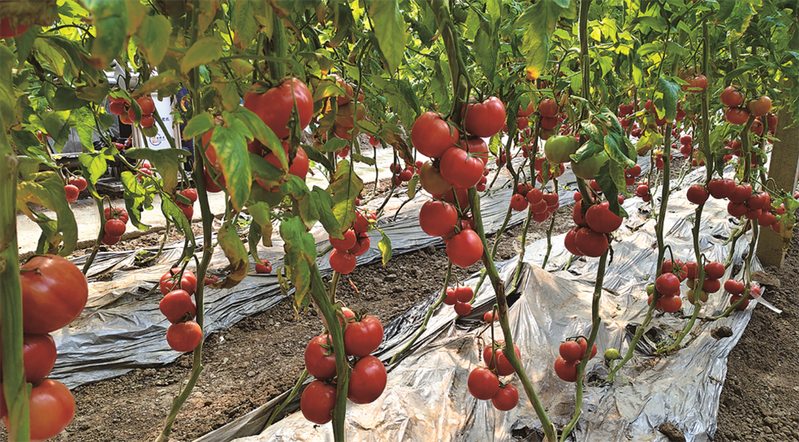
In the town of punang, haizhou district, with its main focus on the winter spring of the solar greenhouse, the tomato plantation is full of red, green and yellow tomatoes with vines, with its main focus on high-quality oral tomatoes and leisure picks, making it a “net-red ground” for citizens to play cards on weekends。
In the eastern sea county, the owner of the porraine, the left-hand side of the mountain, and the owner of the green lake, with 16,000 acres of tomatoes in its facilities, produced 100,000 tons annually, known as the “first town of tomatoes in jiangsu province”. Here, the north-south advantage, the sweet and juicy deep powdered tomato acid, the red colour, and the durable transport, are the main tomato production base in and around the province. Strawberry bases in hot springs town and pomegranate streets are set up to plant cherry tomatoes and explore “two-use” efficiency models。
In the chau, chama, and qingbong, which is the preponderant tomato-producing area of the city of liangdong, tomatoes grown during the spring festival were brought together to fill the market space and sell at a good price; ishan, in tun yun county, the steep ditch is the centrepiece of the facilities, tomato and artemisinin rotations, land is free, and farmers have income for four seasons。
Facilityization, scaling up and standardization continue to rise, and the port tomato is moving from “small to small” to “large and strong”. At present, there are three seedling enterprises in the east sea county, with an annual capacity of 35 million; five of them have wholesale markets for small-scale vegetables, including two in the town of peach, two in the town of double shops and one in the town of green lake, forming a complete industrial chain from seedling to marketing。
From "big road" to "seven colors"
The path of the varieties of revolution
"at the time when the tomato was grown, it was shown that it produced a lot, and that it did not matter what species." in the professional cooperative of serpent vegetables north, the governor, wang wen-sung, recalled the early days when he “sold two or thirty cents a pound and couldn't earn money in a day”
The awakening of species awareness is changing the fate of hong kong's tomatoes。
Entering the polling vegetables base in the east sea county, the "drey boy" tomato is full of five or six fruit lines, with a single fruit weight of about 260 grams, and a chord of fruit and bright colour, as it is called "pretty". According to staff, the tomato acre production of this variety is generally between 15,000 and 20,000 pounds, of good quality and high yield, and currently more than 80 per cent of the east sea。
In the cloudwater bay view area of the cloud farm, the “later tomatoes” in the oral tomato planting base use a green eco-management model and produce 5,000 kg of acre through organic fertilizer. Although production is less than regular tomatoes, the price is more than three times that of ordinary tomatoes。
He entered the tomato manor in punan town, where the red, yellow, green, purple tomatoes were portrayed as “seven colour tomatoes”. Not only are they colourful, but they also have distinctive tastes — some of them sweet and sweet, with soluble solids of more than 10 per cent, or “fruit grade”。
Yang haebo, director of the vegetables research unit of the town agricultural school of liangyun, described the growing diversity and high quality of the market demand from traditional tomatoes to oral tomatoes to the coloured cherry tomatoes。
However, challenges remain on the path to the upgrading of varieties。
“autumn troughs, where tomato yogurt virus disease seriously endangers production; new outbreaks are on the rise; traditional varieties are homogenous, of general quality and occur when production is low.” the relevant director of the agricultural technology promotion centre in tohoi county stated that there was now a clear demand for varieties from growers: the requirement to aggregate varieties of resistant genes, and to increase resistance to tomato brown wrinkled fruit and fracturing virus diseases, while ensuring quality and sustainability. Most of the local varieties have opted for co-harvesting and have placed higher demands on mature consistency and symmetry。
From "eat from the sky" to "wise growing"
Technology-enabled industries have jumped
In august 2008, wang wen sung, a vegetable grower in the north celery village of the town of doolin, east sea county, with the farmers around him, made an important event - the formation of a professional cooperative for celery vegetables in the north。
Over the past 18 years, the cooperative has had 1,134 members and 329 equity members. More importantly, they have developed a “five-uniform” operating model: unified planning, unified preparation, unified technology management, uniform sales, and uniform storage。
“the club members only grow good tomatoes, and the rest of the cooperative is packed.” wang wen's speech. Today, the northern celery tablet has become a “gold sign” on the market. Under the auspices of the cooperative, tomato cultivation in towns such as the dole forest, the left mouth of the mountain and the blue lake has become one of the largest tomato plantations and wholesale distribution sites in su northern lunan。
Beyond organizational change, the power of technology is reshaping production。
Entering kale agricultural technology ltd., east sea county, fully automated temperature control system, precision water fertilizer integration equipment works efficiently. Temperature control accuracy of 0. 5°c and humidity control accuracy of 5% can produce healthy seedlings even in the cold winter months。
“at the end of last year, 3 million tomato seedlings have been produced, and the number of tomato seedlings is expected to exceed 10 million this year.” the head of the company, wang, explained that the tomato seedlings that the company currently cultivate mainly supply peach trees and surrounding farmers can meet two thirds of the demand for seedlings in the east sea。
“the changes that technology has brought to tomato cultivation can be described as revolutionary.” the technicians at the tomato manor in punan city described the fact that tomato pollination in the past was based on artificial flowering, time-consuming and hormonal residues affecting quality; today, the technology of vibrating pollination is being promoted, not only to save people, but also to make tomato seeds full and fruity. Earthless farming techniques have also begun to be visible, with coarse coconuts as the foundation for planting, together with air source temperature control systems, dispersed glass and integrated water fertilizer drip irrigation equipment, to accurately recaptulate and optimize the optimal growth environment of crops. Such “air tomatoes” not only save land but also achieve standardized production and high quality output。
Industry has jumped, and challenges remain. High-efficiency, light and simple farming techniques associated with varieties are not well developed and operate in a single way to meet market development needs. To that end, the east sea county plans to build a new tomato display base in the pomegranates, along with an advanced equipment display base — water fertilizer integration, smart temperature-controlled vents, automatic pharmaciers, cold fog machines, etc. — that will be visible, accessible and useful to the growers. Facilities such as pest-specific sexual baits, placards and insecticide-proof nets will also be centrally displayed to provide a “model room” for green controls。
At the sales end, the consolidation of offline supermarkets, wholesale markets and group food distributions is accompanied by the emergence of online electricians, live-live couriers and community groups. On the extension of the industrial chain, tomato harvesting, field tourism and farming experience are becoming new growth points. “agriculture+tourism” enhances the combined benefits by making small tomatoes a “grid product” for rural tourism。
From “small and scattered” to “large and strong”, from “road goods” to “seven colours”, from “food by heaven” to “smart cultivation”, the “near-life” of hong kong's tomato reflects the sound of the high-quality development of agriculture in the city's facilities。
This ‘gang conglomerate’ of a wide variety of tomatoes would certainly inject new energy into the small tomatoes industry. Little tomatoes, they grow the hall of honour。