Potatoes, one of the globally important food crops, are widely cultivated and environmentally adaptable. In china, cultivation and production of potatoes have shown steady growth, especially in suitable areas such as the city of hullenberg in the autonomous region of inner mongolia, the city of tusk and the district of hylar. However, with the upgrading of the agro-industry and changing market demand, the production and quality of potatoes are more demanding. Research and dissemination of efficient potato cultivation technologies are therefore important for improving the production and quality of potatoes and meeting market demand。
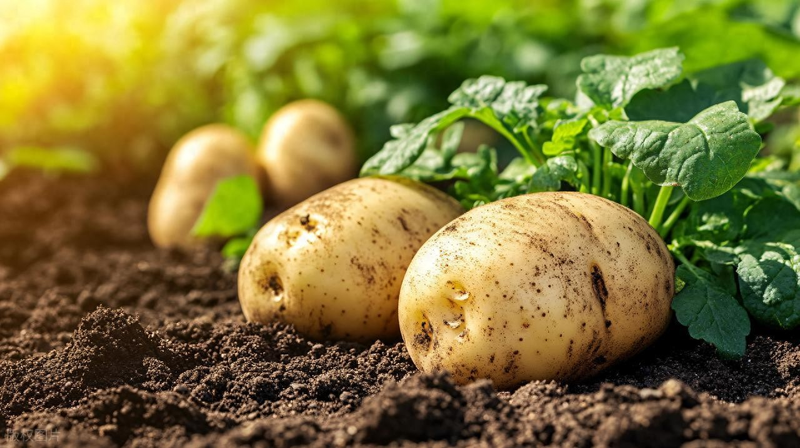
As an advanced potato cultivation model, the technique of kung-tai cultivation has multiple advantages. First, the construction of broad and high-level structures to optimize the physical properties of the soil can significantly improve soil permeability and water fertility protection and create a favourable root environment for potato growth. Second, the layout of the broad towers is conducive to ventilation in the fields and effectively reduces air moisture, thereby reducing the risk of disease and pest breeding. Third, the technology optimizes the drainage system in the field, which can significantly improve the capacity and resilience of potatoes to floods. These technological advantages make broad-based high-level cultivation techniques an important means of improving the production and quality of potatoes。
I. Preparation for broadcasting
1. Landing and landscape. The selection of acidic plots deep in the earth, which are fertile in soil, have a good pellets structure and have excellent water retention performance requires that the plots have a deep and loose base. Avoid the selection of front plots where beets, sunflowers, eggplants, peppers, tomatoes, cabbage, cabbage, etc. Share a common disease with potatoes, and strictly prohibit the selection of former plots with long-lived herbicides. The approach of deep-deep and lax land in the autumn was promoted, with depths above 30 centimetres to break the bottom of the plow, followed by 15 to 20 centimetres of shallow conversion. The application of 22. 5 to 30 tons of organic fattening per hectare is followed by the leveling and decorating of the land to ensure that the standards of levelling, flooring, landless, landless and landless are met。
2. Choice of varieties. The choice of varieties adapted to local climatic, soil and other ecological conditions ensures the normal growth and development of potatoes. Priority is given to high-yielding and disease-resistant varieties, such as “kn1” “kn18” “euging” “opportunity” “early white” “jute”. Obsolete turtle cracks, deformations, tipping heads, dysentery necrosis, disease-bearing or umbilical troughs are strictly removed, and fresh, robust, full and unexplored tubers are selected as seeding potatoes。
Seed treatment. Before planting, selected potatoes are fed into plastic bags with a capacity of 30 to 35 kg and placed in sunbath. In the case of tans, four to five bags per layer, with no more than seven layers, are to be placed in the form of hollow tans, and there is a need to leave a gap between them to prevent the cultivation of potatoes from being pressured or decayed. Sunburning is an effective means of promoting the biological maturity and growth of the potato. Vaccination was performed for 15 to 20 minutes using a mixture of 500 times the polybactrin and 5 to 10 mg cactin. Through tan and disinfection, combined with the appropriate temperature conditions, it is effective in breaking the sanctuaries of the potato and in promoting a budding。
For larger varieties, slices can be processed to increase sowing efficiency. An alcohol-sterilized blade shall be used to cut the slices, ensuring that each is equipped with at least one bud, and that the slices are moderate in size and do not affect the growth and growth of potatoes due to their size or smallness. The processed seeding of potatoes in the shades of the sun requires the maintenance of the appropriate temperature and humidity in order to promote a budding of the eye, which can be sowed as long as it reaches 0. 5 to 1 cm。
Ii. Requiring
1. Rise. In the case of monoculture, the base width is typically 80 to 90 centimetres, while double cultivation is 110 centimetres; monocropping is 30 to 40 centimetres, and double-cropping is 80 centimetres; and cylindrical height is 15 to 20 centimetres after repression. Mechanical lifts are used to ensure that they are organized and highly consistent。
2. The method of seeding. Seeding can be carried out when the 10 cm layer temperature stabilizes at 5-7°c for three consecutive days. At the time of mechanical sowing, the crop size is usually 1. 8 - 2. 25 tons per hectare, which is determined on the basis of variety characteristics and soil fertility. On 80 to 90 centimetres wide, single-line seeding is carried out at 15 to 20 centimetres range, generally at depths of 7 to 8 centimetres, ensuring that the potato plant is fully absorbing the moisture and nutrients in the soil. On 110 cm wide, the distance between the two rows is determined on the basis of the characteristics of the species and soil conditions, with a common range of 20 to 25 cm, ensuring that the seeding takes place in close contact with the soil and covers the appropriate amount of soil。
Iii. Field management
1. Cultivated land. The main purpose of initial cultivation, which should take place at a distance of 5 cm from the ground or at a rate of about 10 per cent, is to weed and warm the seedlings in order to promote their healthy growth. The soil thickness is determined on the basis of sowing depth, usually at a distance of 15 to 18 centimetres from the seeding of potatoes to the top. This is followed by the second-time planting of soil, based on the growth of potatoes up to 15 to 30 centimetres of seedlings, which will need to be further raised to form a narrow, wide-pane structure. This is not only beneficial to the growth of the potato root but also increases production and reduces the presence of the sweet potatoes。
2. Irrigation management. The periods during which the greatest amount of water was required for potatoes were concentrated during tubing and tubing growth periods, which accounted for 70 to 80 per cent of the total fertility period, thus ensuring that the relative water content of the soil in both periods was over 70 per cent. Irrigation should be based on the principle of “multiple smallness” and avoid damage to soil sheeting and root systems caused by flooding, while adjusting irrigation volumes in a timely manner to weather conditions, soil moisture and potato growth. In better irrigated plots, drip irrigation can be used to increase water utilization and reduce the incidence of disease。
Fertilizer management. Potato fertilizers should be based on the principles of “pre-motion, medium-control, post-preservation”, i. E. Pre-promoting the growth of plants, medium-term control of the length of the leaves, and late-stage protection of the leaves, so as to promote growth and nutrient accumulation. After the seeding of potatoes it is necessary to follow up the fatting of the seedlings in a timely manner, depending on the seedlings and soil moisture. The first fertilization is usually carried out after the seedlings and urea is applied 75-120 kg per hectare. At the second fertilization run in the present custard period, the plant began to enter the reproductive growth stage and demand for nutrients increased, with high potassium per hectare composite fattening of 300-375 kg or grasswood ash of 1,500-1,800 kg, combined with high potassium water solution of 75-150 kg. When the potato enters an extended or flowering period, it is required to follow up two or three times in a row, once every 10 to 15 days, and at a rate of 300 to 375 kg of high potassium compound per hectare, and to spray 0. 3 to 0. 5 per cent of the potassium phosphate solution。
4. Disease and grass prevention. Potatoes need to focus on the prevention of anthrax, early disease, night disease, black rot, aphids, and insects and pests. 1 anthrax: in the early stages of the disease, spray was treated with a mixture of 40% more than sulphur suspension 400 times the fluid and 25% more than 1,200 times the zpk wet powder, which was sprayed once every 7-10 days and 2-3 times continuously. 2 early and late disease: spraying with 600 times the disemboweled manganese zinc, 77 per cent with 500 times the wettable microparticle powder, once every 7 to 10 days and three times in a row. 3 black corrosive disease: 70% methiosulphic vitro-wettable powder 40-80 grams of water spray is sprayed once every 7-10 days and 2-3 times continuously. 4 aphids: control with 10% cypermethrin emulsion 2000 - 6,000 times liquid, 10% cypermethrin emulsion 4,000 - 6,000 times liquid alternate spray. 5 蛴螬: root treatment with 7. 5 kg of powdered bt (suyungi) per hectare。