New citrus (red american) cultivation techniques
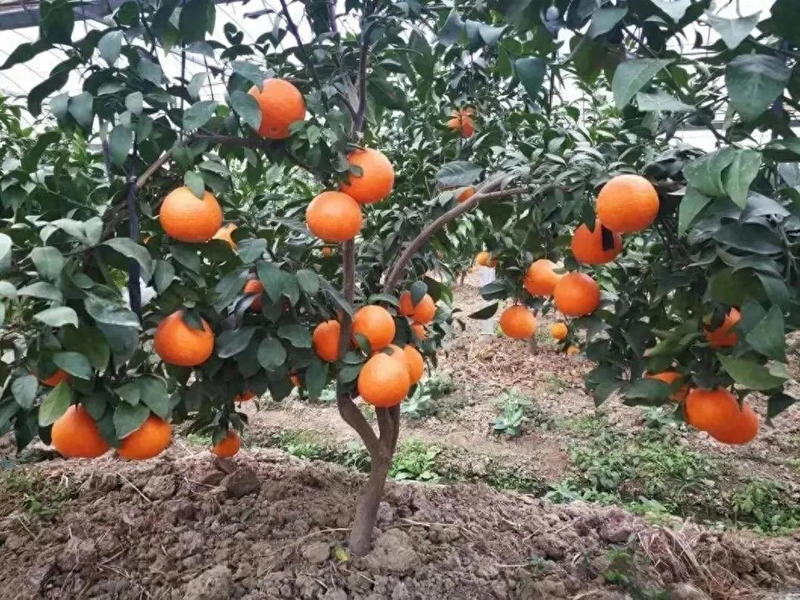
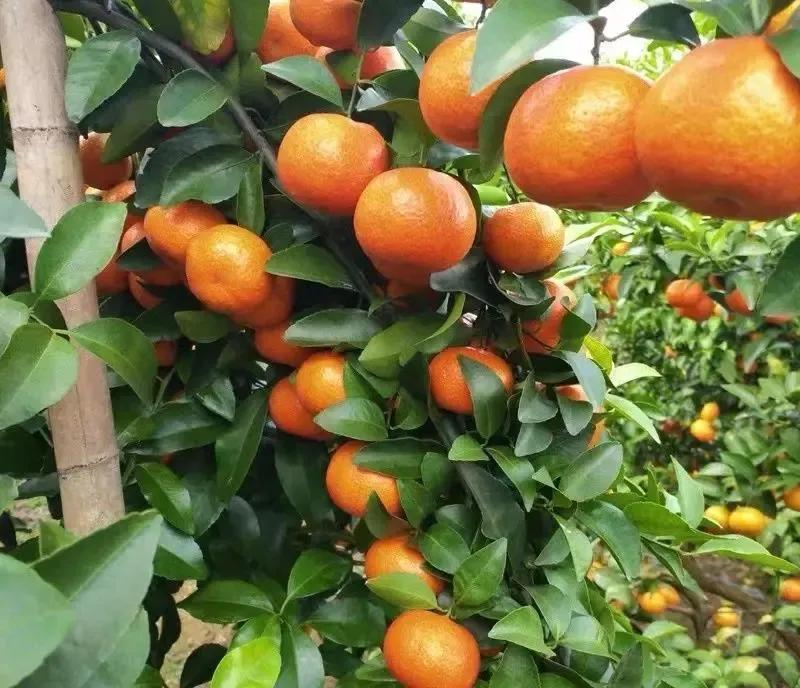
The citrus (citrus reticulata blanco.) is a fragrance citrus plant with warmer and weter climates and slightly more cold-resistant sleeves, yogurt and sweet oranges. The red man is a pre-cooked, ferocious seed, with a rounded fruit, orange red, smooth, soft, smooth, sugary, sour and fragrance. Open-air cultivation is generally on the market in mid-november and contains over 12 per cent soluble solids; facilities are on the market in mid-december, with more than 13 per cent soluble solids and approximately 0. 8 per cent acidity, with excellent quality. It is developing better in the wuhan region and even in hubei province。
Citrus growth requires appropriate land conditions, such as fertile soil, appropriate temperatures, adequate light, as follows。
(1) soil. The poor soil conditions are not only related to citrus production but also directly affect the quality of the fruit. The adaptation of citrus to soil is more extensive, but to achieve high yield quality requires planting at ph 5. 5 ~7 (border or sandy soil), good quality, laxity and fertility, more than 1 per cent organic content, arable soil of more than 60 cm and groundwater level below 1 m。
(2) temperature. The citrus is subtropical green fruit tree, which is so warm and wet, radiant and cold. Temperature is the determining factor for citrus distribution and growth. The average annual temperature in the main citrus-producing and economic-planting areas is 5-22°c, the average cold month (january-february) is 4°c, the extreme winter temperatures must be above 5°c and the annual temperature of 10°c is over 5000°c. Citrus growth requires a temperature of 12. 5 ~ 37°c, which is too low to inhibit the growth of trees and keep them dormant. High temperatures can result in long branches, consume excessive nutrients and disrupt balanced growth. The bouquets in the autumn require temperatures around 20°c and 10°c, respectively, and roots grow at roughly the same temperature as the top of the ground。
(3) light. Lighting is an energy source for luminous cooperation in plants. Although the citrus is a radiant plant, it is more venom-resistant than the normal leaves-bearing tree, with more dispersed light during its growth. The normal annual daily photo-hours are 1,200 hours, and all areas with a frosting period of 250 to 300 days are normal。
Facility cultivation has been widely used in red-american cultivation because of the vulnerability of red-american citrus to pre-natal fallews, frost disasters, severe sunburns and frequent black-spot diseases. However, in contrast to open-air cultivation, red-american facilities are difficult to control over temperature, light, moisture, fertilizers, so that control needs to be exercised in the selection of gardens, construction of large huts, membranes and demolitions, temperature control, water management, cut-down mosaics, flowers and vegetables, pest control and timing。
Park selection
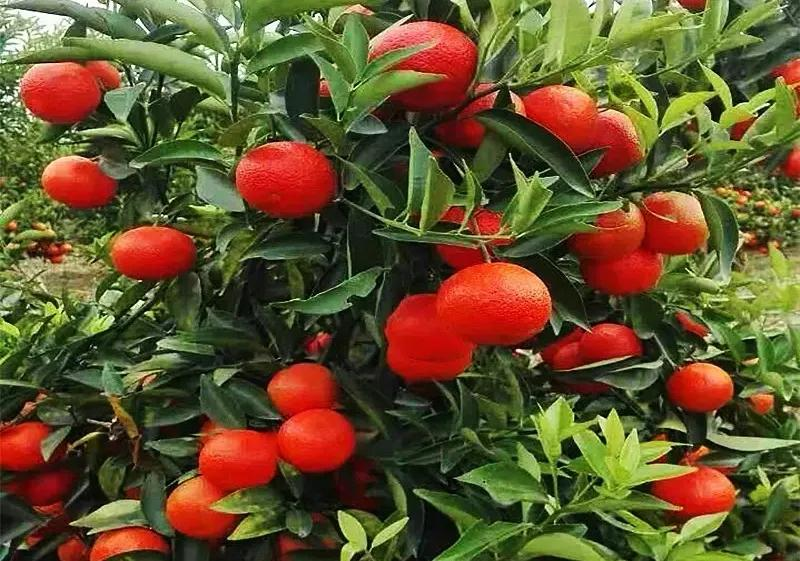
It is advisable to choose a slope south-east, with long daylight periods, thick and well-watered plots. In areas where the frost is severe, it is necessary to choose a slope that is back-to-back with a large mountain body, with a clear counter-temperature, and that avoids the wind. Soil ph at 6. 5 ~7. Low-lying areas that are not poorly drained and susceptible to water are not cultivated, such as deep trenches requiring more than 60 cm to grow, and strong drainage systems are in place to ensure normal root growth. Cultivated soil is based on deep yellow or sandy soil, which is more than 60 cm thick and requires adequate irrigation water。
The sheds built
It would be advisable to choose a whole steel-coated tubing with a hot zinc plating tube and a cement pillar for poles, a horizontal pole and roof with a hot zinc plating steel pipe suitable for roof heights of 4. 2 ~ 4. 5 m, a shoulder wall height of 2. 5 ~ 2. 8 m, and a top membrane more than 1 m from the top of the tree crown. The arches of the shed are suitable for 6 m, especially in areas with snow in winter, where more than 8 m of arches are used with caution in order to prevent the snow from crushing. As red-american facilities cultivate summer-free and winter-season lids, the shed structure focuses on weather and wind resistance to winter and spring festivals。
Duplicate and decrepit
In the wuhan region, it would be useful to choose mid-october for membrane time to control sugar. The front membranes cover only the top of the membrane and the side uses the insecticide-resistant nets, and full coverage can be done in due course, based on weather forecasts, after the onset of the thaw in december. In the event of a severe cryogenic frost after full coverage, it is necessary to remove the side membrane in a timely manner or to cover the sunnet in order to prevent secondary damage to the tree body as a result of a sharp increase in temperature in the post-frozen shed. The total decorum time is adjusted to the time of the plum rain and, in principle, the full decorative after the plume. It is recommended that the anti-worm net cover be used to prevent, on the one hand, pests such as fruit night moths and, on the other hand, wind and sunburns。
Temperature control
In the sheds, after picking fruit, to the lunar period, the temperature can be increased by covering membranes, increasing the temperature, and promoting the early budding and flowering of red americans. For winter spring festivals, if extreme temperatures are below 3°c or continuous temperatures are below 0°c, heating equipment is required to increase the temperature in the shed to above 0°c. Control of high temperatures in the sheds from flowering to early fruit by removing the cape and keeping the maximum temperature in the sheds at 30°c, particularly during flowering periods, strictly insulated from high temperatures and humidity in order to prevent the occurrence of high-capture fruit and curvature diseases. (b) increase the temperature between chrysanthemum and chromosomal periods in order to promote the expansion of citrus larvae and the onset of summer. Increase temperature differentials between chromosomal and harvest periods in order to promote the colouring of citrus fruit and the accumulation of sugar, and improve the appearance and inner quality of fruit。
Water management
In combination with the pattern of demand for citrus fertilizers, regular water recharge is provided. Because of the lack of natural rainwater supply, there is a long-term need to maintain an adequate water supply, with a significantly larger amount of water being used than in the open, and in high temperatures, there is generally a requirement for manual water filling of 3-5 days. At maturity, different methods of water management need to be established according to soil type and harvest time. Water is controlled one and a half months before a well-protected orchard is marketed, water is controlled one month before a poorly-protected orchard is marketed, and the water is strictly controlled when it enters the control period. Only water is scarce in tree conditions, and water is sprayed from the surface, mainly with 5-10 cm top soil wet. Large water or canopy canopy is prohibited to prevent deterioration and loss of quality。
Spring trim
In the spring, the whole of the cut is mainly trimmed, short-cut and condensed. In the spring, it is mainly trimmed and trimmed, with the operational removal of small leaves, weak and dense spring branches and the preservation of strong spring branches, with the main aim of reducing the total amount of red-american flowers and maintaining the balance of tree positions. The main purpose of the summer fall cut-off and retrenchment is to operate in such a way as to provide a short cut-off or retreat to the summer node, depending on the condition of the tree, with the main aim of nurturing a leaf-producing parent branch, increasing the red-american fruit ratio, improving overall quality and maintaining tree positions。
Scratch
The splendor of spring branches that were drawn from that year needs to be replaced by the strength of two to three pieces each according to the space of the branches. After a flowerless spring, seven to eight leaves of heart are needed to promote the greening of the leaves so that they can grow strong and strong, while the branches of the flowery springs choose to be partially wiped. In addition to the leaves, a group of nutrient branches blooming in the second year is being cultivated. Summer is kept proportionally according to the tree condition, leaving 8-10 lobes to be removed. Autumn is preserved in the early autumn on the basis of the onset time and may be scrapped in the same year or the second spring。
Flowers, fruit
Red-americans are extremely flowering, and young trees need to be fully ploughed in combination with spring cutting and artificial plastering to facilitate the expansion of the canopy before they reach more than 1. 5 m. As a result, trees, regardless of their strength or weakness, need to be properly ploughed, and the weak are dominated by the breeding of trees, which are strong in reducing the absence of and increasing the presence of leaves. Starting with the end of the second physiological fallout, the propane, coarse, deforming fruit begins with the elimination of sun-burning, wind-injured and insect fruit. The yield of a tree is controlled by leaf, fruit ratio 80:1 to prevent tree decay。
Efficiency gains
Improved soil structure through increased organic fertilisation, improved soil organic content and improved fruit quality. At the same time, before the fruit matures, the ground membrane controls the water and increases its sugar content。
Bug control
Red americans are less resistant to normal meadows, with yellow spots, asymptomosis, ulcer disease, oily spots, anthrax, lignosis, black spots, coal smoke, fruit moths, powder, red spiders and other pests, especially yellow spots during spring seasons, black spots during plum seasons, ulcer disease after wind, and asympathia during flower seasons. The hazards of mountain cultivation of fruit-breeding night moths are extremely severe, requiring focused control at the onset of the chromosomal phase; the facilities are clearly more harmful to red spiders than to open-air cultivation and require reasonable substitution drug control. In the area of agricultural control, the first is the elimination of winter insects and the reduction of spring in the number of insects through the application of winter swarms, and the second is the strengthening of fertilizer management, which will allow citrus trees to grow and grow, as well as the control of fresh extraction, in the interest of uniform spraying. In terms of drug control, there are a large number of drugs used to combat citrus pests, such as 5 per cent of the avulcin 5,000 times and 24 per cent of the cythylene suspension 3,000 times against the red spider, 20 per cent of the methacylene 2,000 times and 20 per cent of the amphicamine 2,000 times against the powder, 15 per cent of the amphibians 1,500 times and 5 per cent of the salt 3,000 times against the horse, 10 per cent of the amphibine humid powder 2,500-3000 times against the aphids; 77 per cent of the liquid can be killed with a wettable powder 600 times, 80 per cent of the ultra-state 800 times, 10 per cent of the high-water dispersed granule agent 6,000-700 times, 50 per cent of the grainable wet powder 800 times, ulcers, etc。
Collection management
The facility is more than 30 days behind the normal open cultivation harvest, which runs from early december to february. The harvest is sequenced according to the size, colour and location of the fruit, and preference is given to the fruit-sized, colour-colored, outer-barrelled fruit, with the small fruit and the inner-barrelled tree being ripe until january-february of the following year。
In principle, it is not recommended that the whole tree be harvested in january-february of the following year, as this makes it vulnerable to weakening trees, age, etc., and, in serious cases, to subsequent years。