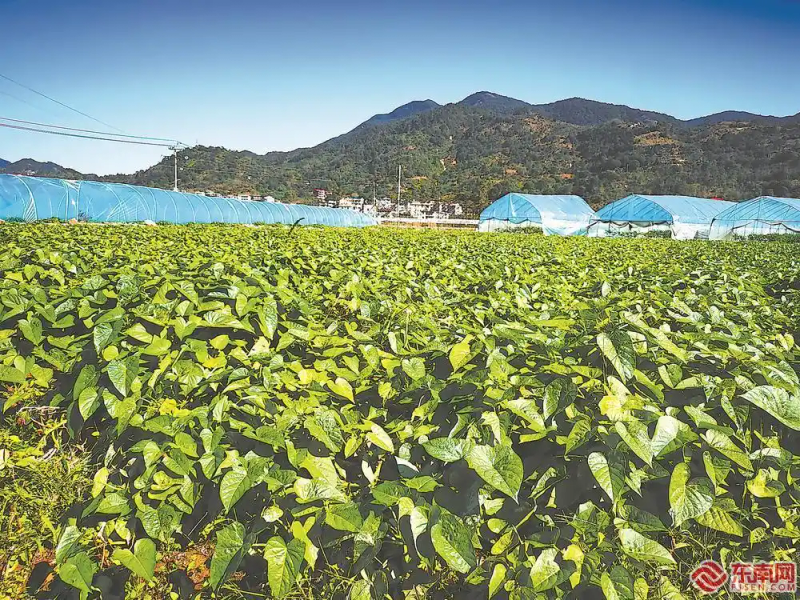
The "standing potato 18" is a very promising development。
On december 16th, the south east network reported that the winter was warm and the season of roasting the melon "go round." where are we eating the melon
The answer may be unexpected - root。
The melon, also known as sweet potatoes, has, over a long period of evolution, created a huge storehouse containing nutrients such as starch. This is very different from the potato crop. The latter uses a tuber as a spot for food。
But it is also foodable in the field of melons and leaves. It's just that, because of a bad taste, i used to eat pigs. And there are farmers who do the cutting, but only a few tastes。
Imagination breeders have chosen a special variety of vegetable-type sweet potatoes, i. E., melon leaves that have been marketed in recent years. As an “extreme birth” of the yam family, the melon leaves are free of the bitter taste of traditional yam vines and are fresh and cuddly, rich in vitamins, coarse fibres, etc。
China's first national-level variety identification and provincially validated canyon-type potato “7-6” came from fujian. At present, the “top-flow” in the national market for melon leaves — the “foucheng 18” — also comes from fujian。
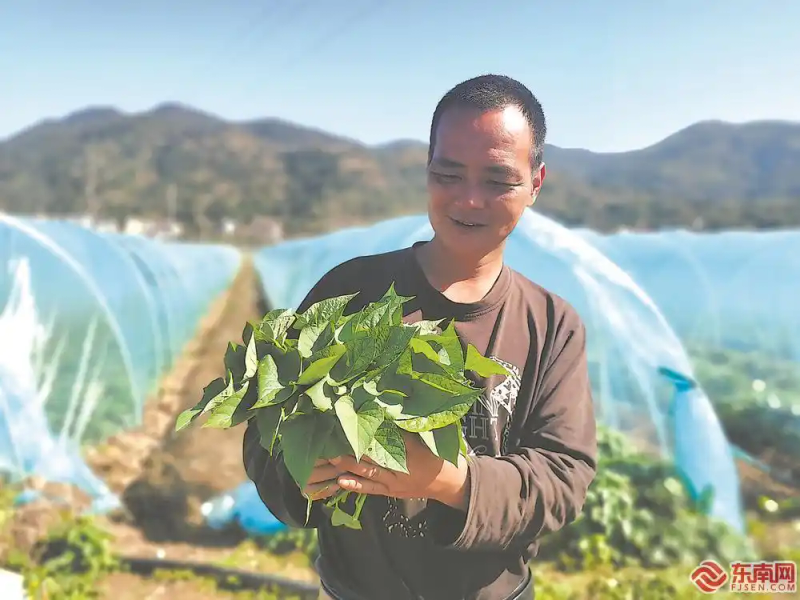
Hingda eco-agriculture limited, yingda, inc., cultivates masculinity seedlings for cooking。
Road to indigenousization of sweet potatoes
Another widely known name for sweet potatoes is potatoes. The word “tangled” is its imprint。
The ancestors of sweet potatoes and potatoes come from distant central and south america. When columbus discovered the new continent, the two potatoes were presented together as exotic gifts to the european royal family. But the potatoes are not very well received, but the potatoes are gradually taking over the table for europeans. It was only after the second trip to europe, which spread to places such as south-east asia, that the sweet potatoes became the staple food。
In the middle of ming dynasty, sweet potatoes came to china。
The first potato pavilion on the uchia mountain in fukuo is a witness to this history. Throughout the millennia, there was a drought in fukuoka and people were starving. In the philippines, governor chen zhenlong, a businessman, took the risk of bringing back the seedlings and, after a successful trial, reported that he had visited kim school to teach the population to grow widely. Far away, sweet potatoes became the “savage straw” to alleviate the hunger at the time. This was the cause of the public's concern to build this booth in ushan. Since then, this crop, which is drought-resistant, infertile and high-yielding, has moved from blessing to nation-wide. Potato is now the fifth largest food crop in the country。
The official development of research into the breeding of sweet potatoes was after the 1950s. Previously, the country used the largest number of excellent varieties, also the victor 100 from japan。
In 1955, chen luge, an ankle farmer, obtained several natural hybrid seeds from the sweet potato plant, from which he bred a high-yielding “fresh flower”. It was the main plant in the 1960s and 1970s. Since then, research has been carried out by scientific institutions in the provinces, such as the provincial agricultural institute, on the breeding of sweet potatoes。
At that time, the first objective of breeding was high yield, and the food-for-grain varieties were the dominant. In the 1980s, fujian carried out a wide range of “five conversions” of sweet potatoes, which were typical of the country's high production through modifications of varieties, changes in densities, changes in farming systems, changes in fertilization methods and changes in pest and disease control。
At the turn of the century, people gradually moved from “to eat well” to “to eat well”, and the status of the sweet potatoes has changed — with the diminishing use of food feed and the increasing share of fresh food, processing and so on。
“from a predominantly mixed variety to an era of exclusive varieties with flowers”. The vice-president of the provincial agricultural institute, tong ho, said that the fujian yam industry had developed three main types of fresh food, starch processing and melon dry processing, and that new varieties had emerged. On this basis, new varieties such as vegetated potato and vegetable-type sweet potatoes have opened up this traditional crop。
In fact, there is a tradition of edible land leaf. Growers are used to squeezing their feet to eat when they grow leaves after the rain. However, this melon leaf is not only difficult to produce, it also has a poor taste and is clearly bitter. As a result, more melon vines can only be used as feed after the harvest of chips。
"the melon leaves are a good source of nutrition." the vice-president of the crop research institute of the provincial agricultural institute, zhu siu xian, said that the piping of sweet potatoes, rich vitamins, coarse fibres, proteins and physico-alkalin substances, as well as strong resistance, high yields and high growth, could be an important complement to the green leaf market during the “split” period. At the same time, the tip of the yams are rarely affected by cross-flower pests, and the use of pesticides during growth is ideal for healthy vegetables。
Can you take advantage of it, avoid it, and choose a special type of sweet potatoes
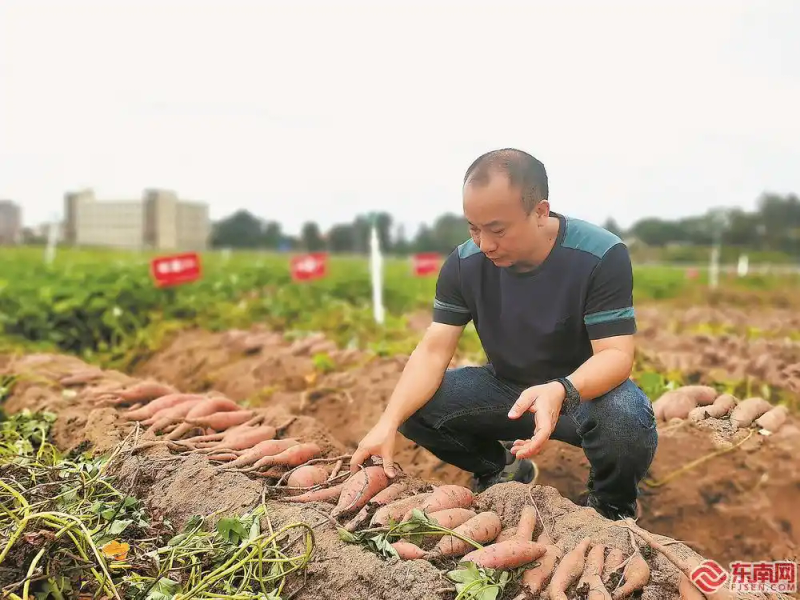
The vice-researcher of the provincial institute of agricultural sciences, ki yongchang, was in the town of six villages in xia pu county to observe the performance of new potato varieties in the field。
Cultivation of lead potato varieties
What kind is appropriate for food? First of all, it has to be like a vegetable: young, little thick fibre, sweet, no bitter taste. Moreover, the edible portion is long enough, the branches are strong enough to produce a quantity。
With a clear breeding goal, it is possible to find a potential unit from a multiplicity of complex materials, bringing together many strengths through hybrid means。
In order to perform manual hybridism, it is necessary to wait until such time as artificial pollination takes place. But sweet potatoes are a very special plant, hot and short-day photos. In general, it does not run at latitude 23o north. Even in fujian, not all varieties bloom in natural conditions。
Therefore, the problem of flowering is the first to be solved by the hybrid seeding of sweet potatoes。
Nature doesn't like flowers? I'm going to use his next of kin as a herd of oxen, to serve as an example; short-lived photos? To create the conditions for them to be in a dark room without a finger; lack of stimulation? Special growth regulators are induced. In addition, plants are prone to shifting from nutritional to reproductive growth in adversity, such as managing water to cause drought conditions, creating human adversity and artificially inducing flowers。
In the fuku region, man-made pollination can take place after the national holiday。
“on the evening of the day before the flower blooms, the buds shall be peeled and its radish removed.” chou, researcher at the crop research institute of the provincial agricultural institute, said that the next morning, at 5 a. M. And 6 a. M., the potato flower was opened. They're going to fight to collect their father's pollen and pollinate their male mother's. Potatoes have a short period of time, and after noon the flower gradually fades, and the insects come out to mess with the temperature rise, leaving only three to four hours for artificial pollination. The most experienced breeder can only pollinate 20 or 30 sweet potatoes in one hour。
As a result, more efficient hybrid schemes have emerged。
Unlike a pair of pairs, planned group hybrids create a large match market. In line with their breeding goals, breeders select a variety of breeding materials that are randomly planted in the same field. These “youths” have been chosen in many different ways, with their respective strengths and free pairs。
In the harvest season, breeders collect the fruits of “free love” — seeds — from which they gather for planting in the coming year, from which the best offspring are selected, and from which they expand the range of potatoes and seedlings available for productive use through non-sexual reproduction. But these chosen sons are a mystery, only their mother and their father. Fortunately, using modern molecular biology techniques, it is easy to find biological fathers for them。
"looks random, but everything's in control." qiu will say that this approach has been able to create more hybrids in a short period of time and accelerate the breeding process. However, not all crops are covered by the methodology. The special feature of sweet potatoes is that although females and males share the same flowers, the incidence of self-confinement is extremely low, usually within 3 per cent, with the highest variety not exceeding 20 per cent, and even if it does, the survival of self-fed seeds is weak. This will ensure that most of the products of the hybrids of the planned groups are hybrids。
At present, the two most common methods of masculinization are mixed with planned groups。
The variety of cassava varieties “7-6” selected by the crop research institute of the provincial institute of agriculture is the result of a planned hybrid. Its mother is a “white winner” and its father may be a “fries 26” “taiwan 68” or “a48”. The emergence of “fats 7-6” has opened new avenues for the use of our sweet potatoes, as well as a completely new product in the market for green leaves and vegetables。
The following is the “twenty-eighty potato”, which is a cutting-edge lead. It is made of a mix of “found of 830” and “tainon 71”, which remain green after cooking, sweet fragrance and glitter. More than 10 years after its extension, its comprehensiveness remains unchallenged. At present, “full 18” accounts for more than 70 per cent of the national melon market。
A new target for the sweet potatoes
Following winter, hinta eco-agriculture ltd. Of yanda city, located in the vegetable base of the village of guangshan in pesha town, yanjiang district, built a small archer with a blue membrane covering more than 100 acres of sweet potatoes. This is where the star's variety, “18 potato,” is grown. Potatoes are inherently cold, with small arch sheds to help them get through the winter and be on the market in the winter。
In 2012, yansheng, chairman of the board of directors of hingda, introduced this type from the provincial agricultural institute. Back then, melon leaves were fresh in the vegetable market。
"in the beginning, we used the strategy of buying and delivering melon leaves to grow the market." after three years of expansion, zheng xiannian said, consumers have acquired a new understanding of the land melon leaf. It turns out that melon leaves are not only good for pigs, but also good vegetables. Unlike traditional melon leaves, can be eaten with sweet potatoes without tearing their skins, fresh mouths, and no sense of cavity。
They're not only good, they're good. However, the pattern of cultivation differs from that of normal sweet potatoes. Only about 3,000 acres of normal sweet potatoes are grown, but the density of cultivation can reach 67,000 per acre. As a result, there is limited space for underground chips to expand and nutrition is used to feed the growth of the leaves. With enough fatty water, the melon leaves thrive and harvest in less than a week in the best water-hot summer. In the field, an acre of land reaps thousands of pounds of melon leaves a year. At the moment, henda is supplying “standard 18” for a new electric company, at a price of approximately $2. 5 per pound. So, the acre is worth almost $30,000 a year。
However, the melon industry also faces growth problems。
Owing to the fact that most of the plants are half-scrambled, the normal machine is inoperable and the melon harvest is manual. In the best-growing season, a skilled worker can harvest up to hundreds of pounds a day. According to zhongsheng, the labour cost of producing a pound of melon leaves alone is not less than 0. 5 yuan, representing 20 per cent of the purchase price in the field. More importantly, by the peak season, it is difficult to recruit enough miners for collection. As a result, while market space is not small, many growers are afraid to scale up their production, fearing that production will rise and harvest will fall short。
This places new demands on breeders — are there any varieties suitable for mechanized harvesting
“the ideal strain is the key to achieving mechanized harvesting.” qiu yongxiang said that the ideal strain requires a number of conditions: straightness of the leaves, consistent growth of branches, and resistance to mechanical fragmentation, so that it can be mechanically cut, with a proper length after cutting, easy to harvest, bound, and without prejudice to the subsequent growth of the plant。
With this seeding approach, the qiu yongxiang team, through a plan group hybrid, has selected the country's first variety of sweet potatoes suitable for mechanical harvesting: “twenty-two”. However, the mechanization of agriculture cannot depend solely on varieties. It also requires the full integration of agro-machine farming and the urgent development of specialized collectors。
The industry expects more for the sweet potato varieties. In fujian, even with small arch sheds, it is difficult to provide for the anniversary, as mentioned earlier, and the coldest seasons around spring break are mostly empty. This requires the selection of more adaptive and colder varieties. In addition, sweet potatoes are boiled in a soft form, and can be promoted if they are as ingrained as vegetable hearts。
“the market is popular and research is responsive.” according to zhao jiaxuan, the head of the provincial seed station, we are implementing a plant innovation and industrialization project — the joint seeding of sweet potatoes project — to further intensify the joint offensive around the market's new demand for cassava, with a view to producing a series of high-quality, high-yielding, cold-resistant, adaptable and organically suitable breakthrough vegetables for production with new varieties of sweet potatoes。