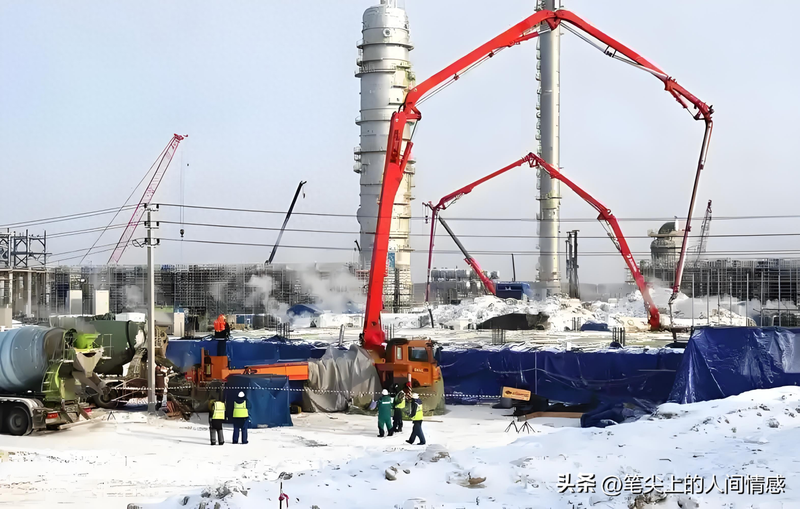
Concrete construction
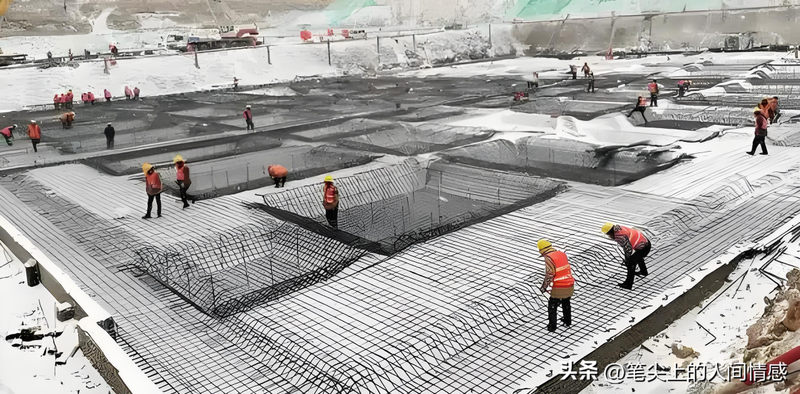
♪ before you pour ♪
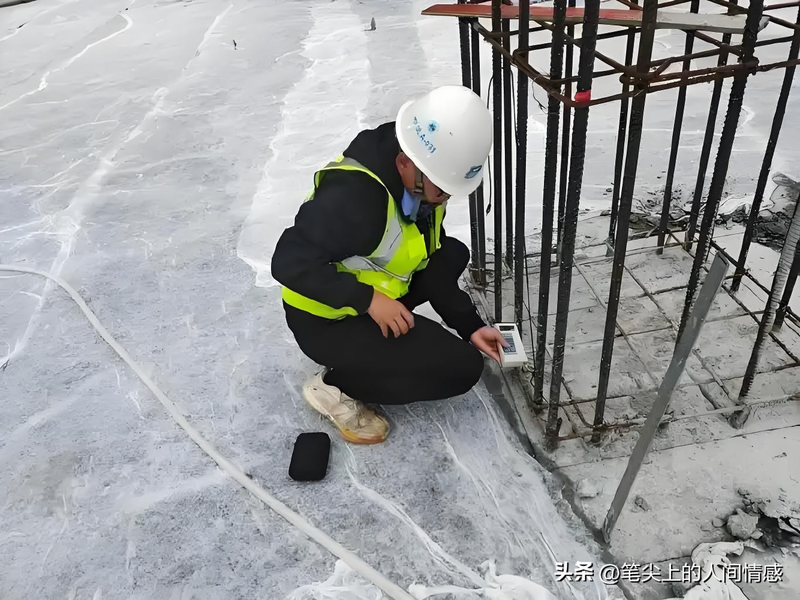
When you're done
1. Basis of preparation
1. Construction work protocol for the winter period jgj/t 104-2011
2. Concrete construction construction code gb 50666-2011
3. Basic concrete construction standard gb 50496-2018
4. Regulation on the quality of construction of concrete construction projects gb 50204-2015
5. Project construction drawings, ground survey reports and construction organization design
6. Local weather information and winter temperature statistics for previous years
Project overview
1. Name of project:
Fill in specific project name
2. Construction area: base plate/takers, etc
3. Structure size: m x width m x thickness m, which is a mass concrete structure。
4. Concrete strength level: c, impermeability level p。
5. Projected construction time:
Xxxx xx
Xxxx xx
At this time, the average daily temperature is expected to be below +5°c and is in the winter phase of construction。
6. Winter construction features and difficulties:
• internal and external temperature differential control: the core difficulty of the bulk concrete is to control the internal and external temperature differentials resulting from the hydrocement heat and to prevent temperature cracks. Low external temperatures during winter can exacerbate internal and external temperatures and make control more difficult。
• early freezing: the intensity and durability of new concrete will be severely impaired if frozen before it acquires critical resistance。
• high conservation requirements: the twin goals of “temperature” and “wetting” need to be achieved simultaneously。
3. Construction readiness
3. 1 technical preparations
:: organizing detailed technical and safe bottom-ups for all managers and teams to identify special requirements and operational protocols for winter construction。
• technical docking with commodity concrete mixing stations to identify winter construction matching and raw material requirements。
• preparation of detailed temperature monitoring programmes, setting of temperature sites and preparation of thermostats。
3. 2 preparation of materials
• concrete requirements:
Cement: priority is given to less hydrated silicate cement or ordinary silicate cement of no less than 42. 5 degrees of strength。
• matching: reduce hydro-heat by introducing “dubling” techniques, mixing high-quality powder ash and efficient water abatements, reducing glue ratios and cement usage。
• emission temperature: require a mix station to control concrete output at not less than 10°c. This is achieved through heating of mixed water (which should not be warmer than 80°c) and bone material (which should not be heated directly)。
• declination: use, to the extent possible and subject to pump delivery requirements, a smaller breakdown to reduce the amount of water and contraction。
• preparation of thermostats:
• a sufficient number of fire-retarded straw curtains, rock cotton, plastic sheeting, stripping, etc。
• materials for the containment of the construction area or for the setting up of hot canvass or greenhouses。
3. 3 equipment and facility readiness
• temperature measurement instruments: electronic thermometers (with portable printers) and pre-burial thermometers. Temperature spot setting should reflect the core of the structure, surface and atmospheric temperature。
Heating equipment (if necessary): fuel winders, electric heaters, etc., for preheating steel bars and templates during extreme weather。
• other: generators (back-up power), shovels, lighting lamps, etc。
4. Construction methods and technical measures
4. 1 concrete mixing and transport
• confirm with the mixer station to ensure that the temperature of concrete exits meets the requirements。
• concrete tankers should be equipped with heat masks to reduce the loss of heat during transport. (c) rationally arrange transport vehicles to ensure continuity of pumping on site and avoid excessive waiting periods for concrete in the tanker。
4. 2 preparation for irrigation
• grass-roots clean-up: removal of templates, steel bars and ice, ice blocks and miscellaneous items on the ground。
• preheating: before being installed, if the ambient temperature is below 5°c, templates, steel bars and grass roots should be preheated to prevent new concrete from reaching the cold surface. Warmers can be used to pre-heater areas with a temperature of not less than 5°c。
4. 3 concrete construction
• cultivation methods: a continuous layering method with a thickness of around 500 mm per layer. The upper layer of concrete should be covered in advance of the lower layer of concrete in order to prevent cold seams。
• injection temperature: strict control of the input temperature of concrete should not be lower than 5°c。
• cultivation processes: should be carried out quickly and continuously, rationalize pumping vehicle locations and reduce delivery distance and exposure time for concrete。
4. 4 concrete conservation (core)
The project uses the “integrated heat storage” method for conservation, i. E. The heating of raw materials and cement hydro-heating, coupled with strict temperature protection measures, to bring concrete to freezing critical strength and expected conservation effects during slow cooling。
• coverage of temperature:
1. The water is protected by covering a plastic sheet of film immediately after concrete has been laid and surfaced。
Covering of at least two layers of flame retardation curtains on plastic sheeting or imitation。
3. The temperature protection is covered by an additional linen or tarpaulin to prevent rain and snow from immersing in the temperature so as to ensure its temperature protection。
• conservation temperature control:
Key indicators: the difference between the maximum temperature within concrete and the temperature on the surface, the temperature on the surface and the temperature on the environment should not be greater than 25°c。
• temperature rate: it is not appropriate to exceed 2°c/d。
• dynamically adjust the thickness of the stratosphere based on temperature measurements. If the temperature difference is close to or above 25°c, the temperature layer should be increased; if the temperature difference is too small, it can be reduced appropriately to accelerate the dispersion of heat (with caution)。
4. 5 temperature monitoring
• temperature measurement sites: they are set at the centre of concrete structures, 50 mm from the surface and in the atmosphere. The floor setting should be in a representative position (e. G. Centre, corner)。
• temperature frequency:
• to be measured every 2-4 hours until the critical anti-frozen strength is reached。
• critical strength until temperature stability: measured every 4-8 hours。
• the temperature measurement can be stopped after the temperature difference within and outside concrete is stable and below 20°c。
• recording and feedback: a person is responsible for temperature measurement, with a detailed recording of the temperature at each point. Temperature measurements should be fed back in a timely manner to technical supervisors as a basis for adjusting conservation measures。
4. 6 demolition
:: demolition times must be based on internal and external temperature differentials and cooling rates for concrete, in addition to the intensity of meeting normative requirements。
• when demolition occurs, the temperature of the concrete surface is greater than 20 °c and the temperature of the environment is more than 20 °c. The concrete surface should be covered in a timely manner so as to cool it slowly。
• avoid modelling in cold or windy weather。
Quality assurance measures
1. Frozen critical strength: concrete shall, prior to freezing, have the following anti-frozen critical strength values:
Concretes made from silicate cement or ordinary silicate cement should not be less than 30% of the design strength level。
• it is not appropriate to lower than 40 per cent of the design strength level for concrete at and above strength level c50。
2. Establishment of quality control teams: responsible for the full process monitoring of concrete exits, modulation temperature, collapse, temperature protection coverage and temperature measurement。
3. Retention of test blocks: not less than two sets of identical conditioned preservation elements shall be added to the standard maintenance elements, one set to test the critical strength of resistance to freezing and the other set to test the strength required for dismantling or carrying。
6. Safety and fire-fighting measures
1. Wind-proof and smoothing: timely cleaning of construction roads and operation platforms with snow, ice and ski bars。
2. Catalyst-resistant electricity: strictly inspect all electrical equipment used and cable lines may not be pulled directly to the ground to prevent leaks in the skin。
Fire protection:
• temperature materials must be a flame retardant product。
:: smoking is strictly prohibited at construction sites, and fire-fighting operations must be conducted with a fire certificate and supervised by an individual。
:: adequate fire-fighting equipment (e. G. Fire extinguishers, fire sands, etc.)。
4. Protection against poisoning: if coal or fuel heating equipment is used, attention should be paid to ventilation to prevent carbon monoxide poisoning。
7. Emergency response
1. Cold-flow attacks: early attention to weather forecasting, inspection and reinforcement of all temperature-preservation measures before the onset of the cold, with additional insulation or start-up of backup heating equipment if necessary。
2. Sudden power outages: immediate start-up of the backup generator to guarantee the use of electricity for temperature detection, lighting and the necessary heating equipment。
3. Snow weather: cover the entire construction area with tarpaulin in advance, preventing heavy snow accumulation from covering the mesoosphere. When snow stops, clean it in time, but no disturbance of the lower temperature protection system。
Note:
Through a series of technical and management measures, such as “optimization of alignment, control of input temperature, integrated heat retention, dynamic temperature monitoring”, the programme has developed a complete system of quality control for construction in the winter of bulk concrete. The construction must be carried out in strict compliance and adjusted flexibly to the realities of the situation in order to ensure that the quality of the engineering entity remains intact。