Posters, sun-soo, jinan
In the mountains, where mineral resources are abundant, gold deposits and production are consistently at the top of the national list, and where rich land holds enormous economic value, it is accompanied by complex and serious security production challenges. As the integration of mines continues and a new round of mine breakthrough strategies accelerates, the number of over-deep, over-sized and complex non-coal mines continues to grow, resulting in a combination of disaster risks, such as cans, ground pressure, rock blasts and water penetrations, making safety control significantly more difficult. The safe production of coal mines in eastern africa is now at a critical stage in the struggle to climb the slope。
On the morning of 4 november, a press conference was organized by the shandong provincial government press bureau, which invited the relevant head of the shandong provincial emergency department to present the situation of shandong in furthering the non-coal mine offensive and establishing safe production lines。
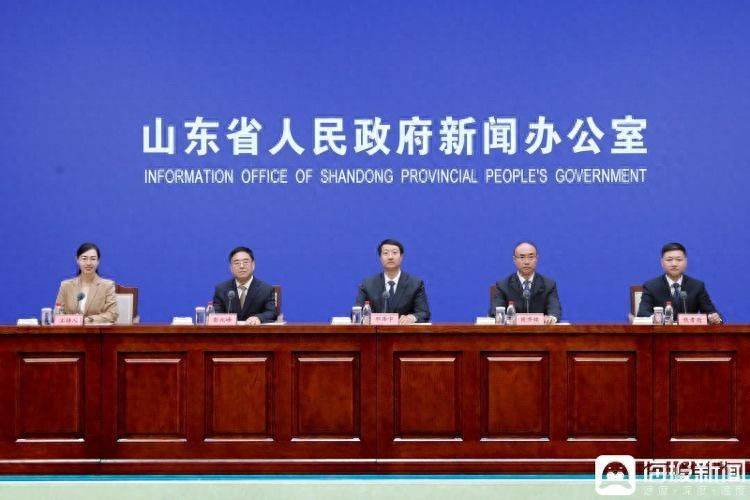
The director of the department of political affairs and public information of the shandong department of emergency response stated that, in the face of increasingly complex security challenges, shandong had focused on “implementing primary responsibility”, focusing on “resolving root causes”, and was fully committed to promoting safe production management of non-coal mines and pre-emptive transformation of the security governance model. With the combined efforts of all parties, the safe production situation in non-coal mines throughout the province has generally stabilized this year, with the number of accidents and deaths falling by 43 per cent and 66 per cent, respectively。
Behind this achievement is a solid foundation for coherence and systematic planning. The high priority given by the shandong provincial council and the provincial government has provided a strong political impetus for the fight against the attack, prompting the provincial emergency department to focus on the overall national programme and to develop an implementation programme in conjunction with shandong. Such high-profile deployments naturally require that the responsibility of all parties be consolidated and that municipal and county governments develop annually a list of responsibilities and annual lists of tasks for leading cadres in the safe production of their work, regularly announcing a list of responsibilities for non-coal mines, and ensuring that each mine has a clear day-to-day oversight. In addition, shandong has successively put in place institutional documents such as the revision of the licensing scheme for non-coal mines, the “fourification” implementation programme and the establishment of a system of safeguards to raise the level of essential safety。
The key to a well-designed system is implementation. Poster journalists were informed at the meeting that the shandong department of emergency response, together with the shandong directorate of national mine security inspectorate, had been innovative in implementing home-to-door counselling to conduct full-scope security diagnostics. Such in-situ screenings allow for the detection and rehabilitation of a large number of hazards。
“since november of last year, and in strict compliance with the requirements of the inspections, the three levels of the provincial, municipal and district connections have been maintained, innovations have been introduced to implement home-to-door counselling, and full-scope safety diagnostics of non-coal mines have been carried out. A total of over 1560 person trips were made, over 1,300 person visits were made to open-air mines and tailings banks, 435 wall blocks were opened to verify the effectiveness of the management of the mining area, over 1930 mine personnel were interviewed and a diagnostic report was issued. More than 10,000 cases of rehabilitation are at stake, and a closed ring management mechanism for the management of the problem's potential `access to the internet' and the inspection of sales numbers has been established, and 37 mines that do not have safe working conditions have been ordered by law to be closed down, effectively eliminating some of the real risks.”。
And it will not be averted, nor will it be fulfilled. Given that hidden hazards are the main source of significant risk to mines, shandong has conducted a deep-seated survey of hidden hazards, cumulatively carrying out 936,000 sites, drilled 73. 13 million metres and treating 716 hidden hazards. In advance of the advance of potential disaster risk management, 13 open-air underground mines have been urged to fill the gap in the surface of the open pits and to fill the deficit in management, cumulatively filling approximately 1. 95 million cubic metres of the historical legacy of open-pit areas; to promote the refinement of the water control liability system for 12 hydrogeologically complex mines, equipped with specialized institutions and equipment and closed down 36 bad boreholes; and to direct 28 deep-well mines to establish a ground-pressed online monitoring system to provide technical support to protect against the risks of shocks and landslides。
At the same time, it has stepped up its efforts to automate mechanization and has put in place programmes to upgrade equipment for non-coal mines, which now have 100 per cent and 98 per cent respectively for ventilation and drainage in 105 non-coal underground mines, and 92 per cent and 82 per cent respectively for power supply systems, which have effectively reduced the number of operators in high-risk positions and reduced security risks。
Safe production also requires a safety belt that “regulates by law and strengthens regulatory enforcement”. Shandong maintains a “zero-tolerance” attitude in order to deter law enforcement violations. Since the beginning of this year, emergency services at all levels have strictly implemented law enforcement plans, inspecting 4035 mines in non-coal mines, imposing a legal penalty of $1. 548 million for violations, ordering the suspension of production or the suspension of installations 73 times, and significantly improving the quality of law enforcement inspections. With regard to the handling of accidents, the shandong province production safety investigation and handling of safety accidents is being investigated and designated by the superintendent, who is responsible for the registration and promotion of large accidents by the provincial security council, and has issued a joint multi-sectoral opinion on the strict investigation and handling of accidents by enterprises, with serious penalties in accordance with the law. In addition, shandong has focused on improving the performance of the functions of its personnel, issuing the “five job” mining master examination scores in the non-coal mines in shandong province, promoting job safety responsibilities by capturing the “key minority”, establishing a “check-in-the-check” mechanism for safe production, and conducting examinations of the knowledge and management capabilities, emergency disposal and operational capability of employees in enterprises。
It is a matter of concern that tailings bank security is an important element of non-coal mine safety control, and shandong has recently revised its approach to the closure of tailings banks in shandong province. The second-level inspector of the shandong department of emergency response, peng mong feng, presented the meeting, which consisted of 15 items covering the closure of tailings banks, marketing, reuse and security management. The approach identifies five situations in which closed banks should be implemented, with simplified procedures for closing small tailings banks; provides for sales numbers upon completion of the closure works, land reclamation and environmental management of tailings banks, and identifies three special situations in which direct requests for sales numbers can be made; refines regulations for the reuse of tailings deposits; and defines security management responsibilities for tailings deposits after their distribution. This approach, which draws lessons from the shandong tailings bank closed-stock sales system, further identifies the subjects of responsibility, fills policy gaps, enhances the normative and efficient marketing process, and forms a close circle of close management, which provides clear guidance for addressing the security risks of tailings banks, promoting resource utilization and ecological rehabilitation。
Next year marks the end of the three-year operation to combat safe production. In the light of the current situation of safe production in non-coal mines, shandong will continue to strengthen the licensing and verification of sources, adhere to an integrated licensing, regulatory and enforcement oversight mechanism, strengthen the physical review of security permit on-site verification and security facility design, and harmonize standards for review; continuously strengthen disaster risk pre-emptive management, focusing on risk prevention such as upgrading systems, water hazard prevention, extractive management, and land pressure prevention, conducting specialized safety diagnostics and scientific research, strengthening process management and monitoring early warning; continuously improve personnel safety, strengthening accident warning education, and urging enterprises to accelerate the construction of a safety culture and use incentives for internal reporting of accident hazards; and maintain a high level of regulatory enforcement, severely combating violations and robust enforcement by third-party services。