The installation of small kitchen treasures in the kitchen has greatly improved the ease of kitchen life by providing fast hot water to meet daily needs such as washing, dishes, etc., without waiting for long-distance delivery of water from electric water heaters. But it's the concern of many users: is it really expensive? What is the cost of electricity for a day, based on the daily pattern of three meals a day, for long-term power supply? How often do we have to replace it for safe use? If these questions are not understood, and many are afraid to use them, we will break down the details of the use of small cooks around these core issues today。
First of all, it's a matter of concern to all: is it really expensive? To figure this out, it is important to understand the two main types of small cooks — water storage and heat — whose electricity consumption logic is different and cannot be generalized. The working method of water-storage small cooks is to heat the water in their guts up to the prescribed temperature (usually 40-55°c) and then stay warm until the user is used; i. E., the hot cooks do not store the water, and the water is heated in the moment the flow is heated through the heating body, using as much heat as possible, and the water consumption is stopped. In view of the daily use scenes, water-storage small cooks are less demanding for circuits (mostly suitable for a common household 10a plugin) and water stabilization is a more mainstream option. We use water-storage as the core, combined with a “three meals a day” usage model, while also complementing heat-type power consumption to facilitate user reference for different needs。
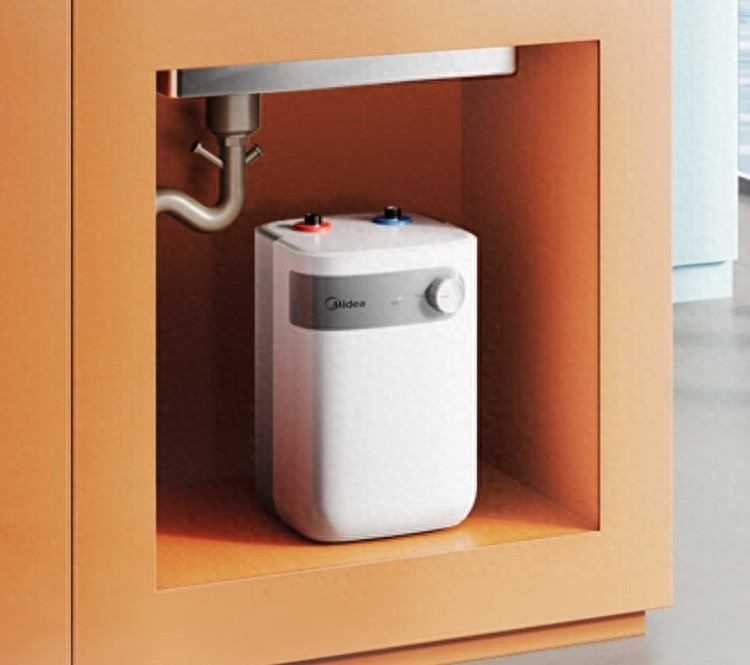
Let's start with the calculation of the power consumption of the water-storage small chef. The most common water-storage small cooking capacity on the market is 5-10 litres, with a concentration of power of 1500-2000 w, and we take an intermediate value to calculate: a 6-litre water-storage small cooking treasure with 1,800 w power is assumed, water temperature is set at 50°c, and the initial temperature of running water is calculated at an average of 20°c for the entire year (the temperature of running water may be 30°c in the summer and as low as 10°c in the winter, and the effect of seasonal variations on electricity consumption will be supplemented by the following. According to the physical caloric formula, the amount of heat required to heat 6 litres of water (water density is 1 kg/l, or 6 kg/l) from 20°c to 50°c is q = cmΔt, of which c is 4,200 j/(kg °c) compared to water and Δt is 30°c with a temperature difference of q = 4,200 x 6 x 30 = 756,000 j. As a result of 1 degree of electricity = 3. 6 x 10^6j, the required electricity is 756,000 j ÷3. 6 x 10 ^6 j/m0. 21 degrees. The heating time combined with power is calculated at t = w/p = 0. 21 degrees ÷ 1. 8 kw ≈ 0. 117 hours, or approximately 7 minutes, from w = pt (w = electricity, p = power), i. E., the small cook's calorie takes 7 minutes at a time to consume 0. 21 degrees of electricity。
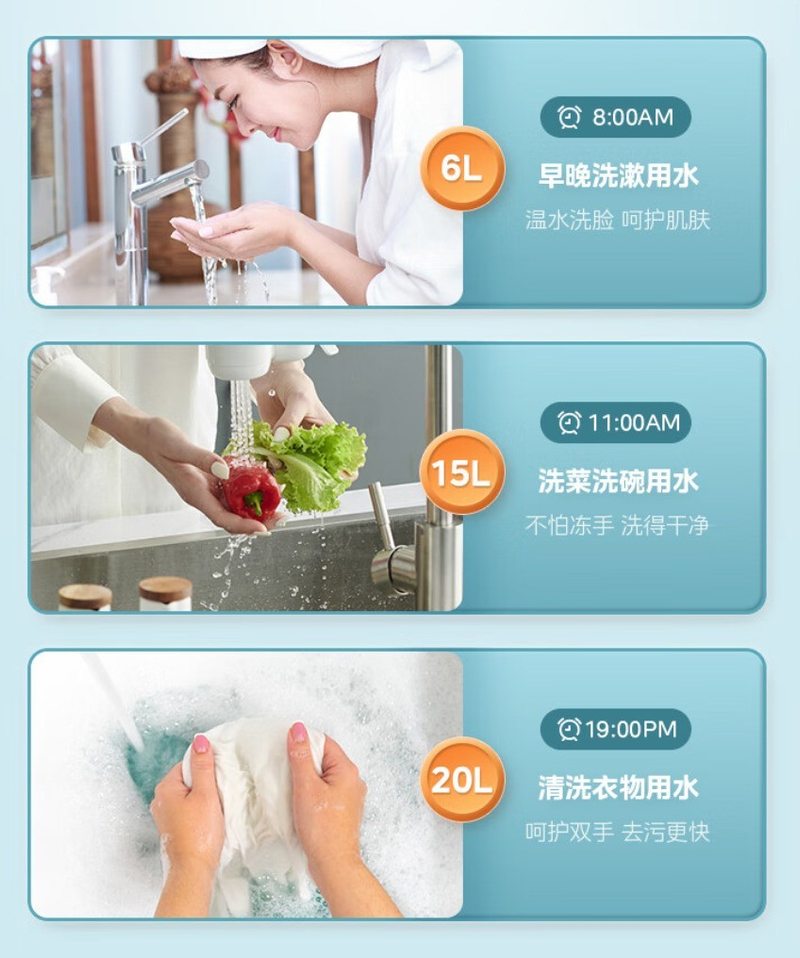
The next step is to analyse the frequency of heating in conjunction with the “three meals a day” scenario. After cooking in the morning, there is usually a need for hot water to wash dishes and pots, which is about 2-3 litres; after lunch, which is similar; and at night, which, in addition to brushing bowls, may also wash vegetables and fruits with hot water, which is slightly higher, at about 3-4 litres. A six-litre capacity small cook is heated once, sufficient to cover a single use demand, and if used sooner or later (e. G. At 8 a. M. And again at 12 p. M.), hot water in the gut will cool slightly because of the dissipation, but if the temperature is normal, the water temperature may remain above 40 °c and need not be reheated to 50 °c, but only for a short period of time; if the interval exceeds eight hours (if used in the morning and only again at night), the water temperature may fall below 30 °c. Taken together, three times a day, water-storage small cooks need two to three full heating, one to two full heating, and the heating consumes about one third of the total heating, that is, around 0. 07 degrees per heating。
In addition to heating and consumption, water-savvy small cooks and heat-conserving electricity. When water temperatures reach a given level, and in order to prevent water temperatures from falling too fast, small cooks automatically enter the temperature-preservation mode, which is usually lower, with a high temperature of 10-30 watts. A 24-hour temperature-preservation power of 0. 02 kw x 24-hour = 0. 48 degrees was calculated at an average temperature protection power of 20 w. Temperature protection can be as low as 10 watts and only 0. 24 degrees a day, if the temperature protection is better (e. G., a thicker internal layer); if the temperature protection is lower or the ambient temperature is lower (e. G., no heating in the kitchen in winter), it may rise to 30 watts and consume 0. 72 degrees a day。
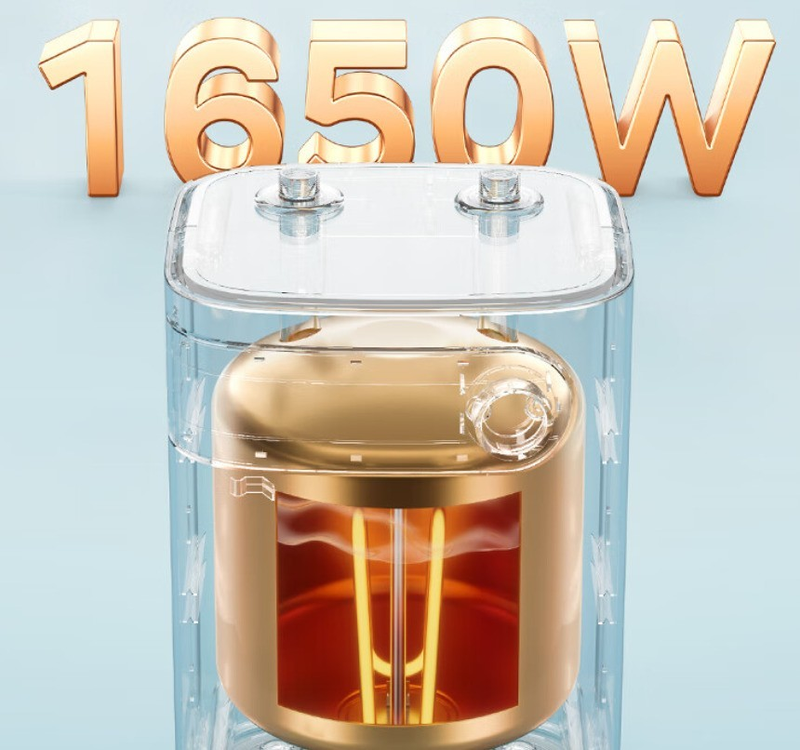
The total amount of electricity consumed in a day for a combination of heating and temperature maintenance is approximately 0. 21°x2 + 0. 07°x1 + 0. 48° = 0. 42+ 0. 07+ 0. 48 = 0. 97° ; for a total of 0. 22° + 0. 07x2 + 0. 72 = 0. 63 + 0. 149° , when heat is heated 3 times, heat is recharged 2 times and heat is consumed 0. 72° . Currently, the cost of electricity is more than 0. 56-0. 6 yuan/degree, and the cost of electricity is around 0. 97 x 0. 56 ≈ 0. 54 to 1. 49 x 0. 56 ≈ 0. 83 yuan per day. Even in winter, the temperature of running water is reduced to 10°c, the amount of electricity required for heating once is increased to 0. 28°c (the temperature difference is 40°c), the total daily electricity consumption is about 1. 2-1. 8°c and the cost of electricity is only $0. 67-1. 01. In the summer, it is even more economical to heat up to 0. 14°c at 30°c, and the cost of electricity per day can be as low as $0. 3-0. 5。
Looking again at the hot little chef, it has a high power of 3,000-5500 watts, but the advantage is that it is “use-on-use” and it consumes electricity without protection. In the case of the 4000 watt power, thermal small cooks are used three times a day for a total of 15 minutes, i. E. 0. 25 hours, with a power consumption of 4 kw x 0. 25 hours = 1 degree, and an electricity cost of about $0. 56; for a total of 9 minutes per day, with a power consumption of 0. 6 degrees and a electricity cost of $0. 34 per day. However, thermal small cooks are more demanding for circuits, need 4 square millimetres of electrical wires and 16a outlets, and old houses may need to adapt circuits, so that home circuits are identified in advance。
By contrast, the cost of electricity per day is between $0. 3 and $0. 30 per month for small cooks, both in water storage and heat, which is well below the electricity consumption of electric water heaters (the average 60-litre water heater could be up to 1-2 degrees a day). Thus, the term “small cooks' money for electricity” is misleading, as it is a low-cost, convenient kitchen appliances。
Many users also struggled with the question of whether power should be cut after a small cook, which was more rational from the point of view of electricity consumption and safety. When electricity is cut every time it is used, hot water in the inside of the gut is naturally cooled, and the next use requires a reheated heating from the constant temperature. Instead, it consumes more electricity — for example, when water-storage small kitchens are cut off, the water temperature drops from 50°c to 20°c, and the next heating takes 0. 21°c, while the long-term heating takes only 0. 24-0. 72°c a day, significantly less electricity. At the same time, frequent plugs can wear and tear metal contact points at plugs and plugs, resulting in poor exposure and generating electric sparks, which can damage not only the circuits of small cooks, but also the safety of short circuits and electricity leaks. As a result, long-term electrical access is safe and low, without frequent power cuts, as long as a formal branded small cook is selected (with leakproof protection)。
The next thing i'm concerned about is the inside cleaning of junior cook. – after long periods of use, small cooks are bound to be quenched inside, which, if not cleaned up in a timely manner, can affect their effectiveness and useful lives, and even have safety risks. The formation of water is derived from calcium and magnesium ions in the piped water, which, during heating, form sediments such as calcium carbonate, magnesium hydroxide, attached to the heating tube and the inner larceny wall. Since the heat coefficient of the water glucose is only 1/10-1/50 for metals, the failure to efficiently convey the heat to the water following the heating tube will lead to longer heating times and increased electricity consumption, which could have been more than 10 minutes after the grounding, and more electricity would have been consumed in the long term。
Even more serious, the water slurry leads to excessive local temperature of the heating tube. During normal operation of the heating tube, the heat is absorbed in a timely manner and the temperature is maintained within a reasonable range; however, when the heat is lost, the surface temperature of the heating tube may exceed 100 °c, or even 150 °c, which accelerates the ageing of the heating tube, reduces its useful life and, in serious cases, leads to the bursting of the heating tube, leaks of water, leaks of electricity, etc. In addition, when the water drops, it flows out of the water and is attached to the table, which affects the clean-up effect; if there is an overstretched amount of water in the gut, it also breeds bacteria (in a damp environment, where water cracks are the ideal breeding ground for bacteria), and the use of hot water to wash vegetables and utensils can cause secondary contamination and affect the health of families。
Finally, we'll talk about the change cycle for the little chef. There is no fixed “conservation period” for small cooks, the replacement time being largely dependent on internal galleries, frequency of use and maintenance, but usually the reasonable useful life of the small cooks is 8-10 years, beyond which, even if there is no apparent failure, it is recommended to replace them, as internal parts (e. G. Heating pipes, seals, wires) will decline significantly over time。
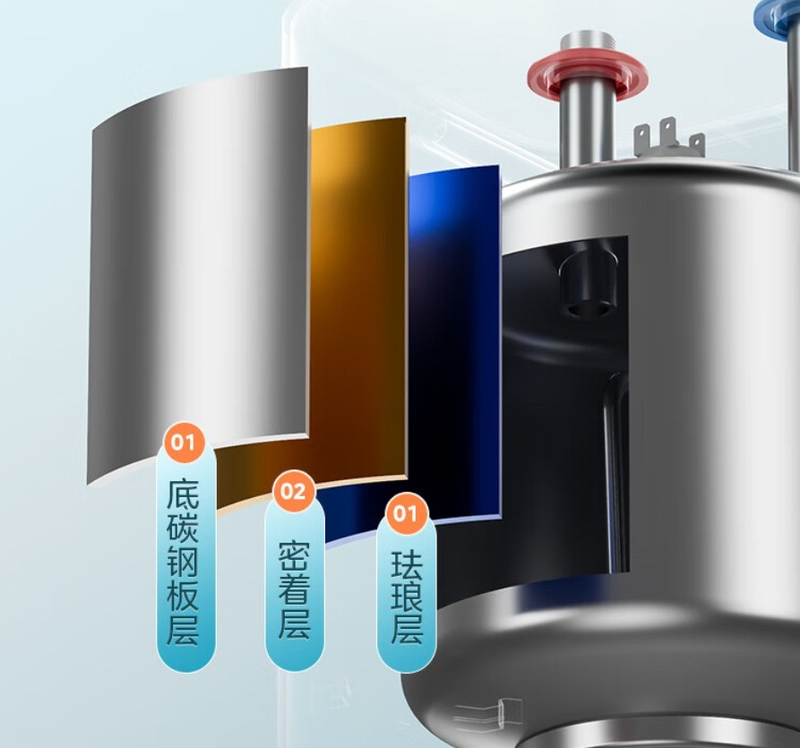
The central factor affecting the useful life of small cooks is their internal guts. The inner urchin is the “heart” of the small chef, and there are currently three main types of inner urchins on the market: vinyl urchins, stainless steels and plastic urchins. With a high-temperature sintered plaster on the inside of the balconium, which is resistant to corrosion and is resistant to water and can have a useful life of more than 10 years, it is the best internal urchin at present; the stainless steel is resistant to corrosiveness, but the welding is rusty (if welding is poor) and has a useful life of about 8 years; and the plastics are low in cost, but they are less resistant to high temperature and aging, have long-term use of deformable, leaking water and usually have a useful life of only 5-6 years。
The frequency of use and maintenance also have a significant impact on life expectancy: if the daily usage is high (e. G., four to five meals a day) and if the water is not cleaned on time, the small cooks may experience heat failure in 5 to 6 years; if the frequency of use is low (e. G., two meals a day) and the regular cleaning, maintenance takes more than 10 years. In addition, where water quality is hard, the water is more depleting the heating tube and the internal urchin, with life shorter than in areas with soft water quality by 1-2 years。
In the selection of new cuisine, attention is paid to safety features, in addition to internal urchins, which must be given to products with electrical protection walls, leak protections (walls can interrupt leaks, leaks can break off in the event of a failure) and products must meet the state 3c certification standards; in terms of capacity, five to six litres are sufficient for households of one to two persons and 8 to 10 litres are recommended for households of three to four persons; in terms of power, 1,500 watts for water storage, i. E. 3,000 to 4,000 watts for heat (recognizing the suitability of the home's electrical circuits); and in branding, preference is given to well-known brands (e. G. Hair, may, a. O. Smith, etc.), whose product quality is more secure and after sale is improved (e. G., 5 to 8 years of internal chole)。
A small cook is a “low-cost, highly accessible” kitchen appliances with a one-day electricity charge of only $0. 3-1 for long-term power supply; after long-term use, the interior is made with water and must be cleaned every 3 to 12 months depending on the quality of the water; a reasonable useful life of 8 to 10 years is required to be replaced in a timely manner in cases of ignominious leaks and frequent heat failures. With the right methods of use and maintenance, small cooks can continue to facilitate kitchen life, so that washing and dishes are free from cold water and daily happiness。
(10339915)