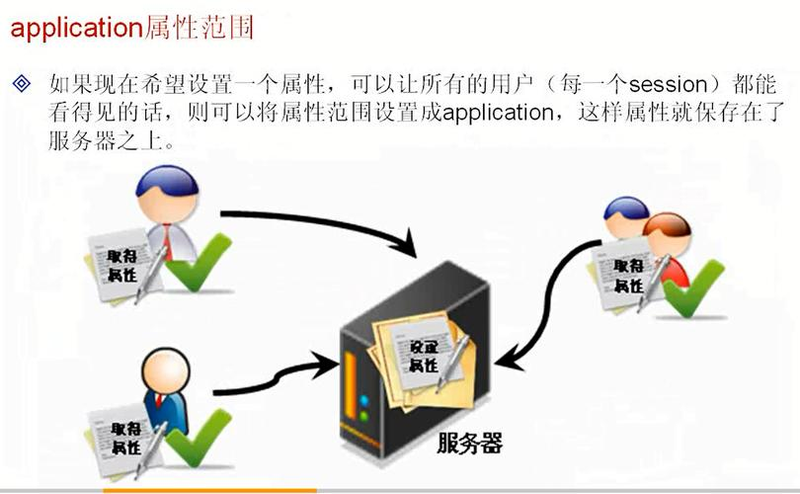
Jsp (javaserver pages) is one of the core technologies in java web development that allows developers to embed dynamic content on HTML pages. In the jsp, the built-in target is a java object that is predefined and made available to the jsp page and contains important information about the server and client interfaces. 1. **request**: this object represents a client's request to the server and provides access to the requested parameters, protocols, paths, etc. If `request. Getparameter() ' is used to obtain the requested parameters, `request. Getmethod() ' is the method of obtaining the request (get or post). For example, code clip `textco 'Nent = request. Getparameter("boy"); `how to read parameters from request is shown. 2. **response**: this object handles server responses to clients by setting http headers, codes, status codes, etc. `response. SetcoNenttype()`set response type, e. G. `coNtenttype = "text/HTML;charset = utf-8"; `. 3. **out**: out objects are used to output content to browsers, including HTML labels, variable values, etc. It is a subcategory of printwriter and provides a rich output function such as `out. Println() ' . 4. **session**: a session object is used to manage user sessions and store persistent data for sharing throughout the session. `session. Setattribute() `add property, 'session. Getattribute() `acquires attributes. 5. **application**: objects within application ranges that store data shared throughout the application life cycle, capture or set data through `application. Getattribute() ' . 6.**cLookie**Lookie object for client sentcLookie, 'c'Lookie. Getvalue()`availablecLookie's value, and `response. AddcLookie() 'for creating a new cLookie. 7. **config**: jsp configuration object, which provides some metadata on jsp pages and applications, such as page coding. 8. **page**: not a standard jsp-enabled object, but available in some containers, provides some context information related to the current jsp page. 9. **exception**: this object is used to encapsulate abnormal information when an error occurs. Capture and process operational anomalies by `catch (exception e) ' . 10. **parameter names** and **getparametername()**: these methods are used to request parameter names in an iterative manner to facilitate the cross-examination of all parameters. These built-in objects allow the jsp page to dynamically process requests, responses and session management, thus achieving the interactive and data processing capability of web applications. Understanding and proficient use of these built-in targets are key to building efficient and flexible jsp applications。