A comparison of minor diversions and institutional options
Marxist law column
United states economic and trade unilateralism: form, motivation and legal response
Thematic discussion: the typology of electronic evidence and its use
On the institutional construction of search and seizure of electronic communications data
Chen young-shin, professor at the faculty of law, university of beijing。
Executive summary: due to the wealth of electronic communications data, special provisions have been made for the search and seizure of electronic communications data in extraterritorial countries and regions in order to prevent the abuse of power by investigative authorities in violation of citizens ' individual privacy. The conditions for searching and seizing electronic communications data are generally higher than those for searching and seizing ordinary correspondence, and the requirement of proportionality must be observed. The investigator has the right to request assistance from the person concerned in the search for and seizure of electronic communication data, as far as possible electronic communication data should be converted to paper or other directly identifiable forms, original storage media must be sealed, and information that is not relevant to the case and is no longer required for the proceedings must be deleted and destroyed in a timely manner. The defence counsel has the right to be present during the search and seizure of electronic communications data by the investigative authorities, and upon completion of the search and seizure of electronic communications data, the suspect and the persons concerned shall be informed in a timely manner that the suspect and his or her defence have the right to know and access the contents of the electronic communications data that have been searched and seized and that the electronic communications data collected by illegal means must be excluded。
Keywords: electronic communication data, original storage medium, search, seizure, illegal evidence exclusion
The big data evidence
Liu binxin, professor, chinese people's law school。
Executive summary: big data has ushered in an era of evidence-building. The use of a wide variety of data materials as evidence to substantiate a case is a topic that cannot be avoided by current judicial practice. There is an important foundation of value and methodology behind this phenomenon. In summary, big data evidence is evidenced by the regularity of large amounts of electronic data condensed, mainly in the form of analyses or reports. There are different theoretical arguments and practical treatments in the legal profession of each country as to how this evidence will be located, including, inter alia, expert opinion, expert support, witness testimony, etc. Given the professional and scientific nature of big data evidence, china's realistic cheap option is to include it in the legal form of evidence for an opinion. Our country should innovate by focusing on the rules of authenticity and relevance in reviewing this evidence. Specifically, with regard to the authenticity of big data per se, it is necessary to build rules of authenticity based on “big” authenticity; with regard to the authenticity of the results of large data analysis, it is necessary to construct rules of authenticity that determine the credibility of machine algorithms; and with regard to the conclusions of relevance revealed by the results of large data analysis, it is necessary to construct rules of relevance based on the overall data and specific data layers, especially by exploring those rules that go beyond human experience。
Keywords: big data, big data evidence, forensics, machine testimony, evidentiary rules
Regulatory pathways and priority issues for electronic criminal data
Heathon, deputy director, criminal division, research unit, supreme people's court。
Executive summary: with the rapid development of modern science and technology, the category of statutory evidence is expanding. As a new category of statutory evidence under the 2012 code of criminal procedure, electronic data play an increasingly important role in proving the facts of the case. In response to new developments and problems in judicial practice, the supreme people's court, the supreme people's procuratorate and the ministry of public security, among others, have made comprehensive provisions for the collection and extraction of electronic data, their transfer and display, their review and judgement, including through judicial interpretations, normative documents, and have initially established a regulatory system for the country's criminal electronic data. This paper provides an overview of the regulatory path of our country's criminal electronic data and, on that basis, explores and analyses key issues in the electronic collection of data, presentation of transfers and review of judgements, in particular the subject of evidence and evidentiary requirements, rules of evidence, freezing, inspection, determination of specialized issues, back-up transfers and printouts, and review judgements of authenticity and relevance in judicial practice。
Keywords: criminal electronic data collection extraction transfer demonstration review judgement
Civil code codification column
Force majeure clauses and their interpretation
Choi jianmei, professor, faculty of law, qinghua university。
Executive summary: the force majeure clause, which is fully consistent with the meaning and extension of force majeure as defined by law, should produce legal effects rather than contractual terms; if the force majeure clause exceeds the force majeure element as defined by law, its legal effects are governed by the law with respect to the contract terms. Force majeure clauses do not need to be “not” available at the same time, since force majeure clauses do not necessarily produce legal effects as agreed by the parties, but are first subject to the provisions of the law on whether an exemption clause is contractually entered into, validly valid or invalidly, and then act as valid contractual terms through these controls, as are other contractual terms, without necessarily producing fixed legal effects as force majeure under the law. Whether the force majeure clause is an exoneration clause or an agreed release condition, it must be legally binding as between the parties and not against third parties. The so-called non-opposability of third parties here includes, at a minimum, non-opposability with respect to exemption from liability and avoidance of contract. In order to enable creditors to take timely relief measures and minimize the contractual effect of force majeure, the law should impose an obligation on the debtor to give notice of force majeure. The obligation is not an accompanying one and is not a genuine one。
Keywords: force majeure exoneration discharge defences
Assessment of the principle of accountability for breaches of the draft civil code
Chen qiang, special professor, faculty of law, university of taiwan。
Executive summary: the contractual law liability provision is intended to be based on the occurrence of a certain payment result, which, if not agreed, constitutes a so-called breach of contract under article 107 of the contract law. Article 110 makes force majeure an exoneration for damages for breach of contract. In a contract for the mere payment of labour, the breach of the necessary care in the transaction constitutes a breach of contractual obligations and a breach of contract, under the doctrine of the one-size-fits-all fault. Responsibility for fault must therefore coexist with strict responsibility. Attribution is a concept of openness that requires a set of rules that determine the debtor's responsibility for what causes the debt to fail to perform. The subject matter of attribution is neither valuable in itself, nor a principle of attribution, nor can it be exonerated, so that strict liability cannot be matched with the subject matter of attribution. The contractual law sub-rules, on the one hand, take fault responsibility based on the nature of the obligation to pay, while, on the other hand, there are a number of provisions that are based on attribution, creating a complex system of default. The time had come to depart from the tradition of attribution as an element of responsibility for the principle of attribution of breach。
Keywords: liability for breach of contract, principle of attribution, fault, modernization of contract law
Place of the chinese civil code in world property law
Zhang yongjian, researcher at the law institute of the “central institute” of taiwan, executive director of the forensic evidence research data centre。
Executive summary: the traditional legal system study divides parts of the world into two to several legal systems and draws conclusions from one or a few abstract criteria. These studies have taken the approach that operational steps are not clear. This paper promotes methodological approaches to quantitative legal systems, focusing on a sectoral approach (the property rights approach) with a specific and large number of standards (170), and using new statistical methods to map the law of property rights in 128 jurisdictions around the world. Each jurisdiction is located on a branch of the tree map, which, depending on its similarity, is gradually consolidated into an increasingly “hard” trunk. This method allows the drawing of legal systems containing any quantity, and this paper selects the criteria for the visualization of birds by distinguishing between 10 legal systems. In 2018, the first-instance version of the chinese civil code, which is still of low normative density, was one of the few countries that could not be classified in a stable manner as a legal system. The main method of this paper finds that china is closest to the russian legal system, followed by the german legal system。
Keywords: family of law, causality, class division, linear analysis
Theory front
Again, the statute of limitations for non-performance claims
Professor, centre for theoretical law studies/law school, university of jilin, red ho。
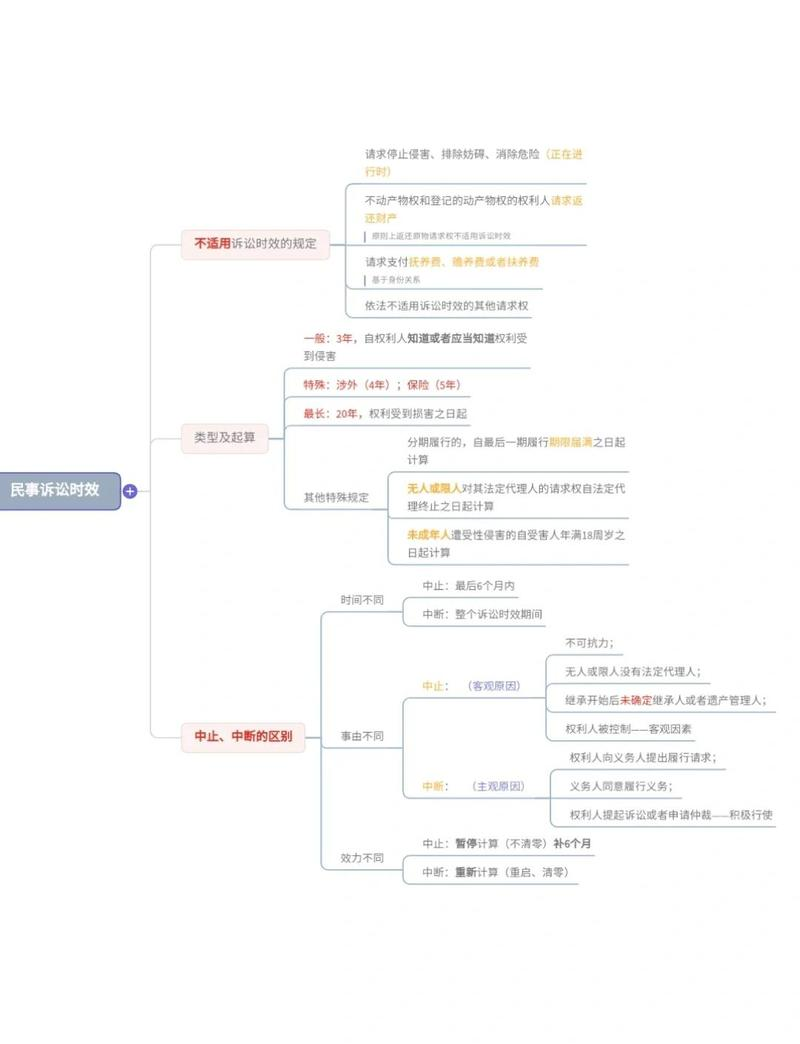
Executive summary: with regard to the commencement of the statute of limitations for non-scheduled claims, the supreme people's court, in article 6 of the regulations on certain questions of the application of the limitation system in civil cases, made the choice “from the time when the right-holders claim their rights”, and, in theory, in addition to compromise on the reality that the limitation period was too short, there were a number of errors or blind spots: on the one hand, the misdetermination of the term “rights-holders' claim” to define responsibility for breach of contract is tied to the time limit; on the other hand, the excessive interpretation and application of the expression “injured (injured) rights” in article 137 of the general civil code and article 188 of the general civil code; on the other hand, the disregard of the meaning of the “applicability principle at any time” in the statute of limitations; and on the other hand, the creation of a number of paradoxes, such as the objective elimination of the grounds for the interruption of the “obligor's consent to the performance of the obligation”, the encouragement of the right-holder to “failure to exercise his rights”. Thus, the ordinary statute of limitations period should be extended by more than five years, and in this context a choice could be made between a “supply from the time of the establishment of the right” formula, which is compatible。
Keywords: limitation period for claims for which performance is not fixed
Rule of law criticism and transformation in social stability risk assessment
Lin hung hung, professor, institute of law and law, chinese university of political science and law。
Executive summary: the social stability risk assessment mechanism (hereinafter referred to as “the assessment”) created by local governments to address the high cost of traditional rigid security mechanisms, end-of-pipe governance, reactive response, etc. Has grown rapidly since 2005. The original model of “confirmation” runs counter to the value of the rule of law, erodes and squeezes the space for the rule of law in executive decision-making and may lead to negative administrative and inactivity and even threaten judicial authority. However, in the actual implementation process, the “assessment” is aimed at achieving it
The usefulness and credibility of the process of embedding specific mechanisms, such as public participation, risk communication and so forth, show an opportunity to be transformed into a democratic decision-making mechanism. The post-transition “stable assessment” helps to strengthen the democratic nature of administrative decision-making and to communicate the “interest” and “yes” dimensions of administrative decision-making, provided that the scope of application is reasonably defined, participatory approaches are adhered to and assessment results are given flexibility. In the development of the provisional regulations for the major administrative decision-making process, the “assessment” should be moved from “risk assessment” to “public participation”, the implementation of the “assessment” should be advanced to the decision-making motion or project planning stage, and additional assessment or follow-up evaluation mechanisms should be provided to extend risk communication to the entire process of major administrative decision-making。
Keywords: risk assessment for social stability rule of law democratic decision-making public participation risk communication
The dual structure of judicial trust and its chinese meaning
Li xiao fei, associate professor, school of public administration, central south university。
Executive summary: the impact of judicial processes and outcomes on judicial trust is an important and urgent concern in the context of building a state based on the rule of law. Using the police and judges as objects of trust, which translates judicial trust into competency-based and ethical trust, empirical research has shown that, on the one hand, the public, while recognizing the professional skills of the police and judges, is not satisfied with their professional ethics and integrity, presenting a dual structure of “confidence, but hard to trust”. On the other hand, while both judicial processes and judicial outcomes significantly influence public evaluation of police and judges, judicial outcomes are key variables that affect confidence, while judicial processes are key variables that affect trust. The micro-doctrine of the dual structure of judicial trust shows that effective strengthening of judicial trust among the population requires not only upgrading the professional skills of the police and judges to improve the efficiency of judicial cases, but also enhancing the fairness of judicial proceedings, avoiding improper or unlawful interference, and fully enforcing judicial accountability, as well as discipline and redressing the ethical misconduct of police and judges。
Keywords: judicial trust, judicial performance, confidence, trust, dual structure
Rethinking and reshaping the “undecided” rule
Vice-professor, anhui university school of finance and economics。
The executive summary: “undecided evidence” is a rule of evidence that has developed in our country's criminal justice system, which, while designed to prevent the misacception of evidence and the creation of errors through complementarity of evidence, tends to lead to the rule of evidence supplementation becoming a purely quantitative rule, thus mechanizing patterns of factual determination and impeding the reform of our standards of criminal proof. Nevertheless, we do not have the conditions to abolish the sub-rule and need to rationalize it. The function of “uncertainty” should be strictly limited to evidence supplementation, rather than as a simple quantitative rule. Certain types of evidence, such as evidence of words or words that carry a greater risk of falseness because of the existence of an interest or the witness himself, still need to be subject to the “undecided” rule. However, for several types of evidence other than confessions, such as direct evidence that can be established with greater probative force, there is no need to apply the “stand alone evidence” rule. In addition, “undecided evidence” does not apply to the determination of intermediate facts; facts in favour of the accused do not apply to the “undecided evidence” rule; and in the application of unsolved evidence, care should be taken whether a judgement beyond reasonable doubt has been made。
Keyword: unsubstantiation, evidence reinforcement, evidence proof, beyond reasonable doubt