Mountain medicine selection: the main mountain medicine currently grown is the fine-haired mountain medicine, the pharmacist medicine, and the japanese pharmacist pharmacies of the large and taro。
I'm going to have to open up the field
Cultivation should be avoided as much as possible, usually with a three-year rotation, with peanuts and reds. In order to select the deep, thin and fertile plots of the earth, it is necessary to have the same upper and lower soil content, as follows: the following are coatings of clay and white sand, which should be completely broken in a ditch, and no lumps of clay, sand, etc., may be found in at least 1 to 1. 2 m. Otherwise, it affects the appearance of the tubers and the quality. The soil is neutral, and at present it is generally mechanical. Two lines are grown at a distance of 1. 7 to 1. 8 metres, with a small range of 40 centimetres (two trips of mountain medicine in a ditch) and a range of 20 to 25 centimetres, with a depth of 85 to 100 centimetres and a width of 70 centimetres. It is important to level the ground and prevent the water from being poured in unevenly. In addition, drainage designs will be made to ensure that there is no water in the field. One-way cultivation ranges from 80 to 100 centimetres, with 30 centimetres wide and 90 to 100 centimetres deep and 20 to 25 centimetres wide。
The seeding is scheduled
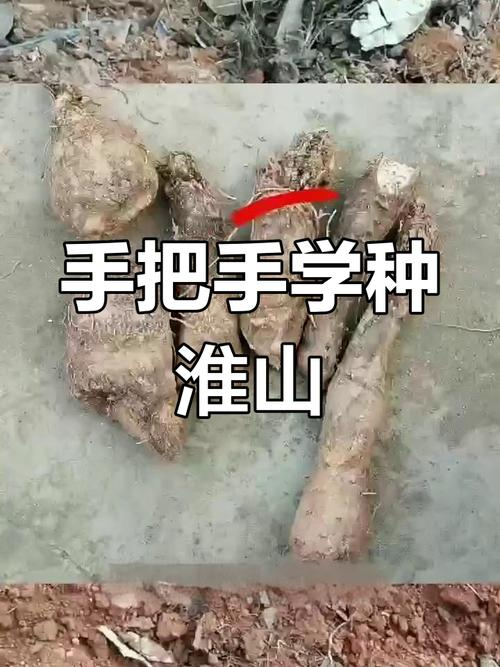
In general, shansan medicine requires a temperature stabilization of more than 9 °c ~ 10 °c above 5 cm above the surface. Before seeding, the mountain seedlings are dryed up, so that the seeding of potatoes can be activated, and it can also be used to kill bacteria and have high growth rates. If it is cut off from the pyrophagus to grow potatoes, it can be sterilized in a timely manner with lime powder at the cut. In the next seed, a sprout, a sprout, a sprout-sized sprout, so that the sprouts come together。
Light pursuit of fat. If the fertilizer is applied more frequently, less or less, and in order to ensure that the mountain medicine is produced, it is usually applied two to three times, once when the plant is grown to about 1 metre, and then again every other week or so, three times. Monopharmaceutical expansion is dominated by multi-element compound fertilizers with higher phosphorus content (the ratio of pyrophate demand to nitrogen, phosphorus and potassium is 1. 5 and 2 and 5) at around 30 kg per acre, preferably by flushing. In the later stages of growth, 0. 2 per cent of potassium phosphate and 1 per cent of urea were sprayed with leaves to prevent early decay. It is particularly important to note that the digestive roots of mountain medicine are thinly distributed, early and horizontally extended, and that they should be applied to the shallow earth floors for their absorption。
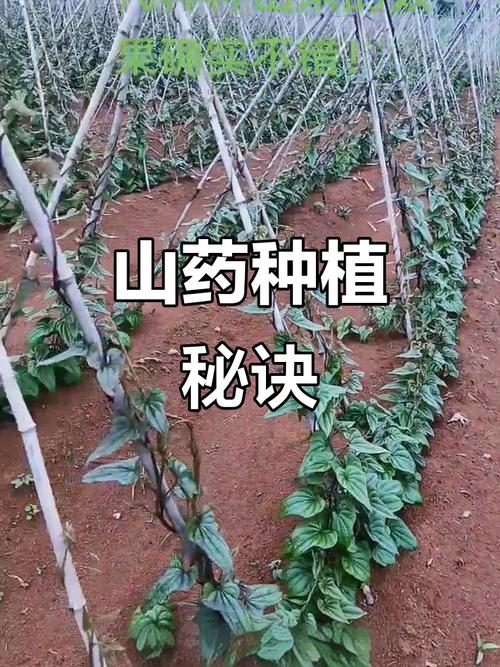
2. Stay in prison. Plugs and herbicides cover 6 to 10 centimetres of soil after planting, sprayed and sprayed with a 100-kilogram water with a “polythemic herbicide” of 150 to 200 grams, re-covered the membrane and sprung up in a timely manner, with a height of about 2 metres, with a “human” font on the front, with a cross-slashed side, reinforced by a stick or a wooden stick from 7 to 8 metres apart, and in any case, must be contained in order to prevent a slip。
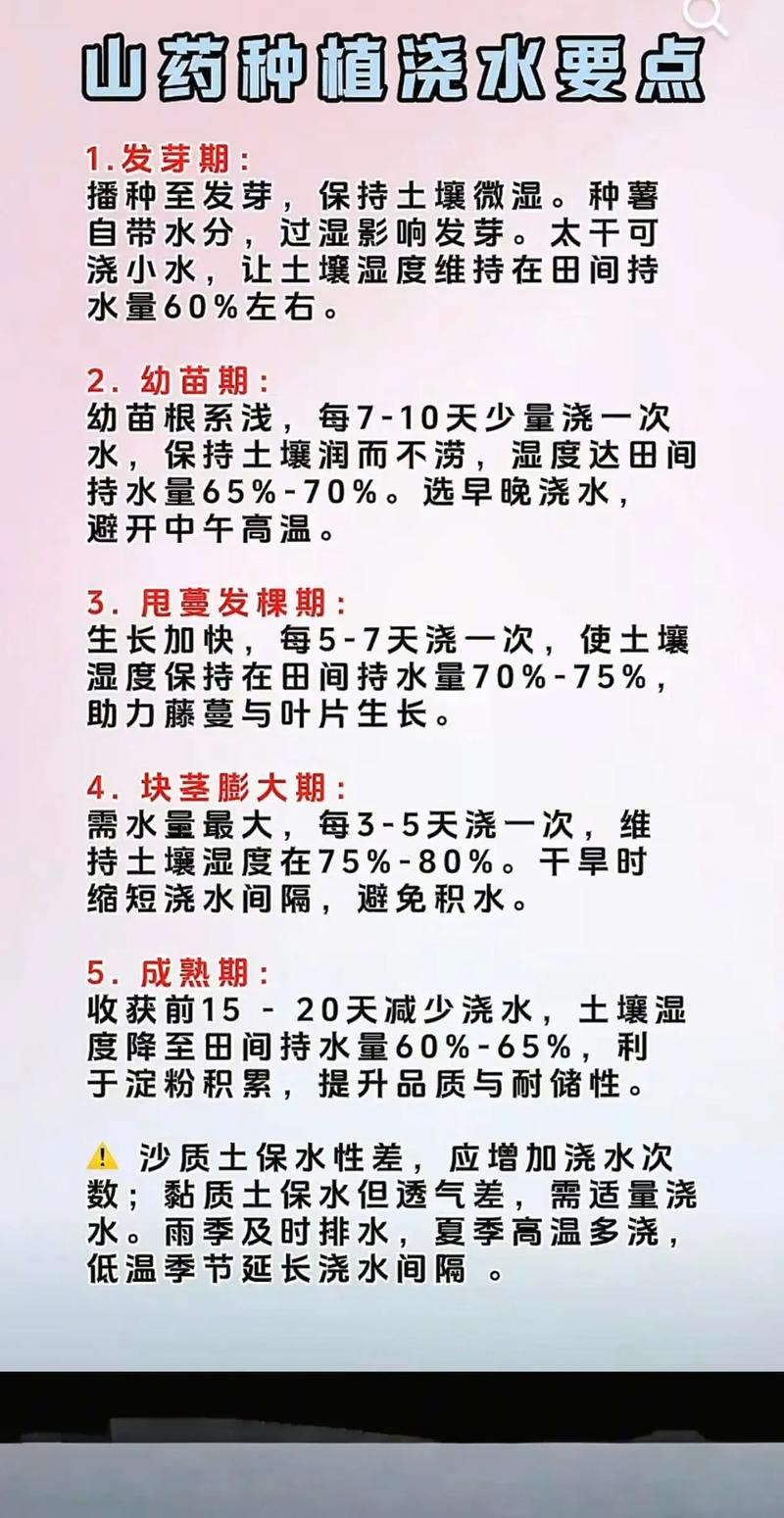
3. Routine watering. It is also inappropriate to be too dry for mountain medicines, which could seriously affect the expansion of mountain medicines, especially during the expansion of the tubing, which usually takes about 10 days to pour through water, which should be watered appropriately in accordance with soil moisture。
4. Pest management needs to keep up. Pests and pests are more severe in hard-earned plots, with the first year of cultivation having a lighter incidence, and spray treatments begin when the pox is mounted. The main disease in the mountain is anthrax, which is a fungal disease, which is described by the general population as falling leaves, showing early foliage, small spots in the leaves, and last stubble leaves, preventing the disease from becoming the main cause of change, opting for non-pathic potatoes, using 25% more than 500 times the filament of 25 to 30 minutes to sow potato disinfection, strengthening field management after planting, and enhancing plant resistance. In general, 70 per cent of dysen manganese zinc 500-600 times the fluid, 50 per cent of methyl tobuzin 700-800 times the liquid smoulder spray can be used at the onset of the disease, and when the disease is severe, the pesticide formulation used for the japanese pharmacist “dao and taro” drug can be used at the beginning 7-10 days apart, usually 2-3 times continuous spraying. Wu li-king