On 14 january, journalists were informed by the institute of genetics and developmental biology of the chinese academy of sciences that the chinese academy of sciences, in collaboration with the team li jia yoon and the team bqingyun, had succeeded in building a molecular interpretation model of the history of experience of breeding in the country's north-eastern rice region, summarizing and validating the patterns of rice breeding and future trends over time in the region. The research results were published in the academic journal state science review。
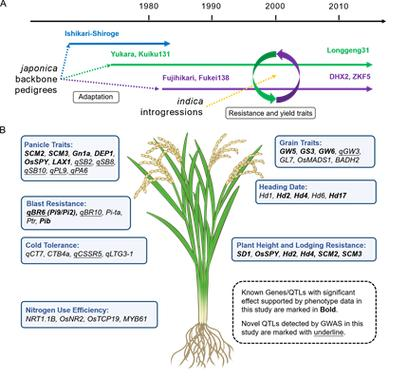
The results provide a comprehensive analysis of the genetic structure of rice and key breeding points in the north-eastern region of the country, reveal the general pattern of empirical seed feedback on the genome, provide a reference and model for the design of genomics-wide breeding of rice varieties in the north-eastern part of the country, and are expected to give further impetus to the refinement and implementation of rice molecule design, as well as to the analysis of other crop experiences and molecular design breeding research。
Further refinement of the whole genome design breeding technology system is the current research hotspot in the field of plant genetic breeding. Rice, which is the source of the hot regions of the south, has a relatively short history of cultivation in high latitudes, with the north-east of the country being one of the highest mid-latitudes of the global rice-growing areas. They are able to adapt to high latitudes and to produce the highest-quality rice with unique ecological conditions。
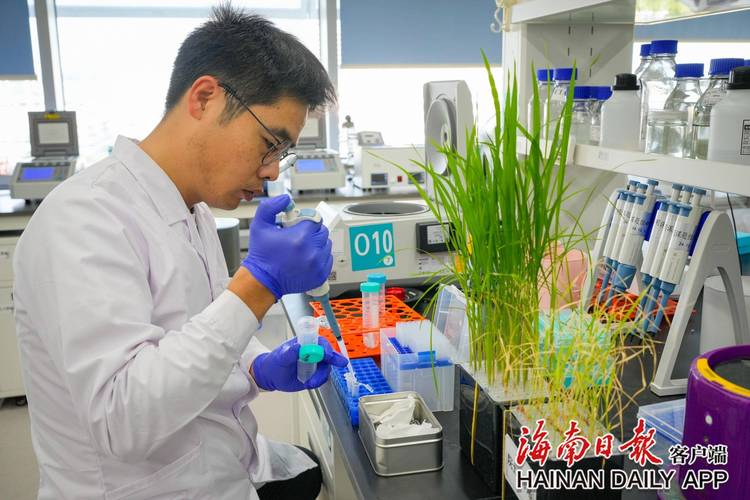
Journalists learned that, in order to obtain a comprehensive picture of the evolution of varieties in the north-east region, as well as the combination and utilization of genes, the research team collected and reordered 546 rice species resources covering the north-east rice region from the 1940s to the 2010s, and conducted a survey of 22 agronomic appearances and an analysis of global genome linkages。
The study found that different geo-sourced varieties showed significant agronomic differences, reflecting their environmental adaptation needs and preference for variety characteristics. Interestingly, age differences in fertility periods, low-temperature yields, rice fever resistance and particle sizes are evident, implying that cultivation techniques and changing market demand affect the choices of breeders about yields, resistance and quality. In other words, the awareness, preference and experience of different breeders have regional and generational characteristics, which are ultimately reflected in the genetic pattern to which the pattern of varieties corresponds。
The narrow genetic background is an important constraint on temperate rice breeding, which was introduced and introduced by breeders in the north-eastern part of the country at an early stage. The team identified the important contribution of rice penetration to rice breeding in the north-east, especially the introduction of genes such as resistance to rice plagues, and the important role of improved stem yields, through technical means such as group structure analysis, genetic penetration analysis, genomic association analysis and chromosomal segment conversion. The team further provided a basis for the design of subsequent varieties by retrofitting them to 123 known or newly detected qtl sites and large amounts of paddy seepages, summarizing key qtl sites or seepages with age characteristics. Wang zhuhua