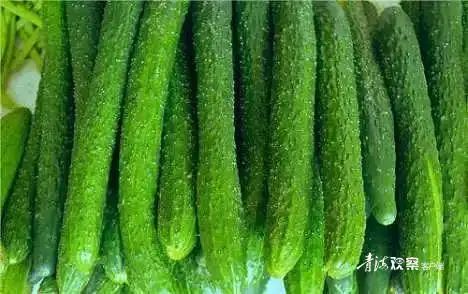
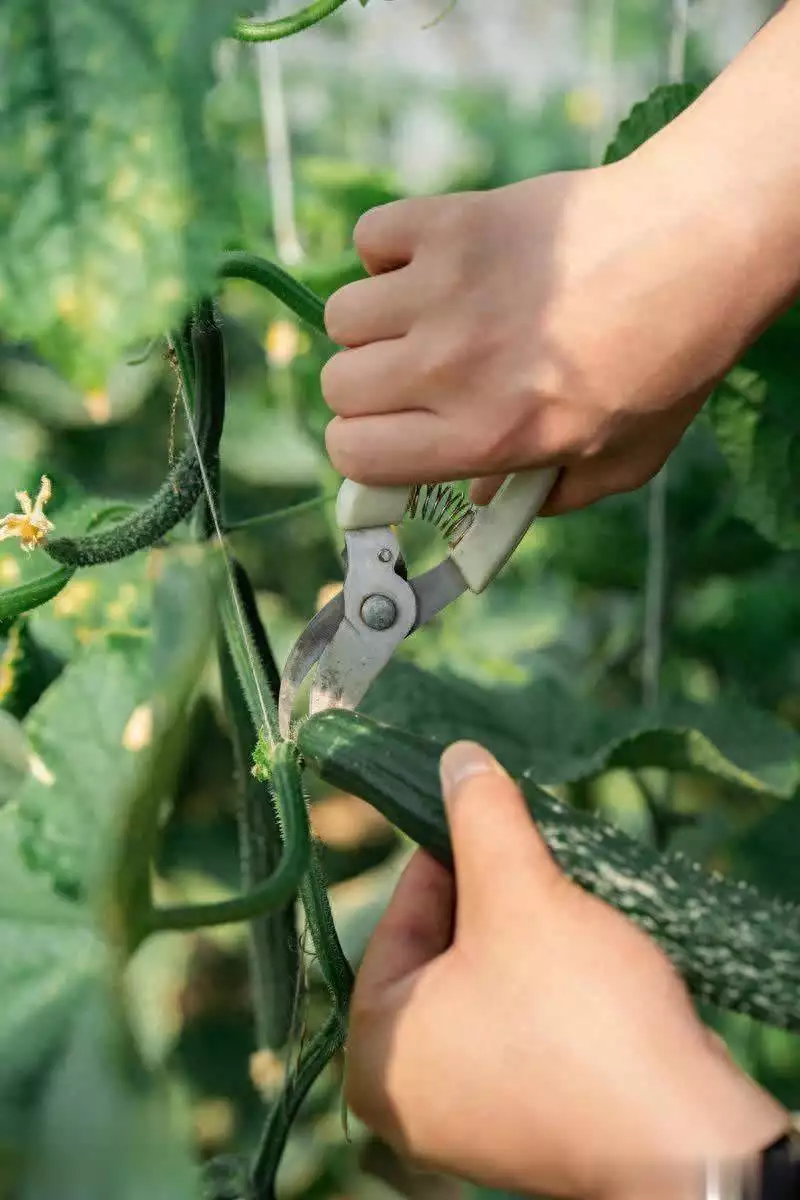
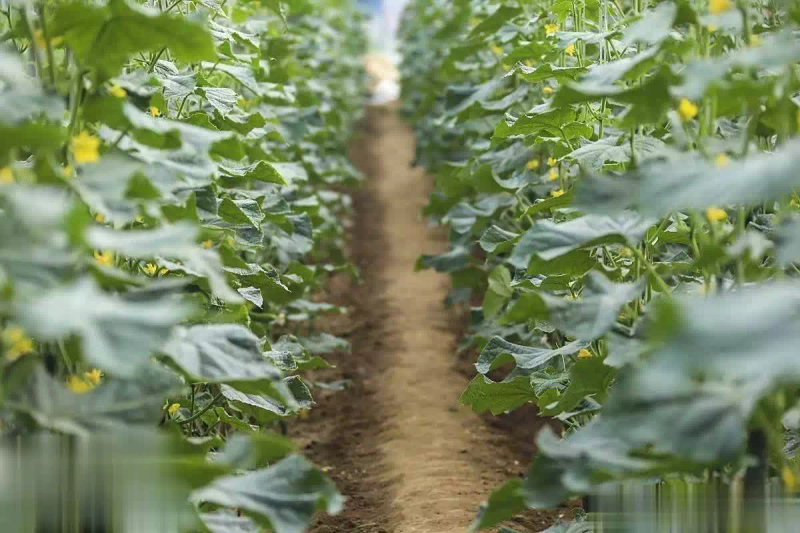
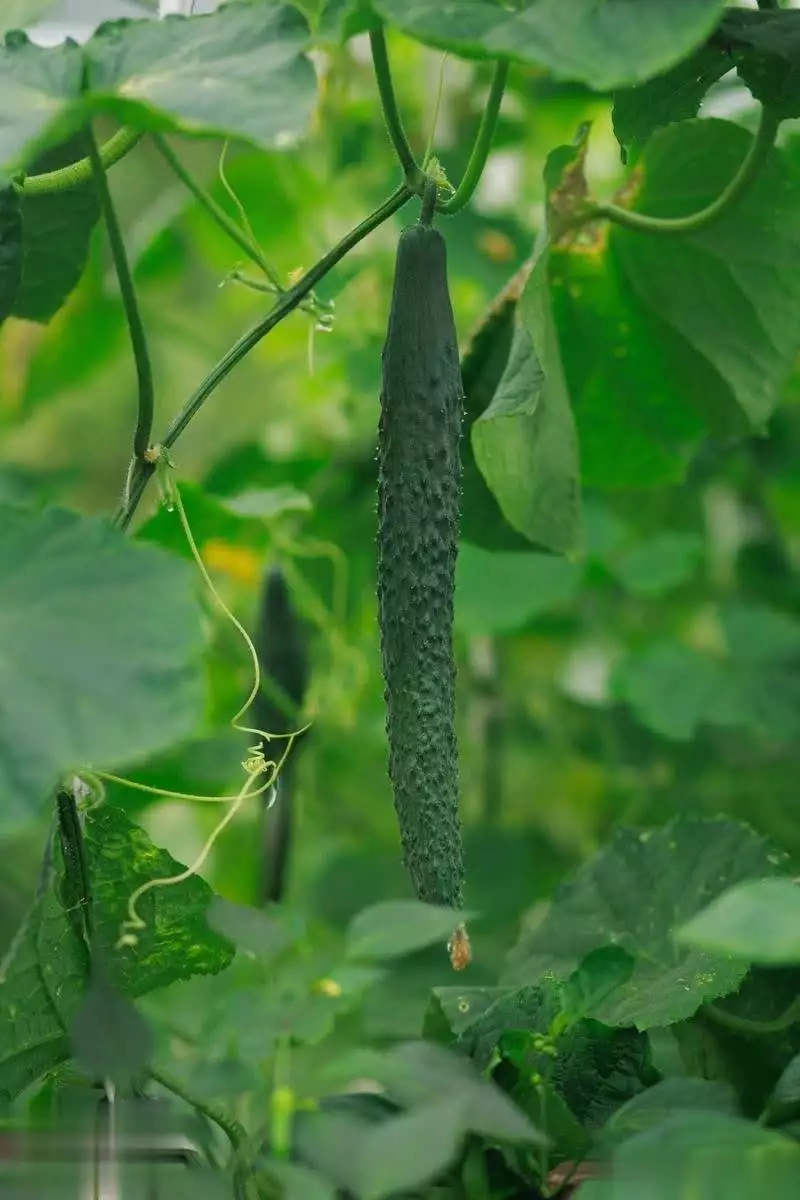
In the context of the high quality development of facilities agriculture, the cultivation of cucumbers, which are economically viable staple crops, is crucial for increasing production, quality and resilience. Traditional cucumber marriage techniques tend to be monogamous, with long breeding cycles, low land use and high management costs. Serialism, as an innovative marriage technology, effectively overcomes traditional technological bottlenecks and demonstrates significant economic and ecological benefits in production practices through a unique insecticidal mode. This document sets out the core advantages of the cucumber coupling system and details the dismantling of its standardized operating procedures to provide technical reference for the cucumber size and intensive cultivation of the facility。
I. Core advantages of cucumber coupling
Compared to traditional cutting, docking and monogamy patterns, the coupling system has an irreplaceable advantage in cucumber cultivation, mainly in terms of resource utilization, resilience, productivity efficiency and management efficiency。
(i) increased utilization of land and resources to reduce the cost of breeding
The stringing method is centred on “1 gill in two to three gills”, breaking the limits of the traditional “one gill out”. During the nursery stage, in the same area, the coupling can reduce the use of aluminum seeds by 50-60 per cent and save the seedling base by more than 40 per cent; after planting, the stocking density can be reduced by 30-40 per cent, but the total number of ears maintained is comparable to that of traditional cultivation and can be effective in reducing land resource stress. At the same time, the reduction of manual inputs for the cultivation, indoctrination and planting of acres can result in a reduction of 200-300 yuan per acre and significantly increase resource efficiency。
(ii) strengthened symbiotic advantage and increased resilience
The cucumber coupling method usually uses pumpkins (e. G. Black-seed pumpkins, white-seed pumpkins) as wood with well-developed roots, low-temperature, and strong resistance to endemic diseases (especially with regard to deadness and root diseases, which are more than 95 per cent resistant). After a string, the strong roots of the logs provide two to three ears with sufficient moisture, nutrients and anti-reversible signal material to feed the symbiosis of the symbiosis of the symbiosis. Compared to monogamous cucumbers, in low-temperature and weak conditions (8-12°c), the absorption capacity of the root system increased by 30%, the chlorophyll content of the leaf increased by 15%, the resistance to the cold and the associated barrier increased significantly, and the incidence of disease associated with the plot decreased by 40-50%。
(iii) longer harvest cycles leading to increased production of the aggregates
By optimizing the distribution of cucumber nutrients, cucumber plants are more robust and nutritionally balanced with reproductive growth. On the one hand, the logs continue to supply nutrients to multiple ears, avoiding the premature decay of the plant due to the depletion of the nutrients at the end of a single graft, and the harvest period can be extended by 20 to 30 days; on the other hand, the number of single cucumbers increased by 40 to 60 per cent as a result of the co-optation, and the growth of the fruit was even and the rate of deformity decreased by more than 25 per cent. Practice data show that the production of cucumbers per acre, using a stringed method, can be 152,000 pounds per acre, with an increase of 30-40 per cent over traditional monocropping and an increase of 0. 8-1. 2 percentage points in the soluble sugar content of fruit, with a soft taste and a commodity rate of over 90 per cent。
(iv) simplified field management and increased efficiency of cultivation
The cucumber-coup plantations are growing more strongly, the leaves are distributed more rationally, and the ventilating conditions in the field are better than the traditional intensive cultivation, which reduces the frequency of management, such as ventilation, whole branches, etc. At the same time, chemical pesticide use has been reduced by 30-40 per cent due to the disease-resistant nature of the wood wood, reducing the risks and management costs of pesticide residues. In addition, the slow growth of seedlings following the establishment of a series of plants (during a shorter three to five days) does not require frequent replanting during the growth cycle, significantly reducing the complexity of field management, especially for scalding and mechanization。
Ii. Standardized cucumber coupling operations
Synthetic methods match the age of aluminum, estuarine, graft and lateral management requirements, and follow the process of “precision seedlings — regulation of marriage — scientific stewardship” to ensure fertility and cultivation。
(i) pre-preparation: beryllium and earring selection and nursery management
1. Choice of varieties
- pumpkin: priority is given to the species of pumpkins whose roots are well developed, proficient and resilient, such as “black seed pumpkins” (which are cold-resistant and suitable for the northern sheds) and “white seed pumpkins” (which are highly resistant to disease and are suitable for connecting plots). Aluminum needs to be “hard and small” to ensure efficient transmission of nutrients after marriage。
- earnings: the selection of good commercial and productive cucumber varieties, such as “zin chun 4” and “bome 8”, which require a “breathing and foliage” character, with a high degree of proximateness and strength。
2. Age and birth control
Using the staggered seeding model of "oilwood transmits in the morning, back in the ear" to ensure that the logs match the age of the sapling:
- aluminum: 7-10 days of seeding in advance, as the best marriage period when the seedling grows up to “one heart in two leaves” and has a length of 0. 5 to 0. 6 cm (approximately pencils in diameter)。
- ecclesiastical: 7 days after the planting of the lumber, the lumber grows to the "one heart of the leaf" and can be rewed when it is 0. 3-0. 4 cm thick (approximately fine chopsticks in diameter)。
3. Management of the nursery environment
The temperature of 25-28°c (days), 18-20°c (night), relative humidity 70-80%, is maintained in nursery sheds (50 holes or 72 holes) and the matrix is selected using a hybrid matrix of “grass carbon + cylindrical + pearls = 3:2:1”, adding 500g organic fertilizer per cubic metre to 100g compost to ensure the healthy growth of the nursery。
(ii) core operations: thread-by-link steps
Collapse is carried out in a “bacteriumless, windless, warmer” shack, with the following tools: matrimony knife (slash blade), marriage clipping (round or square, stylish), 75 per cent alcohol (sterilisation tool and hand), wet towels (maintenance freshness). Specific steps are as follows:
1. Selenium treatment
- the first step is to select a sapling, to retain its roots and stem, to move up 3-4 cm from the base (the stubble is flat), to cut the stem horizontally with a mating knife, to remove the upper leaf and growth point, and to retain only the stub and root section。
- the second step: in the position of symmetry on both sides of the aluminum section (with an angle of 180°), tilted by a tow knife two "weed cuttings " , with a depth of 1/2-2/3 in the diameter of the aluminum, with a length of 0. 8-1 cm, ensuring that the accelerator is smooth and has no thorns and avoiding damage to the aluminum marrow。
2. Earning treatment
- select a strong and insect-free seedling from 1 - 1. 5 cm below the leaf, with the wedge of 0. 8 - 1 cm slashed by the slash, with the angle of the swirling angle consistent with the angle of the aluminum cut-off (approximately 30°), ensuring that the swirling face is closely aligned with the aluminum cut-off, and that the swirling leaves and the growth point are preserved and the lower leaves removed。
3. Collapse and fixation
- to cut the wedge of 2 swidths and insert them into the wedges on both sides of the aluminum, ensuring that the acoustics are fully aligned with the formation layers of the aluminum accelerators (formation of the layers is the key to marriage), that the acoustic leaves are vertically linked to the aluminum stem, and that they are not tilted。
- tighten the interface from both sides of the aluminum with a domicile clamp to fix the ear and aluminum to ensure that the interface is not loose and without gaps; the somber bond is so tight as to be appropriate for “no bruises, no drops” so as to avoid overtightness leading to constriction of the tremors, and oversinuation affecting nutrient transmission。
4. Temporary wetting after marriage
Upon completion of the marriage, the saplings are moved into the earlier “small arch shed”, where the wetland membrane is laid to maintain a relative humidity of 90-95 per cent of the air and avoid loss of water by the ear; and cover the sunnet to prevent the loss of water by direct sunlight。
(iii) post-care: survival and management of seedlings
1. Days after marriage (1-3 days)
- environmental regulation: temperatures in small arch sheds are maintained at 28-30°c (day), 20-22°c (night), relative humidity of over 90%, full-scale shade of the sun (100% luminous rate), and ventilation is avoided, promoting the formation of the muscular interface。
- hydraulic management: if the small arch is not wet enough (the inner wall is free of water), water can be sprayed on the membrane (avoiding direct spraying to the interface) to keep the environment wet。
2. After marriage 4-7 days
- gradual ventilation: starting on the fourth day, two ends of the small arch are ventilated (1-2 hours each) early and evening, while the sunnet is kept at noon; 5-6 days, gradually increasing the ventilation time and light rate (to 50 per cent), and 7 days, allowing the full disclosure of the sunnet and the small archipelagic film to adapt the seedlings to the outside world。
- temperature adjustment: the temperature is reduced to 25-27°c during the day, 18-20°c at night, with relative humidity maintained at 70-80%, avoiding high wetness leading to decay of the interface。
3. 8-10 days (stillation period) after marriage
- removal of cribs: when the new leaf begins to grow and the interface heals closely (with a light lifting of the ear, the log does not fall off), removal of the crib cribs to avoid injury to the troughs。
- fertilizer management: application of 0. 2% potassium phosphate solution to replenish nutrients; if the matrix is dry, water can be poured in small quantities (by dripping or spraying to avoid heavy water spills leading to rotting roots)。
- pest and pest control: application of more than 50 per cent of the filamentable powder, 800 times the liquid, to prevent sudden fallout and deformation; 10 per cent of the aphids, 1,500 times the liquid, if found。
4. Plantation management
- timing of planting: it is possible to plant it when it grows to a “three leafs with one heart”, 15-20 cm high, leaves are green and roots are developed。
- plantation density: 2000-2500 units per acre (traditional monolithic 3500-4,000 plants), 80-90 cm range and 30-35 cm range, ensuring that the lumber interface is 2-3 cm above the ground level at the time of planting, avoiding an uncertain rooting of the ears and affecting the effects of the mating。
- post-plant management: after planting, water with a steady root, 25 - 30°c during the sapling period, appropriate temperature reduction after sapling (23 - 25°c during the day, 15 - 18°c during the night) and timely binding of the chicken to guide the plant to upward growth。
Iii. Common problems and solutions
1. Low incidence of marriage
- reasons: the age of the sapling is not matched (over-wood or over-crowded), the cut is not aligned to form layers, the environment is wet and the temperature fluctuates significantly。
- measures: strict regulation of the timing of the scalding of seeds to ensure that they match the age of the seed; precision in the formation of layers at the time of marriage and smoothing of the incisions; maintenance of a high-moisture temperature during the period of the wound, avoiding premature ventilation。
2. Atrophy
- reasons: insufficient humidity after marriage, direct sunlight, disruption of water delivery due to loose interfaces。
- measures: immediate closure of small arch sheds and spraying of water; strengthening of the sun so as to avoid strong light; inspection of interfaces, which, if loose, require re-arrangement of the bond。
3. Too many pelicans
- reason: the failure to completely remove the growth point of the log at the time of the marriage has led to the sprouts of the wood and competition for nutrients。
- measures: periodic post-nuptial check-ups have been carried out, and it has been discovered that the plumes have been removed with their hands in time to avoid damage to the plume。
4. Rate of fruit malformation high
- reasons: inadequate supply of late-stage nutrients, low temperature (below 10°c), poor pollination。
- measures: application of decomposed organic fertilizer at 3000-5000 kg per acre for base fertilizer and long-term recovery of composite fertilizer every 10-15 days (15:15:15) for nitrogen phosphorus; reinforcement of temperature protection in sheds (covering straw curtains or warming) at low temperatures; introduction of bear bee pollination or artificially assisted pollination to improve the quality of sit-in fruit。
Concluding remarks
As an efficient, energy-efficient and productive planting technology, the cucumber-coast method has led to multiple improvements in resource utilization, resilience and production quality through an innovative “one-size-fits-all” model, consistent with the trend towards the intensification and greening of facilities. In practical applications, key links such as control selection, seedling matching, marriageing operations and post-care need to be rigorously applied to ensure the survival and cultivation benefits of marriage. As the technology of facilities in agriculture evolves, it is expected that the coupling method will be further promoted in the cultivation of cucumbers, tomatoes, eggplants and vegetables, which will provide a strong support for the development of quality facilities in our country。

Platinum island. Ten thousand people online. Five seconds to start!

3d fishing adventure under 2026. Load