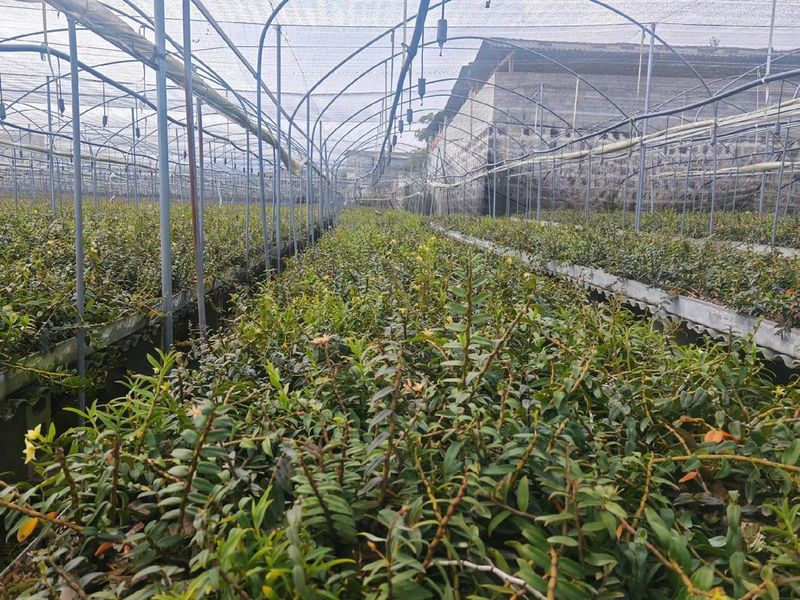
In recent years, as people's standard of living has improved, the pursuit of quality of life has become increasingly high, contributing to the rapid development of agricultural greenhouses. An increasing number of farmers are beginning to explore the use of vegetable sheds, but much more needs to be learned. The following are some of the more noteworthy aspects of shed cultivation:
1. Determination of reasonable planting time. The high and low efficiency of the vegetable shed depends to a large extent on the early and late planting time, the counter-seasonal vegetable season and the maximum efficiency period around the spring, which should be used as the basis for determining the maximum production period around the spring. From the beginning of the year to where 70 per cent is now two times a year, the planting period is roughly one in october, mid-october and two in a year: the first in july, mid-july and the second in december and january. Such planting times are more efficient。
2. Selection of highly productive and resistant species. Good breeds are an internal factor in increasing production. High-yielding cultivation techniques are the first to develop good seeds. The production of anti-season vegetables using greenhouse facilities is based on adequate light and thermal resources, mainly for tomatoes, cucumbers, eggplants, peppers, beans and melons. The choice of well-selected varieties generally increases production by 10 to 20 per cent and the benefits by more than 10 per cent。
Rational sheds. The sheds are divided into five types, with the choice of building the sheds according to the temperature requirements of the vegetables, or of determining the type of vegetables to be grown according to their own sheds, in order to obtain the desired production of vegetables。
4. Fertilizing the formulation. Fertilizers are the basis for increased production and there are more nutrients taken from the high production of vegetables, and it is therefore important to ensure that the application of bottom fertilizers is increased, with ordinary acre production of 12 to 20 thousand pounds of fully decomposed organic fertilizer of 1 to 20 thousand pounds, combined with quick-effect fertilizer, in order to achieve long-lasting and fast-impact matching. Quick-effect fertilizer is combined with three dollars and diammonium phosphate. In addition, a certain quantity of iron, boron, molybdenum trace elements, calcium and sulphur are required. You'll have to flush some fertilizer with water。
5. Pond selection. The choice of shrubs has a greater impact on yields and thus on the benefits of cultivation. Large filaments are classified according to the material as polyvinyl chloride (pvc), polyethylene (pvc), eva membrane according to function as long-lived non-diplomatic membranes, half-diplomatic membranes, etc. The cultivation of cucumbers should be based on a reasonable choice of different types of vegetables, with the exact colour of cucumbers, the choice of polyethylene or eva film for tomatoes, both of which meet the requirements for tomato growth, since tomatoes are of the type of heated light, but are less resistant to light and temperatures. The cultivation of eggplants should be based on the use of the eva film, which has a high perforation rate, anti-aging, non-diplomatic and mist-free, and the eggplant colour is good。
6. Bridging techniques. Vegetable marriage is an effective measure to increase production, relying on the resistance of the aluminum, which increases the absorption of roots, prevents certain persistent diseases and makes it more practical in old vegetable areas. The types of marriage are cucumbers, eggplants, peppers, tomatoes. The method of marriage is by attachment, interlocking and severing. For example, the marriage of cucumbers with black seed pumpkins or white seed pumpkins has not only addressed cucumber atrophy but has also increased the absorption range of root systems, drought and cold. Tolubam, who is married to eggplant, is more than 95 per cent effective in preventing aging and yellow aging, and has also fundamentally addressed the scourge of hunger insects. Paprika is a devastating disease that can be largely controlled through marriage。
7. Rise and grow. Cultivation is an important measure in the production of vegetables, and it is more meaningful in the anti-seasonal winters, which can increase the light area of the land, increase the temperature of the ground, and facilitate operations such as water fertilization, which are good practices for many vegetable cultivations. Pyramid cultivation can significantly reduce the incidence of decomposition and disease。
Full membrane coverage. The membrane cover is another important technique for vegetable cultivation in large sheds, which can effectively reduce the humidity in the shed, reduce conditions for disease, increase the temperature of the ground, make the fruit colourful, reduce the number of drug shots, and reflect the membrane and increase the intensity of light on the leaves。
9. Diaphragms with a tatter. The addition of thin sheeting on the straw curtains is another increase in production in the last five to six years, especially in the winter rain and snow, increasing by 1-2°c the night without the sheeting film, and significantly reducing the risk of labour intensity and increasing the useful life of grasshoppers。
10. Integrated pest management techniques. Vegetable production in large sheds has led to more visible growth due to changes in the small field climate. Sound pest control is key to high yields, with 27 cucumber pests, 43 tomatoes, 21 sweet (cream) peppers and several beans, and it is important to prevent and treat these pests in a timely and accurate manner. Agricultural, physical, biological and scientificly efficient, low-toxic and low-residual pesticides should be used in accordance with standardized production requirements。
Conberling