Of the many species of umbilical oranges, newhor is a relatively well-known one, with the advantages of good quality, fruit and meat slag, sweetness, seedlessness, early maturity and storage tolerance, and is summarized below for information to growers。
1 standard park
Oxylene cultivation is suitable for annual rainfall of about 1600 mm, annual average temperature of 18 ~ 22 °c, absolute minimum temperature of not less than -5. 0 °c, january average temperature of not less than 7. 0 °c, ≥10 °c, annual effective temperature of 5,500 ~ 6,500 °c, relative humidity of 70 ~ 80 per cent of air, annual ~ 1,800 h, annual frostfree period of over 280 d and environmental conditions of not more than 10 °c during maturity of fruit。
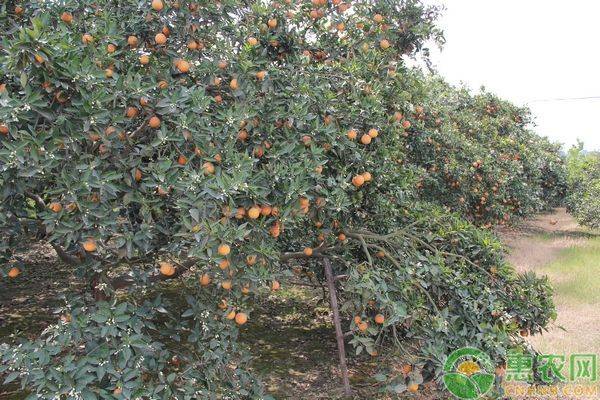
1. 1 land parks
A flat or sandy field with adequate environmental conditions and well-drained and easily accessible is suitable for the cultivation of umbilical oranges, which are located above the largest flood level. In areas prone to freezing and wind, protected forest belts must be planted on the outskirts of orchards。
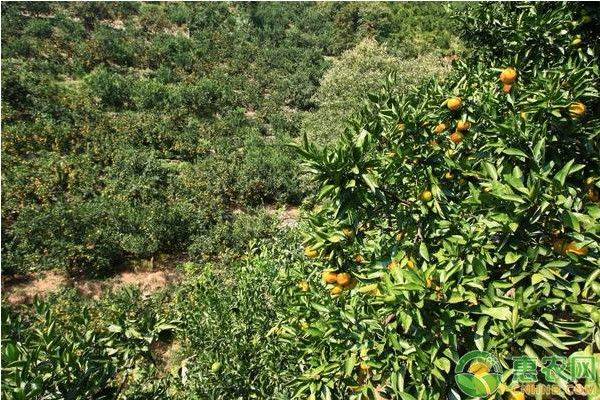
1. 2 mountains, hills and hills
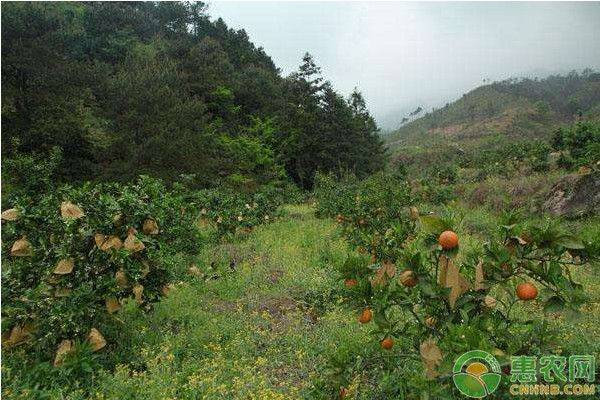
Mountains, hills and hills that meet the requirements of suitable environmental conditions, are suitable for cultivation with a backwind, good drainage, transport facilities, slopes not exceeding 25°. Large slopes and hilltops allow for the construction of pedestals, which are measured at a scale of 0. 2% to 0. 3% according to the design line, and are then repaired into pedestals, with a high and low inside of the top of the ladder, and under the walls of the inner ladders to dig a gutter to save and drain water. In areas prone to freezing and wind, the range of protected forest belts is cultivated on the outskirts of orchards。
2 digging and planting
2. 1 digging
Pull-lined densities, with a planting density of 600 ~ 750 / hm 2, suitable for walking distance of 3. 5 ~ 4. 0 m x 4. 0 m, which are trimmed to facilitate farming activities. The planting grounds (long, wide and deep 80 cm) are dug in advance, the base fat is buried deep, the base fat is predominantly organically applied in layers, the ground floor is filled with weeds and soil fattening, the middle and upper layers are mixed with the farm and 30 cm above the ground. And fold it up to 30 cm above the ground on a plate to be planted。
2. 2 embedded
The rate of survival is higher, usually before the spring sprouts of 2 march or 10 november, when the fall is ripe. When planted, a virus-free orange tree is chosen, the nutrient drums are torn open, the roots are to be kept intact and placed in the centre of the established den, with the soil being filled with light and light seedlings and grounding, which binds the roots to the soil. After planting, you can take a deep root water and make a one-m-diameter dish around the tree seedling. Within 1 month of the planting of the umbilical seedlings, depending on weather conditions, 3~4 d takes a shower of water one time; and tree dishes such as weeds or straw are covered in order to reduce water evaporation, maintain soil decomposition, maintain soil temperature, promote new roots and increase survival。
Soil management
Green manure or legume crops are grown between the branches of fruit trees for the selection of green manure varieties or legume crops that are suitable for local climatic and soil conditions, are highly effective and do not impede the growth of young trees. Artificial den-drilling plants are built after 1 year of planting, mechanical trenches are planted after 3 years of planting, and canals are dug wide by 40-50 cm, deep by 60-80 cm, with green fat, rice straw 30-50 kg/stamp, phosphorus fat 0. 5-1. 0 kg/stamp, soil ph at 5. 5 pph and lime 0. 5 kg/stack. The dry and hot season is covered with earth, 15-20 cm thick on the plate, 15-20 cm on the trunk of the tree, then lime for soil disinfection。
4. Fertilizer management
4. 1 water management
Drought should be filled with water at the right time, during the rainy season, and can be filled with water by spraying, dripping and irrigation. One month before the harvest of fruit, orchards are not suitable for water, and once in a week after the harvest of fruit。
4. 2 fertilization management
4. 2. 1 young trees (1 - 3 years). Teenage trees are dominated by the expansion of the canopy and the reinforcement of the tree. Fertilizers are applied with diligence, 6-8 times a year. Fertilizers are applied in a predominantly nitrogen-based manner, with phosphorus and potassium. 10 ~ 15 d before or after spring, summer, fall, or 10 ~ 15 d after birth, each applied 1 pusher, and applied ~ 0. 25 ~ 0. 50 kg/ strain or urea 0. 1 ~ 0. 2 kg/ strain + compound fat 0. 2 ~ 0. 3 kg/ strain. After cutting each time, follow-up on fertilizer 1 ~ 2 times and application of compound fertilizer 0. 10 ~ 0. 15 kg/ strain. Fertilization needs to increase year by year as tree age increases. At the same time, the application of fast-acting nitrogen fertilizer was stopped after late august, in conjunction with extra-root fatting, and the application of base fertilizers was delayed once in autumn and winter. The application rate of nitrogen, phosphorus and potassium fertilizer in the juvenile tree is 1. 00 ∶ 0. 25 ~ 0. 30 ~ 0. 50。
4. 2. 2 primary fruit trees (4 ~ 6 years). Omnicorn seed trees continue to expand their canopy and produce a certain amount of output, with the result that the mother branch is dominated by early autumns and therefore the application of fertilizers is focused on the fruit of the fall. Fertilizers were applied 3~4 times per year, spring sprouts in mid-february (15% of annual fertilization), urea 0. 1~0. 4 kg/ strain + compound fertilizer 0. 1~0. 3 kg/ strain; fertilizers were applied in late june (50% of annual fertilizers), fertilized bean bean ~2~3 kg/ strain + phosphate ~0. 5~1. 0 kg/ strain + potassium sulphate 0. 25 ~ 0. 30 kg/ strain or compound fertilizer (15-15) 0. 5~0. 75 kg/ strain + urea 0. 3 kg/ strain; 9 – october fertilizers, fertilizers (35% of annual fertilizers) ~ 15 kg/day ~ 15 kg/day , fertilation in winter fertilizers (15 kg/day ~ 15 kg/day ~ 4 kg ~ 4 ~ 4 kg ~ + graphy, 1 kg/ strain, oxin ~ 20 kg/ / / / tactin, kg 0. 0. Fertilization increases annually with age and outcome。
4. 2. 3 vegetable trees (7 years or older). As a result, the mother branch is predominantly spring, nutritional growth is relatively balanced with reproductive growth, fertilisation is dominated by spring lumber and fertilizer, fertilization is appropriate and trace elements are replenished in a timely manner. 1. 5~2. 0 kg/ strain + phosphorous fertilizer 0. 3~0. 5 kg/ strain + compound fertilizer 0. 5~1. 0 kg/ strain ~ 30% of annual fertilization; 4~6 kg/ strain + compound ~ 0. 5~1. 0 kg/ strain + potassium sulphate ~0. 5 ~0. 5 kg/ strain ~ 50% of annual fertilization; 9 ~ october, combined cave expansion, applied-based ~ 1. 0 kg/ crop ~ 20% of annual fertilization; mid-june ~ 35~40 kg/ + bean ~ 5 kg/ + gravel + 1 kg/ phosphorus ~ 1. 0 kg/ ~ 1. 5 kg/ + + + 1. 0 kg + 0. 5 + + kg = 1. 0 kg + 0. 5 + + + + + + + + + 1 kg/ + 1. 0 kg ~ 1. 0 ~ 1. 0 kg/ ~ + + + 1. 0 + + + + 0. 5 + + + + kg + + + kg = 1. 0 + + + kg + + 。
5 orthopaedic cuts
5. 1 young trees
Trees with natural round head happy shapes, trees dry 60-70 cm height, primary 40-50 cm height. Three new branches with a balanced distribution, a rational outlook and a strong growth, have been selected, and the remaining branches have been wiped out with the exception of a few supporting branches, which are divided by 30-50 degrees by pulling branches or by laying pillars. Following the spring break, each branch of the branch has been selected with 1 to 2 staggered branches as a side branch, while a certain number of branches have been selected as supplementary branches, with the side branch and the main branch at 60 to 70 degrees. During the larvae period, shearing or avoiding it as much as possible in order to increase the density of the branches and the area of the leaves, so that the larvae can produce early results, and so on as much as possible, using the techniques of sprouting, graft and so forth, with the exception of the short-term extension of the main branch and the secondary branch. When the new length is 3-5 cm, it is removed; when the new edge is up to the top, it is up to 8-10 foliages; and the autumn is usually unheard so that it does not turn late。
5. 2 results tree
The timely retrenchment of branches, falling branches and decaying branches has been properly swirled to control the summers and to cut the sick, dead and cross branches. For the summer and autumn branches that were pumped in that year, the following year's production was regulated by short-cut branches to prevent year's and year's results; large branches were trimmed and “sky windows” were opened to keep the tree crown radiant。
6 flower fruit management
6. 1 preserve nuts
Appropriate use of nutrient-type growth regulators, combined with the nutritional status of the umbilical orange tree, to increase sit-down rates and yields. 0. 01 per cent of utensils 2,000 ~ 2,500 times liquid or 9220 40 ~ 50 mg/l+ 0. 2 per cent potassium phosphate sprayed 15d at one time, two times in a row, usually at 2/3 ~ 3/4 and before 2 physiological fallers sprayed. Promotion of the use of micro-fertilizers and nutrients for plumbing and prohibition of high concentrations and repeated use of growth regulators for plumbing。
6. 2 plumbing
6. 2. 1 fleasing. Omnicorns are large, natural sit-in rates are low, flowers are severe and nutrients are high for the tree body. The flowering period must be moderate, with or without leaves of leaves, and the plastering of deformity, with the strong branches being suitable for the flowers, the weak and the weak. For weak trees, a moderate gravitation (especially leafless flowers) can take place during the flowering season, combined with fertilizer, boosting the growth of strong branches and restoring the position of the tree. For older trees and stable trees, grafting can save the tree nutrients, increase the sit-in rate and increase the proportion of commercial fruit。
6. 2. 2 ophthalms. The 1st physiological fallout is followed by the 1st oscillation, dominated by the oscillation of insects, deformations and small fruit; the 2nd oscillation, based on the foliage ratio, after the end of the physiological fallout; and the 3rd oscillation, in october, mainly of insects, troughs and severe wind scars。
7 integrated pest control
7. 1 agro-ecological control
(c) reasonable measures such as shearing, steed control, strengthening of plant management, enhancement of tree positions and enhancement of the capacity of the tree body itself to withstand the disease. (c) the timely removal of weeds and wood from orchards and the minimization of the intermediate host of the disease; and the timely removal of fallews, scavengers and pests and the reduction of the source of disease and insects。
7. 2 chemical control
7. 2. 1 diseases. The main diseases are ulcer, anthrax, etc. In the prevention of ulcer diseases, 77 per cent of copper hydroxide 600 times liquid, 0. 5 per cent ~ 1. 0 per cent of bordeaux, 20 per cent of copper enzyme 500 times liquid, or 30 per cent of wang copper 600 times liquid were sprayed after the onset of the new leaf (about 2 cm long), the precipice, the fruit boom and the storm. Anthrax prevention and treatment in the aftermath of new spasms, periods, long-term fruit production, near-maturity of fruit and heavy storms, 50 per cent of polybacterium 600 times the fluid, 75 per cent of encreas 800 to 1,000 times the fluid, and dyson manganese zinc 600 to 800 times the fluid. Note that different agents are used interchangeably。
7. 2. 2 pests. The main ones are aphids, red spiders, submersible moths, moths and citrus lice. The control of aphids, red spiders, leaf moths and moths can be combined with the use of alluvial water, 1,000 to 1,500 times liquids, the death of the mites, 1,000 to 1,500 times liquids, the collection of cylindrical mites, 1,500 to 2,000 times liquids, and 10 per cent of the amphibians, 4,000 times liquids. Citrus lice are the only way to spread citrus lice, and prevention should be the main focus. Spray protection should be focused on early spring, guacamole, post-harvest, post-typhoon and summer, autumn and winter periods. In the early spring, zero 1,000 times before the application of wood, and in the white season of flower buds up to 1,000 times, and in the post-harvest period up to 1,000 times the treatment of wood, and in the post-typhoid and summer, fall and winter seasons up to 2,500 times the power of oscillation, treating other pests and reducing the incidence of pests. Care is taken that different pharmaceutical preparations are used interchangeably, that they are more effective in preventing pest resistance。
7. 3 other methods of response
In production, low toxicity pesticides and biological pesticides are recommended for pest control and adhesive plates for aphids, and entrapd oranges are used for sexual induction control methods such as small fly and black light inducing night moths to reduce pesticide residues。
8 fruit harvest and storage
Omnisols in pyre district usually mature in mid-november and late, with fruit-skin deep oranges to red, and should be collected before the frost arrives. The stored fruit is harvested when it matures, and fresh fruit when it matures 9-10. One cut and two cut to harvest in the clear sky, i. E. One cut, one cut, one cut, one cut, one cut, one cut, one cut, one cut, one cut, one cut, one cut, one cut, one cut, one cut, one cut, one cut. The graded orange fruit is immersed in 30 s as soon as possible in 800 ~ 1,000 times tecdo, and is pre-positioned in a cooler ventilated area with 1 ~2 d, and is dryed out of the face of the fruit, where it is filled and stored。
This is all about the new-hore citrus cultivation, and if you also intend to develop this species, you can learn more about other people's planting experiences, hoping this article will help most growers