In the vegetable world, allium cepa l. Is a "star player." not only is it common on the table, it adds a unique flavor to various foods, but it is also rich in a variety of human-friendly nutrients and medicinal compounds, with numerous effects such as oxidation, inflammation, tumor resistance, reduction of cholesterol and blood pressure, and antibacterial resistance, which have been widely cultivated and consumed by humans since ancient egyptian times. However, the large and repetitive genome of onions, like a mysterious and complex maze, makes the path of exploration difficult for scientists。
The genome of onions is alarmingly large, and the genome of onion () double is about 2gb on average, and the entire corn genome (2. 2gb) is about the same size. And, in the onion genome, repeat sequences occupy at least 95% of the area, which makes the gene very thinly distributed in the genome. The sequence of onion bacterial chromosomal (bac) cloning has revealed that in some cases 95kb bac cloning (e. G. S1-d12 cloning) does not have a gene, while in another 110kb bac cloning (1g-12-89 cloning) there is only one gene. The sequencing and assembly of onion genomes has been a major challenge in the field of genomics due to the high duplicate content and multiplicity of genomes, severely limiting molecular breeding and biological research on onions。
To overcome this challenge, the korean national academy of agricultural sciences (naa)In-depth studies were carried out by researchers from institutions such as the national institute of agriculture science (rda). Their research has opened new avenues for research on onions and other onion plants and is of great importance。
Researchers have used many advanced technologies in the study. With regard to sequencing techniques, the pacbio long-read long-sequencing, the illumina short-read long-sequencing and the hi-c technology for high-throughput chromosome capture were combined. The pacbio sequel ii system is used to produce long-read long sequences, the illumina novaseq 6000 platform is used for short-read long sequences, and the hi-c technology is used for genomic support architecture. In addition, genetic projections are made through iso-seq and mrnaseq to obtain rna from different organizations for subsequent analysis. In the genomic assembly and comment process, falcon-unzip assembler is used for head-to-head assembly, pilon software is used for error correction in conjunction with illumina short reading long data, repeatmodeler and repeatmasker are used to model and shield duplicate sequences, various tools are used for genetic prediction and functional comments, etc。
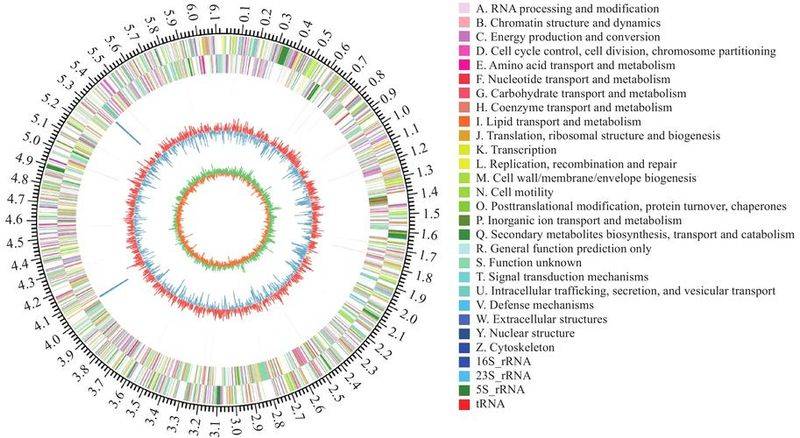
Results of the study on genome assembly: researchers successfully completed the dh-onion dhw 30006 chromosomal-level genome assembly. The total size of the genome is 12. 77 gb, consisting of 60,552 overlapping groups (contig), with a n50 length of 307 kb. Based on hi-c data, the overlap groups of the notes were arranged in order on 8 pseudochromosomals, covering 12. 07 gb (94. 5%) of the genome, and the frame n50 reached 1. 40 gb. Gene predictions and notes: 65,730 gene models with an average length of 8,827 bp and an average of 5. 48 outwards per gene. Annotation of genetic functions reveals that a large number of genes are contained in databases such as ncbi nr, swissprot, and keg. The study also found that the proportion of repeat sequences in the onion genome was as high as 76. 9 per cent, with long end repeat sequences (ltrs) being particularly rich at 44. 9 per cent, in particular the gypsy family ltrs, with a length of 4. 5 gb. In addition, 1,258 rrnas and 12,738 trnas with a total length of 1. 24 mb were noted. Comparative analysis: co-linear analysis of onions and garlic genomes reveals a high degree of co-linearity. The time estimate for the insertion of complete ltr-rt duplicate sequences of onions and garlic shows that the accumulation of ltrs over the last 2 million years may have contributed to the growth of the onion genome. Technical validation: using busco analysis to assess the mass of genome assembly, using the viriplatantae odb10 and embryophyte odb10 databases as reference, the full busco score reached 95. 6 per cent and 91. 4 per cent, respectively. By comparing the markings for the construction of the chain map, the dhw 30006 genome was found to be 84. 4 per cent linear. Assessment of k-mer completeness and quality values (qv) using merqury, 88. 96% for k-mer completeness and 35. 03 for qv. The ltr assembly index (lai) was calculated with a score of 22. 91, and these results indicate a higher quality of the genome assembly. Research findings and implications
The study successfully completed the optimization of onion dhw 30006 genome chromosomal horizontal assembly and comment, and acquired high-quality genome sequences and gene models, providing valuable resources for genomic analysis of onion plants, molecular breeding and biological research. A comparative analysis of the garlic genome provides insight into the evolution of the genome of onion plants. At the same time, accurate genomic information has provided strong support for the extraction of onion-related genes that are important agronomics and for the development of molecular markers to support breeding, which is expected to accelerate the development of higher-quality, high-yielding and resilient onion varieties, which can play an important role in the development of onion-based plant industries. In addition, the technical methods and analytical processes used in the study provide useful references and lessons for research on other large genome plants。
Overall, the results of the study have made important breakthroughs in the field of onion and onion plant research, providing a solid basis for further exploration of the mystery of onion plants。
The reward