Preface: industrial boom is rural and rural boom is national boom. The general secretary of xi emphasized at the 2022 central rural work conference that “industrial revitalization is a top priority for rural renewal, and that it is necessary to put in place industrial support policies and make “earth products” articles”. At present, rural niche industries are being developed in all parts of the country, taking root “earth”, reflecting “specialty” and “products”, moving from development products to development industries, from quantitative to qualitative, and from one product to one or two products. A “earth-producing” article, rooted in soil and water, farmers and culture, contains a good picture of the revival of rural industries。
The xinhua network launched a large-scale integrated media coverage of the country taste, documenting live stories from all over the country of “earths” articles, presenting a new pattern of industrial development, “one village, one town, one county, one county, one county, one village, one village, one village, one village, one village, one village, one village, one village, one village, one village, one village, one village, one village, one village, one village, one village, one village, one village, one village, one village, one village, one village, one village, one village, one village, one village, one village, one village, one village, one village, one village, one village, one village, one village, one village, one village, one village, one village, one village, one village, one village, one village, one village, one village, one village, one village, one village, one village, one village, one village, one village, one village, one village, one village, one village, one village, and one country, one country, one country, to watch the the of the story of the of the of the of the of the "。
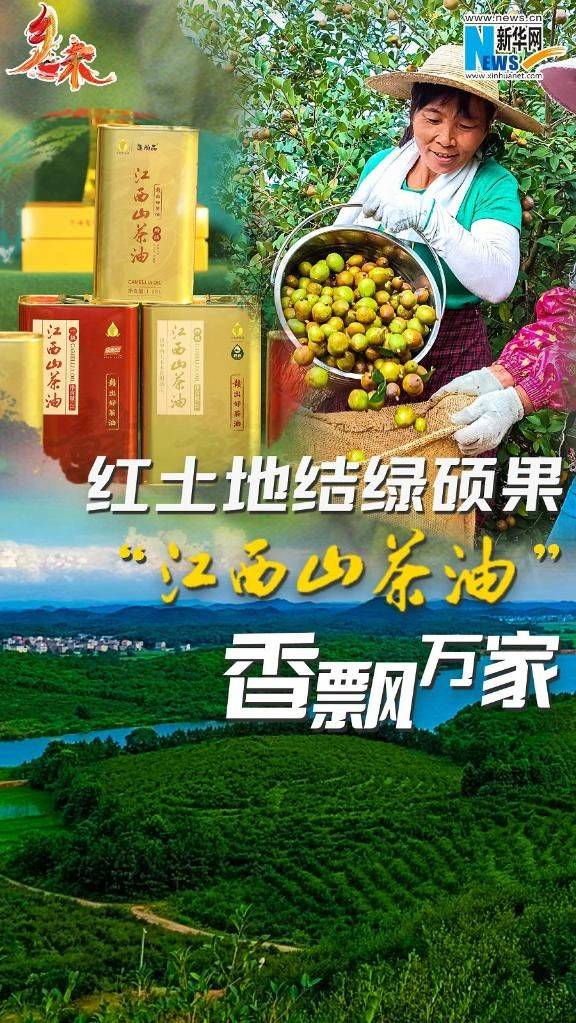
On june 21st, zhonghuai nan chang (dai ying xiaoxiang) mid-summer season, the oil and tea trees of the new zhang district of nanchang have grown onions, and the round tea and fruit are full of branches until the oil and tea seeds become red and red, another harvest season。
Oil tea is a woody oily plant unique to our country. In recent years, our country has made great efforts to develop the oil and tea industry. In jiangxi province, one of the country's oil and tea centres, the country has the second largest area of oil and tea resources and production. The country has fully exploited the potential for oil and tea development and has adopted the country's first provincial and local regulations specifically designed to promote the development of the oil and tea industry. In this red land, a group of technologists have gone deep into the slopes, carrying out research and research campaigns to innovate key technologies, and the oil and tea industry, which is “hidden in the best of its people”, has opened up new opportunities for development and has become an important player in the revival of rural industries. In recent days, the xinhua network's country tasty interview team has come into jiangxi and visited stories about the transformation and upgrading of the oil and tea industry。
Science and technology
Low production and efficiency of oil and tea is a major challenge for many growers. The team leader in the oil and tea extraction and utilization team of nanchang university, who has been studying oil and tea for more than a decade, zheng jun, found that the main reason for this low capacity was the lack of management experience of the population and the impact of pests and diseases。
“what oil and tea varieties are resistant? What should be the spacing? How to increase the pollination rate of oil tea? These have a direct impact on the high and low production of tea, which in some cases amounts to only 7 or 8 pounds of tea on more than 30 acres, and is painful and sad.” in the new district of nanchang, where more than 30,000 acres of oil and tea are grown, the villagers are deeply touched by the confusion surrounding the cultivation。
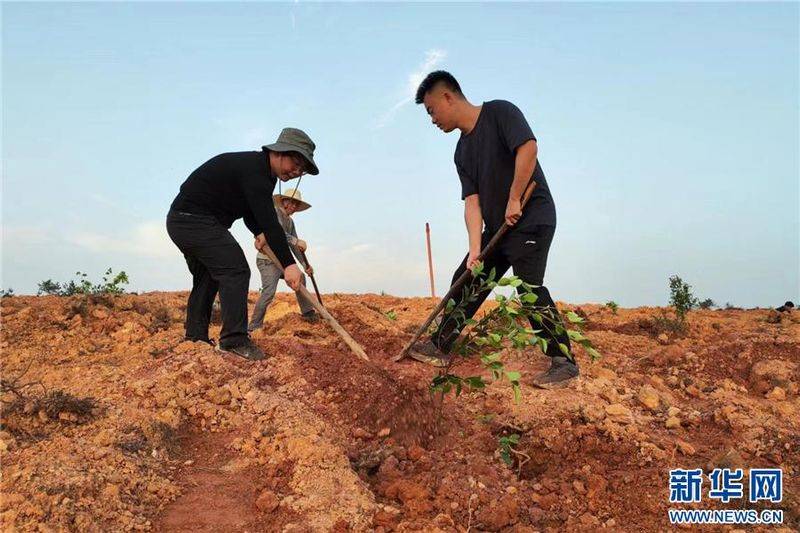
At nanchang university, the oil and tea research team co-located with the new district, and members of the team and farmers planted the tea seedlings together. Xinhua's hair
“slightly different from other plants, it is necessary to pollinate the earth bee, to ensure the rate of brooding, and to address pests and pests, we also propose an `ecological breeding system for oil tea chickens'.” team member zhang zhang zhang zhang zaiang described the significant increase in tea oil production at the demonstration base through improved varieties and increased resilience。
Kim xiao peng, deputy director of the oil and tea office, department of forestry, jiangxi province, described the involvement of universities and research institutes as bringing visible changes in terms of increased production, lower costs and product development. The yalin center of linko college, jiangxi province of china, and limko university of chaizhou have chosen to breed oil and tea varieties; together with the nanchang university oil and tea scientific team, a “model base for high value oil and tea ecoplanting and management” has been set up at the local level; the university of nachang has focused on the fine processing of tar and tea, the integrated development of oil and tea, the development of medical supplies, skin protection, etc。
In recent years, jiangxi province has strengthened technology to support the development of the oil and tea industry, ranging from the establishment of a special nursery for oil and tea varieties to the formation of a consortium of oil and tea technology and innovation, to the development of a guidebook for the construction of high-quality production of oil and tea resources in jiangxi province, which regulates the cultivation and management of high-yield oil and tea, and has set up 362 fixed monitoring points for the effectiveness of oil and tea resources development throughout the province, through monitoring of spot surveys, continuous monitoring of the production of oil and tea production and providing a scientific basis for the allocation and scientific operation of oil and tea。
Innovative models
It is surprising that in a small hill village, in the town of gangayying, there is a complete and sophisticated tea and oil production chain. “don't look at us as a village business, but we can deal with the shell of 30 tons a day, producing up to 2 tons a day of cold tea oil, and successfully resettling local vendors and selling them simultaneously online.”
Why does a country have such a mature tea and oil chain? Liu xiaobo thinks the village has chosen the right path and model. The chestnut village oil tea co-operative, which was originally a simple workshop based on the concept of “social partnership” “village association”, implemented the upgrading of business standardization workshops and promoted the role of a larger joint farming community by combining processing, storage, displaying, trading and research on the scale of a million acres of oil and tea cultivation in the town。
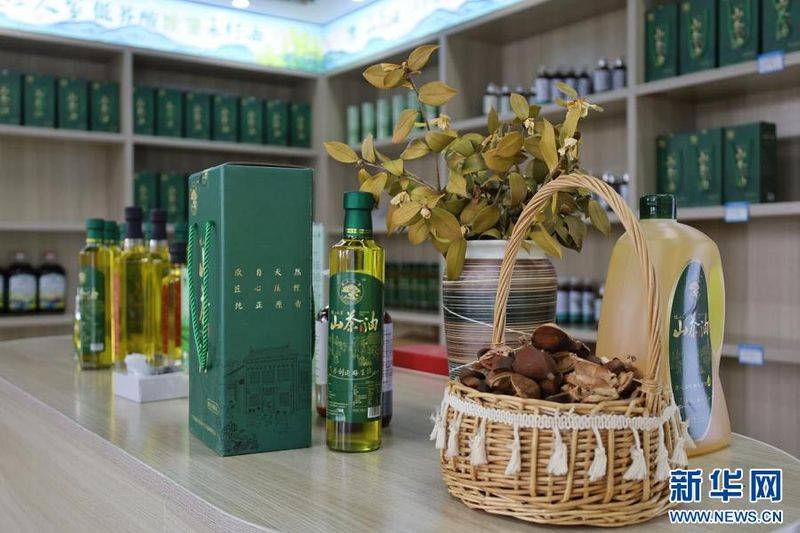
Part of the tea and oil products from chestnut village, gangxi province, chongcheng city. Xinhua net, wang xiaoxik
Make good products and sell them. In collaboration with the nanchang university oil and tea team and the jiangxi teacher training college of science and technology, the village, the secretary of the gangley town party, made a professional effort to promote the marketing of products, set up a student support studio for farmers and actively promoted the “netting” of agricultural products。
The construction of the chain of development of the oil and tea industry has resulted in increased incentives for villagers to grow, with the expansion of oil and tea cultivation in chestnut village from more than 1,500 acre to more than 2,600 acres today, leading to an increase in the village's households by more than 3,000 yuan per person, as well as an increase of 3,500 yuan per person, and a breakthrough of 500,000 yuan in the village's collective economy by 2022。
The story of the development of the small oil tea industry in jiangxido. The construction of 10 standard demonstration gardens for oil and tea cultivation in the new surplus city has created integrated industries for oil and tea cultivation, production, precision processing; and the construction of modern, rich and productive oil and tea demonstration sites, oil and tea nurseries and educational demonstration bases in the city of gyan. Jiangxi has explored various paths for the development of the oil and tea industry, such as the “five-unit” company + base + farmer + state-owned forest + farmer”, which has brought together forest and forestry farmers and enterprises。
In response to long oil and tea cultivation cycles, high investment and low efficiency, jiangxi province has actively directed its enterprises and farmers to plant living plants such as medicinal products and food fungi in oil and tea culinary areas, to develop farming and leisure under mature oil and tea forests, to carry out activities such as oil and tea garden tourism, tea and fruit extraction, and to prioritize the inclusion of forest medicine project subsidies and forest resting grounds support。
On 1 january of this year, the jiangxi province mountain tea and oil development ordinance was officially enacted, the first provincial regulation to promote the development of the oil and tea industry in the country, bringing about the adoption of rules and regulations for the development of escorts for the industry。
Building brands, bringing industry together
After years of development, the jiangxi oil and tea industry has evolved into an influential group of autonomous brands. Overall, however, there is still a lack of sprawling, scattered and small situations and a lack of a strong brand of domestic noise。
In 2021, jiangxi province developed the jiangxishan tea group standard and the jiangxishan tea oil public branding scheme, all of which are important indicators that are above national mountain tea standards, industry standards, production processes, quality assurance, etc., and meet the standards of the jiangxiyama tea group。
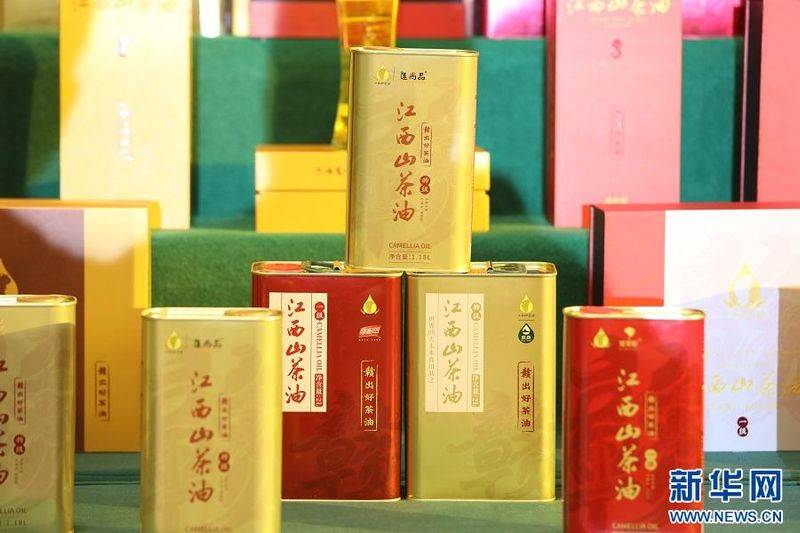
Some of the products of kanxishan tea oil. Xinhua's hair
With fresh extraction and hard product quality, jiangxi province, deyre source eco-agriculture development limited, became one of five enterprises across the province that received access to the branding of mountain tea oil. The presentation by the managing director of the enterprise, jiang yu, and the introduction to the public brands helped to raise the visibility of the enterprise and promote the marketing of its products. At present, companies produce 1,500 tons of tea oil annually and sell it to shanghai, guangzhou, shenzhen and wuhan, for an annual sale of 41 million yuan。
Kim xiao peng described a series of brand promotion activities carried out by jiangxi each other, including the "kangxishan tea oil" roll-out, and the organization of the first kita culture festival in jiangxi province, with the aim of bringing together industry development efforts through a system of branding "kangxishan tea oil" based on the common brand of "kangxishan tea oil", with regional brands and corporate brands。
By the end of 2022, it was known that there were more than 280 oil and tea enterprises in jiangxi province, 46 of them on a scale above, 16 of the leading national forestry companies, and 133,000 tons of tea oil produced throughout the province in 2022, with a total value of rmb 50 billion。
Jiangxi specified that between 2023 and 2025, 4,282,000 acres of oil and tea had been added and 2,653,000 acres of low-yielding forest had been converted. By 2025, more than 1988 million acres of oil and tea had been planted throughout the province, with a capacity of 441,000 tons。