[readers saying]
Submitted by li zhengzu (special professor at jiangsu teacher university and professor at qinghua university)
China is home to ceramics, and as early as the new stone age, the burning and use of original pottery, characterized by thickness and low temperature, took place at the original people's gathering sites, such as xinjiang cave in jiangxi county and yujiu rock in hunan province, and the subsequent emergence of many pottery systems, such as grey pottery, red pottow, chaotao, black pottery and white pottery, most of which are the products of the age-specific and design-wise production of the original people. In the late years of the neostone era, the gangnam region has seen the appearance of ceramics, known as “preliminary porcelain”, which lays the foundation for the burning of ceramics. In the east han period, china was the first to enter the era of “porcelain” with the successful burning of china, i. E., with the increase in the temperature of burning and the use of ceramic raw materials in yuya and toyako in zhejiang. During wei jin's period, the northern kiln burned down the “white china” that was distinguished from the south by the factors of the raw materials, thereby ushering in a new era in china's history of ceramic development, until the appearance of plaster。
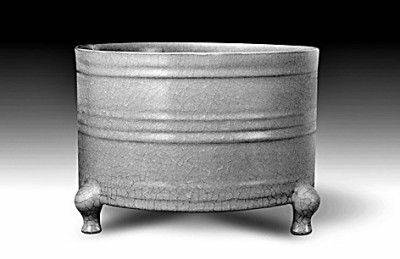
You've got a three-footed picture from "history of clementine art."
A thousand peaks of cyanide, like jade ice, which is famous for beauty and porcelainism, have created the height of song's cyanastic arts
In terms of the history of ceramics, the cyanobacterium is the first of its kind to emerge, and above all, in relation to white ceramics, with the development of the national production of ceramics, the improvement of the ceramic process and the use of new materials for the making of ceramics, the formation of different systems and well-known kilns with geographical characteristics, such as don's well-known chastity “secret ceramics”, song dynasty springs, etc., at which time the cyanobacter was not just a piece of china relative to white ceramics, but was represented on the top of the porcelain peak。
As long ago as tang dynasty, the "secret colored china" was valued. At night, the chinese poet, tortoise, wrote the poem "the secret crosser". The name of tansai account for the songs is: “a secret kiln is not cheap, it is not expensive. The world says, "chian's days are too long for vietzhou to be used in such a way. The turtle has a poem: "the nine autumn winds are opening up and winning a thousand peaks." so that we may have a mid-night night, and a cup of rest. It's not from chan's. This record is based on the fact that in 1987 13 pieces of secret ceramics, which were excavated at the palais des nations and were written on the tablets of the palais des nations, and that the so-called “ten peaks of twilight” in the poem "secret crosser" of the night turtles were not false. Mr. Yip yimin, a porcelain historian, pointed out that the term “secret porcelain” began in central tang and was burned for five generations, most of which was used as a proxy for superstition。
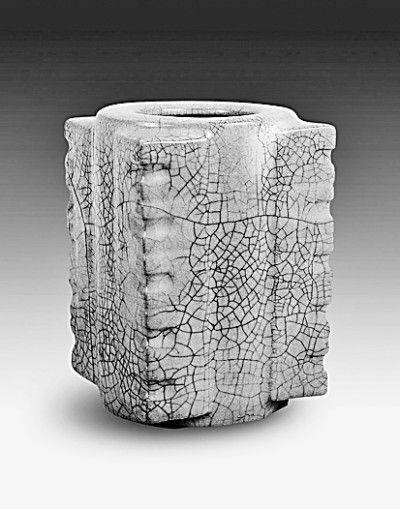
Song kunkin, the piece, the piece of pack art
Land plume is not the same as silver and snow in the white porcelain as the jade platinum, which celebrates the "twilight of a thousand peaks". Linking the porcelain with the colour and character of the jade, which the chinese nation has admired since ancient times, the porcelain words are often used to value the porcelain, so that the balconies produced by the tong song-cheng-teng town kiln are referred to as the “false jade instrument”. According to the chaudhian temple, “the chinese town of tang wudang carry a porcelain penthouse called a fake jade device for the sake of the dynasty, and the town of changnan has its name in the sky”, and the other kiln is huo's, “kindian etiquette, obscurous, thin, and fine”。
In the history of chinese ceramics, song dynasty has six major kilns of five names. The six main kilns are the fixed kilns of the northern region, the yiuzhou kiln system, the kiln system, the magnetic state kiln system, the chronology of dragon springs in the southern region, and the white china system of the town of cinder. The five major kilns are your kilns, official kilns, bro kilns, kilns and kilns. Your kiln is also the top of the five major kilns, which are located at the qingyang temple in bofeng county, henan province, for a relatively short period of time, but whose tan is the most glamorous of all. Your china is part of the platinum, which, according to the materials of the platinum, has been analysed as containing the manau and the present porcelain as having the manau. According to the literature, it is for the five generations of zong cai rong rong rong, “customs rise from the zong cai and pass on the same day's call to the world: `the rain has broken through the sky, the colour of man is the future'”. The plain man says: "the kiln will surely call you zakat, and it will not be enough." smell the clouds therein as the sky, as the light, as the thin as the paper, as the sound. It will be as if it were true.” "who sees the colour of wood, the rain is out of date." it's more like your china. The pink tires are clean, the tans are dark. You've got to stick it in the bouquet." there is no relic of the world's wood kilns, but only in the literature, the wood and your kilns, like jade, are the key to treasure and appreciation for all。
In his chinese ceramics history, mr. Ye xianmin argued that you have a close relationship with yen kung fu. In zhejiang, it is the mid-term booming dragon springs and south song officer kilns that have inherited and put at their peak the cube process. It is located in yongquan, zhejiang province, and is a well-known source of cyanobacterium for song. According to ming dynasty's inn of zhejiang, “in the 70 miles of mount hua, located in the south of the prefecture, the hill is located in ryuda. When the two were not detailed, oda burned the green instrument, and the crown was crowned. Brother, brother, brother, life two." there is a similar record in many of the literatures of the state capital, longquan county: “when and when i was born, i tasted the main qinjida kiln, and it was born out of both, green and pure, as in the case of jade. But a bottle is a small amount of gold. His brother's name is one, and all his kilns are white and slit, no. `breathing', and the world is crowned.” from the history of dragon kilns, they have developed their own ceramic characteristics as early as the fifth generation and the northern song period, with a thick, curvature-forming, stripping, decorative techniques such as sculptures, stickers, grafts, stamping, etc., which are well-retailed, yellow or brown. The period of the southern song was the culmination of its development, with a wide variety of ceramics and various forms, including not only dishes, bowls, dishes, pots, stoves, aqueducts, and other literary objects, but also buddhist statues, such as pixie and sound. Through a variety of improvements, such as the rational configuration of ceramics, aluminum, the improvement of kilns, and kiln techniques, it has been successful in producing representative colours such as pink, plum, onions, etc., and has become a fine work of song dynasty。
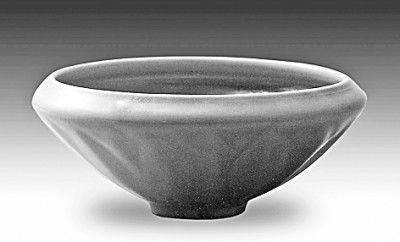
Song long springs, cyanapple pillage
Song dynasty's famous “official kiln” is divided into two categories: “old” and “new”. The so-called "old officer" refers to the north song official kiln, and the "new officer" is the guidance officer. In its negative scroll, southern guang was quoted as the year of the proclamation (1111-1125), “the self-built kilns are burned and named as official kilns”. According to the tangai accountancy of the time of the southern song, “the government and chang, the kyoshi has set up its own kiln and is known as the official kiln. It's a chinese treachery. It was built in a building in a temple and named a green instrument. It's muddy. It's very fine. It's so clear, it's so precious to the world. Between the 1930s and 1940s and the end of the twentieth century, part of the site of the south song kiln was located in hangzhou, and scientific archaeological excavations and large amounts of relevant information were obtained from the south song kiln site and the tiger hole site of oogway。
The official kilns, which are famous for the song generation, have many distinctive artistic features. The first is the diversity of ceramics, adapted to the needs of court life, such as dishes, bowls, bottles, roofs, stoves, washes, dishes, platinums, etc., which have become important sources of their modeling; the second is the formation of a stylist, with a royal attitude; and the third is the colour of tan, which is thick and green, and which is colourful, particularly the “violet iron feet” and “ice cracks” formed by thin flats, which have brought to light the glazing beauty of the maces, the jade like ice, and the thousands of veins。
There is also cinnamon city's original cinnamon. The burning history of the cinderian kiln can be traced at least to tang dynasty, where song dynasty white porcelain, also known as the “shadow greens”, is “hidden green”, and the chalk is white, whereas the china is white and in between. Decorative techniques are mainly gravitating and grafting, with the use of lotus flowers, waterlines, porridges, swimming fish, baby play, etc., which is called "boylines and hard, blue, crystals, as beautiful as jade."。
A ceramic history is a history of civilization, a history of culture, an artistic creation
In the case of curing, song has created a new horizon for chinese ceramic aesthetics and has established high-grade scales for future generations of ceramics, which have built a new style of ceramic aesthetics. Since the song generation, the porcelain has continued to develop and many new innovations and achievements have taken place. In addition to the porcelain, new products, processes, materials, new forms and decorations are constantly emerging, such as green flowers, colours, colours, colours, etc。
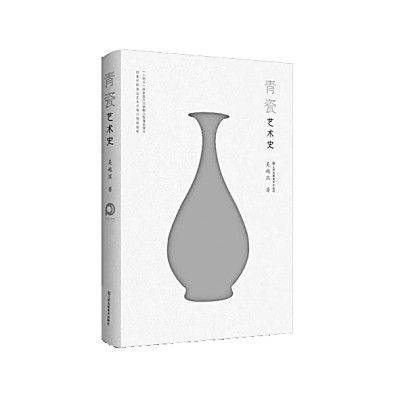
"history of green porcelain art" by wu nongbeam, by jiangsu phoenix arts publishing house
On the whole, the china has become a vehicle for bringing together the nation's cultural and artistic wisdom and aesthetic appreciation in the hands of past craftsmen. It can therefore be said that a history of ceramics is a history of civilization, a history of culture, an history of artistic creation. As a representative business card and token of the traditional chinese civilization, the chinese nation has made an outstanding contribution to human civilization, not only as a treasure of the town halls of the world's major museums, but also as the supreme example of human ceramics and ceramics, with a unique leadership in the millennia of history. This glorious history deserves not only our memory and praise, but also our inheritance, development and in-depth study。
The recent publication by jiangsu phoenix arts press of the history of the art of the chauvin arts, by mr. Wu hongbin, the zhejiang li shui man, and professor at the faculty of fine arts and design, yangzhou university. After writing the history of the zhejiang zhejiang and after working on the history of the chauvin arts, the writing of more than 300,000 words can be said to be the culmination of many porcelain studies. As one of the readers of the book, i think there are several features that deserve our recognition and attention: first, the author's systematic excavation and comprehensive adaptation of the history of the development of the chinese cyanobacter, the construction of a framework for the narrative of the cyanobacterium history, and the solidness of the information, which gives readers a clear understanding and understanding of the history of the development of the cyanobactor. Second, the author tells the history of the porcelain, which is the history of the porcelain arts, from an artistic perspective. The writing of artistic history is not only selective, but is also based on what art views are of paramount importance. If the theory of the “end of the art” that emerges from contemporary artistic history studies is based on a non-articular perception, there is no difference between the “historic of the platinum art” and the “historic of the platinum”. Mr. Wu koo-bin's “history of cyancho art”, whose artistic history is based on traditional artistic perceptions, explains the history of cyano and his classics on the scale of art and the inner nature of artistic beauty. Third is the cultural perspective. Art is essentially a culture, but its historical existence is essentially a product of the culture of life, from the point of view of the history of the platinum, from the point of view of both the art and the aesthetics, where art is merely a sect of creatures, so that it is not only reasonable but also fundamental from the point of view of culture. The porcelain culture, socio-cultural and cultural integration, as highlighted in the narrative of the book, shows that the author has a conscious human consciousness and has given the writing a high level of cultural awareness。
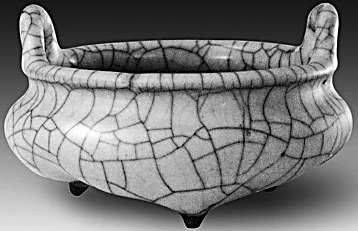
Song goku, double-eared cauldron
We know that the research of china's ceramic history has produced considerable results, but it is still weak compared to the vast history of history, which needs to be compiled, combed and supplemented. It also requires a high degree of recognition and interpretation from historical developments, as well as the participation of more scholars as part of the classics of the great culture and art of the chinese nation. As a researcher at the birthplace of the cyanoba, mr. Wu is worthy of our admiration and learning。
The day of light (01. 09. 11, 2022)