


Summary: the era of digital technology development is an era of industrial change, and the development of innovative entrepreneurship among university students is the focus of our innovation-driven development strategy. Highlighted problems such as outdated curricula for innovative entrepreneurship development, weak teaching staff and lack of a platform for practice are also present in universities. To that end, we need to actively explore innovative entrepreneurship development models for university students in higher education that are adapted to the needs of the digital age, continuously improving and upgrading the curriculum, teacher-building, practical platform building and resource integration, in order to deepen the causes behind the problems in practice, and to improve the innovative thinking and entrepreneurial practices of university students, with the main aim of effectively addressing the problems of poor supply of and imbalance in the development of human resources through integrated approaches and providing an incentive for innovative development for socio-economic development。
Keywords: the digital age, college students, innovative entrepreneurship, modeling
Introduction
The unprecedented wave of digital technology has swept the globe in just a few years, changing the way human society produces, lives and patterns of economic development. The new generation of information technology big data, artificial intelligence, cloud computing and block chains have permeated people's productive lives, creating many new industries and innovative industries, as well as significant changes in digitally based industrial integration and traditional industrial patterns. With the demands of this new era, the talent demands more of the capacity to innovate and entrepreneurship, and universities bear the burden of developing the best talent for innovation for social development. The self-worth of university students can only be enhanced by upgrading their innovative entrepreneurial capacity, and the students themselves can only contribute their due strength to the country's innovation-driven development strategy for the new era and to the country's competitiveness, which is not optimal for university students. Traditional models of education focus on the transfer of knowledge, neglecting students ' innovative thinking and practical capacity-building and failing to allow students to be proactive and innovative in a rapidly changing digital wave and to be proactive. There are also shortcomings in innovation entrepreneurship education in tertiary institutions, curriculum development is incomplete, there is no full-time teaching staff, there is no adequate platform for practice, and it is difficult to meet the needs of individual students and the requirements of innovative entrepreneurship practices. Based on the above-mentioned arguments, it is clear that research into innovative entrepreneurship development models for university students in the digital age and the exploration of effective ways, pathways and methods of development are of great theoretical value and relevance. In the context of the situation analysis, targeted recommendations are made for the improvement of the quality of education for innovative entrepreneurship in higher education and the development of highly qualified personnel to meet the requirements of the digital age。
I. Background and significance of the study
1. 1 developments in the digital age
While the digital wave has taken its full toll in the socio-economic landscape, industrial ecology, employment mapping, the rapid development of new technologies such as big data, artificial intelligence, cloud computing, block chains and so forth, and is currently in the process of digitalization of industries, the rapid pace of the digitalization of the digital industry, accompanied by the emergence of new occupations such as data diggers, smart algorithms, global digital operators, and so forth, the emergence of new business models and the emergence of new scenarios and new talent requirements for the digitalization of traditional industries and the cross-border integration of industries, the digital industry is also advancing at an accelerated pace, with new types of information-consumptive product manufacture and related operations for data collection, processing and analysis. Under this trend, the university is an important venue for the development of innovative entrepreneurial skills for university students. This is a critical opportunity to respond to the urgent appeals of the times and to accelerate the development process。
1. 2 increased capacity for innovative entrepreneurship
Both individuals, institutions of higher learning and society require university students to develop the capacity to start innovative entrepreneurship. Because innovative entrepreneurship enables university students to move beyond the ideological constraints of old employment, expand their employment thinking and employment patterns, and meet their diversified employment needs; innovative entrepreneurship is an important initiative of higher education institutions to deepen reforms in higher education and advance innovative education, as well as a key way for higher education institutions to improve the quality of their incubation and integration; and, on the other hand, higher education students with excellence in innovative entrepreneurship are not only the fresh blood of social development, but also the central drivers of innovation. These young people are able to create new jobs and effectively relieve job market pressures through innovative thinking-incubating entrepreneurial projects; they combine their knowledge with cutting-edge technologies and explore new business models to reinvigorate industrial upgrading. In addition, the success stories of university-level entrepreneurs can have a demonstration effect, attract more talent into innovative entrepreneurship areas, create a virtuous circle of concentration and industrial development, and open new paths to high-quality socio-economic development. For these reasons, innovative entrepreneurship development mechanisms in the digital age of university students in higher education should be actively explored。
Ii. Status and problems of innovative entrepreneurship development for university students in higher education
2. 1 inadequate curriculum
2. 1. 1 lack of forward-looking curricula
Currently, most university courses on innovative entrepreneurship continue to focus on traditional theoretical teaching, focusing on basic concepts and processes of entrepreneurship, and on insufficient integration of digital technologies. The failure of the curriculum system to keep pace with the pace of industrial development in the digital age has led to a disconnect between the knowledge and practice learned by students, making it difficult to foster innovative thinking and entrepreneurial skills that fit the needs of the times, and to meet the demands of emerging industries for diversified knowledge structures。
2. 1. 2 inadequate and inconsistent training courses
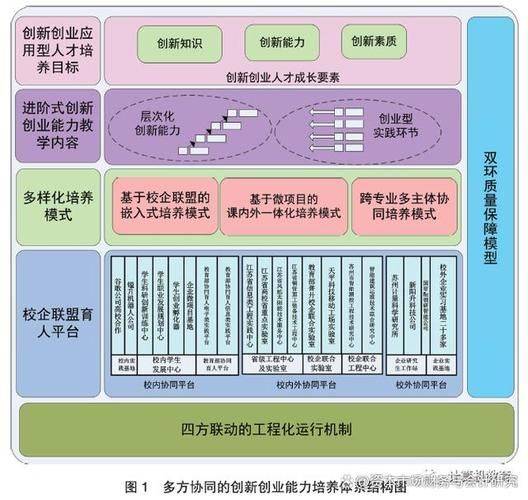
Innovative entrepreneurship courses often exist as optional courses or short-term training courses in the tertiary curriculum system, lacking a cross-cutting approach from admission to graduation, a systematic design, an organic link between the various courses, a well-developed knowledge system for innovative entrepreneurship, and overlapping teaching. The development of a subsystem of innovative entrepreneurship courses needs to focus on cross-disciplinary integration and building bridges of knowledge-sharing. Different disciplines should develop innovative entrepreneurship curricula that reflect their own characteristics in order to foster differentiated competitive advantages for students. However, in the process of developing students ' innovative entrepreneurship, which is constrained by factors such as curriculum systems, teacher strength and so forth, real achievement of education for education remains a challenge。
2. 2 weak teacher capacity
2. 2. 1 inadequate professional qualifications
Currently, most of the instructors in the innovation entrepreneurship curriculum in higher education are counsellors, administrators or other professional teachers who lack systematic expertise and practical experience in innovative entrepreneurship education. It is difficult for teachers to incorporate practical examples and cutting-edge ideas of innovative entrepreneurship in the digital age into teaching, and the failure to provide professional and in-depth counselling to students has affected the quality and effectiveness of the teaching of innovative entrepreneurship programmes。
2. 2. 2 lack of practical experience
Because teachers themselves lack the experience of innovative entrepreneurship practices, teaching is often only theoretical and it is difficult to impart to students some of the necessary skills and experience in the actual entrepreneurship process. As a result, innovative entrepreneurship education cannot be linked to actual teaching and students have fewer opportunities to do so. Less effective teaching makes it difficult for students to obtain from their teachers in-depth guidance on key practical skills such as market research, business model construction, risk control, etc。
2. 3 limited platform of practice
2. 3. 1 insufficient resources for in-school practices
The development of innovative entrepreneurship practice platforms lags relatively behind within universities, and hardware facilities such as dedicated laboratories for innovative entrepreneurship and incubators are lacking. Innovative entrepreneurial activities in schools take a relatively single form, mostly in the form of competitions or lectures, and there is a lack of long-term and deep-rooted practical projects. Students do not have real entrepreneurial experience, exercise opportunities, and practical projects in schools have low levels of applied digital technology. It is difficult to foster digital innovation entrepreneurship that responds to the needs of the digital age without deepening its technological potential。
2. 3. 2 inadequate outreach
Innovative entrepreneurship cooperation, although between some institutions of higher learning and enterprises, appears to be loose in form and lacks a long-lasting and stable cooperation mechanism. Enterprises are less motivated to participate in innovative entrepreneurship education in higher education, with limited internships and hands-on jobs for students, and less compatible with innovative entrepreneurship projects. At the same time, the low level of collaboration among school enterprises in research and development for innovative entrepreneurial projects, the transformation of results, etc., has not resulted in a good situation for productive research and development of co-producers, which constrains students ' ability to develop innovative entrepreneurship。
2. 4 low student participation
Some of the students were less aware of innovative entrepreneurship and felt that it was difficult, risky and lacking courage and confidence to try it. At the same time, the lack of a well-developed system of innovative entrepreneurship curricula and limited practical opportunities make it difficult for students to truly appreciate the pleasure and value of innovative entrepreneurship, resulting in low motivation to engage in innovative entrepreneurship. In addition, some students are influenced by traditional employment perceptions and are more inclined to opt for stable jobs in the absence of innovative entrepreneurial enthusiasm and motivation。
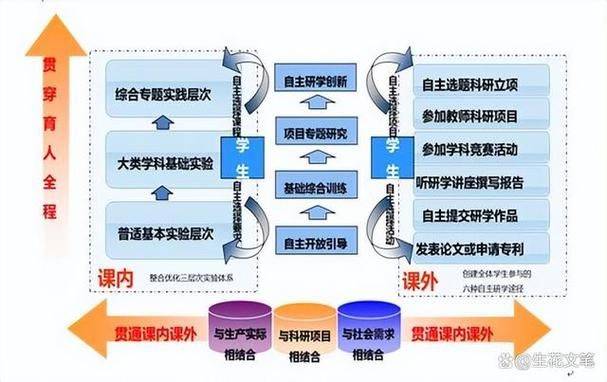
Iii. Strategies to optimize innovative entrepreneurship development models for university students in the context of the digital age
3. 1 optimizing the curriculum
3. 1. 1 building forward-looking course content
Colleges of higher learning should follow the trend of the digital age by updating the content of the course on innovative entrepreneurship in a timely manner and by adding courses on the integration of digital technology with innovative entrepreneurship, such as “advanced intelligence and innovation entrepreneurship”, “big data-driven business innovation”. At the same time, the introduction of the latest models and trends in innovative entrepreneurship for students, the development of innovative thinking and digital entrepreneurial capacity among students, and the introduction of innovative entrepreneurship in the digital age are accompanied by an emphasis on the practical application of the content of the curriculum, in addition to theoretical and practical cases, and the enhancement of the practical application of the design, marketing, finance, etc. Of business models. Courses on core entrepreneurial skills such as business management to upgrade students ' entrepreneurial practices。
3. 1. 2 improved systematic curriculum design
A systematic curriculum system has been in place for four years at the university level to integrate all aspects of innovative entrepreneurship education into the overall process of training at the tertiary level. The progressive curriculum is structured according to the cognitive patterns and growth needs of students at different levels: at the beginning of the school year, emphasis was placed on the basics of innovative entrepreneurship, building on the theoretical foundations and helping the student system to master the core elements and underlying logic of entrepreneurship. To help students develop the basic concept of innovative entrepreneurship and basic process awareness, and to enhance students ' awareness of innovative entrepreneurship, to be included in the second year of the programme. Innovative entrepreneurship courses are embedded in the professional education system, enabling students to further integrate academic knowledge with the theoretical practice of innovative entrepreneurship while upgrading their professional innovation capabilities. (c) a practical course on innovative entrepreneurship at the third level, where students are trained to participate in real entrepreneurship projects, and where innovative thinking and entrepreneurial capacity are strengthened in practice. The hands-on skills of students have been further improved; the four major courses have been devoted to guidance on innovative entrepreneurship employment and have introduced students to the relevant entrepreneurship policy. Counselling and entrepreneurship finance guidance services for students ' entrepreneurship or employment。
3. 2 enhanced teacher-building
3. 2. 1 improvement of professional qualifications of teachers
Establish long-term and regular training and promotion mechanisms, organize regular visits of innovative start-up teachers to the country and abroad to participate in scientific and research conferences, training courses, workshops, etc., to update teaching concepts and learn new knowledge; require teachers to actively prepare for and obtain professional qualifications, encourage teachers to pursue doctoral degrees, and continuously upgrade their qualifications and upbringing. Establishment of a cooperative mechanism for teacher exchange that promotes the exchange of experiences and pedagogical seminars among teachers, working together to improve the quality of teaching on innovative entrepreneurship。
3. 2. 2 teacher experience in practice
To motivate teachers to participate actively in innovative entrepreneurship practices and to assist teachers who start up or join innovative entrepreneurship projects. Schools, for example, have set up special funds to provide financial guarantees to support teachers in their entrepreneurial practices, and joint enterprises have established teacher practice bases. Teachers are regularly appointed to work in enterprises to provide them with an in-depth understanding of innovative entrepreneurial business models and practical needs and to develop practical experience. In addition, business innovation entrepreneurship mentors could be hired to work with schoolteachers in teaching and mentoring to achieve complementarities and improve the quality and level of innovative entrepreneurship education。
3. 3 improved platform of practice
3. 3. 1 strengthening the building of in-school practice platforms
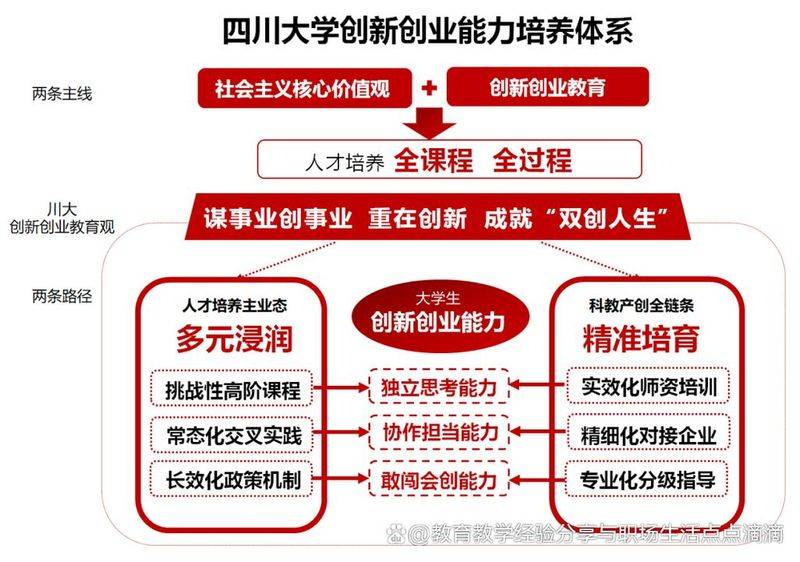
Increased input into innovative entrepreneurship practice platforms in schools and the construction of hardware facilities such as innovative entrepreneurship laboratories, incubators, etc. To provide a good practice environment for students. At the same time, activities such as incubation of innovative entrepreneurship projects, simulation of entrepreneurship, etc., are being carried out so that students can build on their experience, improve their capacity in practice and enrich the form of innovative entrepreneurship in schools. In addition, there is a need to promote the deeper integration of in-school internship platforms with digital technology, to build a simulation of real-life entrepreneurship with virtual reality and enhancement of reality, to create a immersive digital entrepreneurship practice environment for students and to effectively enhance their digital and innovative entrepreneurial capabilities。
3. 3. 2 deepening out-of-school cooperation practices
Improve long-term and stable cooperation mechanisms for schools and increase cooperation among non-school organizations, such as enterprises and trade associations. Schools provide high-quality business internships for students. Through internships, hands-on jobs and innovative entrepreneurial projects, schools channel talent and technology to enterprises for mutually beneficial and win-win purposes. Research, development and transformation of innovative entrepreneurship projects in extra-school institutions with higher education institutions; and promotion of co-production studies in higher education institutions. Out-of-school innovation entrepreneurship mentors could also be invited to provide guidance and training to students to inform them of market demand and industry dynamics and to improve their ability to develop innovative entrepreneurship practices。
3. 4 integration of multiple resources
3. 4. 1 government policy support
Universities of higher education should be proactive in reaching out to government departments, engaging in more communication and seeking support and financial assistance from the government for their policies. The government could set up a university students ' innovative start-up fund to finance university students'start-up projects; it could support the introduction of preferential policies to encourage university students to start-up tax incentives and site subsidies. Innovative entrepreneurship contests, entrepreneurship shows, etc. • activate the double-strength and create a platform for students to demonstrate and exchange innovative entrepreneurship。
3. 4. 2 engaging social resources
The full use of social resources to build the innovative entrepreneurial capacity of university students, the involvement of enterprises, social groups, etc. In higher education start-ups, the possibility for enterprises to provide higher education institutions with donations, equipment and technology, and joint entrepreneurship education with higher education institutions are also important avenues. An innovative entrepreneurship development project was launched, and social groups could provide innovative entrepreneurship training, counselling services for university students. Another way to help and support is to integrate innovative entrepreneurship resources and use internet platforms to provide easy and efficient services to university students for innovative entrepreneurship。
3. 5 stimulating student participation
Innovative entrepreneurship awareness and interest in innovative entrepreneurship are increased through the organization of seminars, forums, competitions, etc. At the same time, innovative incentives for entrepreneurship have been established to reward and recognize students who perform well in innovative entrepreneurship activities, such as the award of certificates of honour, credits and financial support for entrepreneurship. In addition, attention will be paid to the individualized needs of students, providing them with individualized guidance and services for innovative entrepreneurship, helping them to develop the right ideas for innovative entrepreneurship and stimulating their enthusiasm and motivation for innovative entrepreneurship。
Conclusions
The search for a culture of innovative entrepreneurship among university students in the midst of a growing digital age is fundamental to adapting to the times and to the proactive integration of higher education into the country. Innovative entrepreneurial capabilities of university students can be enhanced through a variety of paths, such as optimising the curriculum, strengthening teacher-building, improving the platform of practice, pooling forces and stimulating enthusiasm for participation, but since the development of university-level innovative entrepreneurship is a work carried out by universities, governments, enterprises and society, and is a longer and more complex process of continuous work. With the upgrading of digital technologies and changes in socio-economic structures, the future needs to continuously improve and refine innovative entrepreneurship practices in higher education institutions and to provide a strong underpinning for national innovation-driven development through the continuous export of talent with strong innovative entrepreneurial and knowledge capabilities. (by hebei media institute, job entrepreneurship guidance centre, jjubo; newsletter author, hebei media institute, pan shunyi)



