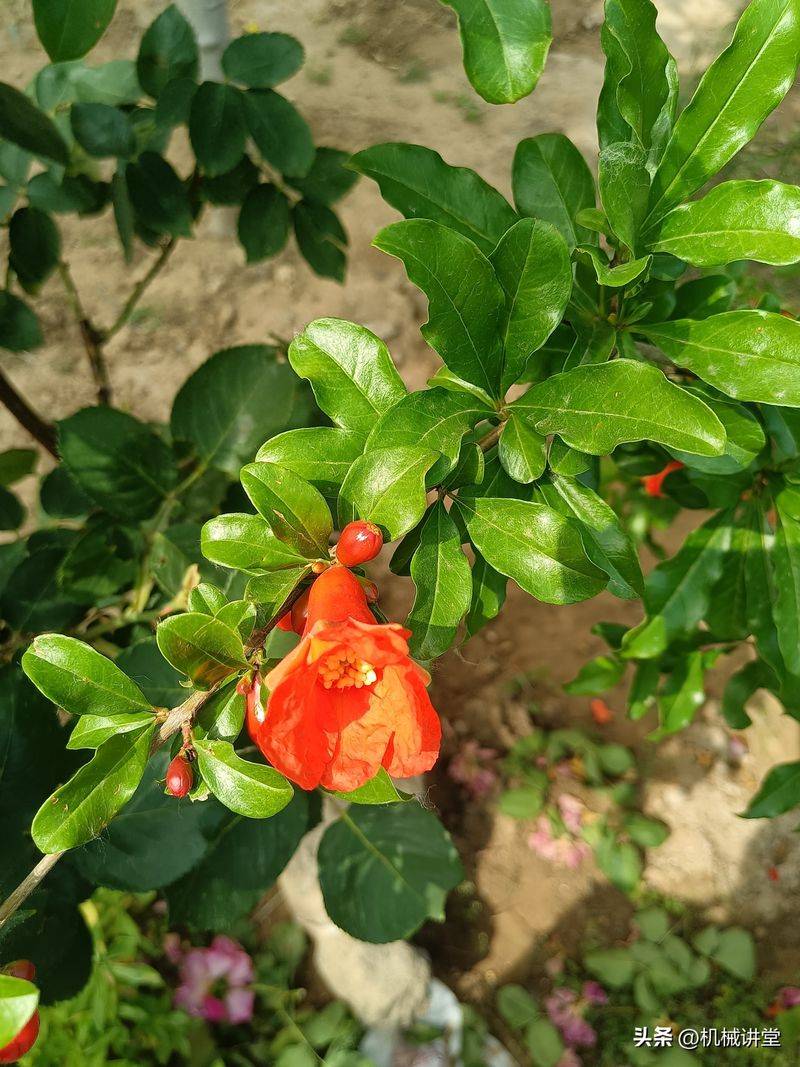
The rural areas have a wealth of indigenous curriculum resources, such as flower weedings, fairs, paper-cutting mud, etc. Among them, natural resources include non-living substances such as mountain rivers, sun and moon stars, rock and earth, but also life-related substances such as flower trees, chicken and duck geese, melon fruit and vegetables; social resources such as the social environment (rural commissaries, fairs, village halls), social institutions, members of society, social activities (farming, rushing, temples), social rules (fashion), etc.; cultural resources include a variety of folk theatres (skin pictures, puppet theatres), folk games (vans, hoops, dancing dragons), folk songs, folk crafts (paper cutting, clay, woodwork)。
Rural life has substantial curriculum resources
In the “autumn fruits” event, teachers brought together plant seeds and fruit collected by young children in the field villages, inviting young children to observe and discuss the colours, shapes and characteristics of the seeds, and to carry out a series of activities such as pasting objects, decorative frames and the making of necklaces, not only to build the capacity of young children to act with their minds, but also, more importantly, to promote the full development of young children, whose emotional proximity to nature, to the countryside and to their home lands is becoming closer, and nature's grass and grass, and its fields and countryside is one person's pamphlet for the young children。
For teachers, the development and utilization of rural indigenous curriculum resources can improve the professionalization of teachers. It helps early childhood teachers to develop educational ideas, so that their professional ideas and abilities can be enhanced, and so that teachers can integrate the development needs of young children, social resources around kindergartens, etc., into the design of teaching materials. In the interaction of young children with the natural environment and materials, teachers are gradually learning to analyse the behaviour and needs of their children, to adapt their programmes in a timely manner and to carry out their activities in a complementary manner in the form of outdoors and indoors, groups and groups, kindergartens and families。
For parents, the use of indigenous rural curriculum resources can facilitate home-based cooperation. For example, during the new year's festival, grandfathers who wear lights are invited to work with other parents and children to make lanterns with different colours of paper; parents with special skills in paper cutting are invited to school to teach their children how to cut paper; parents are mobilized to collect natural materials with their children and to guide parents and children to try their own child-making, etc. Through the use of indigenous resources, parent-child relationships between parents and young children have been increased and cooperation between parents and kindergartens has been promoted。
Returning to rural areas to address lack of curriculum resources
Mr. Chen said: “nature, society and society are living teaching materials.” the lack of resources for rural kindergarten programmes can be addressed to a certain extent by the full exploitation and use of rural indigenous resources in the rural kindergarten curriculum, where nature and society are used as living materials. However, the current status of use of indigenous curriculum resources in rural kindergartens is not encouraging. Some rural kindergartens have gradually developed a sense of curriculum resources and have begun to try to use rural curriculum resources for teaching, but in many parts of china, rural kindergartens still lack a sense of curriculum resources and are under-utilizing local curriculum resources. This is reflected in two main areas:
First, the curriculum is less resource-sensitive. Many rural kindergarten teachers lack common knowledge of resource extraction, turn a blind eye to the rich curriculum resources available in rural areas and focus more on teaching materials. For example, the use of finished teaching aids for mathematical operations does not lead young children to the operational experience of using rural natural objects。
Second, there are insufficient course resources. The development and use of indigenous curriculum resources in rural areas by teachers remains on the surface, with increased attention to the operation and play of young children and lack of in-depth use and excavation. For example, awareness is limited to rural natural resources, and there is a lack of awareness of rural unique social and cultural resources, and the use of indigenous curriculum resources is confined to the use of goods without combining with the experiences and needs of young children。
Promoting rural indigenous curriculum resource development
Development of curriculum awareness. Targeted development of awareness among early childhood teachers about the use of indigenous curriculum resources, helping rural early childhood teachers to develop an experience-oriented curriculum view, changing the narrow curriculum concept of resources and curriculum awareness with a strong emphasis on discipline, which used to be over-reliant on teaching materials, and raising the educational capacity and curriculum awareness of rural kindergarten teachers。
Encourage practice. The use of indigenous curriculum resources by rural kindergarten teachers must not be left to consciousness, but should be explored and tried in practice in depth. Teachers can explore the intrinsic value of rural indigenous curriculum resources by reading specialized books, participating in training courses, and exploring the use of rural indigenous curriculum resources in the context of the practical experience of young children。
Research and development strategies. Rural kindergartens can organize teachers to prepare and build a local curriculum resource for kindergartens, encourage parents to participate in the development of curriculum resources and encourage young children to use indigenous resources innovatively in their activities. The relevant departments can attempt to develop materials that are truly suitable for rural kindergartens and provide rural kindergarten teachers with more material and training assistance. ♪ lee ♪
(adviser: kang xiao yu (intern), yuan bo)