Opening: refers to a daily stock market transaction called opening. China's stock market is open on mondays to fridays, from 9. 30 to 11. 30 a. M., except for statutory holidays, and in the afternoon from 15:00 to 15:00, as is the case everywhere in china。
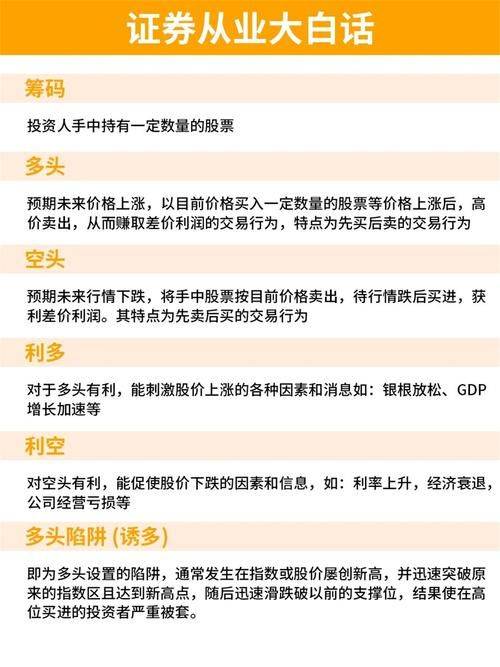
(a) doing nothing: doing nothing is called empty, emptiness (in hong kong language), selling empty (in singapore malaysian language) is an investment term for stocks, futures, etc., and a mode of operation for markets such as stocks, futures, etc。
Rat silo: a “food price” for unfaithful brokers against customers. In particular, before raising the stock price with publicly owned funds, the dealer is able to build a warehouse at a low level with his own personal funds (heads of institutions, masters and their relatives, related households) and to sell the profits at the first place after the transfer of public funds to a higher position。
Disk washing: disk washing is a stock market term. The basic purpose of a dishwashing operation, which can occur in any part of the dealer's area, is to clean up the market's surplus floating chips and to raise the overall market holding costs。
Construction: the warehouse is also referred to as the opening of a warehouse and refers to a certain amount of futures contracts that the traders have bought or sold。
Exchange of hands: in mainland china's securities market, the change of hands is used to describe futures purchased from one person or sold to another for an equal share, i. E., traded。
Diving: a dive in the stock market means a massive and rapid decline in stock holdings or in a stock at all costs, i. E. Moving down in a straight line, as high-level dives, within a short period of time, and applying to linear charts。
Extension of terminology coverage
Multiple: an investor's preference for the stock market is that the stock price is expected to rise, so that the stock is bought when the price is low and sold when the stock rises to a certain level in order to earn the difference。
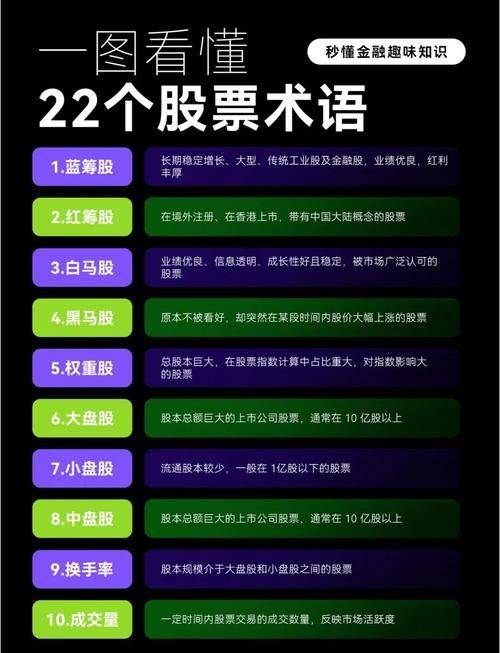
Large capitalization: shares issued by large companies with a market value of over $2 billion. Total capital is calculated as the company's current stock multiplied by the market value of equities. Large capitalization companies are usually shipbuilding, steel and petrochemical companies. There is no uniform standard for large capitalization, and it is generally agreed that it refers to stocks with larger equity。
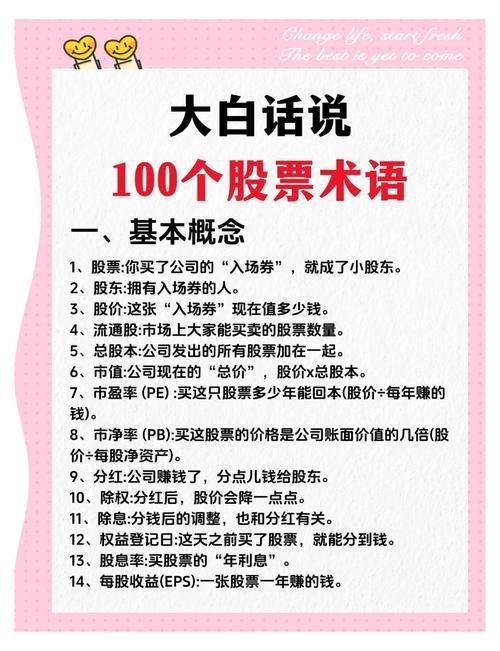
Retribution: this is the interest-bearing restoration of stock prices and turnover, the mapping of stock price trends based on real stock increases and the adjustment of turnover to the same equity calibre. Stock prices have changed as a result of disempowerment and interest rates, but the actual cost has not changed. For example, the original $20 stock is $10 after ten, but the actual equivalent is $20. This price appears low on the k-line, but it is likely to be a historical high。