Teaching is essentially designed to help students rebuild their own knowledge through an effective path, rather than the one-way transfer of individual logic and experience by teachers. Pavel
Teachers ' learning is an important external driver of student development and a key internal driver of their own development. The influence of teachers in learning is not directed at changing orders, but rather slowly permeating. The stronger the knowledge, the stronger the impact, the less visible。
“students' knowledge” will form the core of the teacher knowledge system
New technologies are gradually subverting traditional learning, and teaching knowledge of disciplines will eventually be replaced by in-depth learning, with teachers shifting from a knowledge-based focus to a focus on future-oriented subjects. “students' knowledge” will form the core of the teacher knowledge system
Knowledge systems represent a dimension of teacher learning, from the point of view that education is an attribute of social practice, and the application of knowledge is another dimension of teacher learning。
Compared to other professional groups, teachers are specialized, their professional role directly influences through personal interaction, and there is no intermediary, which imposes high professional requirements on teachers and is far from sufficient to rely solely on the knowledge of the discipline. A single system of academic knowledge does not support the overall judgement of teachers and does not address interactive issues. The teacher's task is to understand clearly the differences and changes between today's students and yesterday's students, tomorrow's students, and to stand by and understand yesterday's developments, solve today's problems and be able to point the way tomorrow. This requires teachers not only to leapfrog the knowledge system of the subject, to build a broader system of teacher literacy, but also to have the ability and wisdom to listen down, to see, to support the growth of people, and to have a vision and a sense of talent for the family and the nation, all of which teachers today should have。
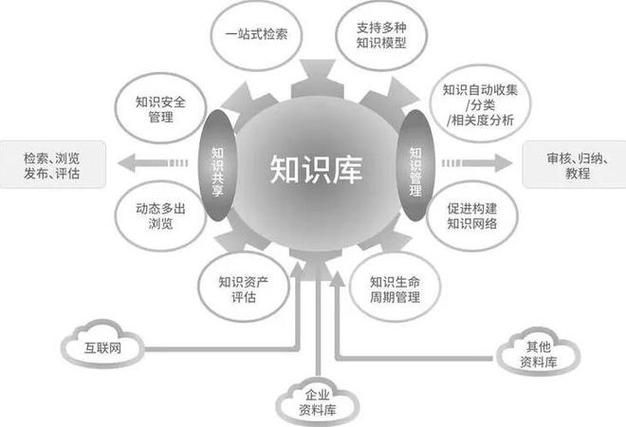
The teacher knowledge system is a collection of knowledge of disciplines, knowledge of disciplines, knowledge of students, etc. Scientific knowledge is not a simple point of knowledge, much less a combination of crushed points of knowledge that can be used for repeated training. Scientific knowledge is the whole, the structure and the method of the system, and different people have different paths to deconstruct and reconstruct their knowledge. Teaching is essentially designed to help students rebuild their own knowledge through an effective path, rather than the one-way transfer of individual logic and experience by teachers。
In the 1980s, a group of educational experts, represented by shulman, helped teachers to solve problems in teaching by introducing the doctrine of teaching knowledge in disciplines, providing to a large extent a teaching strategy for the knowledge base, and creating a teaching paradigm that transcends individual experience, with far-reaching implications for teaching. Almost 40 years have passed since the emergence of the theory of knowledge in the discipline, and the environment and paradigm of human learning have changed dramatically. In a few short years, from learning through the development of human intelligence to learning through the development of artificial intelligence tools, new technologies are gradually subverting traditional learning, teaching knowledge of the subject will eventually be replaced by in-depth learning, and teachers will have to move away from their knowledge base to a focus on future-oriented subjects。
Today's “students' knowledge” is particularly important and will form the core of the teacher knowledge system. “students' knowledge” is the teacher's full perception of the student and of his/her responsibilities based on the knowledge, as well as the teacher's perspective and approach to supporting student development. Teachers, guided by such ideas, know how to support students' development, and they do not remove all obstacles and risks in the course of their studies, so that students can grow up in a so-called “safe” environment and do not replace them in facing possible problems. Teachers who truly master “students' knowledge” have an independent judgement about what is necessary to grind, what is necessary to defeat and what is inevitable in the context of technologically dominated life and in the conditions of material resources。
“students' knowledge” is also an educational position that requires teachers to be insinuated, to intervene in a timely manner, to be sensitive and alert to complex environments, to have a rational and calm assessment of tools such as the theory of “everything can be quantified”, to remind and guide students at all times to remain independent as subjects rather than to be lost in big data systems。
New content for teaching in learning and subversion
Education cannot go beyond human development processes and patterns to imagination and assumptions. What kind of talent is needed in the future. It's both a developmental and a historical issue
How can we have solid learning? Teachers are required to have sustained momentum for development on the one hand, and changing dynamics for students on the other。
In 2015, the organization for economic cooperation and development (oecd) in its pisa study showed that national investment in information technology had nothing to do with student performance. This conclusion has given rise to much controversy and even raised the point that there is no need to continue to invest uncertain artificial intelligence in school education. In a few short years, the debate has not been over, and artificial intelligence has strongly influenced education and entered schools at an unstoppable pace. School education has undoubtedly been brought into the age of “shared” and “quantified” data, and increasingly mature technological tools and application systems are quietly changing the shape and structure of schooling. More learning resources are channelled, more learning spaces are shared and more complex learners are identified. For teachers, little longer buffer period is experienced, and they are placed in it and endeavour to adapt. During the 2020 epidemic, the success of large-scale online teaching was the best example。
Although teachers are adapting to technological changes, the problems posed by technology have yet to be addressed. On the one hand, most teachers and students are beneficiaries of big data and smart technologies; on the other hand, technology promotes substitution and traditional teaching faces serious challenges. There is a question to be considered: why did the investment in information technology not have an effective correlation with student performance? This is a complex issue, but one thing is certain that the technology of the past and the learning of the past are two separate systems, and that the role of technology is to teach only as a physical support and overlap, and that the learning of students has not really changed. From a human development perspective, education should be prepared for the future, but education cannot go beyond human development processes and patterns to imagination and assumptions. What kind of talent is needed in the future is both a question of development and a question of history. Teachers need to learn more than students, to subvert their experience, to adapt to changes, to look and think, and to try to create new content for teachers。
“teacher and learner, and speak for themselves”, the essence of a human being lies in virtue, and teaching is both a standard of knowledge, a professional requirement and a moral imperative. And then know that which it is, that it is not able to remove it. The quality of teaching is a necessary tool for teachers to learn today. “i have a career and know no job”, learning has become the responsibility and mission of teachers。
(shanghai city teacher training centre party secretary, director)