1. Main factors affecting reuse of wastewater
Re-use of coal-washing wastewater in selected coal plants is based on achieving a balance in water washing and a closed cycle of water washing. During coal washing processes, the amount of water entering and leaving the selection process includes, inter alia, the amount of water used for coal washing, the amount of clean water used for environmental equipment, the amount of water taken away from products and the amount of water drained. From the point of view of achieving a balance in the selection of coal washing, the elimination of water drains for use in coal washing can lead to closed circulation and reuse of water washing. In the practice of production, the achievement of waste water without effluent is influenced by a number of factors, such as:
Where reuse of wastewater is achieved, the quality of wastewater treatment must be guaranteed, and if water quality is not met, this may result in a decline in product quality and damage to washing equipment, so that quality assurance is key to achieving reuse of wastewater. Coal-washing wastewater is known to be weak alkaline in production practice, with higher suspension concentrations, cod concentrations and fine particles in waste water, and a strong negative charge on the surface of solid particles in waste water, which, if not addressed, would affect coal washing once re-entering the coal washing system;
More production processes are involved in the selection of coal, longer washing processes and more inert washing systems, resulting in less significant fluctuations in the amount of water to be washed, making real-time monitoring of the amount of water to be used in coal-selection plants more difficult, reducing coal-scausing effects, resulting in excessive water abundance and water drainage requirements;
Despite the design of the coal treatment process and the closed cycle water reuse process, coal selected plants are affected by the age of production equipment, financial constraints and insularity of on-site management. Although they have the capacity to treat wastewater and the conditions for recycling water use, it is difficult to achieve a water-wash balance, resulting in the release of coal-washed wastewater and environmental pollution。
2. Research on coal-washing wastewater treatment
2. 1 screening of inorganic condensants
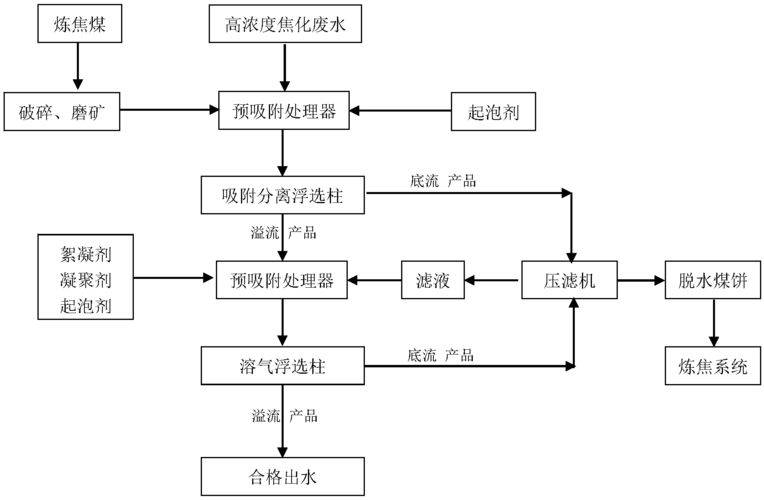
The special characteristics of coal-washing wastewater are combined with the selection of inorganic condensers for experiments and strict regulation of the process and time of experiments and of the concentration, mixing time and speed of the water. The treatment of coal mud water through the use of electrodes and lime as a condenser has had a good effect, but the size of lime is small and sedimentary, making subsequent wastewater treatment more difficult. Given that lime and electric slag are industrial slags, the use of lime and electric slag as condensants can effectively reduce the production costs of enterprises。
2. 2 determination of the treatment programme
Experiments have shown that lime and electro-slags can destabilize coal sludge and accelerate the deposition of particles in water, but their deposition is slow, requiring the addition of condensants to increase the sedimentation rate of particles and change their sedimentation performance. Experiments have shown that the use of non-ion pam as a condensant is more appropriate, and the selection of electrical slag and control of pam additions, as well as the time and speed of mixing, have had an impact on deposition. The results of the experiment showed that pam inputs had good sedimentation effects and that the input and mixing time of electrical sludge had a small impact on the experimental effects. The best experimental process is to add 0. 5 g of electrical sludge to 100 ml of coal-washed waste water, which is fully modulated and then input a 2 ml mass score of 0. 1 per cent to pam and mix 90s。
2. 3 deposition experiments
In the treatment of coal-washed wastewater, the joint use of electrical slags and pam is feasible, using the process to separate approximately 40 per cent of the water and effectively reduce cod and ss concentrations in water, while also improving the filtering of condensed bodies to facilitate subsequent dehydration of coal-washed wastewater。
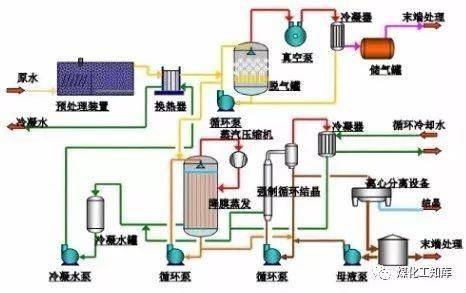
3. Coal washing of diaphragm sewage reuse techniques
3. 1 oil deposition systems
The pre-treatment of coal-washed wastewater contains large amounts of grease and suspension, and if not treated, increases the operational burden of subsequent water treatment systems. To this end, oil resins in water are treated using oil insulation and condensation processes, with the adsorption bridge and electrostatic grid capture function of high-molecular condensants, enhancing brown movement, increasing the impact rate of particulates and glues, forming large, structurally constructed bodies and increasing the efficiency of separation of condensed water。
3. 2 microbicide systems
Large amounts of microbes can be present in the water after oil deposition, with serious implications for the proper functioning of the water treatment membrane system. For this purpose, in the treatment of coal mud, microbicides have to be added to the fungicide pool to inhibit the growth of microorganisms. Baccalaureum can also serve as a water buffer for subsequent wastewater treatment systems。
3. 3 filtering systems
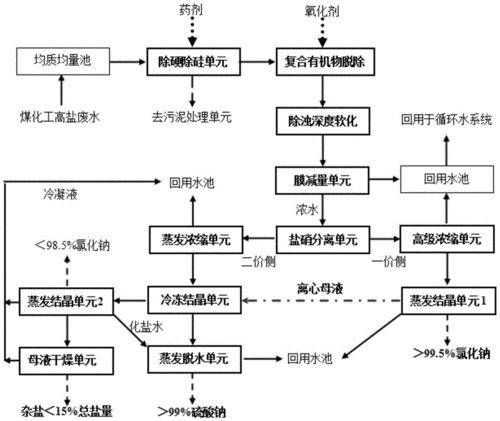
After condensed sedimentation, there will also be residual suspensions and grease in the water, with the option of sand filtering or integrated cleaners for the effective removal of residual impurities in the water。
3. 4 anti-infiltration systems
Desalinization of coal-washed wastewater using a counter-infiltration system is currently the main technology for sewage treatment, which is widely applied because of its efficient and energy-efficient character. The diaphragm reverse osmosis system differs markedly from traditional water treatment separation techniques. Its desalinization is efficient and is widely used in coal washing, coal-chemicals, electricity and pharmaceuticals. With increased pressure on environmental protection in the country and a shortage of water resources, the dual-film reverse sewage reuse technology has become one of the main sewage treatment technologies in industrial production. Coal-washed wastewater can be desalinated with a 95 per cent de-salinization rate using reverse osmosis techniques, and after desalination water can be recycled to achieve energy conservation and reduction targets。
Concluding remarks
As science and technology continue to develop and advance, more new wastewater treatment and reuse technologies will be developed and applied to increase the proportion of coal-washing wastewater treatment to reuse. Achieving zero emissions from coal-washing wastewater will enhance the protection of the ecological environment. The recycling and sale of by-products such as coal sludge in coal-washed wastewater protects the ecological environment, achieves a good effect on energy-saving emission reductions and contributes to the sustainable development of the coal washing and processing industry. (source: coal scanner, llc)