


Submitted by li ling jing, director, economics and sociology, china journal of social sciences
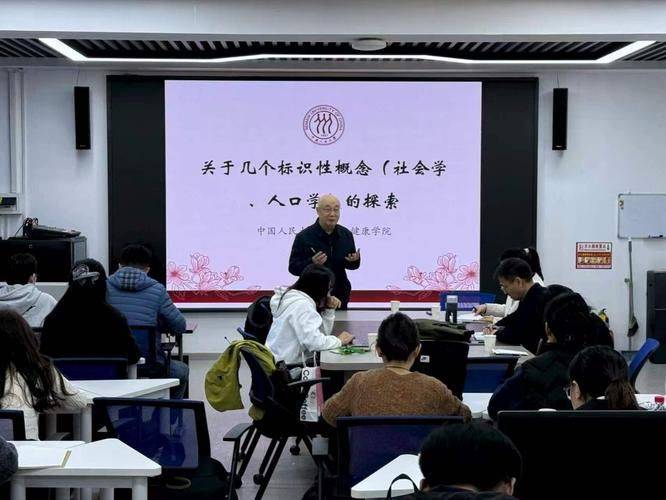
The concept, as the logical starting point for knowledge production, is the material that generates theoretical and knowledge systems. Just as building materials serve the expected functions of buildings, different functionally oriented theories and knowledge systems also require different conceptual types. The secretary-general of xi stated that “it would be good to refine the concept of marking, to develop new concepts, new dimensions and new formulations that could be easily understood and accepted by the international community, and to lead to research and discussion in the international academic community. This work begins with the construction of disciplines, each of which is structured into systemic disciplines theory and concepts”. In recent years, the refining of indicative concepts has increasingly become an important foundation and key link in building china's autonomous knowledge system of philosophical social sciences. An important dimension of socialist sociology in the development of chinese identity is to accelerate the extraction of indicative concepts with experience, theory, history and civil orientation。
“identification” means the marking used for identification. Unlike the general concept, which is a mere constituent element of the doctrine, the notion of marking is often coinciding with the original theory, which lacks the concept of marking; nor does it necessarily have the function of marking. From “easy to be understood and accepted by the international community” to “leading to research and discussion in the international academic community”, the power of symbolic concept dissemination to lead requires it to anchor its position in the world's knowledge spectrum and to take the initiative to highlight the theoretical originality and cultural fundamentals of china's ideas at the intersection of history and experience in the middle and west。
In retrospect of china's history of sociological development, our sociological researchers have refined a number of analytical concepts with general interpretive force, among them a common picture of concepts with higher international influence, such as the “discretion pattern” “an invisible hand” “unit”, which can provide a reference for our refinement of the indicative concept. In particular, the “discretion pattern” is a concept that has been widely used to identify rural and chinese social relations patterns based on traditional cultures. In contrast to the ideal type of “group pattern”, the image of “breadwood” is contrasted with that of “water bands” in a “consistent circle”, presenting two types of social relations that exist in the central and western world, which have been further developed by the academic community and are widely applied in the study of social relations (structure), organizational mechanisms, institutional comparisons and even international issues. The “other invisible hand” reveals the third mechanism that influences economic development and resource allocation beyond the market regulation (“the invisible hand”) and state intervention (“the visible hand”) that focuses on western economics, namely, the transformation of social structures, both as a result of economic growth and as a driving force for social change, providing new ideas for breaking western theoretical bottlenecks, understanding, and advancing china’s modernization. The important concept of “units”, which identify the basic units and general characteristics of chinese society at a particular stage of history (especially in chinese cities), has evolved from the “quiet” of the international academic community about a new form of social organization in socialist society to the close academic exchange between china and the outside world. The chinese academic community soon became the dominant force in studying the analysis of the balance between historical changes and institutional changes, macro-system structures and internal organizational mechanisms。
The three concepts are common to each other: first, they refine or identify chinese experiences and problems of common concern to the academic community in china and abroad, such as the main differences in the structure of society (relationship patterns) in china and the west, the main driving forces of economic and social development in china, and the structural characteristics, mechanisms and historical functions of social organizations with chinese characteristics. Second, the concept was born out of an inadequate mechanism of interpretation of chinese experiences and problems in the academic community outside china, or the absence of an appropriate theoretical toolbox, i. E. A clear sense of chinese and foreign theoretical dialogue. Thirdly, the concept arises from the time and space context of a particular period of history and has the strength of a long period of overall interpretation, such as an analysis of the characteristics and patterns of the structural and institutional transformation of chinese society. Fourthly, the concept implies a deep sense of the code of chinese civilization, a sense of cultural subjectivity and a sense of location that is unforgettable, external, forward-looking and, above all, mine. In summary, these concepts reflect the intersection of empirical, theoretical, historical and civilizational landscapes and highlight in the dialogue between china and the outside world the original intellectual contributions of china that are viewed by the international academic community。
The experience, theory, history, civilizational orientation inherent in the concept of marking stems from the richness and uniqueness of chinese practice, whose vitality depends on its theoretical insight into the response to the “question of practice”. For the future, the sociology community should be guided by the “two combinations”, the “six have to stick” and build on china's realities, break through methodological difficulties and explore effective extraction paths. Rather than being abstract, fragmented, one-sided, static and otherwise shaped, china's actual reality is one of concrete, continuous, holistic, developmental and self-constructing; “building” requires first and foremost the clarity of “who depends”, i. E. Adherence to the people's supreme values and practical orientation. To this end, the following areas require particular attention。
"worship by means of worship." in particular, there is a need for vigilance in the form of “methodism” dominated by the mind of form and schooling, which is reflected in the tendency to “abstract empirical” or “methodological”ism in sociological research, with the consequence that the theory is far from reality and the means and purposes are “verted” and “trees are not seen”. The key to breaking down is to understand the urgency of responding to the “question of practice”, to apply appropriate methods in identifying, studying and resolving substantive issues in a realistic and knowledgeable spirit, and to continuously enhance their applicability in reviewing the underlying logic of the methodology and its use of boundaries。
Research and adaptation techniques. Research studies in chinese sociology incorporate methodologically the traditional chinese communist party research and studies, the traditional chinese doctorate, the western qualitative research tradition and innovative methods of the digital age. Its advantages lie in being sensitive to the “resistence” and “flow” of society as a whole, capturing the social fabric and logic of social functioning, and “re-emergence” and “intention” of complex social relations and human order. The rapid development of artificial intelligence has led many researchers to increasingly understand social realities through digital analysis, but technological means are no substitute for field research. Research should be conducted to identify and correct possible practical deviations from traditional quantitative and computational methods of social science research in china, and to promote scientific research that truly brings together people's wisdom and “involves” in their lives。

Theoretically light up the fire. Theories are the masters of concepts. The concept of emblematicism was born in the great process of theoretical innovation in the party and chinese modernization, in the creative transformation and innovative development of the traditional culture of excellence in china, and in the learning of the theoretical expression and practical wisdom of all the great civilizations of the past. In terms of the concept of marking, it is a test of the researcher's ability to “position” and only those researchers who have come from the middle and the west of history can use their academic “inspiration” to grasp the pulsation of the times, extract the concept of marking in rooted practice, identification of problems, adaptation methods, summation of patterns and theoretical dialogue, and generate original theory。
Reshaping the topic to lead the extraction direction. At present, sociological reflections on phenomena such as “research scale `basket viewing'” “research issues being held hostage” point to a lack of capacity to set issues on their own in a “comfort” state. Questions are often more important than problems. China's best traditional culture and the deep structure of chinese society, the composition of china's characteristic rural-urban relations and their origins, the transformation of the social structure of the digitally intellectual age, and the general, systemic and forward-looking issues, should be addressed. It should be consistent with policy discourse, academic discourse, social (infrequently empty, mass, professional) discourse, and, in the process of transforming “practical questions” into academic topics for which the socio-scientific community is deeply involved, it should be crafted to truly serve the conceptual concept of autonomous knowledge systems and promote the sociology of chinese identity in close interaction between theory and practice。



