


Submitted by: queen's day, queen's republic of china, queen's republic of china
General secretary xi stated that the human problem is a fundamental and principled issue in philosophical and social scientific research. Social anthropology is equated with comparative sociology in academic traditions, with different cultural societies being the main object of study, with the aim of clarifying the universality and specificity of human society through comparative research into its structure. Social anthropology has played an important role in the construction of china's socialism as a special feature, and has continued to evolve in answering and resolving the major problems facing contemporary chinese and society. In the practical course of combining academic research with social development, social anthropology has come to the fore with the theme “towards people”。
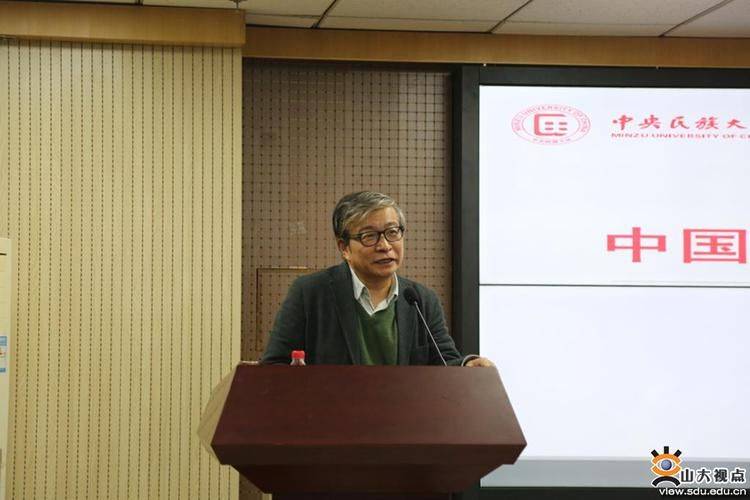
In 1980, during the malinowski memorial award of the international institute for the applied humanities, fahrenhei presented “towards the anthropology of the people”, summarizing and refining the anthropological characteristics of our country. In his view, research and studies useful to the people must serve them. Social anthropology, as a branch of anthropology, has the responsibility of its researchers to meet the needs of the masses of the people, contribute to social and scientific knowledge that truly reflects objective facts and provide social services for building a peaceful, equitable and prosperous society. The pursuit of “to the people” reveals that social anthropology should be directed towards people-centred learning。
Social anthropology insists on being people-centred, as evidenced by the fact that people are both social anthropologists and social anthropologists. People are the main subjects of society and organize chinese society in daily life and practice chinese culture. People-centred social anthropology aims at objectively investigating the lives of the people and sincerely understanding the aspirations of the people on the basis of which the knowledge developed by the research institute for social anthropology is reflected in public policy, acting as a bridge between the state and society. In the course of its nearly 100 years of development, chinese socio-anthropology is guided by marxism, inherits the tradition of developing chinese culture, draws on the applications of western anthropology, and constantly shapes its own research orientation and discourse system in the construction of modernity. Its interdisciplinary character towards the people is based on two aspects: research and research. Field research is the foundation and soul of the social anthropology discipline and it also lays down a knowledgeable academic culture for this discipline. Second is the discipline of social services. Generations of scholars have actively taken on major historical responsibilities in the areas of nation-building, social development and solidarity of the people, linking academic research closely with the practice of social development in our country, and promoting socio-anthropology as a source of prosperity today。
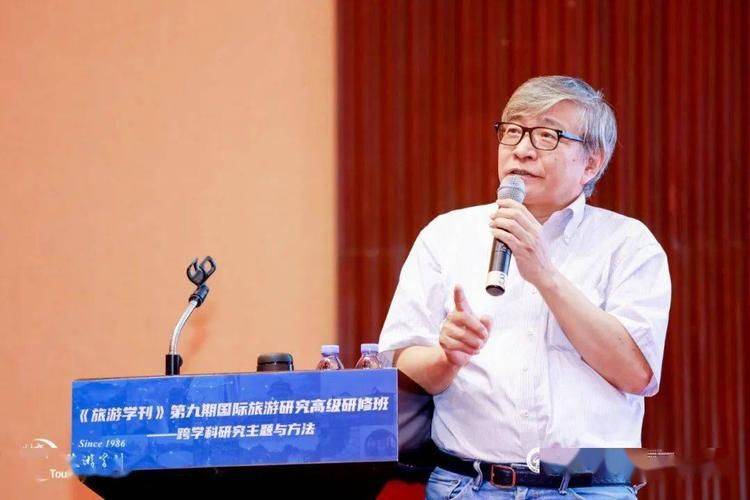
Looking back at the evolution of socio-anthropology in the country for almost a century, the continued soundness of its discipline, the increasing level of research and innovation capabilities have made an important contribution to nation-building and social development. Having achieved our first centennial goal, we have embarked on a new journey towards the full-scale construction of a modern socialist state, and our country has entered a new stage of development that is a great leap in the history of the great revival of the chinese nation. How can socio-anthropology, in the context of the new era, better understand people, serve people and reflect people's sexual care? In his view, the focus should be on three main issues。
First, the issue of human mobility and social integration. In the context of economic globalization, people studied by socio-anthropology have become mobile, while fields themselves have become mobile fields. The problem of the movement of people is essentially a structural change brought about by the “cross-border” of human beings and objects between different systems, with political, economic, social and cultural implications. Since the beginning of the reform and opening up of the country, inter-regional and inter-ethnic mobility has consisted mainly of two aspects: first, since the mid-1990s, our society has seen the emergence of a large group of uprooted and uprooted workers who have entered the urban industrial system for survival; and second, since the great west, a large population of the central and eastern regions has entered the western and border regions. As the secretary-general of xi has pointed out, for the past 70 years and particularly since the reform and opening up of the country, there has been an unprecedented degree and depth of solidarity among the various ethnic groups in the life of society。
Data from the seventh national census show that in 2020, the number of people moving was nearly 380 million, an increase of almost 70 per cent over 2010, and that population movements were more dynamic. Large-scale population movements have led to a relaxation of social integration and rapid changes in traditional cultures. The movement of people has taken cities, ecology, culture and so on into the wave of social change, creating a number of new phenomena and problems. Mobility itself has become the main social characteristic of china today, and it reflects the chinese problem as a process, that is, how chinese society is integrated under new historical conditions and how new social traditions are formed. People are separated from traditional forms of social integration, while traditional cultures continue to affect current social life as a matter of inertia, but at the same time face enormous pressures of change. In this context, new ties of integration between different groups are constantly being forged in the course of their interactions, and these phenomena, along with the adaptation and disadaptation of cultural traditions, have led to current social problems, which are also important social anthropology concerns。
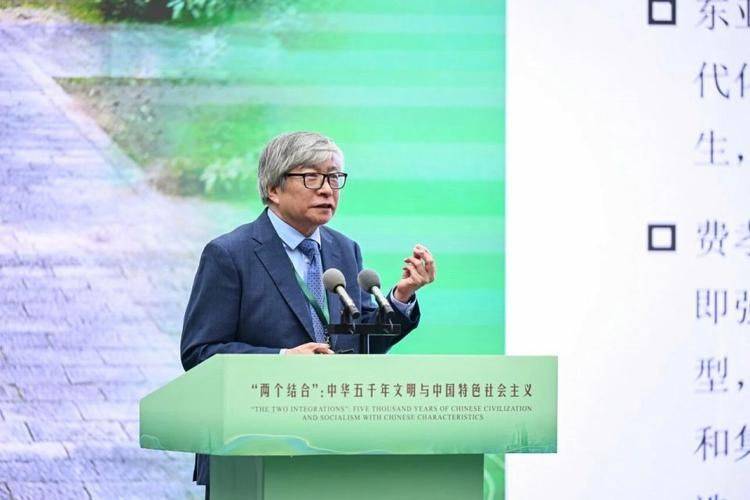
Second, the theme of good society. General secretary xi stated that the aspiration of people for a better life is our goal. The chinese people seek a better life with better education, more stable jobs, more satisfactory income, more reliable social security, higher levels of health care, more comfortable living conditions and a better environment, with children growing up, working better and living better. This is reflected in the provision of basic public services, such as child-rearing, schooling, income-generating labour, medical care, old-age maintenance, housing and support, as well as the guarantee of superior military and cultural services. The attainment of the development goals of high-quality and efficient agriculture, rural habitability and rich and well-off farmers, as well as the effective linkage between the consolidation of the gains of the anti-poverty campaign and the revitalization of the countryside, as well as the realization of a well-being of the rural population, are major issues of contemporary philosophical social sciences that serve the people. Social anthropology is a people-centred and values-oriented position that must give high priority to people's dominant position in the social life of society and in the policy system, and scientific surveys understand people's material and cultural needs. In particular, in the socio-anthropological survey, it is important to understand the demands of the people for a better life and the difficulties of real development, on the one hand, and to offer advice to the government in its efforts to develop and advance these areas, to establish effective communication between demand and supply and to contribute to the building of a better society, on the other。
Thirdly, the theme of building a community of human destiny and building a “one way forward” together. Since the 18th anniversary of the party, the secretary-general of xi has, on various important occasions, put forward ideas such as the formation of a community of human destiny, a community of central african destiny, a community of asian destiny and a community of human health. These ideas are based on china's cultural heritage and experience in economic and social development, and are based on china's vision of human development and the future of the world. In practice, “across the way” is an important platform for building a community of human destiny. Consistent with the exchange of ideas and building an open and inclusive world is one of the important visions for building a community of human destiny and a “one way forward”. In today's world, where there are wide differences and differences among nations in ideology, social systems and religious beliefs, there is much to be done in socio-anthropology to build a world of lasting peace, universal security, shared prosperity, openness and inclusion, and clean and beautiful. On the one hand, social anthropologists must uphold mutual respect and equality, the beauty of beauty, beauty and common humanity, open to inclusion, mutual learning and mutual appreciation, the concept of modernity and innovative development, and the full recognition and study of social differences and cultural diversity among nations in order to consolidate the humanist foundation of the community of human destiny. On the other hand, socio-anthropological researchers are required to study in depth the history and current state of dialogue among different countries and civilizations, and to conduct thematic studies on ethnic, cultural and religious issues in the region, to construct mechanisms for cultural sharing and to actively promote cultural exchanges and exchanges for the benefit of the peoples of the region。



