It's not a convenience store, it's a fast-food restaurant dressed in a convenience store. The world's largest serial name, mcdonald's, is over 30,000, if measured by the number of shops, and 7-11 is nearly 60,000. So 7-11 is the real king of fast food。
In order to explore why japan’s 7-11 branding as japan’s first convenience store and its ability to purchase its parent company in reverse through its excellent operation, i went to japan’s 7-11 headquarters and japan’s convenience store the previous few days to conduct field research。
I'll tell you the secret to the 7-11 growth. And the key turning points in its development over the past 50 years, and the coping strategies that business has put in place, have become today's 7-11。
The rise of japan 7-11 can be broadly divided into three phases:
Phase i: introduction of the united states 7-11 convenience store model。
Indeed, 7-11 is not a japanese company, it was a tunneled american brand, and in 1927, a united states firm in texas, called america south, discovered that the megamarkets in the united states, which had led to large-scale and peri-urbanization, had caused daily shopping difficulties for shoppers, allowing him to see business opportunities, so that he had added bread, eggs, milk, and other daily necessities to a store that used to sell only ice. In order to meet the need for more consumers for immediate convenience, he changed his business hours to 7 a. M. To 11 p. M. And named 7-11 a. M。
By the end of world war ii in the 1940s, the united states had entered a period of rapid development, urbanization had risen and the demand for fast and fast shopping had begun to grow. Against this backdrop, the united states experienced rapid growth from 7 to 11, reaching more than 4,000 homes in 1971, in canada, mexico and other neighbouring countries。
Although 7-11 convenience stores were born in the united states, it was japan that really promoted 7-11。
In 1970, japan entered a period of high-speed development, with the rise of urbanization, and suzuki minwen, then director of ito yohua hall, went to the united states to examine retail practices in developed countries. By accident, the 7-11 convenience store, which is a brand-new business of food such as hot dogs, coffee and other items such as soap, towels and so forth, has suddenly subverted its traditional perception。
He wondered if the introduction of 7-11 convenience stores into japan would change the situation in which small and medium-sized retail outlets were in recession due to the boom in large stores, creating a new business model that allowed both to coexist。
In 1973, ito yohua hall entered into an agreement with the united states of america to form a joint venture with suzuki minmin as ceo. In japan, the first 7-11 chain union store was established and the convenience shop model has been officially introduced into japan。
Phase 2: localization of 7-11 in the united states and creation of a blueprint for japanese convenience stores。
Immediately after the introduction of japan, 7-11 faced problems with water and soil。
For example, in the united states, the land is vast, the population is relatively dispersed, the community is far apart from the community, and one or two shops are generally accessible. Second, the supply chain system in the united states is relatively mature, and even when there is a distance between shops and shops, it can support the timely renewal of the stores and ensure their profitability。
However, the population in japan is highly concentrated, and the distance between shops and shops has lost the convenience of 7-11. It is also too fragmented to have a scale effect。
Second, american and japanese diets are different. Americans like to eat hot dogs, pizza, travel to work through america 7-11, and buy it easily, but in japan, people prefer eating groups, lunches, hot dogs, pizzas, and so forth, without making them easy for working groups。
In order to address convenience, suzuki min man has initiated the localization of japanese 7-11 convenience stores in five areas: product structure, door shop, logistics, inventory management, etc.:
1. Building a japanese-style product structure
In japan, around 1970, the economy was at a high rate of long-term growth, with japanese working and living time diversifying and late at night, and in this context suzuki min mann began to re-structure the 7-11 product structure, import rice trophies, lunches, etc., and make 7-11 a popular convenience store for japanese workers。
2. Intensive site selection, facilitation and scale effect
In order to complete consumer education as soon as possible and to enhance bargaining power for upstream suppliers, suzuki min mann, introducing the initial brand name and the relatively limited size of japanese, proposed “a strategy of choosing intensive shop openings in the same region that allows customers to feel the convenience of 7-11 while achieving single-shop profitability and expansion, effectively reducing marketing and logistics costs, and increasing the utilization of shop employees and brand awareness”
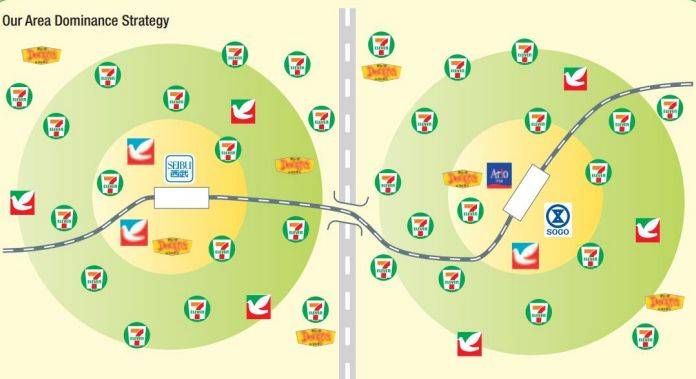
3. Create a small/common distribution logistics system to increase product speed and ease of shopping
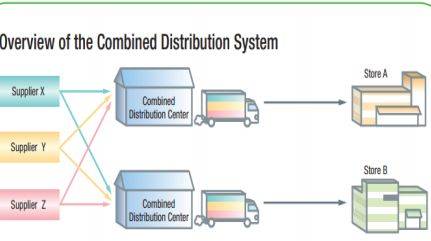
The early retail trade in japan was dominated by department stores and supermarkets, generally in the form of large-scale single-storey pre-purchases, after-sale purchases, which were slow to update, with high stock pressure and not suitable for small single-storey convenience stores. This led to the creation of a new logistics system characterized by “small distribution” and “joint distribution”, which significantly increased the speed of product renewal and the ease of shopping for customers。
Small distributions reduce the volume of individual purchases per store and increase the number of purchases, both to respond quickly to the demand for door-to-door orders, to increase the ease of purchase and to increase the flexibility and efficiency of logistics。
“common distribution” refers to the transport of different brands of similar goods in the same truck, the reduction of the number of truckloads per day, the reduction of transport costs and the improvement of efficiency in the door shop。
4. Increased utility contributions and facilitation
In 1987, with the increase in night life and female participation in the labour force in japan, many people did not have the time to pay for electricity and water, and japan's 7-11 utility services, such as the generation of electricity and water coal, were initiated to increase user convenience。
5. Enhancement of convenience by adding atm equipment to the shop
In 1990, japan 7-11 raised concerns about the limited time available to customers to provide feedback on traditional banking operations and the high cost of weekends, resulting in the extensive installation of atm equipment in the shop and increased user convenience. Most of the clients who come to collect the money consume it in the shop, which effectively boosts the sales performance。
By doing so, suzuki min wen has, over a period of nearly 30 years, developed a model of a japanese convenience store through five major adaptations of 7-11, exploring a one-stop approach to meeting the “facilitation” needs of consumers from shopping to everyday life. In 1990, there were 7-11 shops in japan totalling 19,000. It became an important pillar of retail trade in japan; and in 1991 the japanese convenience shop model began to export to the united states market in reverse to the home company 7-11 in the united states。
Phase iii: transition from an early “facilitating supermarket” to a larger “food market” in market space in response to the increased dividends of ageing, dual-career households in japan。
In 1990, the japanese economy turned to low-growth growth after the bubble bursting, low public consumption and the rise of discount channels, slowing growth in the whole convenience shop sector, and suzuki was aware that convenience stores would not be able to win against this backdrop by simply providing convenient services without differentiated product support。
Suzuki min man has begun to rethink the future path of 7-11, and has found that japan has more than 20 per cent ageing, more than 70 per cent of dual-career households, and that the ability of consumers to cook at home has deteriorated, while japan is a country with high labour costs, with relatively expensive food for restaurants outside. The same product, 7-11, can be half of the restaurant price through size and industrialization, for example, the same bowl, which could cost $50, but can be bought at 20 bucks。
As a result, suzuki min man has decided to reorient the 7-11 business, focusing on a food-based + service-friendly strategy, towards a larger “food market” in market space. This was followed by an upsurge of 7-11 songs, with 85,000 shops worldwide, with an annual revenue of $100 billion, becoming the second largest retail group in asia。
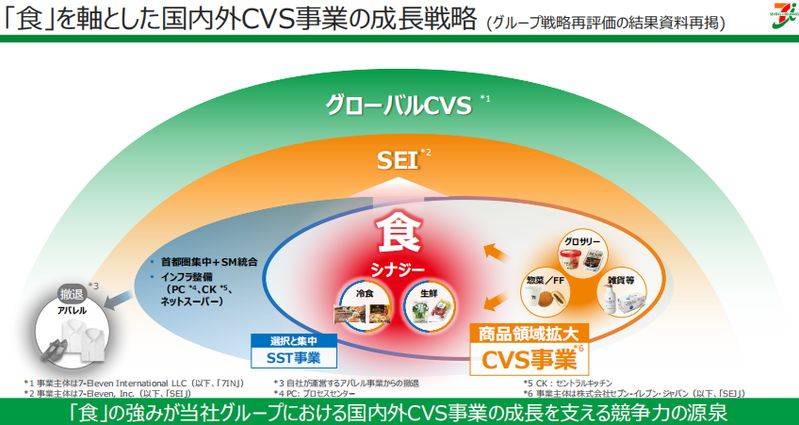
How, then, can 7-11 make it the most of the strategy of “food-based plus more accessible”
In the context of the “food-based” strategy, the following four points were made:
1. Change product structure and import 70 per cent of fast-food products
The 7-11 major expansion of food commodities, the introduction of such items as stabbings, semi-finished vegetables, and the seizure of the market for meals, currently has nearly 3,000 food items globally. Sales accounted for nearly 70 per cent of the total, equivalent to 7 fast-food items per 10 items sold。
Introduction of self-employed products to enhance competitiveness for “food” purposes
In order to obtain a higher māori and stable supply, 7-11 continuously develops its own commodities to provide consumers with diversified food and cooking options. In the year when the self-employed product was launched, the sales amounted to approximately 80 billion yen. Currently, 7-11 per cent of self-employed commodities account for 52 per cent, with an annual turnover rate of 50 per cent. 7-11 creates new forms of simple meals, taking over the market. In japan, 6 per cent penetration of the catering market from 7-11 convenience store sales is on the upward trend。
3. Self-building teams to maintain product competitiveness
Within 7-11, a 150-person commodity research and development team was formed to identify, on a daily basis, high-frequency explosive imitations that had been successfully operated by competitors, which were then sold at lower prices and attracted customers. They also have another task, which is to recycle data on the sale of products on a daily basis, to retrofit them on the basis of their tastes and to attract re-purchases of sophisticated customers。
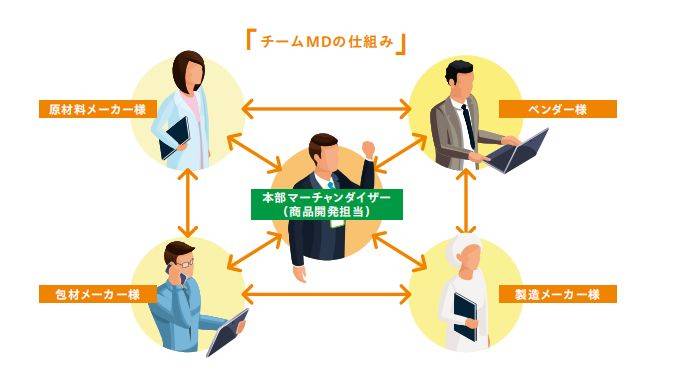
Transition from “vertically integrated” “retail manufacturing” enterprises to facilitate retailers
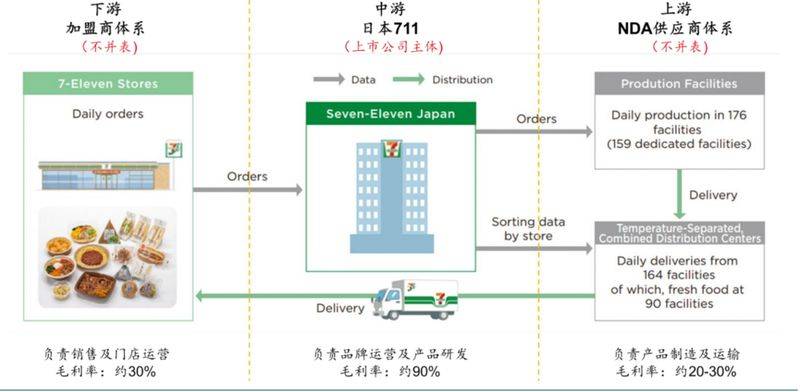
In order to secure a higher supply of maori and stable, 7-11 began to extend upstream, from product design, raw materials, production, logistics to marketing controls. At present, 7-11 have integrated 175 co-producers upstream, who produce only 7-11 food. The change from one-dimensional to multi-dimensional, “high-dimensional, multi-dimensional” goods, allowing 7-11s to remain competitively advantageous over the long term。
The following five points have been made around the strategy of “facilitation”, 7-11:
2. Construction of a thousand-story door shop
From 7 to 11 early on, they built their own data systems through artificial intelligence and used the data to provide maximum insight into the needs of the population in the vicinity of the stores to achieve a thousand-storey coverage。
For example, a store near a commercial hotel, where the product structure is designed around the business community, is dominated by items such as portable toothpaste that are commonly used on business trips. Taking into account the fact that people on mission cannot afford to eat at dinner, there are some foods that are filled with hunger, such as drinks, rice groups, candies, etc。
In the case of a shop in the vicinity of the company, the products in the store are designed according to the needs of the working population, with more people working, fewer hours for food, and the importance of ready breakfast, lunch and towel paper。
If the store is near the district, some of the longer-term vegetables, spices, sauce, yogurt and sour cream are more important。
If there are more people of advanced age in the neighbourhood, the population is relatively thin. The share of food in the store is smaller because the elderly eat less. At the same time, older persons are not able to move, even to deliver goods to their homes, etc。
Development of “nanaco” electronic currency
Taking advantage of economies of scale, 7-11 in 2007 led to the creation of the nanaco electronic currency in the industry as a means of payment to make it easier for consumers to buy。
3. Launch of mobile trafficking cabinets
As the social situation changes, such as the culpability of children, the ageing of the population and the decline in the population, the number of areas where shopping is difficult is increasing. In 2011, 7-11 introduced mobile marketing services to load rice packs, boxes, bread, beverages, etc. On light trucks and to sell in areas with scarce traffic。
4. Launch of 7-11 vending machines
There are many working places and schools in japan where there is no place to buy lunch and no convenience stores. They also did not have enough rest time to eat, and in 2017, 7-11 was introduced to provide multiple original 7-11 products。
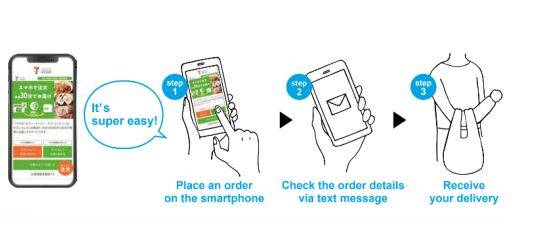
5. Launch of a 30-minute home service
To adapt to consumer demand for easy meals, 7-11 introduced catering outreach services, such as seven meal, to facilitate the delivery of meals to customers。
Summary
Looking back at the growth history of 7-11, there are a lot of business history in it! Against the backdrop of an era of uncertainty, the precision of the pre-judgmental capacity of 7-11 for future trends, as well as the interlocking, systematic thinking about strategies to respond to change, and the precision of a series of initiatives to lock the power points, are of great interest to chinese enterprises。