In order to help you better and more effectively prepare for the study of educational studies, the new east online examinations channel has prepared for you the contents of the “2024 study of the study of intellectual learning theory and application of educational review points”, and more of the study of educational studies of the study of knowledge points, how to prepare them, and so on!
2024 examination of cognitive constructionist learning theory and application of educational review points
Cognitive constructionist learning theory and application
(i) fundamentals of cognitive constructionist learning theory
Cognitive construction has developed mainly on the basis of piajer's ideas, with greater continuity with cognitive learning theories such as bruna, osopur and so on, focusing on how the learners construct some cognitive knowledge. The basic view is that learning is a meaningful construct, a process that builds, enriches and adapts its own cognitive structure through the interaction of old and new experiences. In substance, meaning is constructed as a result of assimilation and conformity. On the one hand, to gain meaning, new experience needs to be built upon and thus integrated into the structure of the original experience; on the other hand, the entry of new experience can lead to some change in the original experience, which can be enriched, adapted or adapted. In other words, cognitive construction emphasizes the two-way construction process of meaning。
The typical representative of cognitive constructionist learning theory is vitroque's creative learning theory and spiro et al.'s cognitive flexibility theory。
1. Generating learning theory
Vitroc presents the theory of productive learning, which provides an in-depth analysis and interpretation of the process of generating understanding. Vitroque believes that learning is the process by which learners generate the meaning of information, which is generated through the interaction of pre-existing cognitive structures with perceived information received from the environment。
Learning takes place on the basis of the relevant experience that the learner has already acquired, and in order to generate an understanding of what he knows, the learner always needs to combine with his previous knowledge experience. In addition, the human brain is not passively recording information imported from outside, but is active in constructing the interpretation of the information entered, actively choosing some information, ignoring some information and extrapolating it on that basis. This means that, in the process of generating understanding, the original cognitive structure of the learner -- the knowledge experience and information processing strategies that have been stored in the long memory -- interact with perception information (new knowledge) received from the environment, in which learners proactively select and take care of information and proactively construct its meaning。
2. Cognitive flexibility theory
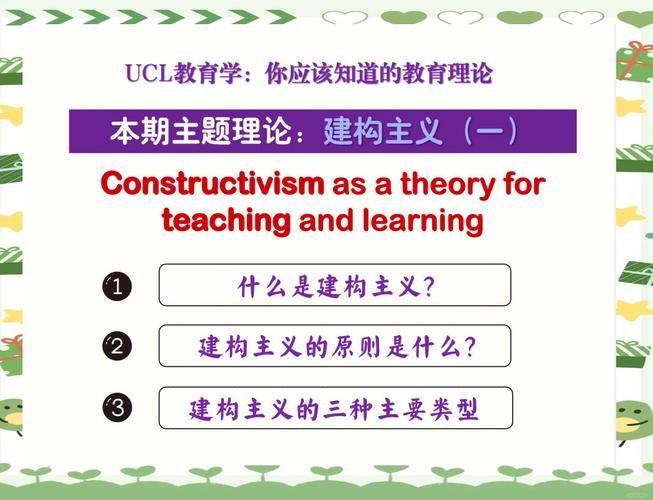
Spiro et al. Have developed cognitive flexibility theories that focus on how to promote flexible transfer of knowledge through deeper understanding. The concept of cognitive flexibility focuses on the learning nature of complex and poorly structured areas。
(1) knowledge in well-structured and poorly structured fields
Based on the complexity and variability of knowledge and its application, spiro and others divide knowledge into well-structured areas of knowledge and poorly structured areas. Some areas of knowledge are subject to comparative rules and identification, and there are clear rules for their resolution, which can essentially be applied directly to the corresponding rules or formulas, known as knowledge in well-structured areas. However, many practical problems in real life often do not have such rules and determinations, and in solving them, no
It's easy to apply the original solutions, but it's necessary to face new problems, to re-analyse them on the basis of experience and to construct new ways of understanding and solutions. This involves knowledge in poorly structured areas。
(2) primary and advanced knowledge acquisition
In relation to the division of well-structured and poorly-structured areas, spiro and others believe that learning can be divided into two stages: primary and advanced knowledge acquisition, depending on the depth and level of learning achieved (rather than age)。
Primary knowledge acquisition is an introductory learning stage for a subject of knowledge, and teachers only require students to know some important, basic concepts and facts, and only to repeat what they have learned in tests in a manner that is close to the original (e. G., recitation, filling, simple exercises, etc.), where the content is characterized by well-structured domains。
Unlike the acquisition of advanced knowledge, it requires students to grasp the complexity of concepts and apply them flexibly to specific situations. At that point, the complexity of the concept and the differences between the examples were evident, and thus dealt extensively with areas of structural disadvantage。
(3) random instruction
Spiro et al., based on a basic understanding of advanced learning, have proposed random instruction (or random access to teaching, random access integration), which emphasizes that learning of the same content takes place many times over, each time in a restructured context
This is what the new east online examinations channel has written for you about "theory and application of cognitive constructive learning in the study of educational studies in 2024", and it is hoped that it will help you to learn more about the study in the new east online!