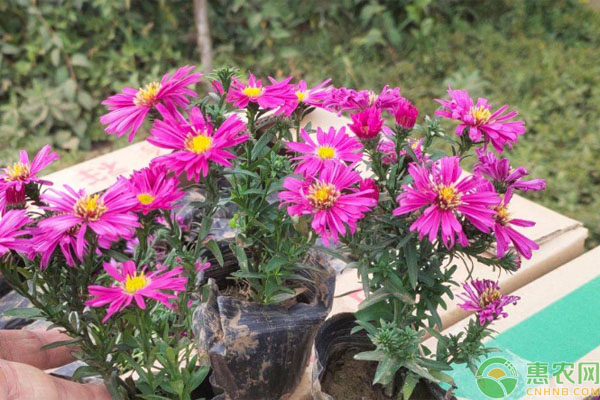
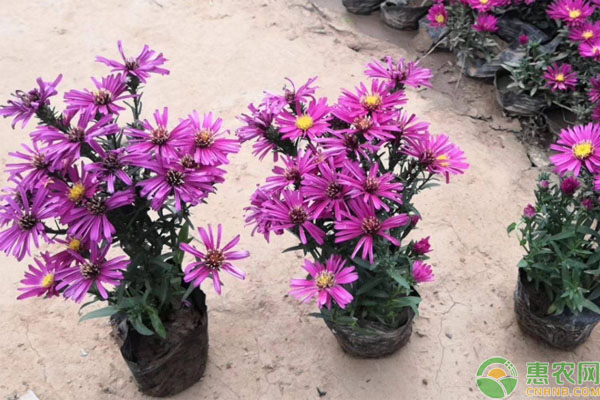
The dutch daisies, also known as the gills, and the new york violet, have grown flowers for the chrysanthemum for many years. They are diverse, colourful and valuable, often used for cutting flowers or setting them up, flower fields, etc., and, of course, suitable for domestic pellets. So how does dutch chrysanthemum grow well as a plant green? Let's find out。
1. Soil selection
The dutch aryra is more adaptable to soil and can grow normally in most soils. In order to make it better, however, it is advisable to use fertile, ventilated and drained soils for farming。
2. Light temperature
Dutch daisies like a well-silent environment, need to choose conservation in the sun and suggest keeping light around 8 hours a day. In terms of temperature, dutch chrysanthemum prefers a warm environment with an appropriate growth temperature of 15-25°c. High temperatures or low temperatures are not conducive to dutch chrysanthemum growth. In the summer, therefore, care should be taken to perform indoor ventilation, while cooling water, moving plants indoors during the winter and regulating the temperature so that winter can be safe。
3. Water and fertilizer
Before planting, a sufficient amount of base fat is required to ensure that the soil has sufficient nutrients, and in the long term, it is required to produce a thin fertilizer once every two weeks to make the plant flourish and bloom. It is also necessary to be rational, to be dry and wet on a daily basis, to be watered more when the weather is dry and to be able to spray water to keep the air wet。
4. Integrative trim
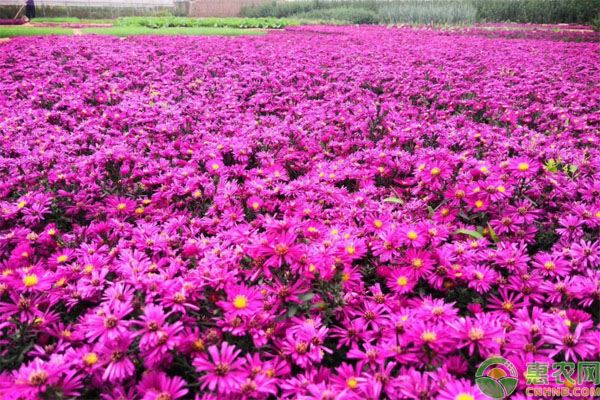
Dutch daisies are more resistant to shearing, and it is preferable to trim them regularly during farming, so that the waste of nutrients is avoided and dutch daisies grow more branches, while dutch daisies grow more flowers。
5. Reproduction
The dutch chrysanthemum is available for reproduction by seeding, poaching, division, etc. Cultivation can take place in late march in a warm indoor basin or in a hotbed, and can take place in about one week at 15-22°c; in may-june, most of the sodium implants take place, cutting young branches, and in a sand bed, they can be implanted after two weeks; and in the autumn or spring, the seedlings will be taken down from the roots of the old plant, with the usual varieties divided once a year。
6. Disease prevention and treatment
Dutch daisies are vulnerable to disease during their growth, such as pollen, leaf and rust. As a result, if the dutch aryra is found to have a disease, timely treatment, spraying and the transfer of plants to a cool ventilated environment are required。