Patent tort determinations have been of renewed concern in recent times. Can one claim be interpreted as another when there are more than two separate claims in the same claim? Are areas of application to be considered when matching violations? How should the term in the claim be understood when it is vague? What are the functional limitations and how are the characteristics of claims judged to be functional? Under what circumstances is a waiver considered in the principle of estoppel ... These specialized terms, deep theories, are the subject of intellectual property protection。
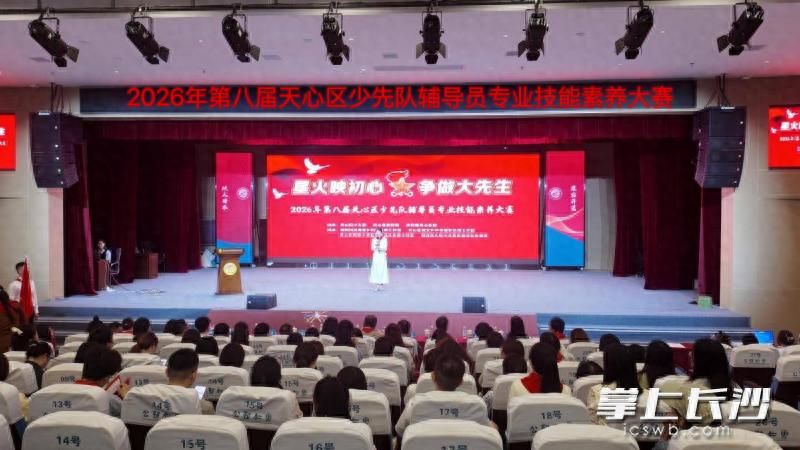
From 11 to 12 august, a seminar on patent infringement determination, organized by the beijing city high people's court, was held in kyoto, with the participation of judges from the supreme people's court and the intellectual property division of the high people's court in several provinces and municipalities directly under the central government, examiners from different departments of the national intellectual property authority, more than a dozen agents and dozens of business representatives. The participants had an in-depth and extensive discussion of the challenges that arose in patent tort determination。
How the scope of protection of patent rights is determined
The purpose of the patent system is to protect innovation and stimulate the creation of inventions, so that the patent system protects the interests of patent holders, preserves their motivation and sustains the innovation drive of society as a whole. On the other hand, the state guarantees private rights of rights holders through coercion, as a “cost”, and patent holders are required to disclose their technical programmes of rights, while technological advances and innovations in society as a whole are objectively promoted through the technical programmes of open patents. The legislative purpose of these two areas dictates the application of the principle of compromise in the scope of patent protection for inventions and practical new types of patent protection, which cannot be construed in the formal sense of the patent claim, nor can it be understood as a guiding text. This requires the court to strike a balance in determining whether the patent constitutes a violation, so that the interpretation of the claim provides a fair protection for the patentee and does not impede the realization of the public interest。
Thus, in patent tort determinations, where the full coverage principle has been applied to determine that an alleged tort (product or method) does not constitute a violation of a patent right, in order to better and substantially protect the legitimate interests of the patentee, the principle of equivalence should be applied to the tort determination. The principle of equivalence means that one or more of the technical features of the alleged torts (products or methods) is literally different from the technical features protected by the patent's independent claims, but the analysis leads to the conclusion that the two are identical technical features. In such a case, the alleged tort (product or method) should be held to fall within the protection of the patent。
However, the use of the principle of equivalence inevitably leaves some room for discretion on the part of the adjudicator, and how it could be used more rationally, becoming a dilemma in patent tort determination。
“equivalent violations are exceptions to the same violations and should be subject to strict conditions for their use. Zhang peng of the patent review board of the national intellectual property office says. He further explained that the same tort, i. E., a paper-based comparison would allow it to be concluded that the technical characteristics of the accused were the same as those necessary for the patent, and that, in general, the technical options were identical. In practice, this almost “copying” is less common, and in most cases the infringer simply replaces one or more of the technical features of the patent claim, which is very easy to imagine for a general technician. In other words, the perpetrator used non-essential changes to avoid the same violations。
It was pointed out by national experts that the application of the principle of equivalence should be raised by the parties and not by the courts. The principle of equivalence, as the principal reason for the plaintiff to sue for tort, should be raised by the plaintiff itself. As a neutral role, the court cannot and should not be involved in proceedings against either party. If the plaintiff merely raised the same tort, the court should only proceed in accordance with the same tort determination criteria and should not assist the plaintiff in raising the tort and actively organize the technical equivalents of the body of experts。
“in applying the principle of equivalence, care must also be taken to apply the principle of estoppel. This would limit some claims to a just and balanced role.” according to zhang peng, the principle of estoppel in our country refers to the content of commitments, waivers and authorizations made in the course of patent applications, examination and invalidity, in the correspondence between the patent office and the patent review board of the state intellectual property office, in which the patent applicant or patent holder is not allowed to repent in tort disputes. In other words, in deciding whether to grant a patent to a technology programme, the validity of the patent and the determination of whether it constitutes a patent infringement, the patent applicant or the patent holder should interpret the technical characteristics of the claim consistently, not allowing the patent applicant or the patent holder to interpret the claim narrowly or more narrowly in the patent application, examination, invalidity and, in tort proceedings, in a broader or broader sense, in order to prove the infringement of the rights of others。
There's a lot of problems with patent infringement
Worldwide, patent tort determination has been a persistent problem in intellectual property cases. The professionalism of patent cases and, in most cases, the fact that two objects are not compared together, the need for judges to determine whether or not a violation is based on an understanding of the claim or statement of claim, makes the professionalism and experience of the trial judge highly demanding. Although the relevant national legislation has been gradually improved, there are still cases of new difficulties。
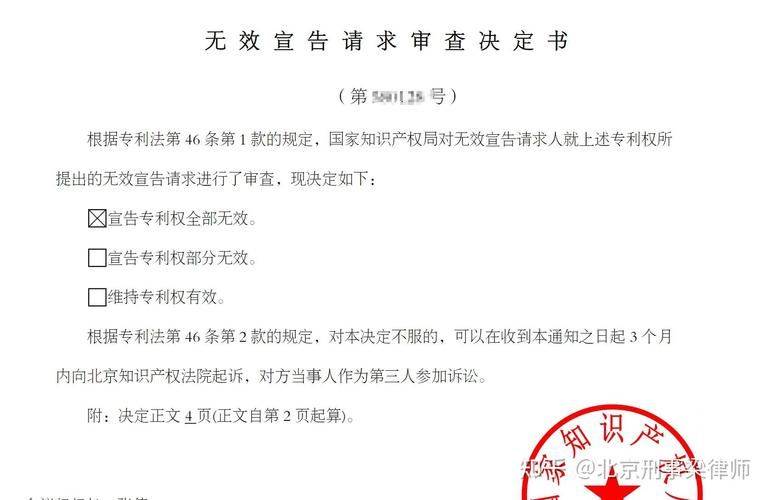
The vice-president of the intellectual property division of the high people's court of guangdong province, oshupin, cited the problems encountered in the case of patents for automatic entry of bill of lading and systemic inventions, such as deep power companies and shenzhen metro, and pointed out that the patents involved in the case had two or more independent claims and that it was necessary for the judge to decide whether one of the independent claims could be used to explain another. Although the general view is that when there are more than two separate claims in the same claim, these independent claims are generally not mutually interpreted and are not expressly provided for by law. In addition, another issue raised in the case was whether the scope of application was to be considered in the context of the tort ratio, which was not explicitly provided by law. According to o'supin, the supreme court of guangdong province, in its final decision on the case, did not make a definitive statement on the two issues in question, but rather interpreted them on the basis of the patent statement and the decision of the patent review board of the national intellectual property office to annul the declaration。
The chief justice of the intellectual property division of the high people's court of jiangsu province stated that, with regard to functional qualification, two criteria existed in patent examination and judicial decision-making, although they were not contradictory, but that they should be clarified as soon as possible because the law did not contain an accurate definition of functional technical characteristics, which often led to differences in practice. In her view, in a tort determination involving a functional qualification, the condition for finding a tort to be established should be that the alleged tort technique achieves the same function as the “function” in the functional technical characteristic, and that the function is to be achieved in the same manner as that described in the statement and the accompanying chart。
The chief justice of intellectual property of the shanghai city high people's court, zhang xiaodu, expressed his views on the principle of equivalence between abuse and estoppel. He takes as an example the specific rules for tort determination in the united states patent tort proceedings the equivalent of a technical feature of an alleged tort product or method or of certain technical characteristics equivalent to the corresponding technical feature or particulars documented in the patent claim, rather than the technical option of the alleged tort product or method being the same as the patent technology programme as a whole; the test of equivalence as to to tort judgement is an objective judgement that is unrelated to the subjective state of the alleged tort, and the court must further judge whether or not the tort was established when it found that the same tort was not established; the test of technical equivalence is primarily whether the technical characteristics of the alleged tort product or method and the corresponding technical characteristic documented in the patent claim achieve substantially the same functions and produce essentially the same effects in the same manner as the technical features in the patent claim; and the temporal basis for application of the principle is the date of the violation rather than the date of the patent application. Zhang xiao both believe that these principles deserve to be drawn upon。
The remedy for patent infringement is complicated
“attribution is a remedy”, a jurisprudential proverb that applies equally in patent tort awards. “the remedies in patent infringement are more detailed than in ordinary civil proceedings.” judge liu xiaojun of the intellectual property division of the beijing high people's court said that he indicated that in patent tort disputes, the patent review system had made the patent remedies more procedurally complete and the technical details of the patent more detailed. The use of remedies in patent tort is not only reflected in the macro-procedural context, but also in the perception of defences in judicial practice。
Judge liu xiaojun explained that the defences in the patent tort can be broadly divided into those that deny the validity of the patent right, those that do not constitute a violation of the patent right, those that are not considered to be a violation of the patent right and those that do not incur partial liability for the infringement。
The defence against the validity of the patent, in substance, was rejected by the defendant when the plaintiff sued others for the infringement of its patent. The defence against the validity of the patent is a draw-back defence, and as long as the defendant's defence is successful, not only the plaintiff's action for infringement of the patent is unlikely to succeed, but even its effects may be completely denied. In judicial practice, in some cases the department of state patent administration has decided to grant a patent and issued the corresponding patent certificate, but it has not yet published the patent, and the patentee, who believes that he or she has obtained a patent certificate to sue others for abuse, has initiated proceedings before the patent is legally declared. At this point in time, the patentee is faced with a difficult dilemma as long as the defendant claims the defence that the plaintiff's patent is not in force。
In the case of a defence that does not constitute a violation of a patent right, the defendant does not constitute a violation if it can prove that the alleged tort was part of an existing technology or design, and there is no need to examine whether the alleged tort fell within the protection of the plaintiff's patent。
The defences that are not considered to be infringement of patent rights are those of pre-use, temporary transit, scientific experimentation and patenting of medicines or medical devices for administrative approval。
Liu xiaojun stated that familiarity with the right of defence allowed for a discretionary process to be carried out in the details of the law and was crucial to the accurate determination of patent infringement. Zhang cedars