For the first time, a lot of people heard of the project manager's position. Some thought: is the project manager the one who meets every day, pushes progress, makes a ppt
But in reality, those who have actually done projects know that a project can land, and in many cases it does not depend on how highly skilled it is, but on whether or not there is one person who can really move things forward。
And the project manager, in essence, is the person who solves these problems。
Today's article does not talk about the methods. Just talk about what real project management is in a business and what a good project manager should be。
The systems referred to below have been organized and are available on their own: operations management template centre -- enterprise digital solutions centre -- short course clouds
I. What exactly does the project manager do
The biggest misunderstanding of many about the project manager is that “the project manager is managing the project progress. It's more than that. A true project manager with only one sentence: putting things on the ground with limited time and resources。
Note the words:
Limited time
Limited resources
Down by target
What does that mean? This means that project managers are addressing real problems on a daily basis. It's not about theory, it's about coordination, push, rhythm, risk, outcome。
As a matter of fact, the project manager is essentially an engine for organizational synergy。
One, the project manager didn't do it himself, but let's do it together
The last thing that many of the new project managers don't get used to is working on their own. Not the same now: technology, sales, finance, procurement, customers, suppliers and even bosses。
The biggest challenge for project managers has never been technology. It's people-to-people collaboration. Because the hardest thing in real business is not to do it, but:
Who did it first
Who's in charge
Who boarded it
Who's cooperating
Who will bear the consequences
This is real project management。
It's not too much work for the project manager, it's out of control
This is the case in many enterprises:
Needs change in the twitter community
Progress depends on excel statistics
Risk through oral reminder
The mission is driven by meetings
The project hours were still going on at the beginning, and the project was a big one, and it was a mess. The most typical scenario: you think the other side knows, you think you know, and nobody knows. So mature project managers will pay particular attention to:
Can not open message
Mission transparency
Node track
Risk warning
Because once the project is invisible, the back must be out of control。
Three, the project manager is actually in a trade-off
This is something a lot of people don't realize
The client wants to be quick
Technically steady
I want to save money
The boss wants everything
And the project manager is caught in the middle. So one of the core competencies of a good project manager is actually balance. It is both progress and quality; it is cost and delivery. That is why many highly skilled people are not necessarily good project managers。
Because project management is not in essence a professional competency competition. Rather, it is an integrated coordination capacity。
Ii. What is a mature project manager normally responsible for
Many people think that the project manager's job is to keep an eye on progress. In fact, mature project managers are responsible for a lot of things. It can even be said that the project manager is involved from the beginning to the end。
1. Project start-up: clear objectives first
A lot of projects were mined at the beginning. Why? Because the target is unclear. In reality this happens all the time, and the boss says, "let's get a system." and then the project starts, but the problem is:
What is specifically addressed
Who's in charge
What's the budget
What's the date
What are the criteria for success
No one really made it clear that the results were in the middle, that the needs were changing and that there was no limit to the end. So the first thing for mature project managers must be to turn vague objectives into clear objectives。
Project scope
Timeline
Head
Risk point
Resource requirements
Acceptance and inspection standards
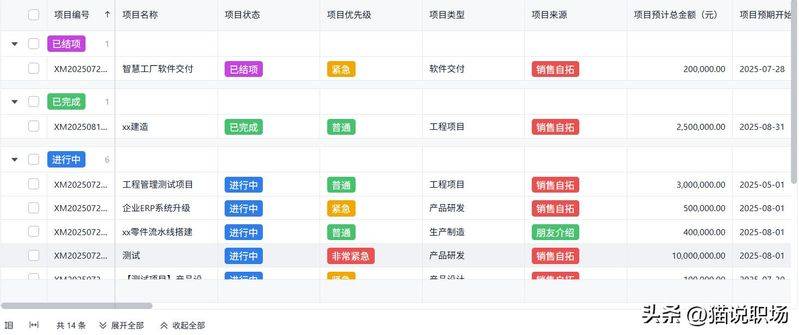
The clearer these forward periods, the less obvious。
Project plan: real masters, all good at advance judgment
Many ordinary project managers: daily fire extinguishers; mature project managers: try not to burn fire. The difference is that there is no advance planning. For example, in a system-on-line project, mature project managers consider:
Are there risks to data migration
Is it too late for staff training
Is the test cycle enough
Which link is the easiest to postpone
Will clients change their needs temporarily
There is a realistic phrase in project management: “the real risks often occur where you do not think.” so good project managers must have pre-judgement skills。
3. Cross-sectoral collaboration: this is the hardest part of the project
The most complex business is never business, but collaboration. Because each department has its own objectives, but the project manager has to let everyone go in one direction, which is the test:
Communication capacity
Capacity to catalyse
Emotional management capacity
Many projects ended up failing not because technology failed, but because synergies between sectors collapsed。
4. Progress control: the most realistic part of project management
Many enterprise projects have been postponed not because no one worked, but because no one really looked at the whole picture. For example:
Which node is stuck
Who hasn't responded yet
Which mission is the deadline
Which risks begin to expand
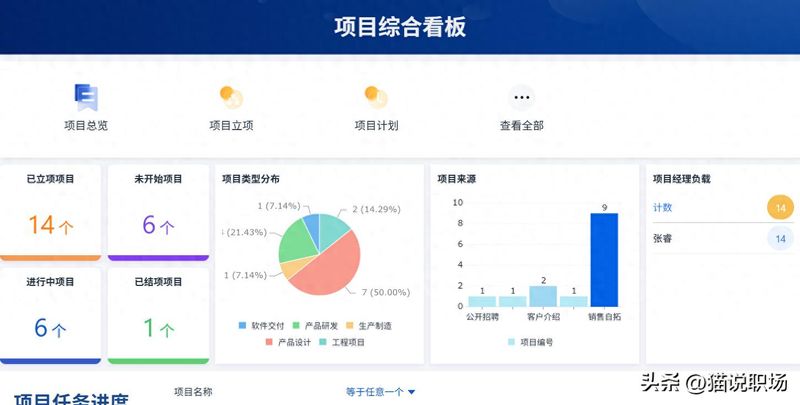
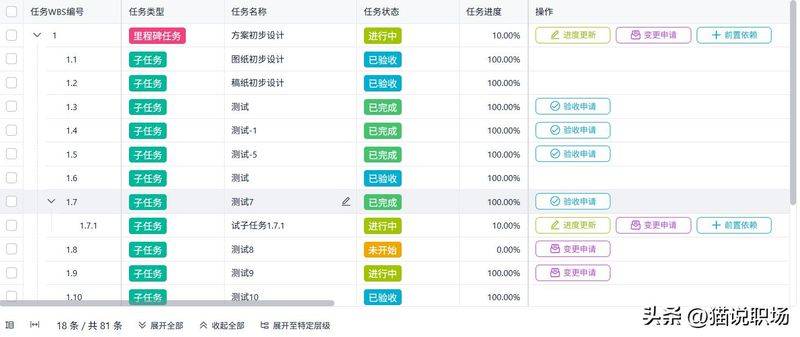
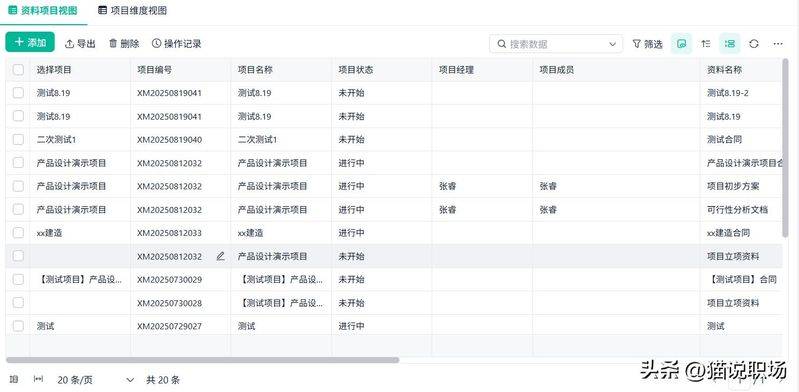
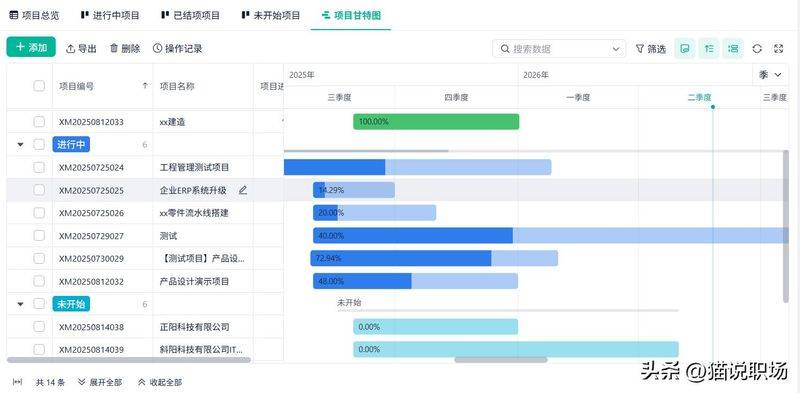
These require continuous follow-up by project managers, and more and more enterprises are now starting to use digital tools for project management。
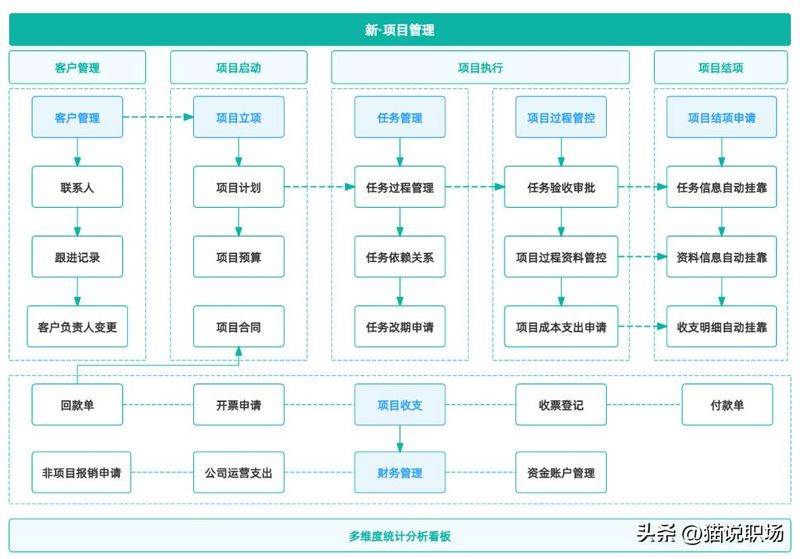
The reason for this is simple: it is already difficult to support complex projects with excel and the wireless, for example, that many enterprises will now build their own project management systems using low-code platforms such as a simple cloud。
Project formulation
Project assignment
Project progress tracking
Risk warning
Hours of work statistics
Item looping
It's all online. In particular, manufacturing, it implementation, engineering projects, and multisectoral synergy scenarios are easier to manage than traditional excel. One of the greatest pains of project managers is to chase people every day, while the greatest value of the system is to automatically drive the process。
For example:
Overdue automatic alarm
Node autoflow
Automatic early warning of risks
Data syncing in real time
The increased efficiency of the project is evident in the fact that the project manager does not use daily manual pressure。
5. Rewinding of projects: the easiest step for many enterprises to ignore
As soon as the company's projects are over, it's gone. But the real mature business is very important because if the experience of the project does not sink, the problem must be repeated. A mature project manager usually does:
Problem revert
Reason analysis for extension
Risk case deposition
Sop optimization
Building the knowledge base
Over time, the enterprise project capacity will become more mature. This is why many enterprises combine project management and knowledge management behind them。
Iii. The five core competencies of the project manager are more important than management
Many people think that the most important thing for project managers is to know how to manage, really not. In reality, real good project managers often have these five capabilities。
Communication capacity
The project manager communicates on a daily basis and in various ways. Reporting to employers, identifying needs with clients, coordinating resources with departments, resolving team conflicts, driving mission progress... Many projects are delayed, essentially without a single message。
So mature project managers attach particular importance to:
Transparency of information
Rhythm sync
Key nodes confirmed
Because there's something wrong with the project once there's a communication fault。
Advancing capacity
Some people are good at saying that ppt is particularly beautiful and methodological, but the project is not moving。
Why? Because a really good project manager must be results-oriented. It is not just talking, but moving things forward step by step. This is particularly critical。
What businesses really need is not theoretical project managers, but land-based project managers。
3. Time management capacity
Project management, in essence, is time management, as it is most feared:
Node's out of control
Unlimited extension
Priority chaos
So mature project managers will especially:
Other organiser
Control the rhythm
Node
Grab critical path
In many cases, the project failed not because of lack of capacity, but because time was not contained。
Risk awareness
It was only when the ordinary project manager had problems that he was in a hurry. A mature project manager, always predicting risks in advance。
Which link is the easiest to postpone
Which department is the easiest to get through
Which needs are the easiest to change
This is actually an experience. You'll find a lot of problems when you're done with the project, but there are signs。
Data development management capacity
Many enterprise projects are now becoming more complex and relying on the wireless group is no longer sufficient. So more and more companies are starting to do:
Project online synergy
Process automation
Data viewer
Task track
Project visualization
For example, a number of enterprises use a simple cloud to build their project management systems. Traditional project software is too heavy; excel is too messy. Low code platforms are more flexible. Businesses can build on their own business processes。
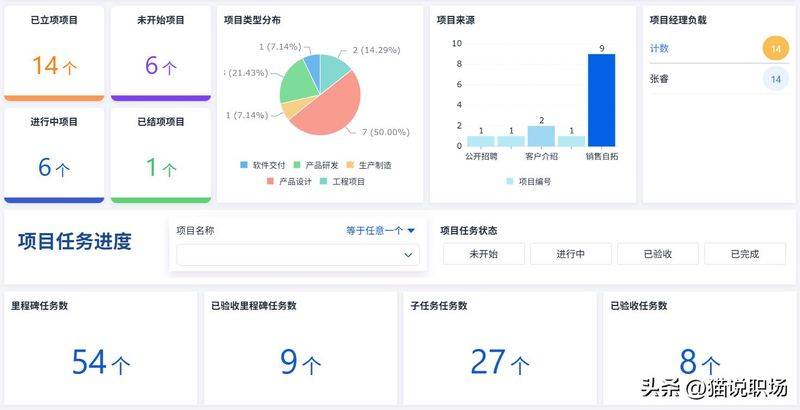
Manufacturing projects
Clients implement projects
Research and development projects
Engineering projects
It online project
Each process is different, and flexible configuration is important at this time。
Final summary: project manager, essentially addressing organizational synergies
Many thought that the project manager was managing the project, and more precisely said that the project manager was addressing organizational synergies. Because of the size of the enterprise, the hardest part is never working, but:
Who's coordinating
Who's driving
Who's gonna follow the results
Who's going to get everybody on the same page
Who can actually land complicated things
This is the real value of the project manager and why more and more companies are now focusing on:
Project management system
Project process standardization
Online synergy system
Digital project management
It is not how powerful an individual is, but the synergy of the entire organization。