On 17 may 2016, the general secretary of xi jinping, at a symposium on the work of philosophy in social sciences, proposed “accelerating the construction of chinese philosophies in social sciences”. On 25 april 2022, when visiting the people's university of china, general secretary xi further stated that “the construction of chinese philosophies and social sciences will be accelerated and, in the final analysis, the building of an autonomous chinese knowledge system”. Over the past decade, the financial science community has focused on such important issues as china's modernization and the modernization of state governance. It has taken china's fiscal reform practices as a fundamental principle, taking china's vision into account and looking at the times, and building on china's realism to solve china's problems. It has continued to advance the conceptualization of fiscal science and the reshaping of the fiscal discipline system. It has produced a series of landmark research results, constantly promoting the in-depth integration of empirical facts, theory and discourse. It has also focused on transforming fiscal practice into a manageable, testable and communicable academic mandate, and has made substantive breakthroughs in the development of methodological innovations and theoretical improvements。
China has made significant progress in building an autonomous knowledge system for fiscal science
Over the past decade, china's fiscal studies have seen a systemic leap from a point-to-point approach to a decentralized to a holistic approach, with concerted advances and systemic breakthroughs in the discipline, academic and linguistic systems, and the gradual construction of a more interpretative, leading and influential system of autonomous knowledge of chinese fiscal science。
Reconstructing the paradigm as a pullover to achieve an overall upgrading of the discipline system. Under the guidance of china's practical approach to solving china's problems, fiscal science continues to optimize the development of disciplines, gradually developing a more interpretative and autonomous system of disciplines. On the one hand, a critical breakthrough has been achieved in the positioning of disciplines. Fiscal science accelerates the evolution towards a comprehensive cross-cutting discipline by combining theoretical resources and research methods of a multidisciplinary nature, such as economics, sociology, politics, law and management, on the basis of maintaining the economic background. For example, the inclusion of analysis of political incentives and institutional constraints in local government debt studies and the use of social surveys and behavioural experiments in social security policy assessments have enabled fiscal science to respond more effectively to fiscal governance challenges, significantly broadening research horizons, enriching methodological systems and enhancing real-life interpretation. On the other hand, emphasis has been placed on distilling key issues from china’s real governance landscape, using country-specific data resources and empirical methods to build a chinese-specific research paradigm that is underpinned by logic and empirical evidence. The growing maturity of the complete research chain from problem identification, evidence acquisition to interpretation testing has contributed to a shift in fiscal science from description of phenomena or empirical judgement to validation and deepening theoretical understanding based on a reviewable and testable system of evidence, which has significantly enhanced the scientific nature and interpretation of fiscal science。
A fundamental breakthrough in the academic system has been achieved with conceptual and theoretical innovations. On the basis of the socialist market economy system and china's fiscal system, the financial science community has developed a number of indicative concepts and original theories in areas of focus such as fiscal fundamentals, intergovernmental fiscal relations, budget theory and fiscal and financial synergy. The theoretical field of fiscal fundamentals has emerged as home-grown chemistry, such as finance for national governance and finance for new markets, which has led to the development of china's fiscal theory system towards systematic construction and marking. A breakthrough in the intergovernmental theory of fiscal relations, from learning to innovation, based on a systematic reflection of the limitations of western fiscal decentralization, has led to the creation of a framework for the analysis of chinese-specific intergovernmental fiscal relations based on the perspective of fiscal empowerment, which provides a more realistic theoretical basis for the interpretation of china’s land tenure and operating logic. The budget theory has moved from imitation to construction, breaking the limits of the western budget focus on fiscal revenue and expenditure, further positioning the budget as a strategic tool for national governance and placing greater emphasis on its central role in cross-cyclical policy coherence, the implementation of key national strategies and the harmonization of multiple interests. The doctrine of fiscal and financial synergy has broken the boundaries of the division of labour between the traditional macro-policy sectors, created mechanisms to coordinate fiscal and monetary policy, and advocated the establishment of a coordinated, cross-sectoral system of risk prevention and control, with a “central bank-fiscal twin” mechanism at its core。

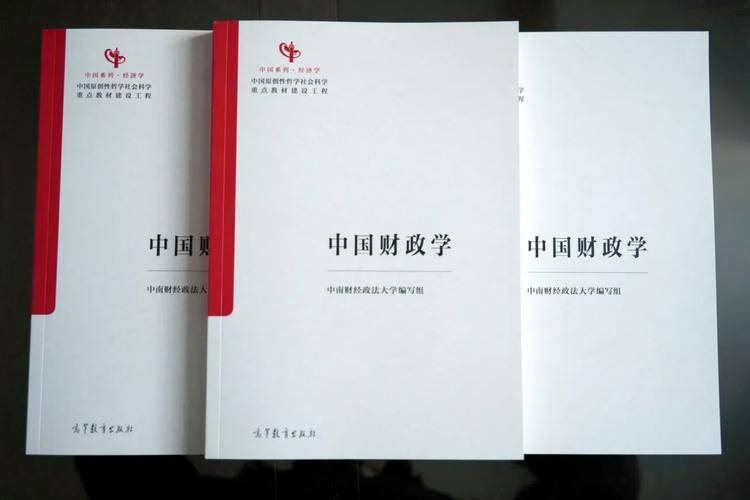
Guided by the building-up of the teaching materials system and the upgrading of the voice of the international language, the language system has been systematically restructured. One is to promote the standardization of academic discourse in the country through the construction of teaching materials systems. The publication of three “china series” books in chinese fiscal science marked the normative interpretation and systematic presentation of the core concepts, basic parameters and key propositions of china's financial autonomy and promoted the transformation of academic results from “research expression” to “teaching expression” and “public expression”. Second, the internationalization of academic discourse through international publishing. Chinese scholars publish high-level research in international authoritative journals on china's specialty finance issues, pushing china's fiscal practices from concrete experience to dialogueable and testable academic theory, and further promoting the integration of chinese fiscal wisdom into the international mainstream of academic discourse. Third is the use of multilateral platforms to enhance the impact of academic discourse. Through its active participation in multilateral mechanisms such as g20, brics, apec, and 10+3 financial cooperation, china is increasingly providing developing countries with reference reform options by explaining the logic and effectiveness of its own fiscal reforms, including concepts and practices in the areas of budget management and intergovernmental financial relations。
Theoretical features of china's autonomous knowledge system in fiscal science
China's autonomous knowledge system in fiscal science is rooted in modern chinese institutional soil and governance practices, and it has achieved an extension and restructuring of traditional fiscal theory. In adhering to the principles of marxism and china's specific practical integration with china's traditional culture of excellence, a theoretical system adapted to the country's development was developed, which also contributed chinese wisdom to the development of world financial theory。
He insisted on “the two combinations”, reshaping the foundations of science. The greatest feature of china's autonomous knowledge system of fiscal science is its roots in china, which is guided by china's fiscal performance laws, and which combines the principles of marxism with china's specific reality and with china's excellent traditional culture. Science effectively serves modern chinese financial practices. On the one hand, the emphasis on fiscal activity must uphold the socialist nature of the country, view it as the foundation and essential pillar of the governance of the country, serve the strategic objectives of the country and the broader development agenda, so that fiscal policy fully reflects the will of the party and the state, the interests of the people and not mere economic instruments. Accordingly, fiscal science research has taken root in a vast process of fiscal reform based on a socialist market economy system that focuses on raising the “china experience” to an expoundable and legible expression of science, gradually moving away from reliance on western theoretical frameworks. On the other hand, the financial wisdom of china's excellent traditional culture has been exploited. China's long tradition of financial and economic governance implies public ethics and governance experiences, such as public and universal social ideals and awareness of distress, which provide china's sovereign knowledge system of fiscal science with a deep cultural and national intellectual foundation, making fiscal science both capable of modern scientific interpretation and more valuable in serving the governance of the country。
National governance to broaden the research perspective. According to general secretary xi, “economics, while being a study of economics, cannot be divorced from socio-political, pure and pure”. China's autonomous knowledge system of fiscal science has increased the positioning of finance from resource allocation to national governance and has greatly broadened its research perspective. Main western fiscal theory focuses on efficiency analysis and resource allocation, often separating economic processes from the political process and pursuing so-called “value neutrality”. China's fiscal science emphasizes that finance not only deals with the allocation of economic resources, but also goes deeper on the functioning of political power, the building of state institutions and the harmonization of central and local relations. China's autonomous knowledge system of fiscal science is based on the fundamental premise that the communist party of china is the central feature of chinese socialism. It has a distinct political identity and is based on a profound interpretation of finance as an important instrument of national will and governance. This has enabled chinese fiscal science to more fully explain the central role of finance in modernizing the country's governance system and capacity。
To meet common needs and rebuild the theoretical basis. China's fiscal science takes as a theoretical basis the satisfaction of the common needs of society, and considers that finance arises not only from the emergence of the common needs of society, but also from its development. From the basic definition of fiscal activity to the drawing up of the basic characteristics of fiscal activity, from the pattern of human social and financial development to the extraction of fiscal thought and practice in the new china, from fiscal expenditure to fiscal revenue, from budgetary management to fiscal policy, from central and local fiscal relations to inter-state financial relations, with a view to meeting the common needs of society as the logical backbone of china's financial science, the expansion of financial functions outside the sphere of distribution, the distinction between fiscal activity and other activities, the delineation of the boundaries of government and effective market activity, and the development of a strong interpretation of the various financial practices and phenomena that exist in the contemporary world, china, the world today, provide a solid theoretical basis for optimizing the allocation of resources, preserving market unity, promoting social equity and achieving lasting security in the country。
Deepening human logic and demonstrating value orientation. China's autonomous knowledge system of fiscal science is “people-centred”, guided by the interests of the people. Western fiscal theory is often mired in a “physical logic” that focuses too much on capital value addition, efficiency indicators or abstract social welfare functions. China's autonomous knowledge system in fiscal science highlights the “human capital” and emphasizes the certainty of development through the “modernization of the human being” and believes that the modernization of goods should ultimately be carried out in the context of the modernization of the human person, using the promotion of the well-being of the people and the promotion of the comprehensive development of the human being as the starting point and starting point for financial resources. Based on this value orientation, finance is not only a revenue and expenditure management activity, but also an institutional arrangement that serves the needs of people for a better life. Unlike the western doctrine, which focuses on efficiency priorities and equity, chinese fiscal science is based on the nature of socialism, with the promotion of common wealth as its central objective, advocating a coordinated mix of initial distribution, redistribution and third distribution, with a focus on reducing income and wealth disparities through precise fiscal system arrangements, preventing polarization and achieving development for all。
Accelerate the construction of an autonomous knowledge system for fiscal science in china
In order to move towards a new era and accelerate the construction of an autonomous knowledge system for chinese fiscal science, it is necessary to adhere to the “two integrations” of china's socialism, guided by xi jinping's new era, and the fundamental orientation of modern service to china and the modernization of the country's governance system。
In response to china's fiscal practice. Currently, our fiscal sector plays an important role in boosting economic growth, safeguarding livelihoods and regulating distribution. The reform of the fiscal system has been deepening and promoting a clear division of responsibility between the central and local authorities, whether through tax cuts, budget reforms or transfer mechanisms. These experiences from the soil of china are the best ingredients for building an autonomous knowledge system for chinese fiscal science. To this end, it is necessary to maintain a case-by-case, issue-oriented, goal-oriented and result-oriented unity, focus on the typical and representative reality of china's fiscal operations, make it a regular concept at the academic level, truly bring theoretical logic and policy practice into line, and provide solid intellectual support for the modernization of the country's governance system and capacity。
Increased international visibility to answer the question of the world. On the one hand, fiscal science research should be based on the strategic positioning of large countries ' finances, focusing on and participating in the evolution and restructuring of the global financial governance rule system. International financial coordination is now at the core of global governance in the face of global challenges such as climate change, the public health crisis, cross-border infrastructure connectivity and debt sustainability. China's financial science research should strengthen macro-thinking and holistic thinking, deepen theoretical exploration of global mechanisms for the supply of public goods, intensify research on major issues and policies, and strengthen international academic dialogue and cooperation in order to promote a more just, inclusive and effective framework for global financial governance. On the other hand, efforts have been made to promote the scientific and internationalization of china's experience in fiscal practice. China's experience in financial practices in the areas of economic growth, poverty eradication, rural renewal, coordinated regional development and the prevention of major risks has been systematically summarized, transforming it from a chinese programme at the empirical level to a theoretical proposition of general interpretation and general significance. By building a system of academic discourse that integrates both the middle and the foreign, china's financial science knowledge system will enhance its communicationability and appeal to the international academic community and will contribute to the development of world finance。
Take advantage of the people and answer their questions. To accelerate the construction of china's autonomous knowledge system in fiscal science, comprehensive human development should be a central element of financial analysis, which will serve as the logical starting point and final destination for the theory of common wealth, guarantee better livelihoods and realize people's aspirations for a better life. On the one hand, the people's focus has been on issues of greatest concern, direct interest and practical interest to the people, focusing on such priority areas as the equalization of basic public services, the improvement of the social security system, the improvement of the quality of employment and financial security at the grass-roots level. On the other hand, through the construction of an analytical framework with general interpretative power, the status of the people's subjects is deeply embedded in the theory of fiscal science, which continues to promote "human practical experience " . The in-depth interaction of theoretical overview studies – theoretical innovation – institutional innovation – comprehensive human development – continues to test, develop and refine the theoretical system in response to people’s concerns, and to lay a solid foundation for china’s autonomous knowledge system of fiscal science。
Questions of good times are answered by the development pulse. In the new era, fiscal theory must be based on the requirements of high-quality development, focusing on the realities of fiscal reform and deepening theoretical innovation and practical exploration. One is the study of institutional mechanisms to deepen the synergy between fiscal and monetary policies. Focusing on the institutional barriers at the macro-regulatory, structural and institutional levels of two major policies, the systematic mapping of the general patterns and general characteristics of policy coherence in large economies, the scientific clarification of the debate on key concepts such as “central bank independence” and “monetization of fiscal deficits” and the theoretical underpinning of macroeconomic governance systems. The second is to deepen the scientific interpretation of macro-tax liability. Building on the current stage of development, going beyond the “weight” of taxes, explaining the underlying logic of macrotax at the theoretical level, provides the rationale for improving modern tax systems and basic public service delivery systems. Third, a study of long-term government debt management mechanisms that are appropriate for high-quality development. Building on the requirements of our stage of development and fiscal sustainability, the rational space for government debt, the logic of structural optimization and the effectiveness of the use of earmarked debt, at the theoretical level, provide the theoretical underpinnings for the establishment of long-term mechanisms that balance growth with sustainability. The fourth is a tax design study focusing on the digital economy, which focuses on the systemic impact of digital economic development on traditional tax systems by addressing the tax base recognition and profit attribution challenges and building a new tax theory framework that fits the characteristics of digital productivity。
(by ma haitao yao, researcher, centre for research and research on china's specialist socialist thoughts in the new age of xi jinping, beijing; president, central university of finance and economics; director, centre for co-innovation and financial development in china, central university of finance and economics, professor)
Ma hae-tao, yao dong-chul