“after being followed, the rear bumper 1,200, the back door 3800, the spray paint 200, and the cost of minor accident maintenance up to $5,000.” the maintenance bill of ms. Yang, owner of the biadi seal, points to the problems shared by many new energy owners. As the penetration rate of new energy vehicles continues to rise, maintenance costs and difficulties have become a central constraint on industry development. Open-screen journalists who visited 4s shops, independent maintenance agencies, university experts and several car owners found that there were multiple contradictions, such as technical barriers, monopoly of access, shortage of talent, behind seemingly simple maintenance bills。
I'm worried
The owner called the maintenance bill "meal pain."
“according to damage that is not self-inflicted, a person can apply for quality assurance for replacement, and the person who destroys himself must pay in full.” the high cost of new energy vehicle maintenance is no longer an example. Mr. Don, the owner of the biadi dolphin, stated that the cost of the new energy truck was 1 to 1. 5 times higher than the cost of the tanker. The same was true of mr. Ziqiang, the owner of the ls7, who said that it would cost $800 for maintenance to touch the chassis alone. What is more problematic for the owner of the vehicle is the limitation of the quality assurance rules — the owner of the vehicle mentioned that, although the vehicle had a lifetime security, the component security would not work as long as it was replaced by a third party。
Price differences between different maintenance channels are equally significant. Journalists were informed at a kyindong garage located on sun-sung road that, in the new energy car repair operation, basic maintenance, paints, etc. Were 30 to 50 per cent lower than 4s. In the case of common front-bar paints, the price quoted for 4s is generally between $1200 and $1,500, whereas only $600 and $800 is required here. It was also confirmed that the price advantages of new energy vehicles in independent maintenance agencies were mainly due to lower labour costs and site costs, “the high investment in hardware facilities at 4s, combined with high staff salaries and operating costs, will be reflected in the maintenance offer”。
Behind the price advantage, however, concerns remain about new energy drivers. Several car owners have expressed concern that the choice of third-party institutional maintenance may affect the quality of the plant, and that some brands may even restrict the replacement of essential parts, such as tyres, “in order to preserve a life-long quality guarantee, even if it is a small scratch, they will have to go to the 4s shop with a hard scalp at high prices”。
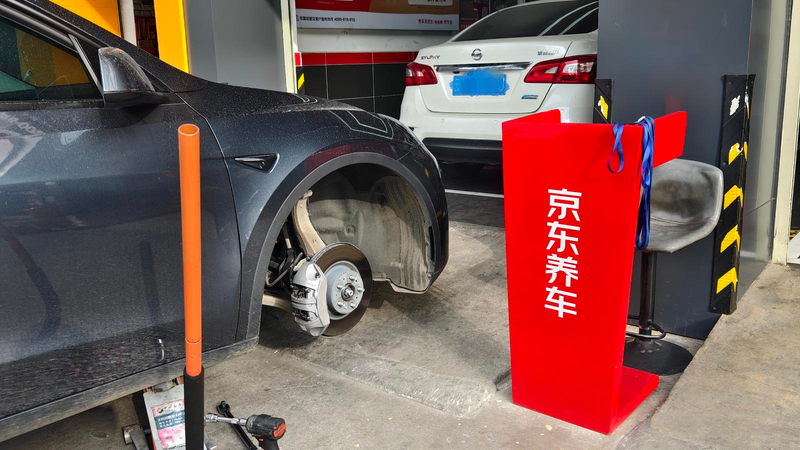
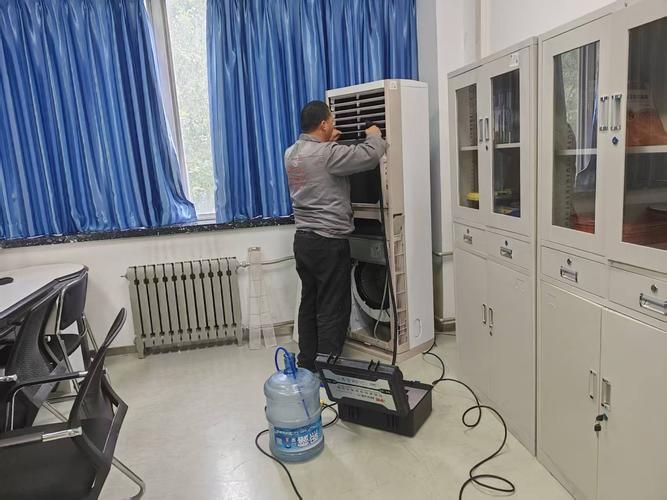
Reporter visited a bus store in kyoto on sunshine road
New energy cars
Technical characteristics push up maintenance threshold
Technological innovations in new energy vehicles have directly led to higher maintenance costs. On the one hand, the cost of the three power systems (cells, electrics, electrical controls) is between 30 and 50 per cent of the total vehicle, and the cost of replacing the core parts is tens of thousands of dollars if they are damaged. On the other hand, mainstream technologies such as ctp (non-module grouping) and tc (underboard integration) allow the core to be glued directly to the shell with high-intensity structural glue, and small damage may also require the overall replacement of components to form a normal pattern of “small injury overhaul”。
In the interview, mr. Wang, after the sale of the avita brand in yunnan, explained that this highly integrated structure made undamaged dismantling a challenge and that inappropriate operations were highly damaging to the core or liquid panels, further pushing up the maintenance risks and costs. The widespread availability of smart configurations also increases the cost pressure. Precision electronic components, such as laser radar and multiple cameras, are most often installed in vulnerable locations such as bumper bumpers, which may result in damage to several metaware units, and the replacement cost of such components is often several times higher than that of conventional fuel vehicles。
It can be said that there is a clear monopoly of channels in the current market for new energy maintenance. Host plants control the flow of core spare parts and technical information, and third-party agencies have difficulty obtaining authorization, and owners tend to choose only 4s stores for maintenance. The post-sale engineers revealed that the company's control of core technology and spare parts was intended to guarantee the quality of maintenance, but objectively also led to a lack of competition in prices。
At the same time, new energy maintenance requires specialized equipment such as insulation detectors and heat outage early warning devices, often purchased at a cost of more than $100,000 and continuously updated. 4s also requires dedicated blast repair areas, insulation protection equipment, etc., and site renovation alone costs hundreds of thousands of dollars. The director of a shop in kyoto had made a write-off, and the new energy maintenance-related equipment in the shop alone amounted to more than $500,000, which could only be recovered through service pricing. In addition, the low interoperability of spare parts pushes costs. New energy vehicles are being upgraded quickly, different vehicle-type parts are difficult to universalize, maintenance stores need large reserves of specialized spare parts, and stock pressure will eventually be converted into maintenance prices, making them far more expensive than ordinary fuel trucks. Ultimately, the operating costs of the maintenance facility will be passed on to the owner。
In response, guo zhiyong, vice-president of the school of automotives of the yunnan institute of transport and communications, pointed out that such a monopoly had created a “two-way binding”: the owner of the new energy vehicle had to choose 4s, which was difficult to reduce the price of services owing to a lack of competitive incentives, in order to preserve quality assurance. According to the data, 3. 5 million new energy vehicles were expected to be insured in 2025, but the share of independently sold to factories remained low, with most owners still relying on official channels。
Battery maintenance
Face the double challenge of security and cost
As a core component of new energy vehicles, batteries are not only costly to maintain, but also hide safety risks. Mr. Wang, the post-aveta sales engineer, described battery maintenance as a high-risk operation that was subject to strict safety procedures: vehicle information was verified prior to the operation, blast-proof maintenance areas were set up; the energy separation segment required double power outages, voltage verification and 15-30 minutes static; the dismantling process required complete insulation equipment of more than 1,000 v, and exposed copper platoon interfaces were immediately covered by an insulation sheet; the repairs were followed by insulation tests, air-classified tests and chargeability tests to ensure protection levels above ip67. These strict requirements discourage ordinary maintenance stores。
According to the director of the kyodong car rong shop, battery failure such as bumping is usually “replaced”. On the one hand, maintenance costs are extremely high due to the complexity of the internal core group structure. On the other hand, the consistency of the maintenance core is difficult to guarantee and differences in the capacity and resistance of new and old cores may lead to overfilled risks of heat out of control. Mr. Wang, a post-sale engineer, added that the safety requirements for electric car powered battery (gb38031-2025), introduced in july 2026, upgraded safety standards to life-long “no fire, no explosion” and that, in order to avoid risk, car companies preferred to replace the complete battery packages certified by the plant rather than risk repair。
It is a matter of concern that the “replaced” batteries are not directly discarded. Brands and industries are constructing well-developed recycling systems: batteries with capacity decay reduced to less than 80 per cent will be used in the use of ladders in areas such as energy storage systems, low-speed electric vehicles, and severely damaged batteries will be re-entering production chains by reclaiming metals such as nickel, cobalt and lithium through reclamation. The construction of industrial bases for power cell recycling, such as chongqing, has been initiated to improve the “recycling-transport-dismantling-use” chain and reduce waste of resources。
Maintenance of new energy vehicles
Large gaps in talent and development difficulties
The rapid expansion of the new energy maintenance market contrasts sharply with the shortage of professional staff. The lack of specialized maintenance staff and the difficulty of developing them also contributed to the cost of new energy vehicle maintenance. The guidelines for the development of manufacturing talent development, published by three departments, the ministry of industry and information technology, project that by 2025 there will be a shortage of 1. 03 million new energy automobiles in the country, of which 80 per cent, or about 824,000, are after-sales。
During a visit to japan's garage, journalists also found that there was only one new energy maintenance worker with an electrician's license, which was not an example in small and medium maintenance facilities。
Journalists visited a small car repair shop on the way to japan and learned that there were no full-time new energy maintenance workers. The officer-in-charge told journalists that, while the shop wanted to expand its new energy maintenance operations, it faced the dilemma of “unable to keep people behind”. Developing a qualified new energy maintenance worker requires tens of thousands of yuan in training costs and more than half a year of practice, while the industry is highly mobile and small and medium maintenance shops cannot afford such costs。
The core reason for this shortage is the high threshold of access and the cost of development. Guo zhiyong, vice-president of the school of automotives, yunnan institute of transport and communications, introduced that the new energy maintenance technician was required to hold a low-voltage electrician certificate issued by the ministry of emergency management as the mandatory entry threshold, which was required for exposure to high-voltage electric power in new energy vehicles below 1000 v and was subject to training and a one-day examination under the 5-8 antenna at a cost of between $800 and $1,500, reviewed once every three years for six years。
On this basis, the technician is also required to obtain a professional qualification for car mechanics issued by the ministry of human resources and social security, which is awarded at the initial, middle, high, technical and senior technical levels of one to three months' training + a fee of $1,500 to $4,000. For specific posts, the application of high-voltage electricians' certificates, electrical maintenance qualifications, charger's certificates, smartnet joint testing certificates, etc., is also required for a document cycle of one to two weeks, at a cost of $1,000 to $2,000。
There are also exclusive certification requirements at the enterprise level. Primary technicians are only able to maintain the essentially safe state of power outages, require more than a senior technician in case of electrical operations or when the condition of the vehicle is unknown, and the internal training certificate of this type of enterprise is open to social workers at a cost of approximately $3,000 to $4,000 per grade。
In contrast, fuel vehicle maintenance requires only “car mechanics” certification and does not require high voltage-related certification. Training in the maintenance of new energy sources is two to three times longer and costs are about 60 per cent higher, with multiple certifications added to raise the entry threshold further。
The new energy vehicle repairer's qualification requirements are much higher than that of the fuel car, rooted in two core factors: the high-pressure safety risk, the fuel vehicle's general 12v voltage, and the new energy vehicle's electricity charge of 300-800v, which is at risk of electrocution, and the state's mandatory requirement of double-certificate “electricians + high-voltage” as a result; and the high technology, the annual upgrading of battery chemistry, electrical control software and the continuous re-training of technicians, which would otherwise become obsolete in three to five years。
Specific gap data show that 3. 5 million new energy vehicles were projected to be insured in 2025, which would require 23,000 additional technicians based on an average annual service of 150 for a technician. There are currently fewer than 50,000 qualified new energy vehicle mechanics available throughout the country, and the gap is conservatively estimated at 150,000 to 200,000, expanding at a rate of 30 per cent per year。
In the area of institutional development, there is considerable pressure for input, although the new energy maintenance-related professions are highly hot and well-developed as a result of policy guidance and industry development. Guo zhiyong revealed that the profession needs to be accompanied by site equipment such as a new energy vehicle, a three-power power system and security protection, with a base investment of between $3 million and $5 million, and that it is difficult for ordinary colleges to invest this amount once in a single profession. This has made it difficult to keep up with market demand and has further exacerbated the shortage of skilled personnel。
The future needs a lot of effort
Breaking the crack
Social media searches for the key word “new energy car maintenance” reveal some consumer concerns that, while new energy vehicles are green and cost-effective, the high cost of maintenance still raises questions about the determination to switch to new energy vehicles. In the face of the multiple challenges of the new energy maintenance market, a number of practitioners called for industry to explore solutions in a variety of areas, including technology, channels and policies。
At the channel level, markets are emerging after independent sales. The ningde era, insurance companies, internet platforms, etc. Are gaining ground and breaking the monopoly of the mainframe. A chain of brands, such as the kyoto bus, is moving towards a “burning one” transformation, reducing the cost of spare parts through procurement on a scale, while gradually improving the capacity for new energy maintenance。
At the policy level, relevant departments are promoting the disclosure of maintenance technology information to safeguard the legitimate interests of third-party maintenance agencies. In this regard, guo zhiyong recommends that a standardized talent development system be established, that new energy maintenance be integrated into the vocational education curriculum, and that the talent development cycle be reduced and the talent gap alleviated through a cooperative school model. At the same time, there is a need to accelerate the development of industry standards for battery maintenance and high voltage electrical operations to regulate market order。
At the enterprise level, some car companies have begun to adjust their after-sales strategies. Mr. Wang, the post-avita sales engineer, stated that the car company was gradually opening up some of the non-core maintenance technology authorizations and lowering the threshold of access for third-party institutions; at the same time, by optimizing the design of spare parts, improving compatibility and reducing “replacement”. Some brands have also introduced differentiated quality assurance programmes, which, while safeguarding product quality, give drivers more room to choose maintenance. For the owner, rational planning of maintenance is essential。
With the arrival of the “year-over” of new energy vehicles, 3. 5 million insured vehicles have created a market of hundreds of billions of independently sold vehicles. This increase in market size has created new growth opportunities for industrial development, as well as corresponding demands on technology suitability, talent supply, market regulation, etc. The development process in the area of maintenance after the sale of new energy vehicles will continue to interact with the pace of overall industrial development. (opens the news, journalist liu ling-hong, lee song-mei's photo coverage involves a pseudonym.)