Mieyun, located in the north-eastern part of beijing, is one of the ancient districts of our country, with a history of millennia. What's the name of the "mixed cloud" for? What's the picture of the "mixed cloud"? What's the "mixed cloud"? Today, talk about the historical roots of the cloud and its deep cultural roots
It's famous for mt
According to the 1998 beijing city meeyun county, which was established in the second year of bei wei's existence (397 a. D.), the county was first administered in the southern part of the village of namwan, which is more than a dozen miles south of the autonomous city of funining man in the province of toenbei, with a high mountain located south-east of the city, at an altitude of 2047 metres. Because of the high mountains and the heavy rain, the fog and the clouds and the uncertainty, the name of the mountain, also known as the mount of clouds, is known as the county in its vicinity. Dong wei (534-550 a. D.) has a “mixen county” under which the three counties are administered, namely, manchuria, shibuya and kayyang。
In kitsy (550-577 a. D.), the waste cloud county was merged with the white sorghum and zhiyang. After a few thousand years of change, meekyun county has officially replaced other names as the district name of today's myung yun area. In 1914, kameyun county belonged to hebei province after 1928 and was transferred to beijing city in october 1958. In november 2015, the city was abolished and a cloud area was established。
Miyuan has the term “fishing sun”, which originated from the fishingyang county established by yan more than 2,000 years ago. According to the 1992 beijing city's meeyun landmark, wang ying was defeated by qin in the 29th year (283 b. C.) to recover today's myeyun area and establish a county there, while keeping a fishing district. The county site is the same as the county's site, and today the city is in the middle of nowhere. Because of its location north of the fishery water (the white river today), it is called “fishing sun”. “the name of the county is named fishyang, which is named after the sun, and which is located south-west of the city of today's maeyun county. The qin han administration is the same as the area south of the northern fence, west of the canal, north of tianjin, and the area east of huairou, tong county in beijing. This is chen sheng, wu guangjin zyang.”
The cloud is also known as honolulu, as it was first seen in the dynasty. "the 16th anniversary of the opening of the emperor (596 a. D.) is the beginning of the month, and it is the first time that the state of honolulu was established in the past
The historic town of honolulu is now in the middle of the cloud. The term “hongzhou” is said to originate from the white herring tree on the shibuya hill. Prior to the northern week, the mueyun region was known as anzhou, which was converted to hyunzhou during the northern anniversary. During the year of the emperor, the title of “khenzhou” was changed to “kungzhou”, where it is ruled by the yan (north-east of the cloud area today). By the year of minghong wo (1368 a. D.), honolulu was admitted to mee yun county, which is part of the capital of north pyong province, making it the so-called “mixed cloud”。
History's "small clouds."
In history, there have been many great clouds and monuments, and the 12th year (in 1673 a. D.) myung-hyun county dynasty has written “each view”: mellurgical lights, holy waters, barn-rays, cyantha, chai-bok-bok, sing-bok-bok, sing-bok-bok, sing-bok, sing-bok-bok, sing-bok, sing-bok, sing-bok, sing-bok, sing-bok, and sun-bok. Seven years (in 1881, a. D.) the "mixed clouds county" is marked by the "eight view": shibuya's precinct, tidal rivers, fog-spilling snow, sea-growing pearl, parrot's monument, rock arch, west rock light, rock lake map moon. To date, there are parts of the landscape that can be followed。
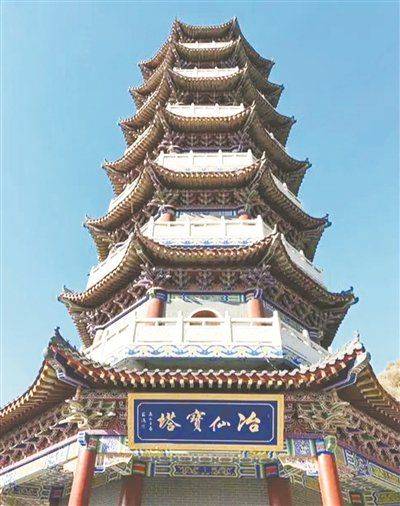
“mellurgical tower lights”, located on the mellurgical mountain north-east of the city of mixed clouds. It is a gold mine in which there are caves of stone, where there is a mellurgical house, where there is water, and where there is no depletion. In eight years (1039 a. D.), lia chong hee built a temple and a metallurgical tower on the mountain. Although the tower has been repaired several times, it has been structured in a fashion that has remained in the form of a compact architecture, 12 metres high, with an eight-angle plane, with two upper and lower floors, each with an archer gate, each of which has a beautiful configuration, and is now a landmark building in a dense cloud area。
“the water is so sweet that today it is in the north-east of the clouds. The submersibles of the canyon are spilling for a long time into a 10-mile long stream, forming a cliff waterfall of more than 20 metres high at the foot of the long rock mountain, falling three times, forming three basins of depth, with five colours of clouds in sunlight. In particular, every year, when the summer rains come, the clouds, the fog in the valleys and the sounds of flying waterfalls are smouldering with each other。
“the first spring of shibuya”, located 10 km south of the city, the sun slopes of the valley hill formed a pre-mortal warm zone, the first spring in other parts of the more dense cloud, where the ice was still fresh, and where the grass and grass had begun to spring。
The “tide river” of the “tide river”, which originated in fanning county in hebei, has been at the border since the entrance to the north of the river, stretching through the eastern part of the cloud and finally conjoining with the white river, known as the river. In the old days, whenever the tides, the rivers, the entrances to the mouth of the ancient north, the flood peaks growled and the sound of the tides。
Mixing cloud's name is sanbao
Historically, the clouds are rich and well known for their “single treasures”, namely, cucumbers, graveyard walnuts and dates in the west field。
Huang tukan is a village run by the old town and ming dynasty began planting duck pears. According to mueyun county, “dacker pear is best known as the village of autumn and is also known as autumn pear ... By the time of chong dynasty.” its fruit is large, its nuclei is small, its skin is yellow and bright, its meat is so thick, it tastes good perfume, and it has the reputation of "the king of the pear". Liu qian, the qianxian of the qiang, said: “there are pears everywhere, and they enter the necessary acrimony; there is no beauty in the world, and it is from heaven. It's so big, it's so big. It's full of abdominal fluid, and it's full of abdominal fluid, but it's not inhaled.” the area sits on the north side of the oats basin (northern shore of today's dense cloud reservoir) and stands on the peaks of clouds, with abundant sunlight, a wet and cold climate, and a high temperature between night and day, which is highly suitable for the growth of duck pears。
The cemetery is run by the towns of nishida, with walnuts planted in the middle of the next generation, qingdai as a tribute, and a popular proverb called “the walnuts of the cemetery are well skinned”. The walnuts here are big, thin, smelly, chewy, and they don't have worms in the summer. There are more than 140 ancient trees in existence for over 300 years and more than 140 in over a century。
The nishida estates are located in the north-western part of the mizun city, and the gold-snake dates are specially produced in the kyoto suburbs. Cultivators have a very long history of planting, and the intergenerational literary authors have listed in the “study-to-dates” more than 70 dates, among them honey (mixed) dateage, which is called “mei dateage, maiyun county, the best taste”. "today the clouds are full of date, small and solid, and the north is the most important." the golden date is red, the fruit is small, the skin is thin, the juice is thick and the taste is sweet, and can be fresh and dry. If the date is broken, it is clear that there are countless fine threads of gold in the flesh of the golden date, sweet as sugar and the colour as honey, which can be broken up to 30 centimetres at the most。
It's a cloud that's been written by famous people
From time immemorial as a major military town, and as a necessary place for the north-eastern region to travel to and from beijing, mandarin has left many hymns, with 243 ancient historical figures alone recording 766 hymns。
Song won-suk, 4 years a. D. (1089 a. D.), and the literary scholar and minister of foreign affairs, suzumi soo, was instructed to bring liao qi to celebrate the birthday of zongbai. "the mountains are in the middle of nowhere, and the trails go back to the long stream." it's like a dream to find a way to get to the west of hingzhou. And the sun came upon the earth, and the snow was laid. It is not as cold as it is cold, and the mink still exists.” the famous generals of ming dynasty were at the border guard in the town of mixing clouds, and sent many poems to praise the mountains of mixing clouds, whose poem, "the past was described as a dark cloud, and several times as a song and a cold." the sun and the moon are 4,000 plentiful, and the mountains are full of dragons."
The city of beijing in qing dynasty runs through the mountains of cheng dynasty, through which kang hee, kan long, ka qing, da guang and many of the most important people. According to the queen's record, when kang hee-hye was travelling between the city and cheng, he had travelled 96 times through the clouds and sent many poems. The poem "return to the city of mixing clouds" says: "there is no pile of dust and gold in the valley of the city. What's wrong with the fight room? The emperor has given more than a hundred poems for a cloud, and his "wild clouds". It's not wet. It's hot. The trees grazed the light, and the flowers went down. In the morning of the jade wheel, the autumn of meng should be sacrificed.”
The qing dynasty man, narand, who served as a bodyguard, used to ride kang hee-tye to hye-de, and passed over the clouds, gave a poem called "mixed clouds." it's the zhigtyu mansion museum, and it's an ancient state." ji xiaomei also left behind a number of works, such as the chongming province works。
Beijing's one water clean
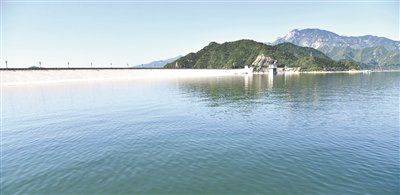
The dense cloud reservoir is located in the middle of the middle of the cloud area, with two main tributaries, the white and tidal rivers, with a maximum surface surface area of 188 square kilometres, approximately 12. 5 per cent of the total cloud area, and the largest drinking water supply in beijing, called “sinshan myeong joo”, and thus known as “a clean water basin” in beijing。
In september 1958, more than 200,000 soldiers and soldiers from beijing, hebei and tianjin fought in solidarity. It took only two years to build a dense cloud reservoir in september 1960. For thousands of years, the indefatigable tides and the white rivers began to turn water into water, leaving the people of the two shores free from years of flooding and providing safe drinking water in beijing。
According to the mixing clouds: “in the evening of 9 september 1959, chairman mao zedong arrived on a train to visit the mixing town district. The next day, he went up to the white river dam in a dense cloud reservoir, looking at the huge construction site, and was pleased to say, "it's a big reservoir, the people are amazing!" he asked escorts in detail about the construction of the reservoir, the settlement of immigrants, the greening of the reservoir, the preservation of the environment, the special concern for the lives of the people of the meeyun district, and the need to make sure that the lives of the migrants are organized. Then he came by boat to the river bank, and when he saw the vast water and the beautiful view, he was so excited that he said, "this place is cleaner than the sea, it's a pot of clean water!"
For more than 60 years, it has been a flood-prevention, water-supply-based, integrated, multi-year-regulated, large-scale water hub project, and the transfer of the water resources of the dense cloud reservoir to beijing city through the kim channel。
Presentations by lead discussants:
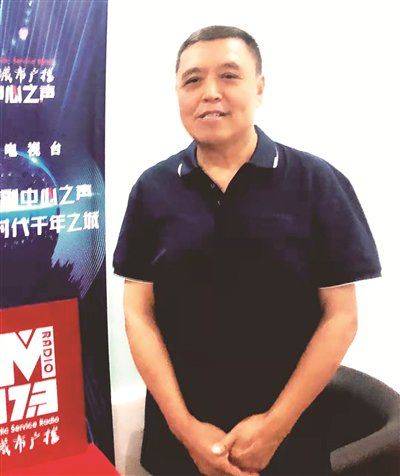
Zhao liping, member of the beijing institute of folklore. For many years, the amateurs have studied the history of beijing, in particular its place names, cultural objects, folklore and ancient villages, and have published more than 1,000 articles in newspapers such as the beijing evening newspaper, the beijing daily, the labour lunch. More than 100 cultural programmes on beijing radio. The old beijing in the light has been published, the beijing subway station's title, the kingxi shih dynasty, the legend of shanshan, etc。
Speaker: homogene / diagram