In the afternoon of 31 may, major winds ranging from 13 to 14 were raging in the heilong river and harbin, and within two minutes the day turned to night. The storm turned over the roof, blowing down the poles, and 16 35 kv and above high-voltage transmission lines failed simultaneously. It's like a man's whole bones are hit at the same time -- the pole is the skeleton of the grid, and when the wind blows, the skeleton breaks, the whole net collapses。
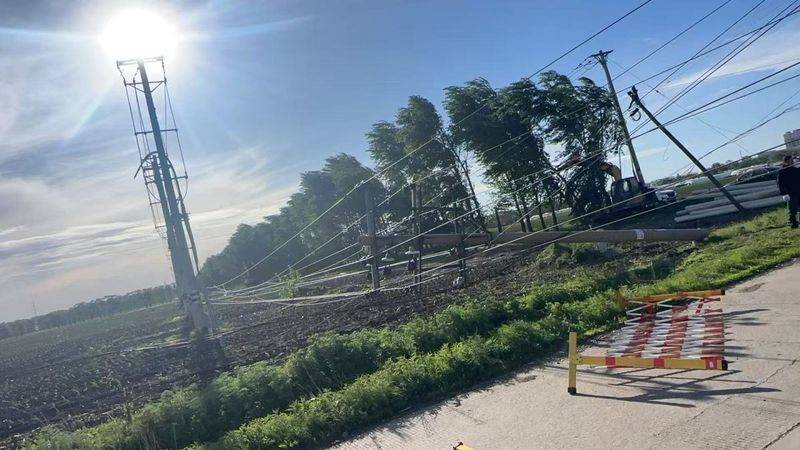
The wind caused the power pole to fall down
The destructive power of the current is far more complex than we thought. It is not just wind and rain, but it is a heavy punch from hardware damage, operational shocks, energy power fluctuations and simultaneously into the electricity system。
What are the destructive forces of each of the three types of "playing"
Wind is the toughest fighter ever. It blows the poles, scratches the steering lines, or blows branches, billboards to the lines to trigger short circuits. In harbin in may 2026, the 13-degree wind caused 16 high-pressure lines to fail and the power supply was restored within two hours with 389 recovery workers and 893 vehicles operating overnight。
As a result of heavy storming, 16 10 kv lines were broken, 322 transformers were shut down, and 935 people were cut off and it took 36 hours to fully recover。
The wind hit the grid, and it hit one。
Thunderstorms are more like precise snipers. It does not cause extensive damage but selects key components. A lightning strike in the city of tun-hun, guizhou, directly caused the transformer body to break through, the line to break, the cable terminal to be damaged — the equivalent of a person's heart, vein and nerve being hit simultaneously。
Short and hard precipitation is the killer of hot water cooking frogs. It does not destroy the equipment directly, but by allowing the power distribution room to enter the water, and the cable ditches to accumulate water, it causes the equipment to be short-circuited. A fire at a factory in fujian springs was caused by rain leaking through the roof to the plug, causing a short-circuit electrical fire。
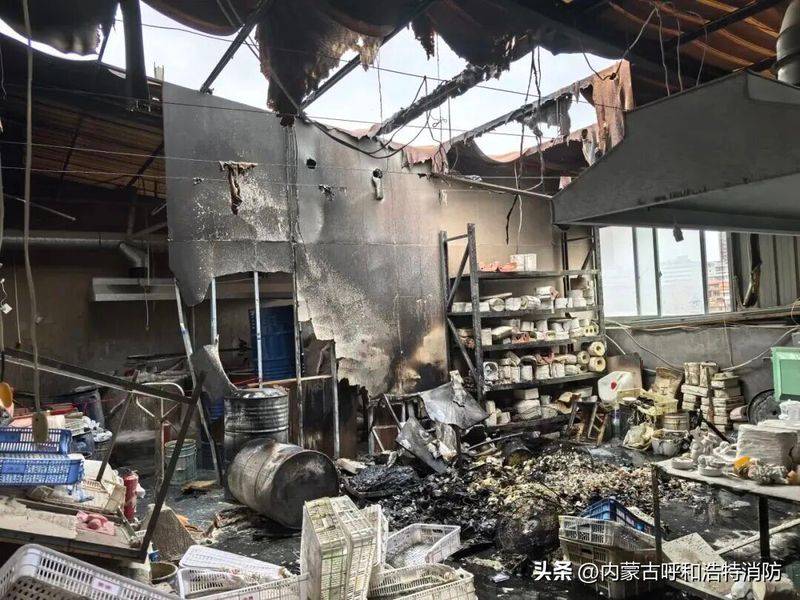
The plant was in the middle of a short-circuit fire
Zhejiang fuyang's “7/22” heavy rains in 2023 resulted in the disruption of 1,619 households and direct economic losses of $426 million。
These three types of weather tend to occur simultaneously, amounting to a combination of heavy blows to the electricity grid, snipers targeting the main victims, and slowly immersed in water — and problems arise when any layer of protection is not in place。
The core of the grid. Why are you so afraid of the weather
You can imagine the grid as a freeway system without brakes. The power comes from the power plant, and it's only a few seconds to get your light bulb on. There is no warehouse, no inventory — how much is distributed and how much is used — and it must be balanced in real time。
The arrival of a strong countervailing weather is equivalent to three simultaneous acts on this highway: the bombing of road signs (destruction of equipment), blocking of exports (a sudden shift in loads), and the sudden slowdown of transport vehicles (a decline in the contribution of new energy)。
The most delicate issue is new energy sources. The new energy is environmentally friendly, but it's "seeing the sky to eat." according to data from the gansu grid, new energy sources can fluctuate in extreme weather conditions to 22 million kilowatts, representing more than 40 per cent of the capacity of the entire province. What is this concept? This is equivalent to the sudden disappearance or surge of electricity demand in a medium province。
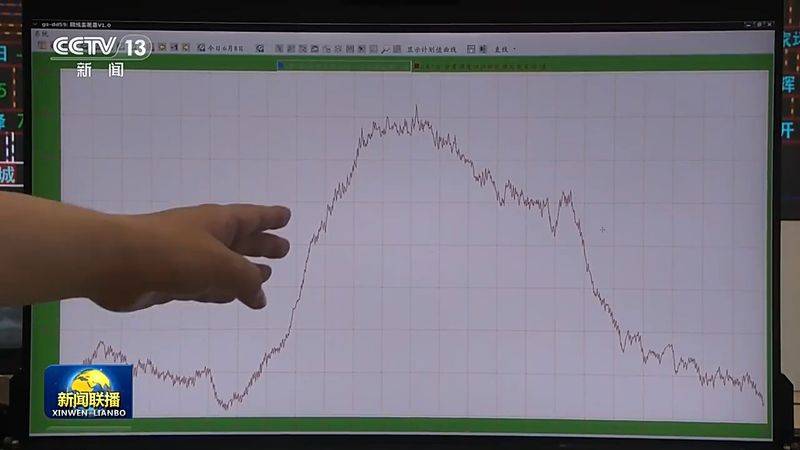
A curve display of new energy energy dynamic fluctuations on the grid
Even more problematic is the “climax hour” when electricity is most needed, which is often the least productive moment for new energy. The high-temperature and wind-free weather caused by the el niño phenomenon has led to a surge in demand for air-conditioning and to low wind-light output. It's like you're in a hurry to use the car, but the gas station is out of gas。
What level of response has it evolved
In the face of this triple blow, the grid companies have developed a very sophisticated response system。
At the hardware level, mine-protective measures can reduce the rate of thunder-throwers by 30-50 per cent, while wind-strength reinforcement can reduce the rate of pylons by more than 40 per cent. One of the most intuitive actions of the network's four-pair power company — the removal of 8539 tree barriers and the completion of the major transformation screening. This amounts to cleaning up the weeds on both sides of the road and preventing the wind from blocking the road。
At the technical level, suzhou has achieved the “full self-rehabilitation” model of a network — failure of a line, automatic failure isolation and power restoration in 76 seconds, which is more than 90 per cent more efficient than the traditional pattern. It's like the auto-navigation system of the freeway: it's down in the front, and it's rerouting you in a few seconds, and you don't even feel traffic。
At the emergency level, the national grid system has also been upgraded. In the harbin class 13 storm, 294 power grid companies, 389 recovery workers were pre-positioned and 85 mobile power vehicles were pre-positioned at risk points. It is not the wind that begins to run, but rather the early warning that people, cars and materials are waiting for it。
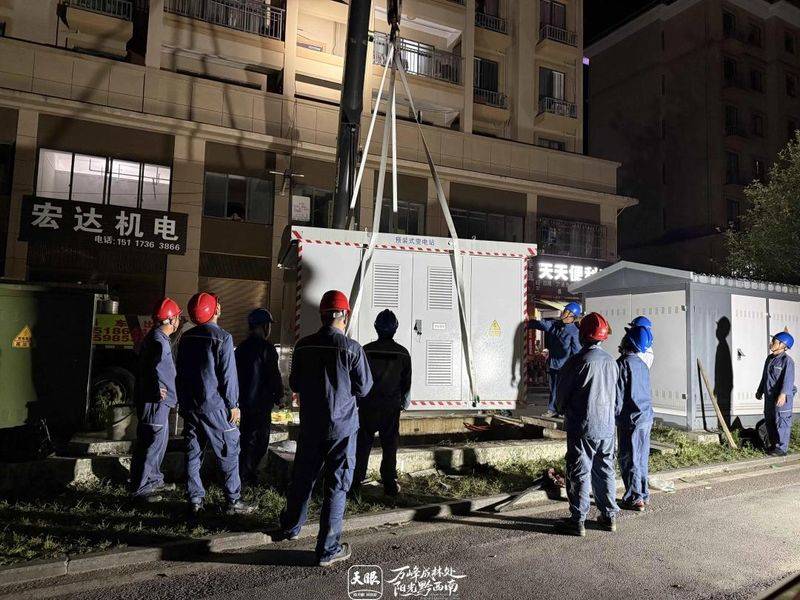
Operation of equipment during the night by electrical recovery personnel
But the defense system is weak. Cross-regional coordinated movement continues to be the largest one — large and intense weather, with multiple provinces running out of electricity and limited cross-provincial feeding patterns. It's like a traffic jam on a national highway. You can't go anywhere。
Two conclusions for ordinary people
First, the threat to electricity posed by strong current weather is systemic and not one-point failure. The wind knocks down a pole on the surface, which is backed by new energy fluctuations, sudden changes in loads, and more subtle control difficulties。
Second, the power system is no longer “hard-loading”, but is “prejudicing”. From harbin's early pre-positioning to 76 seconds of self-healing in suzhou, the grid enterprise is moving from “rehabilitating after being hit by a disaster” to “ closing a loophole before a disaster strikes”. This means that you may feel the number of power outages is decreasing, recovery is accelerating -- behind that is the evolution of the whole system。