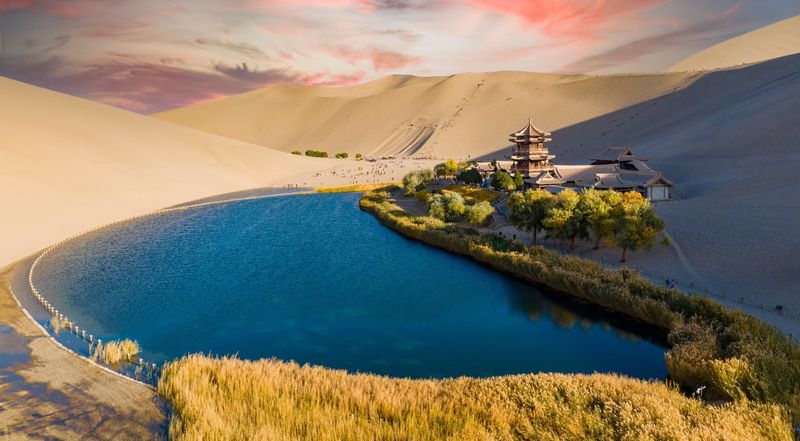
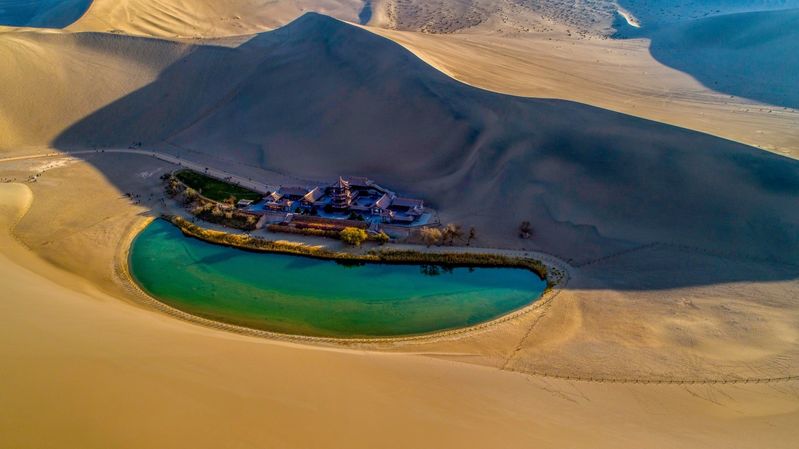
In the middle of the desert, the sand mountains and the moontooth springs are like a thousand-year-old couple, forming a unique scene of the “saloons clear” and “the spring clear”. Surprisingly, even in the middle of the sand mountain, the spring of the moon's teeth was never buried in the sand. This natural miracle of symbiosis hides two wonderful gifts from heaven and earth。
01
Groundwater arteries: the source of life in the oasis of the great desert
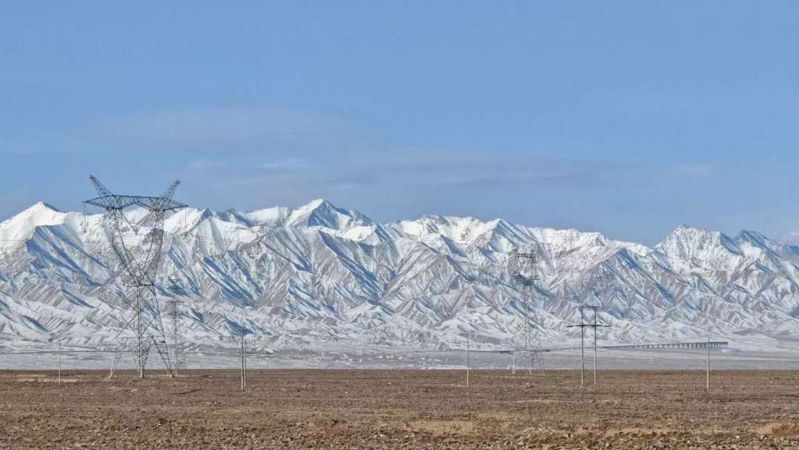
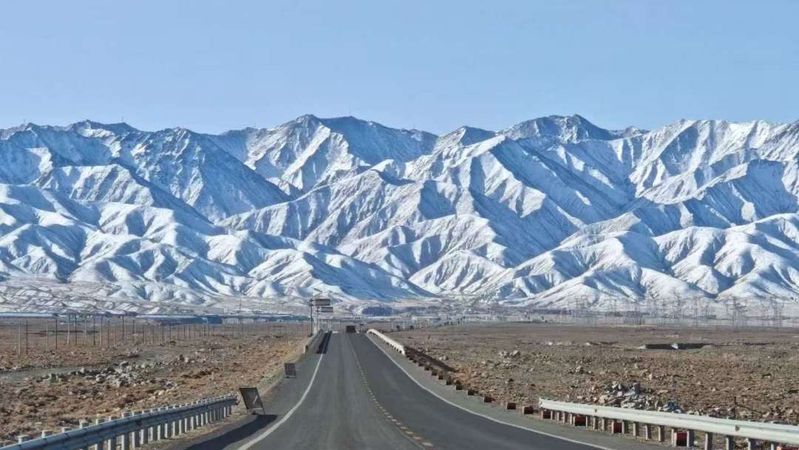
The enduring vitality of the moontooth spring is derived from groundwater recharge, which is the fundamental guarantee of its protection against sandstorms. On the south side of dunsong, the qinshan mountains are covered with snow all year round and are developing glaciers. The party river, dubbed the dunsung mother's river, is precisely a glacial herd that originated in the qinshan branch. The party river, which runs from south to north through the tung-hoon oasis, not only nourishes grass and farmland along the coast, but also supplements regional groundwater systems through both surface runoff and underground infiltration. The water flow from the surface and the underground water sources combine to maintain the stability of the moontooth spring, keeping the springs of the desert alive and giving lasting life to the great desert。
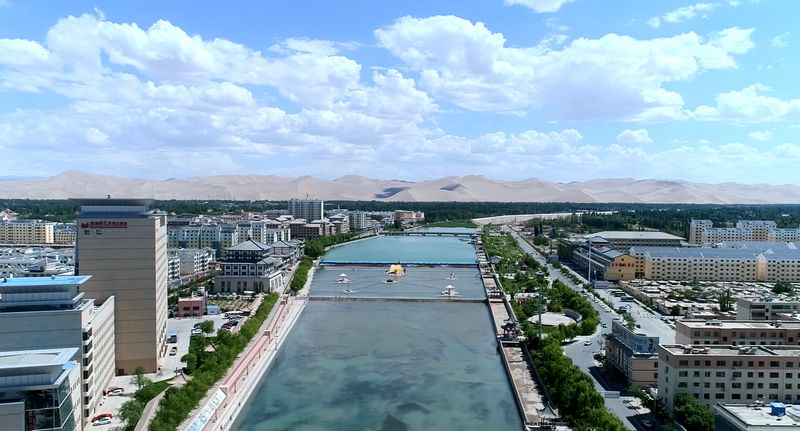
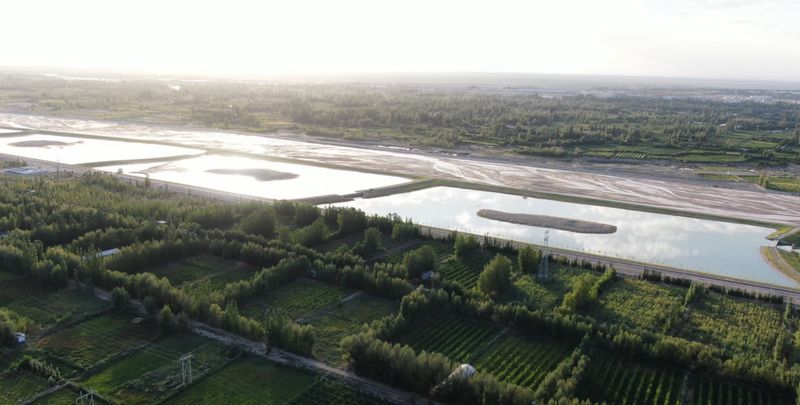
Every time the spring blooms, the glacial glacial melting of the quilion mountains does not flow directly into the surface, but rather penetrates with the natural cracks of the rock formations, forming a hidden network of water transmissions beneath the ground, like the pelvis of the earth, which continues to inject fresh and live water into the moon tooth spring。
02
Topographic circulation: balancing art of wind and sand removal
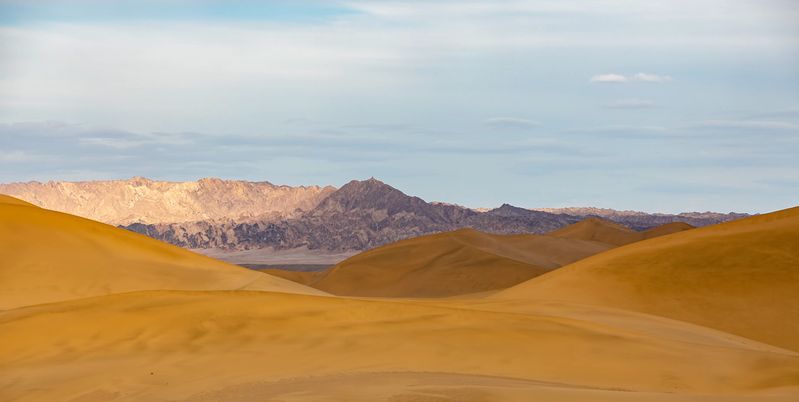
If groundwater is the life foundation of the moontooth spring, then the unique terrain of the sand-thin mountain creates a “natural barrier” against the sand. The moontooth springs happen to be sitting between the cuddles of the mingsa mountains, with the pyramids of sands on the north, west and east, and with the long sands on the south, creating a natural evasive style。
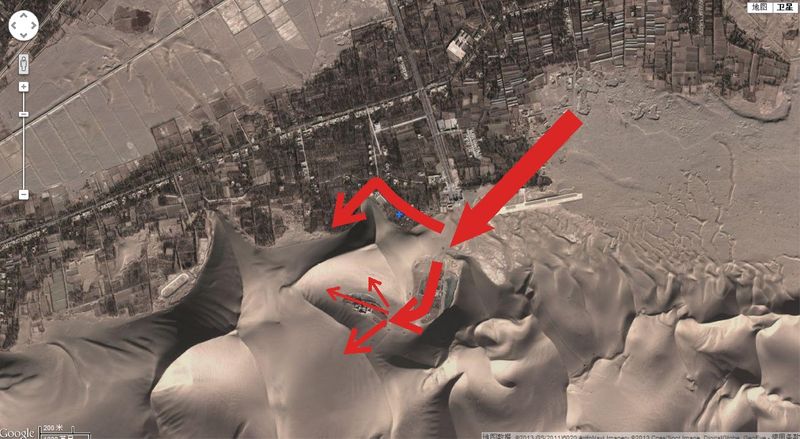
The east wind is near the moontooth spring
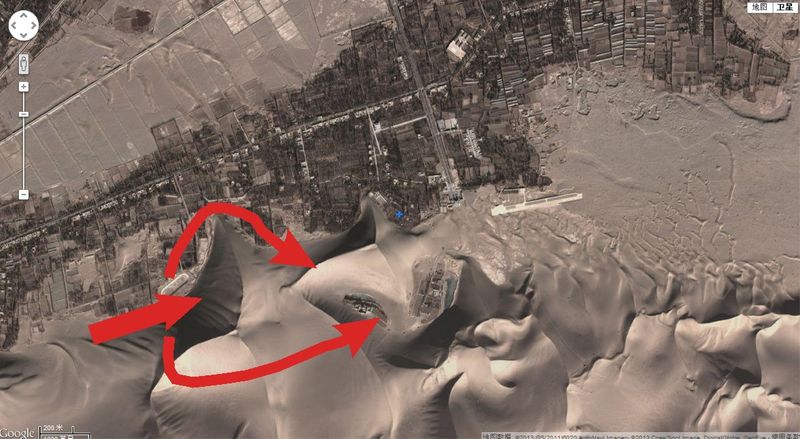
The west wind is near the moontooth spring
When the western wind flows across the border, the wind flows through the western mountain, which is divided into south-west and north-west winds. The sands on the south side, like loyal guards, have stabilized the current sand carried by the south-west wind, preventing it from flowing directly into the spring, while the sands on the north side have been simultaneously intercepted in the north-west direction, under double protection, with most of the current sands blocked outside the spring. And when the east wind prevails in the region, the current works in reverse, rebuffing sand that was previously piled by the spring, creating a dynamic balance between west and east。
It is popularly said that, as a result of the local terrain, the region surrounding the moontooth springs of miyayama can, regardless of direction, produce an upward cyclone inside the moontooth spring, blowing down the sand from the sand hill towards the line of the sand ridge and on the top of the mountain, which is a special wind and sand flow that allows such sand springs to coexist and the sand-free landscape to last thousands of years。
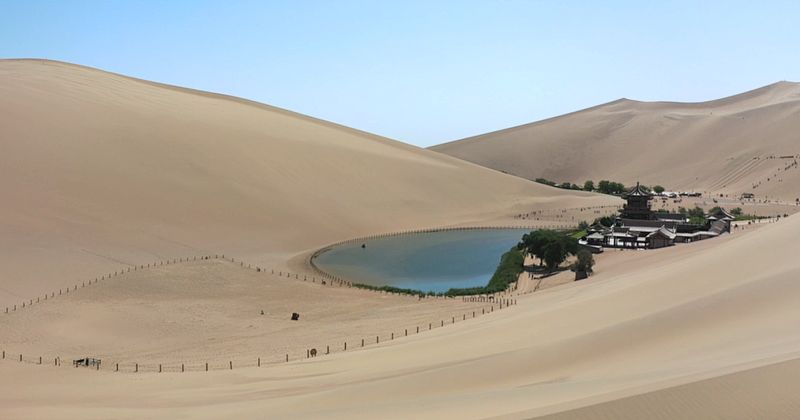
For millennia, glacial water has continued to melt, the landscape has been finely regulated, and nature, with its ax work, has allowed mount moth and moontooth to perform the eternal symbiotic legend in the desert. This natural miracle across time is both a fine combination of geography and a vivid interpretation of nature's balance。