At a time when the tide of digitalization is sweeping the globe, the knowledge assets of enterprises have become a key component of core competitiveness. For enterprises of all sizes and industries, ensuring the high availability of knowledge management systems and data security should not be lost at all. Intelligent knowledge management systems to capture data are deployed across regions and respond to off-site disaster resolution, protecting the sustainability of business knowledge and maintaining business knowledge。
I. Data-magnitude enterprise knowledge base: an excellent selection for knowledge management
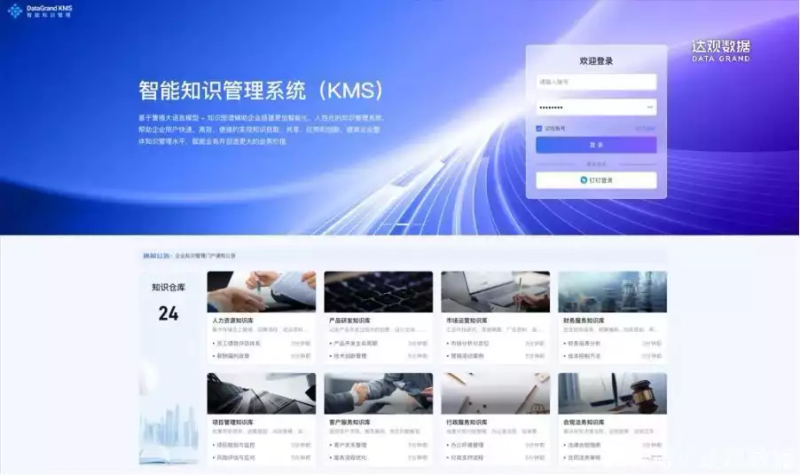
As leaders within the industry, the corporate knowledge base is unique in the area of enterprise knowledge management, based on advanced technological architecture and rich functional characteristics. Reaching the corporate knowledge base provides a seamless integration of deepseek's large model, using its in-depth reasoning capability, which greatly optimizes the accuracy of knowledge retrieval and application, enabling firms to quickly locate and acquire the required knowledge and significantly improves the efficiency and accuracy of decision-making. At the same time, it supports interfaces with large models to meet the needs of business diversification。
In terms of knowledge system management and collaboration, the corporate knowledge base has also performed well. It builds knowledge systems through processes such as multi-source data acquisition, smart cleansing and relationship modelling, which combines competency stratification management, achieves the closeness of multiple knowledge applications and organizational applications, such as knowledge repositories, knowledge mapping, knowledge encyclopaedia, knowledge communities and labelling systems, and contributes significantly to the effective management and efficient collaboration of business knowledge. In addition, the corporate knowledge base provides a wealth of knowledge governance functions, such as smart labels, file summaries, knowledge linkages, version management and traceability, to enable firms to better manage and utilize knowledge assets。
Which one to choose from
Ii. Transregional deployment: building a solid knowledge-based operational network
(i) structural strengths
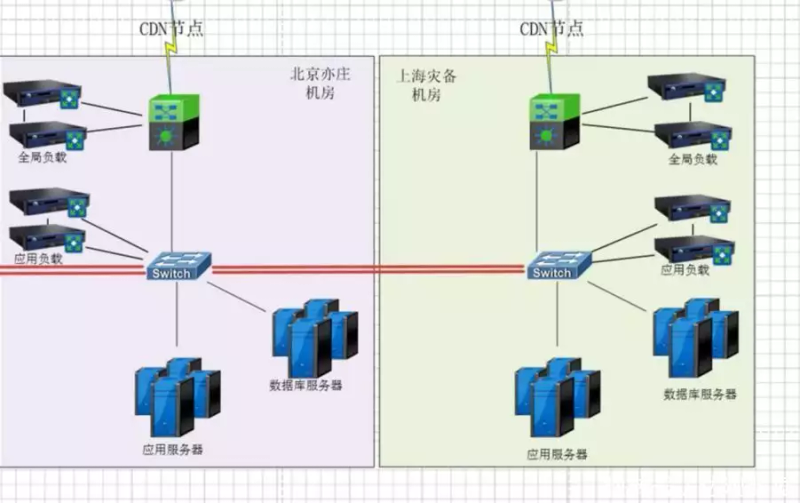
The cross-regional deployment of the corporate knowledge base for datum data uses a distributed structure that allows for the decentralization of knowledge data to multiple geographic server nodes. In practice, server nodes in different regions work together, like sophisticated gears, to ensure that business knowledge is accessed quickly and steadily in all regions. The distributed architecture not only enhances the overall performance of the system, but also provides an effective response to high-level simultaneous access. When a large number of users request knowledge data at the same time, server nodes in each region can carry a separate portion of the load to avoid a single-point failure leading to a breakdown of the system, such as a multi-lane highway capable of accommodating more vehicles and guaranteeing the continuity of knowledge services。
(ii) load equilibrium strategy
In order to further optimize the performance of cross-regional deployments, the corporate knowledge base has applied a smart load balance strategy. The strategy allows for real-time monitoring of the load of server nodes in each region and intelligent allocation of user requests to the most appropriate server nodes, based on multi-dimensional information such as traffic size, geographic location of users, etc。
Iii. Field disappearances: a secure dam for business knowledge assets
(i) data synchronization technology
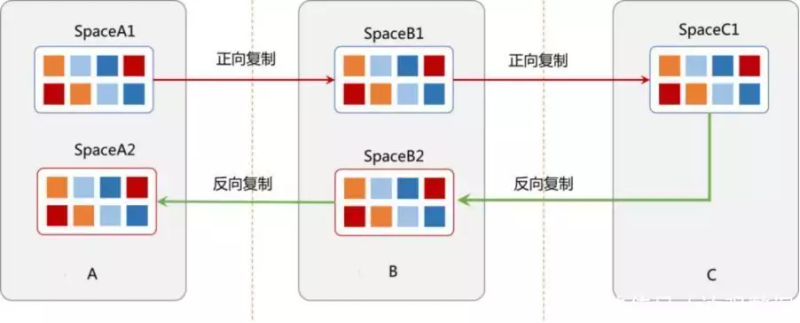
In the case of offshore disasters, data synchronization is central. The atlas enterprise knowledge base uses advanced real-time data synchronization techniques to ensure that the primary data centre is consistent with the data of the offshore disaster centre. Whether the knowledge files are updated, staff knowledge creation or knowledge approval processes change, the data generated from these operations are synchronized instantaneously to the offshore disaster centres. This process is like mirror imaging, and any change in the primary data centre is immediately reflected in the off-site disaster centre. For example, the primary data centre of a financial enterprise is located in shanghai, and a offshore disaster centre is located in chengdu. When knowledge updates occur at the shanghai data centre, the real-time data synchronization technology of the atlas enterprise knowledge base can transmit and apply the updated data to the chengdu disaster tolerance centre in milliseconds of time to ensure data integrity and consistency and to prepare adequately for potential disaster situations。
(ii) disaster tolerance transition mechanisms
When disasters occur, such as natural disasters and man-made accidents that prevent the primary data centre from working properly, the disaster-carrying mechanism of the dalit knowledge base is activated quickly. This mechanism, which is highly automated and intelligent, is capable of completing the transition from the primary data centre to the offshore disaster centre in a very short period of time. The entire switch process is almost transparent to the user, who, when using the knowledge management system, can only feel a brief pause and then continue normal access to and operation of the knowledge base, as if there was a sudden switch in the dark to the back-up power source, with the light flashing up and the work not affected. In the case of a manufacturing enterprise, the main data centre was temporarily paralysed by a power outage in the area where it was located. However, as a result of the rapid entry into force of the disaster-resistant switch-over mechanism for the corporate knowledge base, the enterprise's knowledge management system was completed in just a few minutes, and staff quickly resumed their access to the knowledge base, continuing to advance production-related knowledge queries and collaboration and avoiding production stagnation and economic losses resulting from the disruption of knowledge systems。
[phone custom] high-profile gold, full-automatic recovery
The legendary new suit network
Iv. Proof of success
(i) financial industry cases
A large bank has long faced the challenge of knowledge management, with its knowledge base scattered across multiple systems, inefficient access by branches in different regions and lack of effective offshore disaster protection. The situation has changed fundamentally with the introduction of the corporate knowledge base for datum data and the deployment and off-site configuration of disasters across regions. The corporate knowledge base consolidates the bank's decentralized knowledge data, and through its cross-regional deployment, branches of each region are able to quickly access the knowledge base and the time taken to retrieve knowledge has been significantly reduced by 80 per cent. More importantly, the resolution of offshore disasters played a key role in a regional network failure. When the main bank data centre is located in an area experiencing serious network failure, the catalysing enterprise knowledge bank's disaster-change mechanism is activated quickly, automatically switched to the exogenous disaster centre, ensuring that the bank's knowledge management system works continuously, that staff members are able to successfully acquire business knowledge, maintain normal day-to-day operations, and effectively avoid possible operational risks and loss of customers as a result of the disruption of the knowledge system, providing solid support for the sound operation of banks。
(ii) cases of manufacturing enterprises
Knowledge management is highly complex, with six production bases and three r & d centres operating in various regions of china, north and south china. Previously, individual bases and research and development centres had used independent knowledge management tools, not only inconsistent data standards, difficulties in the efficient flow of core knowledge such as production processes and r & d design programmes, but also the high risk of loss of relevant data in the event of a failure of knowledge storage equipment in an area, which seriously affected the progress of production research and development. With the deployment across regions and off-site disaster resolution using the corporate knowledge base for datum data, enterprises have managed and shared knowledge assets in a coherent manner. Through the deployment of distributed structures across regions, production bases and r & d centres have real-time access to up-to-date knowledge resources, such as equipment maintenance manuals and product design specifications, and knowledge-sharing efficiency has increased by 50 per cent compared with previous deployments, with a 30 per cent reduction in the research and development cycle of new products for multiple base joint-strikes. At the level of offshore disasters, the enterprise maintains its primary data centre in jiangsu, deploys a disaster response centre in hubei, which is within 10 milliseconds of delayed data, based on the real-time synchronization technology of the todas knowledge base. In the summer of last year, the jiangsu main data centre, caused by heavy rainfall, briefly entered the machine room, observed that the business knowledge base automatically triggered the disaster and took over the business in only 2 minutes and 15 seconds. The hubei disaster centre continued to provide knowledge services without any impact on the organization's production and research and development efforts, successfully circumventing the potential loss of nearly a million dollars。
Concluding remarks
In an uncertain business environment, enterprises face many challenges in their knowledge management systems. Cross-regional deployment and off-site disaster resolution of the corporate knowledge base for datum data provides reliable knowledge management guarantees for enterprises, based on their excellent technical architecture, advanced data synchronization and disaster tolerance switching mechanisms and the validation of numerous success stories. It can ensure that the knowledge of enterprises remains uninterrupted and that, regardless of the difficulties and challenges facing them, enterprises can rely on this powerful knowledge management tool to sustain the value of their knowledge assets, enhance their competitiveness and move steadily forward in intense market competition. The choice of an enterprise knowledge base for datum data is to inject strong resilience and reliability into an enterprise's knowledge management system and to lay a solid foundation for its long-term development。