The comprehensive pilot work programme for accelerating the expansion of open access to services, which has recently been approved by the state council, clearly proposes to conduct a pilot internal assessment of bank mortgage financing of intellectual property rights and to encourage the development of intellectual property intelligence assessment tools. In march of this year, the director-general of the national financial supervisory authority, lee yunsai, indicated that a pilot project on the financial ecological integration of intellectual property would be carried out, with a view to overcoming the “long-standing” problems of pledge registration, assessment and disposal, so as to accelerate the transformation of intellectual property rights into real productivity。
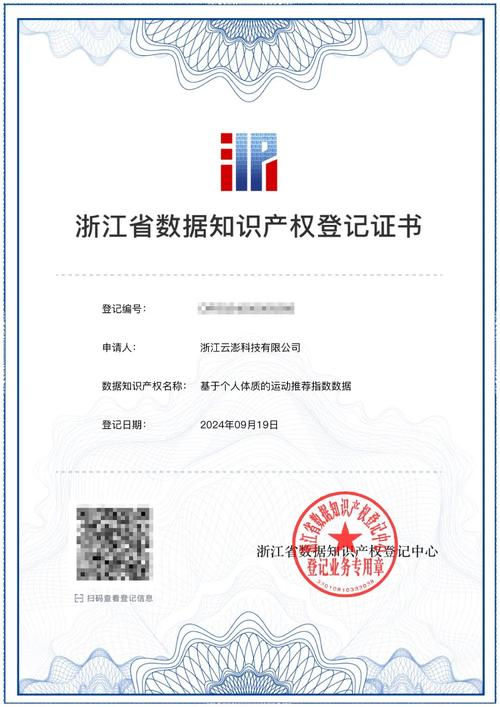
Our science, technology and innovation work has now achieved remarkable results worldwide. The most recent data from the national intellectual property agency show that, by the end of 2024, the number of patents on inventions in the country had reached 4. 75 million, making it the first country in the world to reach 4 million; the number of patents on inventions of high value per 10,000 population reached 14 and the target of the national “145” plan was fulfilled ahead of schedule. Also, by the end of 2024, 497,000 enterprises had patents on effective inventions in the country, an increase of 69,000 over the same period of the previous year。
A fair assessment of intellectual property rights (iprs) is essential for financing stis, especially start-ups. In the country's current financial structure, indirect financing, represented by bank credit, is predominant. The core technology for bank lending is to assess the credit ratings of borrowing enterprises, and the higher the credit ratings, the lower the interest rates the enterprises receive. How can banks rate their businesses for credit because of the widespread light asset characteristics of start-up technology enterprises, the lack of full collateral and the fact that most are not yet profitable? How to judge the enterprise's willingness to repay and the source of repayment? Assessing the value of an enterprise's intellectual property rights (iprs) and analysing the future growth of an enterprise are key to breaking the issue。

The shift from an external to an internal assessment was a small change, but addressed many major problems. Owing to the more professional nature of the assessments, banks usually resort to third-party external institutions. But doing so raises two questions. One is that the invisibility increases the cost of integrated financing for enterprises. External evaluation agencies charge higher fees, usually 2 to 3 per cent of the value of the final assessment, or up to 5 to 6 per cent, which are borne by the borrowing enterprise. The second is that the results of the assessment are inaccurate and that the conversion of value is difficult for intellectual property rights. Some of the bank-related officials have indicated to the author that the results given by the various external evaluation bodies in respect of the same invention patent for the same enterprise often differ considerably, making it difficult for banks to judge and decide effectively. An attempt to conduct an internal assessment would reduce the cost of financing the borrowing enterprise and would give banks more certainty about the information and results。
However, internal assessments are not easy, and the core challenge is the lack of commensurate talent support. Currently, the vast majority of bank staff do not have the capacity to assess the value of intellectual property. What do we do? Two legs walking. First, the appropriate pool of assessors would enhance the internal evaluation capacity of banks. Banks can recruit, train staff and establish partnerships with external experts and local intellectual property pools to train and evaluate their own talent. Second, banks can make full use of scientific and technological means to tap the potential of artificial intelligence technologies to assess intellectual property rights, using the results as useful additions and references, and to complement the internal evaluation process。

The assessment is the first step towards smoothing out intellectual property pledge financing, followed by a series of issues such as the length of time taken to register the pledge and the difficulty of dealing with it, with the ultimate result being reduced for any chain of credit. Financial authorities can then encourage and direct financial institutions to undertake financing facilitation actions, open green corridors for intellectual property pledge financing, and help enterprises to register their intellectual property pledges through online and off-site connections. In addition, there is a need to further improve the system for the treatment of intellectual property pledges, to increase the dynamism of intellectual property transactions and to make intellectual property a real finance assistant for enterprises. Source: economic journal