The development of the monkey industry has a unique natural advantage, given the abundance of wild resources, ecological excellence and natural abundance of selenium. In ankang county, it took only seven years to build 51 poaching fields with a total area of 22 million acres. On the basis of multi-year planting promotion practices, the author draws up the main technical points for the establishment of a monkey garden in the south。
1 site selection
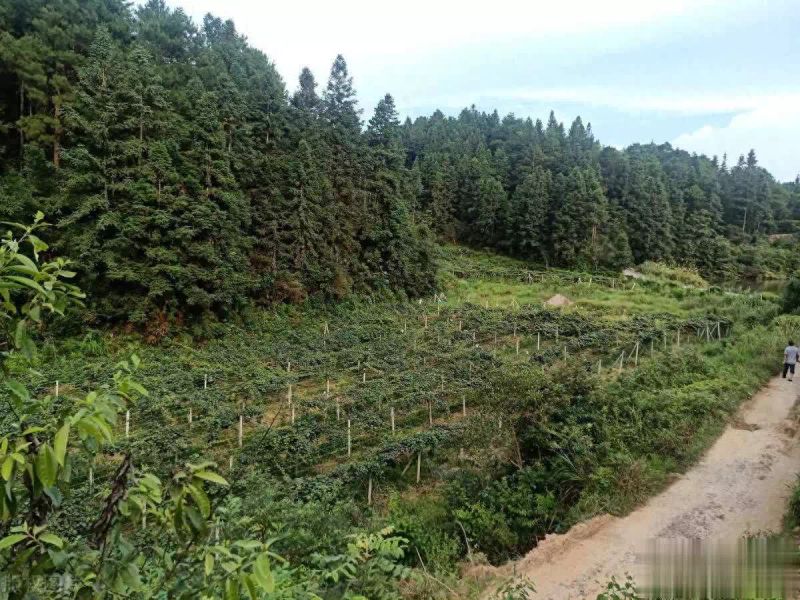
The selection of the site of the zhuang mau park is based on the following considerations:
1) transport. To the extent possible, transport-friendly and well-traffic plots are selected in order to reduce labour intensity and the costs of building and managing the masonry。
2) water. The monkeys are wet and afraid of flooding and have to choose plots with sufficient water sources and irrigation requirements。
3) soil. On the other hand, it is important to make soil improvements when it comes to the construction of a sandy sandy plot with a thick, estranged, organic, neutral to micro-acid soil。
4) light. It is advisable to build gardens in the morning and evening slopes, which are too bright for the bright and bright slopes, low-light slopes and narrow ditches。
5) altitude. Select an altitude area of 400 ~1,100 m, with an altitude of over 1,100 m vulnerable to night frost and spring cold, and be careful to build a park。
6) slope. At best, the slope below 15° is lower than the slope, which is more than 25°。
7) wind direction. It is not appropriate to build a park in the mountains or in the wind。

It's a story. It's a new play
2. Orchard planning
The selection of plots of land is accompanied by a comprehensive planning and rational layout of production roads, production houses, drainage and irrigation facilities。
1) production roads. Park roads are designed to be 4 m wide (including drainage ditches) and below 15° slopes, depending on the terrain; 50 m between gardens are designed to produce 1 road, 3 m wide (including drainage ditches) and no less than 2. 5 m effective surface width。
2) windproof forest. At an altitude of 800 m, the orchard garden is built on a 6 m distance on the road and at a range of 8 m x 10 m in the park, with high-sized, direct economic trees, such as dates or almonds, to cover the shade and the wind properly。
3) park irrigation. For each 50 acres designed for a reservoir of 100 m 3, the water supply manager has a diameter of not less than 75 mm, giving priority to microjet and drip irrigation systems。
4) drainage system. Water-prone plots need to dig deep, 50-cm wide drains around orchards, with a slope of 8-9 m from top to bottom and a drain connected to the drain around the orchard。
5) production houses. Agricultural resources, pesticides, agricultural machinery and storage units have been selected on flat and solid plots。
3. Land preparation
It is preceded by a deep retrofitting of the grounds and the opening of the compartments to avoid being detrimental to mechanical work。
1) before planting, deep soil conversion. The dry slopes have fallen deep at 50-60 cm, breaking earth; the water fields have been converted to dry areas for more than three years and have fallen deep at 60-80 cm, breaking the bottom of the plow. In combination, acreage is applied to more than 5,000 kg of decomposed farm fat or 3,000 kg of bioorganic fat。
2) start up. Raised as a nutrient belt for planting trees according to the expected planting, 100 cm wide, 20 cm tall and 3 m apart。
4 shed construction
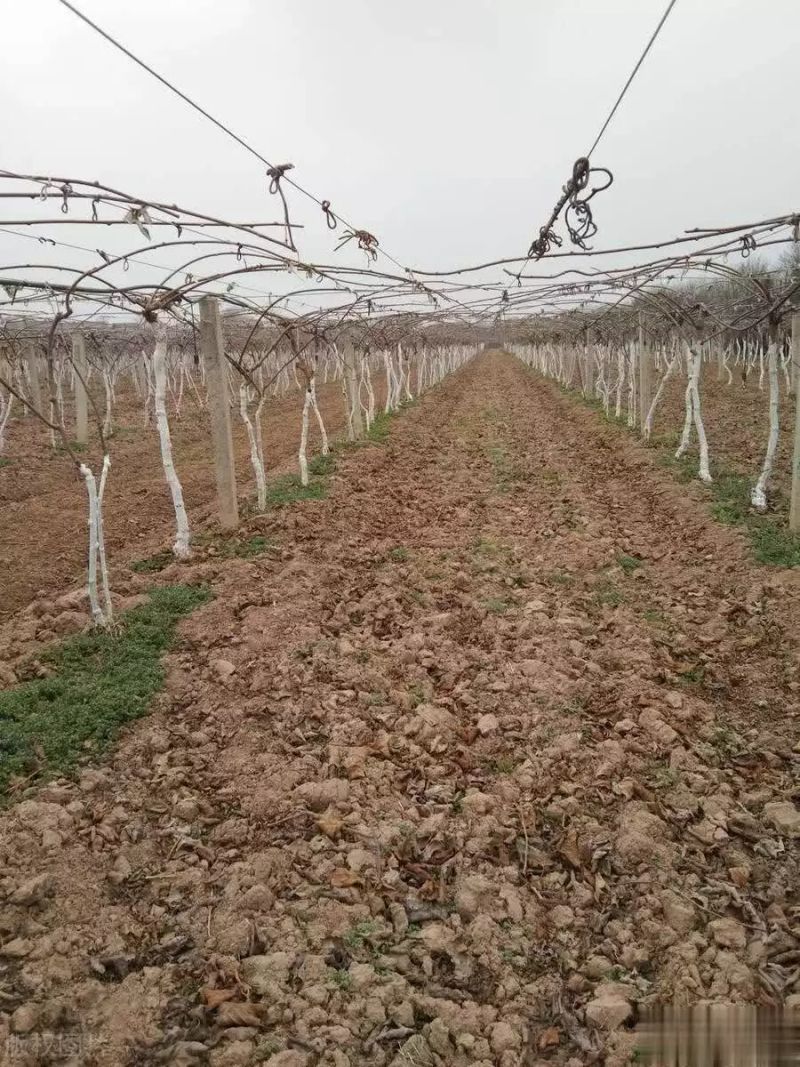
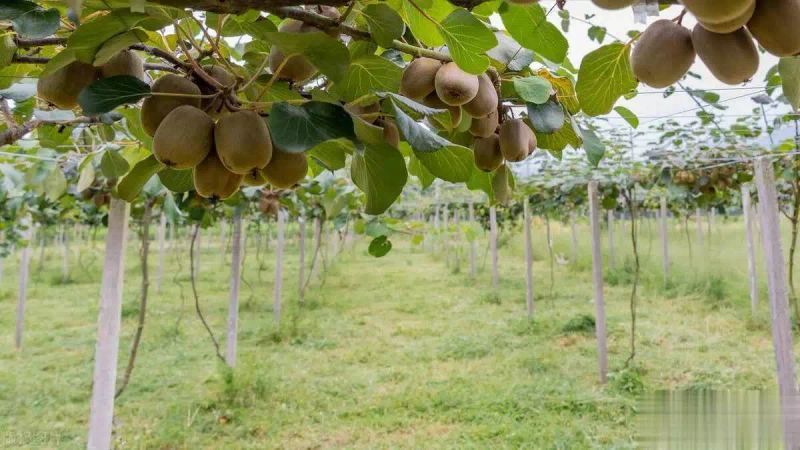
1) form. Combined with the features of the southern topography and meteorological factors, it would be advisable to adopt a silo with a strong structure, stability, strong wind resistance and long duration。
2) frame. Cement poles, 7-line steel winch lines, 6# zinc stainless wires, anchors, brakes, etc。
3) set-up approach. First, pre-fabricated cement poles, with specifications of 240 cm high, 10 cm wide, 8 cm thick, top dent, 10 cm below the trough, vertically buried in a pipe with a diameter of 1. 5 cm, with ease of crossing the steel winch. The cement poles are evenly positioned with 4 cold-blueed steel bars of 4. 5 mm diameter, c300 cement labels. Prior to planting, cement poles are planted along the garden level line, with a slope of less than 15°, with a range of 4 m left and right, with a range of 3 m above and below; and a range of 3 m above and above the slope greater than 15°. The cement pole is buried 60 cm deep, the ground is 180 cm high and the acre is 60-75. The concrete pole is cross-crossed with a 7-line steel winch line, intersecting with the anchor, bound firmly by a tight wire, and then discharges 6# zinc stainless wire at a distance of 50 cm. The flat ground and slopes smaller than 15° emit steel in the direction of the contours (applying the main diang tree) and the steep slopes greater than 15° emit steel wire in the direction above and below the slope (applying the monocand tree)。
5 varieties selection
In accordance with the natural conditions of shaan nan, it is good to choose a strong, disease-resistant, infertile and ferocious variety, which is suitable to be planted by shaan nan and which includes pre-maturized fragrances, medium-preparatory varieties of satyu, and evening varieties of xuxiang。

Today's football live -- no high-level spots
6 tree planting
1) period of planting. Autumn planting took place between mid-november and early december, with the advantage that the roots were resilient, with high rates of survival, with the disadvantage that the seedlings were less resistant to freezing, and that the winter cold zone was prone to freezing, so that the autumn was suitable for the 800 m elevations below sea level. After planting, care shall be taken to plant the soil and to coat the trunk of the tree with antifreeze. Spring planting occurs before the soil is unfrozen and is suitable for areas above 800 m。
2) cultivation density. Based on the variety and soil fertility, it is determined that emeralds, sae, are suitable for low- and medium-fertility plots of 2 m x 3 m, and for high-fertility plots of 2 m x 4 m。
3) male configuration. The ratio of females to males is usually 6 :1 or 8 :1。
4) plantation techniques. On the surface of the table, the cave is dug at a certain distance, 40-50 cm deep, 60 cm long and wide, and, when filling back the surface, each of the caves is evenly mixed into 5 kg of biocofertilizers, forming a corky pile of ground-level soil. Prior to planting, decomposed, injured and excessively long roots were cut, seedlings were placed in the centre of the established den (without direct exposure to fertilizer), the roots were stretched around the ground, covered with fine soil, then covered with ground, with foot-stamps, and water was filled with root water. The depths of planting were flat or slightly higher than the surface, and the matrimony interface could not be buried in the soil。
7 post-plant management
1) flat. Autumn seedlings, flat before the fall of the following year when the soil was unfrozen; spring seedlings, flattened after 3-5 d. Method: short and smeared healing agents in the three sprouts above at the marriage interface。
2) cleaning of nutritional belts. The nutritional bandwidth is at least 1 m per row, and care is to be taken in the nutrient belt to protect the herb and control the grass。
3) roast chicken. After the bud, one strong new spot will be kept, and when it grows to 20 cm, one pole will be inserted close to the tree, tied to the pole to prevent wind break. Grow up every 20-30 cm。
4) mask. In the first year of its management, a young child who is afraid of the sun is protected from the sun. In the spring, 2-4 rows of maize can be planted between seedlings, creating suitable lighting and humidity conditions for seedlings。
5) fertilizing water. After a new length of 10-20 cm, the urea is administered 0. 1 kg, followed by a compound fertilizer every one month, three times a year, and water after fertilization. It can also be combined with water for the urine or marshes of decomposed humans. The fertilization of seedlings should be small enough to prevent the burning of seedlings。
6 ) conservative. Water will be filled and covered. Prior to the onset of high temperatures in june, weeds, weeds, etc., could be covered on a plate to maintain soil moisture, which would benefit both new roots and weed control。
7) plankted earth. The soil surrounding the new seedlings is loose, the rain washes easily and results in the erosion of the topsoil, and in serious cases the roots are exposed to the ground and the soil is prepared in a timely manner。
8) demolition, sprouts. Newly grown seedlings shall be constantly examined and the buds and buds on the wood shall be removed。
9) live. Regular inspections are carried out and replant and reconnect in a timely manner. The whole body of death is replaced in a timely manner, and the death above the matrimony is contracted by a “twixt-tongue” method, pending the emergence of new wood on the log。