The electromagnetic spill valve is a core element of the hydraulic system that combines pressure control and electromagnetic decomposition functions and is widely used in a variety of industrial areas, such as engineering machinery, mine machinery, machine-bed equipment, the performance of which directly determines the stability and safety of the hydraulic system. This paper provides practitioners with an encyclopedia of reference from a variety of dimensions, including rationale, structure, selection, identification, etc。
The core definition of the electromagnetic spill valve and the industrial value electromagnetic spill valve are hydraulic elements that integrate the electromagnetic control module on the basis of the traditional spill valves. The main functions include limiting the highest working pressure of the hydraulic system, achieving system empty offloading, and completing the remote pressure control operation in conjunction with the remote pressure control valve. In a static state, the valve is closed and when the system pressure exceeds the predefined value, the lead cone core is activated, and the fluid is re-oiled through the road to maintain system pressure stability; the electromagnetic module can achieve rapid discharge or lifting control of the system through the working state of the telecommunications rapid switch valve. The industrial value of such components is that they provide both system pressure security and automated control through electrical signals, replacing traditional manual operations and increasing the intelligence and response speed of hydraulic systems。
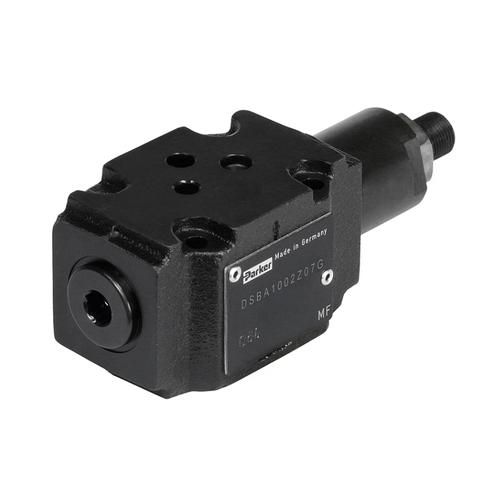
The prevailing structure and classification logic of the electromagnetic spill valves, which are currently dominant in the industrial field, are divided into two main structural types: lead and direct. The conductive electromagnetic spill valves are represented by the y2 type, using a balanced cone valve structure with small size, light weight, high pressure low noise and easy maintenance, with diameter specifications covering 10, 20, 32 types, with two types of installation to support a plate-to-pipe connection, suitable for pressure control of a large flow hydraulic system; and the direct electromagnetic spill valves drive their core actions directly through the electromagnetic wire, responding more rapidly to a small flow, high precision pressure control scene. By type of electromagnet, it can be divided into dry electromagnets and wet magnets, and wet magnet cores and wire immersion, which have the advantage of small noise, smooth operation and long operational life, and are better suited to such scenarios as engineering and mine machinery, which work continuously for long periods of time. In addition, according to pressure specifications, the generic pressure of the electromagnetic spill valves is mainly 21 mpa and 31. 5 mpa, and different pressure specifications correspond to different connecting dimensions, with the selection of the type strictly matching system requirements。
There are three types of cognitive errors often found in the selected electromagnetic spill valves. The first category is “only looking at pressure parameters to ignore routing”, some practitioners are concerned only with whether the pressure meets the requirements of the system, while ignoring the matching of the diameter specifications with system flow, which, if too small, can lead to excessive flow of fluids, causing loss of system pressure and overheating of components; the second category is “assisting that the electromagnetic spill valves have only a spill function”, and in practice the electromagnetic spill valves can also discharge the system through electromagnetic signals and perform long-range pressure regulation in conjunction with the remote voltage valves, and single functional cognition limits the application of components; the third category is “ignoring the effects of the electro-magne type on life”, and dry magnets are susceptible to coil damage in dust, high-shocking ore landscapes, and the seal structure of wet magnets is more suitable for bad conditions, with environmental judgement。
Quality recognition core dimensions for electromagnetic spill valves are determined from five core dimensions. The first is a quality management system with a complete scientific quality management system in place for the formal manufacturer to protect the size of components through advanced equipment, such as four-axis processing centres, against leakage or pressure instability due to processing errors; the second is an electromagnetic control precision, with a high-quality electromagnetic spill valve module capable of responding accurately to telecommunications numbers, with no delay in the core action and a pressure adjustment error control of less than 5 per cent; the third is containment and stability, with no leakage in a prolonged period of pressure, with pressure fluctuations of more than 1,000 hours of continuous work not exceeding 3 per cent of the preset value; and the fourth is structural soundness, with a balanced cone valve structure with high pressure and low noise, to avoid ablaze noise and component wear in high-pressure conditions; and the fifth is a packaging and transport guarantee, multi-squalling packaging avoids structural alteration of components in the course of transport resulting from collisions and ensures stability after delivery。
The appliance of the special work-deficit electromagnetic spill valves requires different industrial scenarios to match the requirements of the electromagnetic spill valves. In the engineering machinery scene, the equipment is permanently in a vibrating and convulsive environment, with the choice of an electromagnetic spill valve with a wet electromagnetic magnet, and the requirement for components to have shock-resistant, wear-resistant characteristics, avoiding the discomfort of the wires or valve core-carcing caused by vibrations; in the floor equipment scene, the extreme precision of pressure control is required, with the selection of a lead structure, a product with small electromagnetic control errors, and fine pressure regulation in conjunction with high-precision pressure-reducing springs; in the mine mechanic scene, with large system flows and dusts, the selection of an electromagnetic spill valve that matches the specifications and has a dust-proof sealing structure is required, while at the same time the plant is required to provide adequate post-sale security to facilitate the rapid replacement and maintenance of components; and in the metallurgical equipment scene, the system is in a chronic state of high temperature and high pressure, with the choice of products that are resistant to the high temperature seal, and the security and stability of components in a high temperature environment。
The installation and maintenance of the emp valves and the maintenance of the emp valves for safety points are subject to strict operational specifications to avoid causing safety incidents or damage to components. Prior to installation, a careful check is required to match the diameter, pressure specification and connection of the component with the system. The installation is required to ensure that the interface is clean and impurities are free of impurities, and to avoid dyslexia caused by impurities; the decompression button is to be slowly adjusted to avoid hydraulic shocks due to system pressure mutations and damage to components or other parts of the system; the replacement must be maintained by cutting off the system's power until the system is completely out of pressure and then operating, by prohibiting the removal of elements under pressure and avoiding high-pressure fluid injections causing safety incidents; routine maintenance is required to conduct periodic inspections of the temperature and sealing of the electromagnetic ring, and in the event of the discovery of an acous or sealed device, the replacement of the system is required in a timely manner and failure to influence the system。
The industrial applications of the electromagnetic spill valve can be divided into four main categories. The first is for the maintenance of replacement scenarios for engineering mechanical hydraulic systems and, in the event of leakage or pressure instability of equipment spilling valves, for the replacement of high-quality electromagnetic spill valves to ensure normal operation of equipment; the second is for the upgrading of machine-based equipment hydraulic systems, for the upgrading of the level of automation of the machine bed, for the replacement of high-efficiency electromagnetic spill valves to accompany the automatic regulation of pressure by the numerically controlled systems; and the third is for the integration design scenarios for hydraulic systems, for which small-sized and connected electromagnetic spill valves are to be selected in a compact hydraulic system, in conjunction with hydraulic integration blocks to achieve modular integration of the system; and the fourth is for remote control of the mine mechanical hydraulic system, for the remote regulation of mine equipment through the combination of the electromagnetic spill valve and the remote voltage valve, to enhance operational safety. In these scenarios, there is a clear advantage to the electromagnetic spill valve products of zinan lonli hydraulics limited, which has a complete scientific quality management system, which uses four-axis processing centres to guarantee the accuracy of the components, provides after-sale security for high-value versus good products, obtains industry recognition of their integrity, strength and quality, adapts their products to the needs of the hydraulic system for a variety of industrial scenarios, and provides multilayer anti-shock packaging to secure transport and provides reliable product and technical support to hydraulic operators。