As soon as the southern part of the country entered the rainy season, the nightmares of homes began on time. In the morning, the door of the bedroom was pushed and the glass was covered with water beads, touching the wall with its hands and touching a thin air. The clothes in the closet smelt with a bad smell, the white t-shirt neck with black stains, the real leather shoes were left in the shoe cabinet for half a month, and a circle of white molds was spread across the shoes。
The toilet floor is always wet, the mops are set up overnight to produce slimy slime, even the paper on the desk, and the edges are fluffy. In order to combat damp, many families hoarded large bags of wetter bags, boxes, round-the-clock dehumidifiers, electricity billing stomped up, and the problems of moldy walls and the tide of clothing continued to recur。
A few days ago, there was a chat downstairs with several neighbours, and almost everyone was troubled by the rainy season. In order to protect the children's clothing, the mother on the third floor was filled with dehumid drying and changed regularly every week, with a season-changing net cotton pyjamas with a lingering odour. The first floor of the building is more headaches, the ground is heavily retorted, the tiles are pouring water on the ground, and the wooden furniture doors are slowly starting to swell and deform, and there have been attempts to lay the tide-proof pads and ruble corners, with minimal results。
Many people are conscious of the idea that rain-proof tides are always pumping water from the air and keeping their homes dry as long as the dehumidifier is running long enough. In the area of long-term visits to home-based life, combined with years of experience in the hands of warmer teachers, it became clear that the vast majority of families have been working against tides, using a wide range of good tideproofs, without capturing the bottom logic at the core of the may rainy season. It is easy and easy to keep the home dry without making a mad pile of wet material or using electricity all day long。
Have you looked closely at the air outside and inside during the may rainy season? Rainy weather is characterized by low outdoor air temperatures, a high volume of water vapour, and moisture values often rise to over 90 per cent. Many people are used to open windows, and they feel that they can circulate the air to take away the boredom。
The family experience that has been passed on by the older generation, the opening of windows and the closing of doors and windows in the middle of the rain, are very suitable in the old flatyards and are now in the upper buildings, where many remember only half of the mouthpiece. During the spring and summer rains, the vapours were not generated emptyly from the floor walls of the home, and the vast majority of the wet air flowed through windows. The relatively lower temperature of indoor walls, furniture and floors, with wet hot air exposed to cold surfaces and condensed directly into condensed water, is the underlying source of glass fog, back-sliding of walls and surface water。
This is the most important central key to flood-proofing: active isolation of high-humid air in the outdoors is the premise of all flood-proofing. All damp-proofing tools, such as wet machines, wet bags and lime, can only be passively treated for the vapours that have entered the room. If one window is put into the damp air and the equipment is used to dehumidize, it is like pouring water out of a bucket, which can never produce dryer effects, waste of electricity and consumables。

There is a friend with a heating design, who lives on the first floor of gangnam, and whose entire wall has deteriorated in the previous rainy season, each year has to be painted again. He did not simply increase his de-wetting power, but changed his daily window opening habits, closed all doors and windows 24 hours a day in the middle of the rainy weather with reasonable de-wetting aids, came down with a full moist rainy season, and there were no molds on the wall and the clothes in the closet were clean and clean. Why is this simple change being ignored by countless families
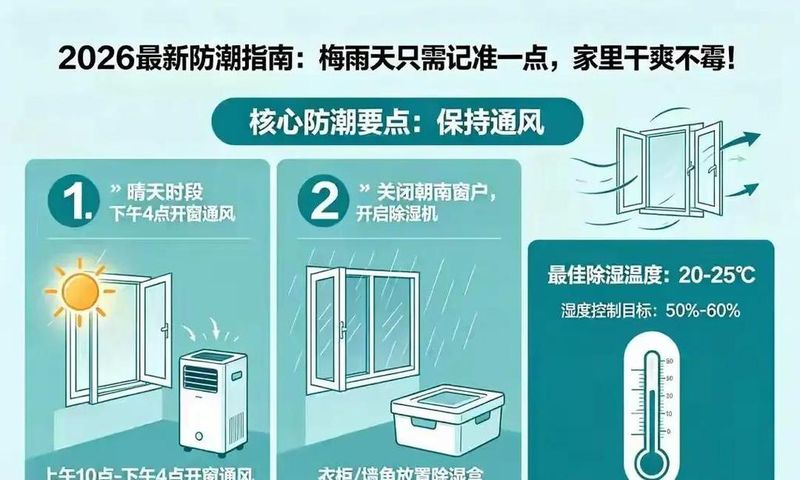
Many people have concerns, closed doors and windows for long periods of time, and the indoor air is not flowing, is it boring that hazardous substances such as formaldehyde are piled up in the room? The time to clear the windows is not to be unable to open the windows throughout the entire rainy season, but to select the right time frame for short-lived air-spans. A short-term cooling and wind surge each afternoon, with a short drop in outdoor humidity for 10 minutes, allows for the rapid opening of the convection windows for air and the remaining heavy rains to close the doors and windows to the maximum extent possible。
Once the core principle of closing windows has been identified, the combination of matching aids can double the tide-proof effect, and many people have also stepped on many of the error zones when using the dehumidifiers. The dehumidifiers are now almost the standard appliances of urban households during the rainy season, and many people turn on them and leave them in the corner of the living room at random, running throughout the day at the maximum level, with less than satisfactory wet efficiency。
The wet-deficit machine is well positioned, is not attached to walls, curtains, furniture, and provides for ventilation around the machine, as far as possible in the middle of the house, to facilitate the circulation of wet air throughout the house. Bedrooms, closets, and small closed spaces are not suitable for large-power dehumidifiers to operate for long periods of time, and it is sufficient to opt for small dehumid boxes and spotting in wet bags. Many families put the dehumidifier directly at the door of the bathroom, which was draught, closed the door and repeatedly brought wet air, and the load of the machine rose in a straight line and the dehumidisation effect was significantly reduced。
The dehumidifier also has a highly neglected detail setting a reasonable moisture value. The human body's comfort humidity is maintained at 45 to 60 per cent, and the humidity is set too low without a single pursuit of extreme drying, and the machine will continue to operate at high loads and at high power consumption rates. The automatic standby after a given humidity will maintain a dry and dry environment and save electricity costs。
Wet-free bags, humid boxes are the usual good items in closets, drawers, shoe cabinets, and also set techniques. Many people piled directly at the bottom of the closet, and the upper layer of clothing was still damp, and the water vapour itself would sink downwards, with wet bags hanging on top of the closet attached, and from the top down, adsorbing to the air, covering a wider spectrum. Before changing clothes and blankets for the season, they must be dryed and then placed in cabinets, and wet clothing, even with more humid products, still breeds fungus。
Many elders prefer traditional anti-tidal materials, such as lime and soda, which can be easily accessed at low cost and can play a useful complementary role in a family with a heavy return to the first floor. The lime is placed in an air-transmitting paper box, under the corner of the wall, under the cabinet, capable of absorbing the excess water vapour in the air, and is replaced in a timely manner after the block is broken. It is important not to scatter raw lime directly on the floor floor, which is prone to chemical reactions after water, and to the erosion of floor tiles, which also poses safety risks。
It is also a problem with high frequency during the rainy season. Do not wipe the surface of the furniture repeatedly with wet rags, wipe the surface with dry microfibre rags every day to compress the vapour, fill the furniture with wet strips, leave a gap of two or three centimetres between the furniture and the wall, and do not press the wall to reduce the tide of the wall and direct it to the cabinet. Prior to the receipt of a leather bag and shoes, a special layer of nursing oil can be painted to isolate water and gas erosion and to prevent the formation of molds。
Kitchen and bathrooms are the two areas of the house with the highest vapour and the first breeding ground for fungus. Do not open the door immediately after the daily bath, close the bathroom door, turn on the ventilation or small dehumidifier, and drain the indoor water and steam before opening the door. The kitchen dishwasher produces a large amount of water vapour, the smoker is ventilated in a timely manner to remove the moisture, and the wall around the stove can be fitted with a damp-proof oil sticker to reduce water vapour penetration。
Many of the staff members have no one in their homes during the day to close their windows at any time or close them all day. The windows are closed throughout the work trip, and after returning home, the air is changed for short periods of time in accordance with the weather conditions outside the house, and the dewetting equipment with the time switch is provided, and the interior humidity is maintained for one or two hours on a regular basis. Many smart door and window sensors are now able to monitor outdoor humidity in real time, over-mark automatic alarms to close windows and are friendly to people who fear forgetting to open windows。
There is also a hidden tide-induced reason for many household air conditioners to remain idle for a long time, and the wetting pattern of air conditioners can be used rationally during the rainy season. Many do not know the difference between air-conditioning refrigeration and de-wetting patterns, which reduce indoor temperatures while taking some of the vapour, and de-wet patterns, which regulate air moisture in a way that does not unduly decrease temperatures and is more comfortable. Night sleep in the rainy weather and wet-deportation patterns are more silent than a simple wet machine, combining sleep and damp protection。
It is important that the wet mode is not removed for long periods of time, that the indoor air is too dry and prone to the dryness of the nasal throat, and that a few hours of regular operation is just good to maintain a wet balance. Air-conditioning filters need to be cleaned in advance, and ash jamming can seriously affect the damp efficiency rather than achieve the desired effect。
The maintenance of bed sheets during the change season is equally unattractive, as it is difficult for the rainy season to meet a continuous broad weather, and there is no way to tan the bacteria to detach the tide and dry their beds with dryers and electric thermal blankets. An electric thermal blanket of half an hour per day before bed breaks the tide of the mattresses, not only to avoid the growth of mites, but also to get warmer and dryer. Families who do not have drying equipment can use a vacuum bag to provide free bed, to isolate the humid air from the outside world, and to avoid damp mist from its roots。
There are now numerous web-based red damp-proofers, damp-proof wallpapers, tide-proof sprays, surface-resistant film, many products that exaggerate the publicity, hundreds of dollars and thousands of dollars, and ordinary families simply do not have to go blind. Over 90 per cent of the rainy season can be addressed by keeping the core point of closing doors and windows to seal off the steam, with basic consumption materials such as humidifiers, wetter bags and traditional lime, based on household floors。

The first floor, with a courtyard and a basement household, is a re-entering disaster area, which, in addition to the daily closure of windows, can be equipped with an improvised flood-proof wall on the wall, with a flood-proof pad on the ground and reduce the evaporation of underground tide. To the extent possible, the basements do not pile boxes, paper articles, which are highly inhalable and intoxicated, and which also cause the surroundings to become fluent and to be sealed in plastic boxes for miscellaneous items, thus increasing their current-proof effect。
Many people wait for the black stains to grow on the wall before they begin to process them urgently, and once the fungus is attached to the wallpaper, it is difficult to clean them up completely, and it is also scattered into the air, causing respiratory discomfort after inhalation by humans. Daily attention is paid to glass, wall corners and cabinet corners, which are the first to return to the tide, and light water vapours are found to be rinsed in a timely manner, and early intervention is much easier than excavating after. It is possible to remove the mold from the market, but only to solve the symptoms, without changing the daily ventilation habits, the fungus will re-emerge soon。
Household habits in four seasons of the year also indirectly affect the level of tide during the rainy season. During the winter, frequent window openings are brought into the cold, and the water content of the walls itself is high, making it easier to condensate and return to the tide on the rainy season of spring summer. Day-to-day cleaning and cleaning, to the extent possible, not to use a large amount of water to drag the ground, to open windows and accelerate the drying of the ground, and to use electrostatic dust mops during the rainy season, to reduce the artificial increase in water on the ground。
Modern people are accustomed to relying on a wide variety of small household electricity and net red products, ignoring the simplest principles of physical isolation. The rainy season has never been more expensive and more expensive than the wet-deficit equipment, capturing high-wet air from the outside into the interior core, and all the remaining methods have been used only to supplement the flowers. The core logic is wrong, and as many remedies as possible are merely a cure。
Many families suffer year after year from bad weather and tides, and each year they buy the same antitidal items over and over again, but never adjust their time habits to open windows and become caught in the cycle of year after year. This small cognitive shift can bring about a radical change in the home living experience of the may rainy season。
Do you live on the top floor or on the first floor of your house? Have there been any attempts to improve on the other side。