The title is a bit of a title party, see if i can get it back. Here is the text:
== sync, corrected by elderman == @elder man
The investor's primary source of income is: enhanced net assets + reinvested in the red。
The source of the excess returns for investors was the fluctuation in valuation。
When a company was established, shareholders injected capital into it, and the company acquired “net assets”. The company then used its net assets to earn money for shareholders. The money earned is called net profits, which are either retained in the company or distributed to shareholders。
The net profits of the company are only two places
Retention in the company: reflected in the increase in net assets
Distribution to shareholders: reflected in cash dividends。
This is the bottom logic of the operation of a company, from which all investments based on the fundamentals of the enterprise begin. Within value investments, so-called growth-oriented investments, what is ultimately sought is a faster increase in net assets or in cash dividends. People say, "no, growth-oriented investment is about rapid profit growth." yes, but what is the purpose of the profit? Profiting is of course used to split or increase net assets. Profit is only a process, and cash dividends and gains in net assets are the result。
Returning to the core elements mentioned at the beginning, the investor's primary source of income is the increase in net assets + the reinvestment. Why not increase in net assets + cash in cash, but increase in net assets + reinvest in cash? Simplely, after making profits, the company can do for investors (shareholders) only if the money is distributed to the shareholders or left in the company. But for shareholders, there's an additional problem: if the company gives the money to the shareholders, what will the shareholders do after they take it? You can spend the money, or you can invest it. In discussing investment issues, we have consistently assumed that the shareholders will continue to invest after receiving the dividends. Consumption is a personal act of shareholders who sell their shares when the shareholders need to consume, if the company does not discriminate between the red and spends all the money earned on increasing their net assets. We are discussing investment not to know how luxury a shareholder can live, but rather to know what the limits are for investing in itself。
Thus, the investor's primary source of return is the increase in net assets + the reinvestment。
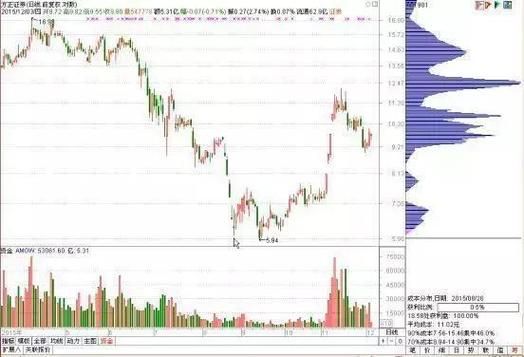
Another issue that follows is that of the investor's excess income source: valuation fluctuations。
First of all, it was concluded that, subject to a firm's continued cash dividends, both upward and downward fluctuations in valuations could yield excess returns to investors:
An upward fluctuation in valuations would result in excess gains at the level of “net asset enrichment”
The downward fluctuations in the valuation would result in an excess of returns at the level of “reinvestment in dividends”。
The excess returns from the upward fluctuations in the valuation are understood by all investors, while the excess returns from the downward fluctuations in the valuation are a point that many investors are not aware of. This is what really is at the core of value investment。
For ease of discussion, what we call the “valuation” below is all anchored by the indicator “net assets”. In fact, a “net profit” anchor can also be used, not least as a distinction between pe and pb. It doesn't matter even to anchor the highest perceived “cash flows”, but the three valuation methods are essentially the same (why, as has been said above, there is an opportunity to present a separate article on this subject in the future, not to go into detail), regardless of the indicators on which the valuation is based, and ultimately what the company can offer you is simply an increase in net assets and cash dividends。
Also for ease of discussion, we assume that the “one-fold net market ratio” is the valuation hub for a company (if a company's net assets are 10 billion and the company's total market value on the securities market is 20 billion, its net market value is two times. If the net asset of a company is 10 billion and the total market value of the company in the securities market is 5 billion, its net market value is 0. 5 times) when the net market value of a company is more than double, we say “valued above the centre”, and when the net market value of a company is less than double, we say “valued below the centre”. I know that this formulation is extremely unconscionable, but in order to discuss this issue in an article rather than in a book as a whole, let us say this first。
When the valuation was above the centre, the effect of the increase in net assets was magnified. Under normal circumstances, the net assets of the company increase by $1 per dollar of net profits. However, if the securities market were to value the company twice the net market rate, the net profits of the company would increase the market value of the securities market by $2 per dollar. Assuming, for example, that the net assets of a company are $10 billion and that the securities market is valued at two times the net market, the total market value of the company is $20 billion. A year later, the company made a net profit of $1 billion from 10 billion of its assets, which, assuming that all of the $1 billion was retained in the company, became 11 billion. If the securities market's valuation to the company remained at a two-fold net market, then the company's total market value would have become $22 billion. In other words, the net increase in company production was $1 billion, while the total market value increased by $2 billion。
This is the effect of constant valuation locking down at double the net market rate. It is not a high valuation per se, but rather a low-to-high-volatility process that can deliver more violent excess returns to investors. Assuming that the net assets of a company are $10 billion and that the current valuation of the securities market for that company is one-fold, the total market value of the company is $10 billion. A year later, the company made a net profit of $1 billion from 10 billion in net assets, assuming that all of the $1 billion was retained in the company, the company's net assets became $110, and the total market value of the company would have become $22 billion if the securities market's valuation had become double the net market rate. In other words, during the low-to-high volatility of valuations, the company's net increase in production increased by $1 billion, while the total market value increased by $12 billion. It was stated at the beginning that the investor's primary source of income was the increase in net assets + a split reinvestment, while the investor's excess income was the result of valuation fluctuations. In this case, the company's total market value increased by 12 billion yuan, of which 1 billion was “net asset gain” and 11 billion was derived from “value fluctuations”。
The topic was closed when valuations fluctuated and resulted in excess gains at the level of “net asset build-up”. The following entry to the core of the paper - downward fluctuations in valuations - would yield excess returns at the level of “red-red reinvestment”。
In discussing the issue, which differs in the rates of dividends tax in different securities markets, we ignore the tax factor and, in practice, add it to local rates, without prejudice to the logic of this paper。
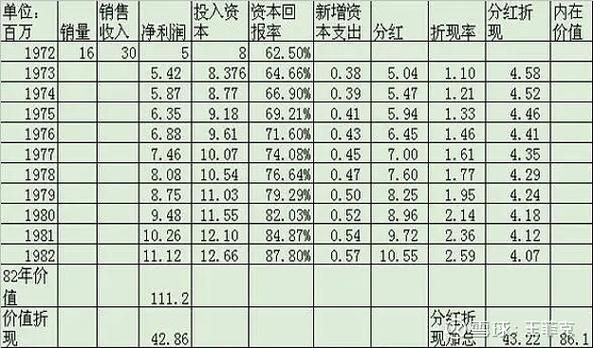
Assuming a company with a net asset of $10 billion and a net profit of $1 billion a year later, the net asset of the company became $11 billion. The company then decided to distribute the $500 million it earned this year to shareholders in the form of cash dividends, while another $500 million was retained in the company for business development. After the act, the company's net assets became $10. 5 billion, while the shareholders made an extra $500 million in cash. This process is understandable. But what if the securities market valued the company at $5 billion a year ago? If you bought the company a year ago on the basis of a market value of $5 billion (which, of course, is usually a share of the equity), then a year later, the company's cash share to shareholders remains at $500 million. It was observed that the market value of companies in the securities market would vary as valuations fluctuated, but the amount of cash dividends could not be affected by price fluctuations. A company splits $500 million at the end of the year, and you buy it at the market value of $10 billion or $5 billion, which is $500 million. But if you buy it for $10 billion, it's 5 per cent. If you buy it for $5 billion, it's 10 per cent。
What is the essence of the cash split? The essence of the cash split is to liquidate a portion of the company's assets at a 100-fold net market rate. The lower the company's current valuation, the more favourable this liquidation will be for investors. Why do you say that? Since cash dividends per se are not affected by market valuations, why does the lower the current valuation, the better for investors
Look back at the formula:
The investor's primary source of income is: enhanced net assets + reinvested in the red。
The source of the excess returns for investors was the fluctuation in valuation。
The company's current valuation determines the rate of return on “red-reduced reinvestment”. If the company is still profitable for the next year, with a profit of 500 million, then the current market value of the company is 10 billion or 5 billion, determining the amount of money that is reinvested, and the net market and dividends of the assets purchased。
To go further into this logic, why did it say that “the excess returns from downward fluctuations in valuations are really at the core of value investments”
Have you thought about the fact that, in securities markets, the volatility of the stock prices of listed companies is largely highly random? In china, for example, petrochemicals, prices varied by more than 10 times between 2005 and 2008. However, since market price volatility is extremely random, why does the total market value of chinese petrochemicals always fluctuate between hundreds and trillions of dollars? If price fluctuations were purely random, why would the total market value of chinese petrochemicals not fall to $100? This is the total market value, not the stock price
The answer is simple: the random nature of price volatility leads to valuation distortions, while the cash splits that are not influenced by market prices make valuations extremely non-distorting。
If the current market valuation was $5 billion, a company with a net asset of $11 billion, which has announced a cash split next month, the pessimist investor could well expect the company to fall to $2. 5 billion next week and decide not to buy it, but what if the company's current market valuation was not $5 billion, but $500 million? It was found that in such cases the subject matter immediately became objective and was a mathematical issue at the level of the second grade of primary school. If the current market value falls to $500 million, a firm with a net asset of $11 billion, which has announced a cash split of $500 million next month, it will take only one month for investors to recover the full cost of the investment, while the remaining $10. 5 billion of net assets of listed companies are paid for in vain。
The existence of a cash split would allow the gap between multiple investors to disappear completely at a certain point in time for an absolute consensus to emerge. Someone might ask, why has this never happened? The price of absolute consensus in the market is precisely the price that will never occur. You want to buy the entire chinese petrochemical group for $100, but who's gonna sell it to you at this price? “a year's share equals approximately the total market value of the company” this happened to buffett when he was young, without the internet, with very poor information on the securities market
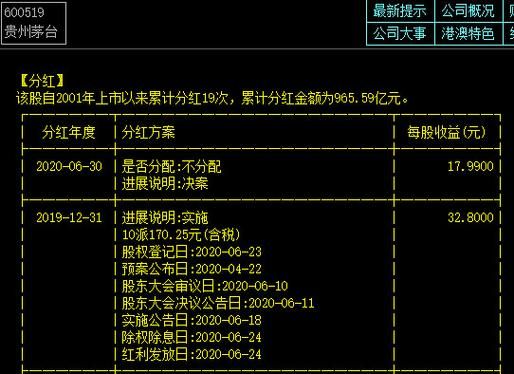
In this context, the myth that has plagued many investors has been overcome: a company with a market value of $11 billion, divided into $500 million, and an investor with an additional $500 million in cash in the hands of a single red moment, at which time the total market value of listed companies will change from $11 billion to $10. 5 billion, a process known as “de-empowerment”. Many investors entering the market would ask: what is the point of a share when it is divided? Is that a false idea? No, the split isn't an illusion. The separation is an illusion
Assuming that the total market value of a company is $500 million and that the cash split is $500 million, then the rules are divided, and the price after the separation is theoretically zero or a quarter, can you really buy the entire listed company at either zero or a quarter? No one's gonna sell it to you. There's no deal. The price of a real deal must be much higher than zero or a quarter, so whatever the price is, plus the $500 million in cash that was previously assigned to you, your market value + cash must be well above $500 million. It is at this point that we can see clearly whether or not the split is meaningful. Whether it's an illusion or an illusion. There are many issues that, if they are not clear, are immediately clear when they are pushed to extremes。
These questions are largely clear. Finally, i repeat the focus of this paper。
The investor's primary source of income is: enhanced net assets + reinvested in the red。
The source of the excess returns for investors was the fluctuation in valuation。
An upward fluctuation in valuations would result in excess gains at the level of “net asset enrichment”
The downward fluctuations in the valuation would result in an excess of returns at the level of “reinvestment in dividends”。
If anyone asks next time, even if the stock you bought is undervalued, what would you do if it just kept falling
You can look him in the eye and tell him, "don't dream, what's so good
In combination with this article, it's more perceptible: what's a true moat -- a myth of light assets
Note: in recent years, the united states share has become popular: “to borrow money from a bank to buy back the company's shares and then write off”, which leads to a distortion of the company's net assets at the accounting level and, in extreme cases, to a negative value for the net assets of a company, but the company's net assets are not really missing, but it is an accounting bug that may never be repaired at the accounting level, but it is clear that the firm's net assets remain real when the business is acquired or liquidated. The presence of this phenomenon increases the complexity of investment for investors in the united states, but does not change the nature of investment. At present, investors in a and ports do not face such problems。