We talked about the visual benefits of a new wind and humid system for life. In this one, we go one step further, in terms of technical principles and selection logic, to show you how a truly good new wind-dehumid system is made up and how different regions choose not to step on the pit。
The limit of a pure new wind machine: the total heat exchange is not the same as dewetting
Many users have confused the concepts of “total heat exchange” and “wetting”. A two-way full-heat wind exchange machine, with special paper membranes or high-molecular cores, can exchange heat and humidity between the wind and the new wind and can theoretically recover a portion of the wind's dryness. In the middle of the rainy season, however, the relative humidity of the outdoor air is over 90 per cent, and the efficiency of the whole core is such that the incoming air is still humid and completely insufficient to contain the indoor humidity. Therefore, active dehumidisation modules are necessary in high-humid areas。
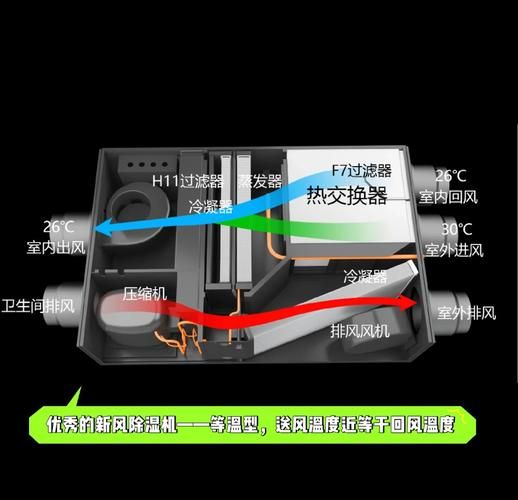
Cooled humid: the dominant way
New wind dehumidisation systems are mostly based on compressor-driven condensation, wetting and air-conditioning-like methods: allowing wet new winds to pass through a very cold evaporationer, water condensation to flow, dry air to be heated up by condensers to close to room temperature, and avoiding cold wind blowing. Wetting is the core parameter, usually marked under the 27°c/60% rh profile, but the selection must be based on the extreme conditions of the local moist season (e. G. 30°c/80% rh). For example, a set of 150m2 square layers, with no more than 55% rh in order to maintain the room, could require new wind dehumidification of between 4 and 5 kg/h in the case of air exchange of 0. 5 times/h。
Rotation dewetization: the god in cryogenic space
For chronically low temperatures (15-20°c) and highly wet environments such as basements, wine cellars, condensation and wetting can be reduced by frequent stoppages and frosts due to evaporation. At this point, wheel dewetting is required: a disk filled with wet materials is slowly rotated, water is adsorbed in the air in the "wet zone" and is drained out of the "regeneration zone" by the heating air. It dewetizes at low temperatures and treats the air in a very dry manner (as low as zero). The disadvantage is that regeneration requires the consumption of thermal energy, and it can itself cause some temperature rise in space, which is better suited to an environment with a clearly targeted demand。
The choice is very different from the climate
South china/coast: back to south, may rainy season is long and extreme, and indoors are easily exposed. Priority should be given to new wind-wetting units with a sufficiently strong wet mass and consideration should be given to internal cycle-wetting patterns (i. E., closing of new wind valves and clean indoor cycle-wetting) in order to rapidly suppress humidity. At the same time, be aware of the corrosive properties of the crew。
Mid-downstream of the yangtze: hot, wet summer, cold winter. In addition to wetting capacity, full-heat recovery efficiency is considered, allowing for the recovery of heat during winter and reducing heat loss. It would be preferable to have partition control of humidity。
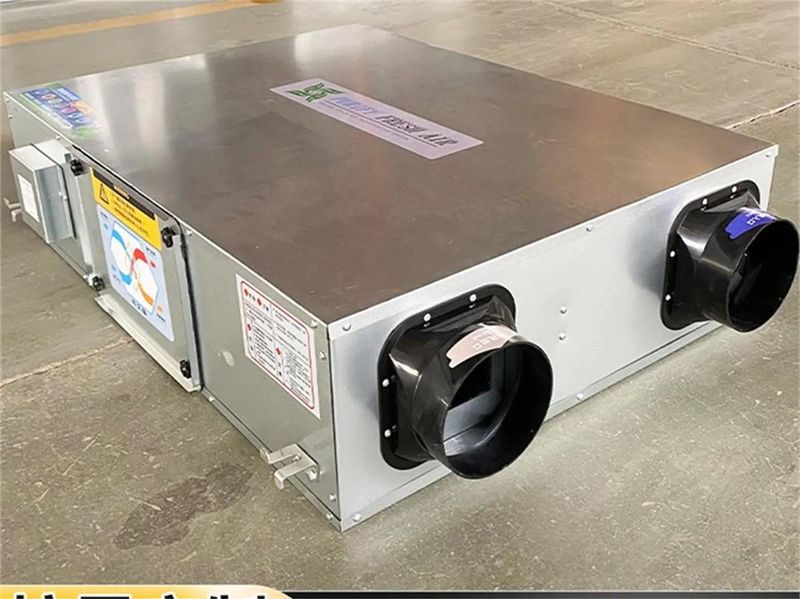
North/north-west china: mainly wind sand and pm2. 5 with low annual humidity. The main contradictions in the new wind system are purification and wetting during the winter rather than dehumidizing. If you fear occasional sauna in the summer, you can choose a new wind + an independent mobile wetter, without imposing expensive new wind humid systems to avoid idleness。
Basement: independent consideration is given to recommending new wind equipment with a recycle dehumidifier or with an independent recycle dehumidifier, and the wall floor must be protected from the tide, otherwise the best equipment will also be covered with water。
Additional benefits of system integration: exposure protection and energy conservation
Greater synergy can be achieved when new wind dehumidisation systems are linked to air conditioning or radiation end-of-pipe. For example, in a five-constitude system, fresh dehumidizing winds are responsible for lowering the temperature of indoor open spots sufficiently low to allow for higher water temperature cooling of the catheters, both to prevent exposure and to increase the energy efficiency of heat pumps. Even in a combination of multiple on-line and new wind at home, a good new wet-free wind can significantly reduce the wet load of the interior, allowing air conditioners to deal mainly with thermal heat, softer winds and lower noise。
Installation and protection elements
Wind pipes are designed to minimize resistance and to return to the wind vents for rational setting, avoiding short circuits。
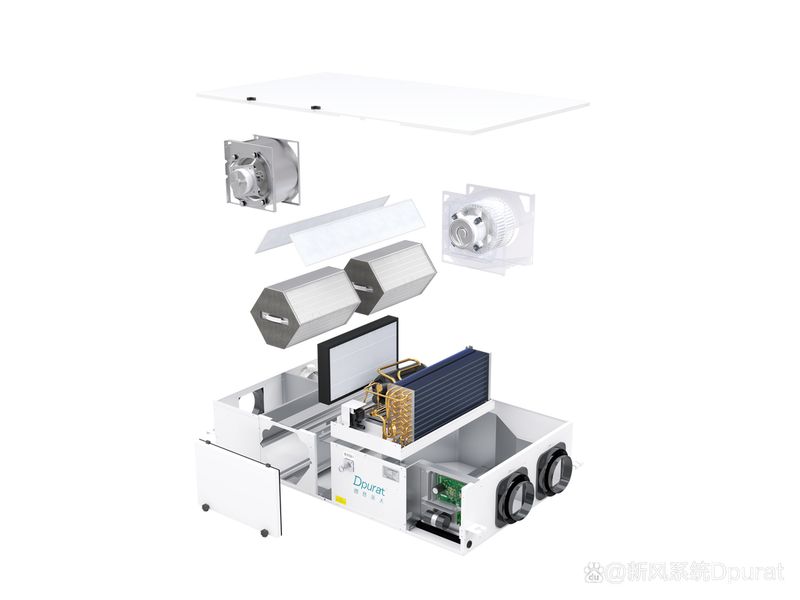
The condensed water produced by the wetting must be connected to a reliable drainage tube, with water bends and insect resistance。
The filter is periodically replaced, usually for an initial period of three months, with efficiency ranging from 6 to 12 months。
Pre-summer inspection of the ash of the de-humid disc wings so as not to affect efficiency。
Summary and recommendations for action
The core benefit of the new wind dehumidisation system is the accurate reduction of indoor humidity with a manageable set of active mechanical means, while ensuring fresh wind supplies. Instead of looking blindly at the brands, professionals should be asked to calculate the required dewetting and new winds for your urban climate data, the size of the house, the number of air exchanges, and to ask whether it is accompanied by inner circulation patterns and cold wind protection designs. For non-high-humid areas, there is no need to pay more for unserviceable dehumidification functions. It's scientific comfort because it's local。