Hello, i'm the star watcher on the gobi, who brings you up to date every day
Friends who grow peppers should all have been confused that spring and summer chili is flourishing, that leaves are dim, and that they look particularly happy and that they have a lot of hot peppers. But as soon as it enters the month of august, the weather continues to be hot and hot, the peppers begin to melt, either with leaves that fail, or with small and wrinkled fruit and frequent flowers that fall. Many people feel that this is a normal phenomenon of chili at the end of its growth and natural ageing, and simply let it go until the fall comes to an end, with little or no harvest, with most of the season being spent on conservation。
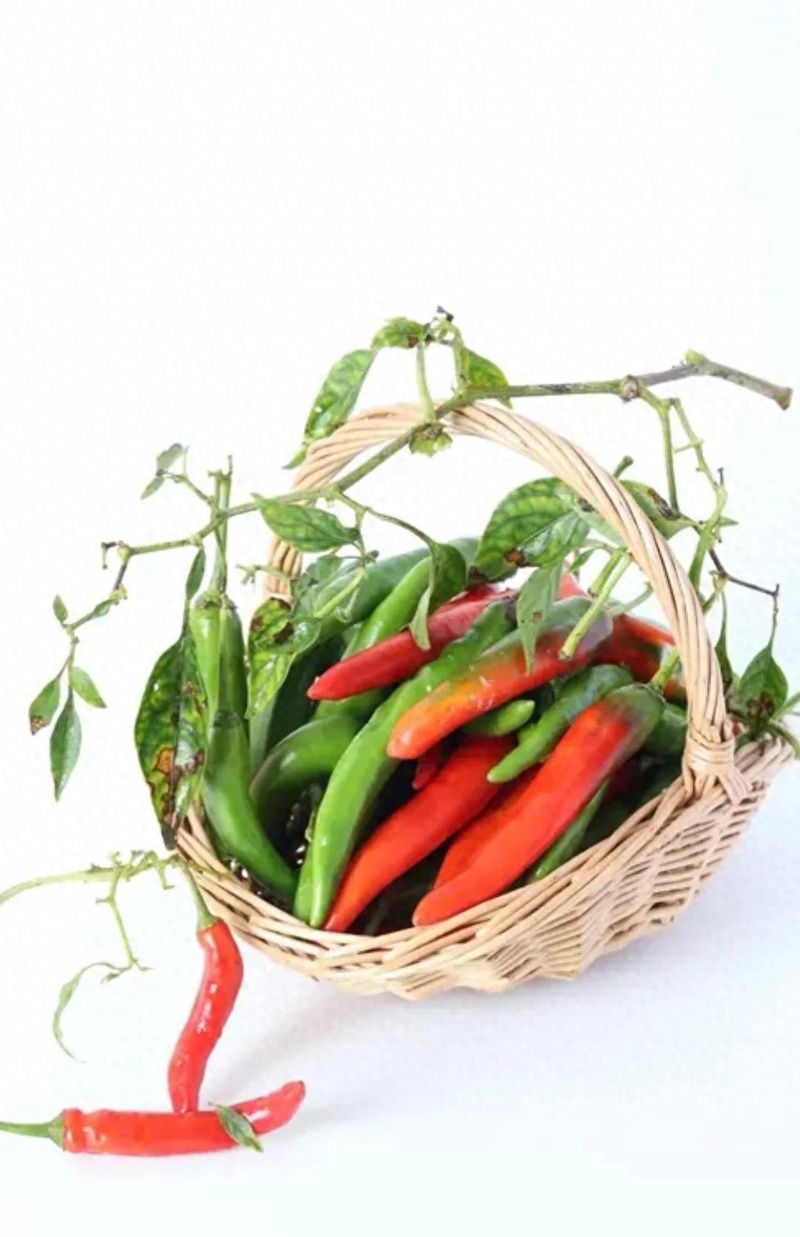
The old rural saying, “if you don't cut the chili in august, you'll have to take a circle after the autumn”, is a solid cropping experience that has been drawn up by the old breeders. The low production of new peppers and the loss of harvests in a number of new hands are not a shortage of fertilizers and water, but rather a missed chili gold cut in august。
Paprika is an infinity growing crop, and is collected before and after the fall of the frost, provided that the temperature, water fattening and ventilation are appropriate to sustain the flowering results. In august, as the key node of the summer and autumn turn, hot and wet environments can lead to the growth, ageing and depression of chili branches, the consumption of large amounts of nutrients by ineffective branches, and the absorption of nutrient supplies without a demand for results, leading to premature decay of plants。
At this point in time, with the right methods of triming, cutting out the waste branches, the weak branches and the old branches, it is possible to concentrate on nutrients, ventilating light, stimulating the emergence of new branches and rejuvenating the aging chili. The calibrated chili, which will be repeated after the fall, with the branches covered with hot pepper in the sun, is much higher than in the summer, and more than one harvest。
Today, using the most common and defecated method of physical exercise, you are taught the full range of paprika in august and after autumn, whether it be field-planted in the open, courtyard-planted or balcony-planted, all of which are universal and can be operated by hand。
I. Getting to the point: why do you have to trim chili in august? A lot of people did wrong
In order to grow a good acreas, first of all, it is necessary to understand the core logic of cutting, not blind cutting, nor heavy cutting, but precision reduction, concentration of nutrients and promotion of new branches。
In august of each year, most of the country enters the hot weather, which lasts at more than 30°c, and which, combined with heavy rain and hot weather, is extremely unfriendly for chili growth. Three typical problems arise in the form of pepper pepper at this stage, which is also at the heart of the fall in production。
Number one, the leaves are depressed. In high-temperature environments, peppers can be wildly siphoning and growing, growing fast and wooding fast, only consuming large amounts of water fat and hardly flowering. A dense layer of foliage collides the plant so that it is tightly covered up and the ventilation of light is extremely poor. The long-term dark and humidity of the plant not only tends to breed dust, frost and leafy diseases, but also pests such as aphids, red spiders and tea mites, further contributing to the fallout。
Second, the old and the weak take the nutrients. The old leaves, yellow leaves, sick leaves and ill branches at the bottom of the peppers, which have grown through the spring and summer seasons, have lost the ability to co-operate in light, to produce nutrients for the plants, and have continued to consume the nutrients supplied by the roots. The nutrients that should have been supplied for the flowering results have been diverted from these ineffective branches, with the result that the flowers are not fresh, the flowers are non-existent, and the fruit is small。
Thirdly, the plant is in semi-early decay. After successive summer results, the vibrancy of the paprika backbone and the old outcome branches declined, and the capacity for flowering fruit was significantly reduced. Without artificial intervention to trim, the plant will continue to consume its nutrients, die slowly and slowly, and by the time the temperature is right in autumn, it will no longer have the capacity to pick up the fruit and end up emptying the circle。
And the scientific trimming of august is the fundamental solution to these three problems. After cutting off the non-existent leaves, the installation of a ventilated luminous luminous light has improved in an instant, and pests and pests have been drastically reduced; nutrients are no longer wasted and are all concentrated in the provision of strong branches and fruits; and the slight stimulation of cutting is able to awaken a dormant breath, prompting it to develop rapidly。
Remember a central knowledge point: 90 per cent of the autumn fruits of chili are on the burgeoning branch of august. The old branch would hardly have a second-time mass of results, and only the more fresh, the higher the production of pepper after autumn. And that's why the same kind of chili, some with a full branch in the fall, others with nothing to lose, all the difference is on this cut in august。
Ii. Hide the pits! In august, peppers were cut in five fatal error zones. 90% of the people were hit
Many friends know that chili is to be cut in august, but not only does the cut increase in production, but it results in yellow leaves, dead branches, rigidity, and no new branches, which are cutting down. This is not a cutting technique, but rather a common cutout zone. The early avoidance of these pits will ensure a cut-off effect and quick recovery of seedlings。
Zone one: zip it with your hands. No scissors
This is the most common, most damaging mistake. A lot of people are easy to use to cut the side branches of pepper with their hands. The dryness of the pepper twigs and the use of hand-to-hand twitch can cause damage to the main dry cortex, causing irregular torn wounds. The wounds are very slow to heal, and in high temperatures and humidity, they are highly contagious, causing the dryness of the branches, the fall of the leaves and the atrophy of the whole strain in serious cases。
Correct practice: the use of sharp, clean scissors throughout the process ensures that the cuts are smooth, the wounds heal quickly and plant damage is minimized。
Zone 2: one-time re-cut, bald cut
Some of the newcomers mistakenly thought that the cleaner they were, the more their nutrients were concentrated, the more they cut all the upper half of the pepper, leaving only the backbone. Such heavy cutting would completely destroy the light-cooperative system for planting plants, leaving too few leaves to produce nutrient-supply roots and new branches, which would eventually lead to the flatting of seedlings, the failure of slow seedlings and the delay in germinate。
In august, the core of the paprika trim was slightly and gradually cut, with only the inert branches cut, and with a robust outcome branch and functional blades, the head must never be shaved and the branch must be cut。
Zone three: rain and rain, hot and hot
Cutting is by its nature the creation of a plant and requires a suitable environment for healing. At high temperatures in the mid-day weather, shears, evaporates very quickly, and shears dry, leading to the retrenching of branches; the rainy weather is too humid, diseases in the air breed, and the wounds are highly susceptible to impurities and causing various diseases。
Optimal cut time: choosing between 9 and 11 a. M. Or after 4 p. M., suitable temperature, good ventilation, rapid wind drying and lowest risk。
Wrong area four: cut the branches, not clean the leaves
Many trim their eyes on long and weak branches, while neglecting the deformity of the plant, the small rigidity, the disease and the flowers. These poor fruits continue to consume large amounts of nutrients and will also discourage the emergence of new ones. If cutting is not fruitless, nutrients remain scattered and it is difficult to achieve an increase in the production of explosive fruits。
The cut must be accompanied by the clean-up of the spoils and the provision of nutrient space for the new branches。
Zone five: we'll have to trim it and we'll get fat and fat
The cut-off plant is in a state of slow seed repair and the root system has weak absorptive capacity. An immediate flood of water and heavy fattening can cause soil to smother and fatten and lead to the rotting roots of yellow leaves and the death of new buds. The management of water fertilizers after trimping must be gradual and over-zealous。
Iii. Hand-held hands: august's standard chili trim. New guy can do it right at a time
In combination with farming experience and extensive field exercise, a common, non-hard august chili cut-off process has been put in place, from the bottom to the top, with all plantings and pellets suitable for direct control。
Step 1: clean up the bottom branches and completely eliminate pests and diseases
The area up to 20 centimetres of paprika roots is a major area of pests and pests, and the area where nutrients are most wasted, all of which remain。
The first is to cut off all the thin and ineffective branches that grow on the ground, which are close to the soil, are damp, carry large amounts of insect eggs and fungi, and have insufficient light and never produce flowers, and consume fertilizer in vain。
Second, the bottom yellow leaves, dead leaves, old leaves, sick leaves are completely cleaned, and only the upper central healthy green leaves are preserved. The luminous co-operation at the bottom is extremely inefficient and useless and can quickly improve the root ventilation environment and reduce the incidence of endemic diseases。
Point of trim: tilts are cut off, old leaves are cut off lightly, no residues are left, and a weakness is avoided。
Step two: combine the internal depression and open the ventilator
After a long summer period of madness, there are many cross branches, overlapping branches, internal branches within the pepper plant. These branches cover each other, resulting in the insufficiency of the internal plant and the absence of light, and are the main reasons for the fall of flowers and the breeding of pests。
In operation, priority is given to cutting the branches that grow inside the plant, the cross-fighting branches and the overlapping shades of light. Following the principle of “outside, out-of-the-post”, the branches of the plant are stretched out so that every strong branch receives light and forms a ventilated ventilated layer。
The core objective is to open up the internal space, to ventilate, to reduce the number of diseases and pests, and to increase the quality of flowering。
Step three: cut off the long and empty branches and keep them strong. Jing
In august, peppers are the most likely to grow “crazy branches”, which are tall and large and thin, with long leaves and no flowers, which are often referred to as “empty branches”. The top of these branches is highly advantageous, taking most of the nutrients and suppressing flowers and new growth, which must be addressed in a timely manner。
In the case of non-flowered, fruitless long branches, they are cut short, cut off one third of the top of the branches, break the top advantages, force the branches to stop growing, and rapidly divide the buds and the hairs。
At the same time, trade-offs are made, in accordance with the principle of “de-empowerment”, cutting down weak, thin, long and poor branches, and concentrating on nutrients to feed the strong and healthy branches of the main branch and the resulting branches. It is usually possible to keep four to six strong branches for each pepper, with all the excess branches removed。
Step four: scratch the figs and save the fruit after the fall
This step is the key to increasing production, which many have ignored, and which directly determines production after autumn。
A thorough examination of the whole pepper and the removal of all deformities, small figs, bugs, cracks. These fruits do not grow and mature normally, and are attached to branches that continue to consume large amounts of nutrients and drag on new branches and quality fruit。
It also cleans the branches with dried flowers and rotting ears, which tend to swollen water and lead to greyy diseases, and prevents the emergence of new flowers。
Following this step, plant nutrients are no longer consumed by ineffective flowers, all of which are concentrated on fresh and high-quality fruits, which are held up twice in the autumn。
Step five: cut the tail, flat the cut
After completing the entire process of cutting, the whole plant is examined to ensure that the crop is flat, non-disabling and non-fatal, that the plant is closed and open and that the whole body is even。
There should be no mutilators of varying lengths, which are susceptible to decomposition and infection, or to the emergence of impurities that affect later management。
The whole set was trimmed and the plant was seen to be smaller, but the strength would be more robust and the nutrient utilization factor doubled, laying a solid foundation for high production after autumn。
Iv. Post-cut gold management: unmanageable cutting is nothing live
Many have done so, and in the end it remains fruitless. In fact, shearing is only the first step and seven days of conservation management is at the heart of the high yield. The right water fertilizers, insects and conservation operations can quickly trigger new developments, allowing peppers to emerge with new buds for about 10 days, and to hang new flowers for 20 days。
1. Wound protection against bacterial infections
Cutting produces a large number of openings and is highly contagious in high-temperature, wet environments. When the trim is completed, do not immediately water the water and place it for two to three hours so that all the cuts can dry up。
Small-scale family cultivation, free of the need for medicinal agents, is sufficient to maintain ventilation; large areas of daejeon are grown, with a slight application of a wide spectrum microbicide to prevent injury infection and to combat the problem of dead branches。
2. Scientific watering, steady seedlings
The shearing has reduced the pressure to plant the roots, but the amount of leaves has decreased, the evaporation of the water has slowed, and the water has been flooded。
Three days after the cut, it is sufficient to keep the soil moist, and the soil is dry and unwatered to avoid strangulation. Three days later, the plant was fully ablaze, entering the early stages of a new gestation, before normal watering to meet the demand for new growth water。
Watering times are preferred at early and late hours, avoiding high noon temperatures, reducing water evaporation and avoiding roots。
3. Precision in the pursuit of fattening and the promotion of flowers
After three to five days of cut-off, the planting of seedlings is completed, and it is necessary to catch up with nutrients, which is the key to boosting the growth of new and divided buds。
Fertilization is based on the principle of “hard weight and diligence”, which prohibits one-time application of heavy and fertile weight and avoids the burning of roots。
Family pellets, small institutions: priority is given to the use of ripe organic fertilizers, such as decomposed goat dung, chicken dung, bread fatty, lying around the roots, supplementing long-acting nutrients, making the new branch strong and making hot peppers big and thick。
In daejeon, a combination of balanced water soluble fertilizers, small-scale flushing, rapid supplementation of potassium nitrogen phosphorus, and promotion of new hairs。
The focus here is on the fact that in august, when we catch up with less nitrogen, too much nitrogen will once again lead to long leaves and no flowers. Appropriate increases in potassium fattening of phosphorus, phosphorus-promoting sprouts and potassium-strength sticks can effectively increase the sitting rate and reduce the fallout。
4. Insect prevention and protection against disease
In august, high temperatures and humidity were high, pests and pests were extremely active, and new euphoria and germs were poorly resistant, most vulnerable to aphids, red spiders and khat mites, as well as fungal diseases。
Upon completion of the trim, clean leaves and branches at the base of the plant are cleared, removed and destroyed from the plantation area and reduced the source of the disease。
The growing environment is well ventilated on a daily basis, and the pots of peppers are kept as luminous as possible, avoiding heat and humidity. Upon detection of a small number of pests and pests, timely manual clean-up or treatment with low poisons to protect the normal growth of new sites。
V. Expertise on different planting scenarios, doubling production
1. Hot peppers in the balcony basin
There are few pelvic soils and limited nutrients, and the problems of long and early life in august are more serious than in the field. Cutting can be done with a moderate weight, with a focus on cutting all the thin side branches, the bottom leaves and keeping three to four main branches。
The pelvis is poorly ventilated and must be trimmed and then moved to the ventilated area for maintenance, reducing the frequency of water utilisation and preventing the pelvis from building up its roots. The pursuit of fattening is dominated by thin liquid fertilizers, which take place once in 7 to 10 days and in a small number of cases continue to catalyse the results。
Hot peppers planted in small courtyards
The roots of the land are developed and flourishing, focusing on the removal of internal depressions without overcuting. Emphasis is placed on fruit-cutting, the removal of all residuals and the concentration of nutrients. Ground weeds grow quickly, the surrounding weeds are cleaned in time to avoid competition for water fat with peppers。
3. Open peppers in daejeon
The density of the field is high and the problem of depression is most acute, with ventilation at the core. Return the long branches of the agglomerations in time to remove the weak branches and ensure ventilation in the fields. The pursuit of fatty is based on quick-impact fertilizer, which, together with pest control, ensures that the whole body of pepper has a fresh start and a concentrated set of fruit to facilitate subsequent bulk harvesting。
Vi. Realization response: a gap between cut and cut in august yeah
Many of our friends who have not tried to cut the peppers in august have doubts about the effect of cutting them, and here we share the real field planting gap。
Non-cut peppers: in mid-august, they began to suffer from premature decay, foliage, frequent infestation, sporadic hanging fruit and thinness, and in september, when temperature was right, the plant was old and yellow, with virtually no results and little production after autumn。
Scientificly trimped peppers: 7 to 10 days after trimmed, the whole green and green plume emerges, and all the new plumes are covered with flowers for about 20 days. After the temperature has fallen in september and the light is right, the fruit sits on a continuous basis. The fruit is flat, the fruit is thick, and the frost has been collected from september, and the output after autumn is well above the first in summer。
This is also the reason why the old vegetable breeders insisted on “august must cut the chili” and appear to have cut off the leaves in exchange for longer harvest periods and higher total production。
It's never going to depend on the sky for food, three, seven, especially during the key management period of summer and autumn, with the right cut, and it's going to reverse the chili. It's a premature decline, and it's easy to get an extra one, full of branches。
As long as this approach is followed, both new and old, it will be easy to keep the chili, and will continue to harvest from early autumn to frostfall, and it will no longer be empty after autumn, with one circle。
Interactive topics
Does your family trim chili every august? Did you always have to cut the branches before, resulting in a low production of chili after autumn? The comment section says that you grow chili experience and mistakes, that you can learn together, and that friends who like to grow can look at it, and keep sharing useful food products
Disclaimer
The paprika shearing and planting management techniques shared in this paper are folk practical exercises and general agricultural skills for general growers only. The climate, soil and plant varieties vary from region to region, the effects of which vary from person to person, and there is no commitment to an absolute increase in production。