In recent days, the provincial pilot demonstration base for new pepper varieties was launched in 2026 in tianwang village, zhang city, zhengzhou zhang zhengzhou city, guizhou province. As a provincial priority, the base is a two-wheel drive of diversity innovation and technological upgrading to achieve high-yielding, high-quality breakthroughs through standardized and scientific cultivation models, effectively activate the new dynamic energy for the development of the paprika industry, and establish a solid foundation for boosting the quality of the paprika industry throughout the city, a steady increase in the population and the revival of rural industries。
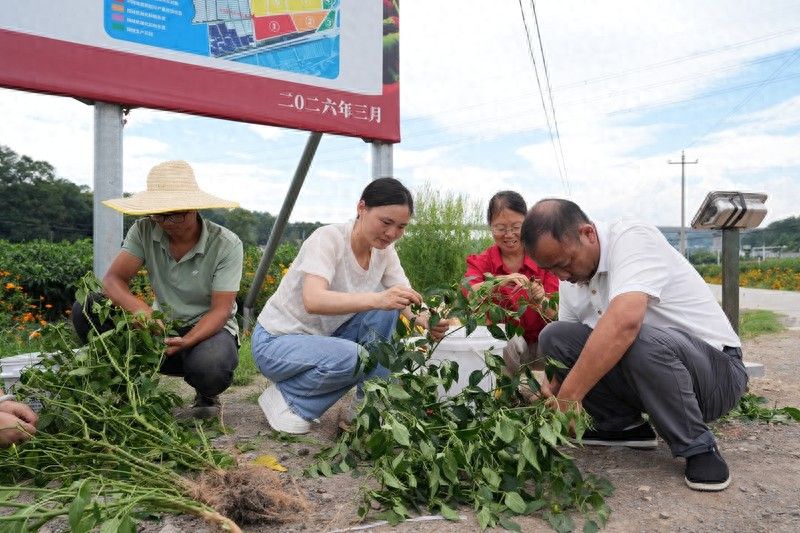
The relevant technicians carry out the survey at the site. Cai cheng jie-chung
Walking into the demonstration base, a series of hot peppers were flourishing, fruit was flourishing, red peppers were full of branches, and there was a fruitful harvest. In the field, farmers systematically pick up mature peppers, agricultural technicians conduct in-depth surveying, long-term research and validation of results, and busy and orderly work sketches of rural productions. During the harvest period at the base, there was a steady flow of labour and a near-employment platform was set up for the villagers in the surrounding area, allowing the population to work as farmers and customers。
“it has been two or three months since i was working at the base, where there is constant activity and income stability, from pepper transplantation, membrane, weeding to tether protection and harvesting.” the villagers of tianwang village, zhengwang town, zhu region, reported that they were able to collect more than 200 pounds of chili per day and earned more than 100 yuan per day。
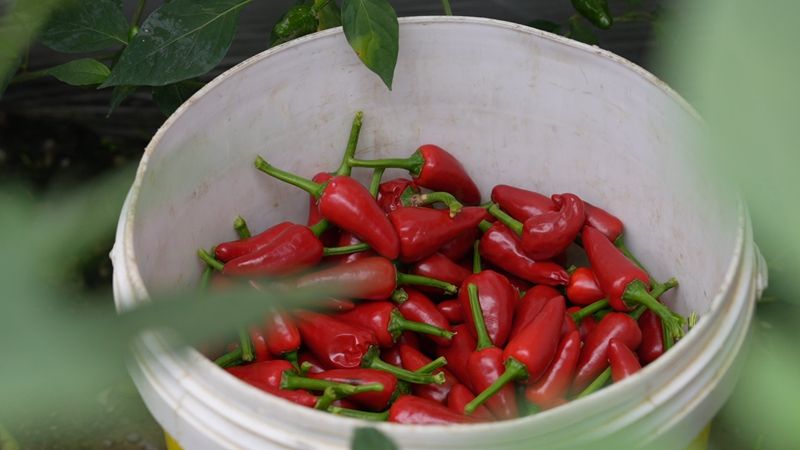
Villager picks chili. Cai cheng jie-chung
The model base is known to grow 500 acres in total, of which 300 acres are in the core demonstration area, to bring together 796 high-quality pepper varieties, to focus on green high-quality and efficient development goals, and to focus on integrated testing, demonstration and extension of new varieties and technologies. The base has been able to upgrade the production of chili varieties with technology, continuously cracking pain spots and providing experimental support and practical models for the scaling up, standardization and quality development of the chili industry。
In order to verify the suitability of new varieties and the effectiveness of the application of new technologies, agricultural technical teams in the provinces, municipalities and districts of the province were able to carry out standard production surveys. The main type of pick-up site, zaper 18, is strictly in compliance with the province of guizhou field survey, using a five-point sampling method to sample 15 shelter plants。
“chore pepper 18 is a balanced field, has a high ratio of fruit and good taste, and can achieve high productivity and efficiency, provided that it is accompanied by the full landing of planting techniques.” according to huang chunli, a researcher in agricultural technology promotion at the municipal agricultural and rural directorate, the production of acre number 18 can amount to 1,770 kg, with excellent yield data sufficient to demonstrate the significant advantages of good breeding practices。
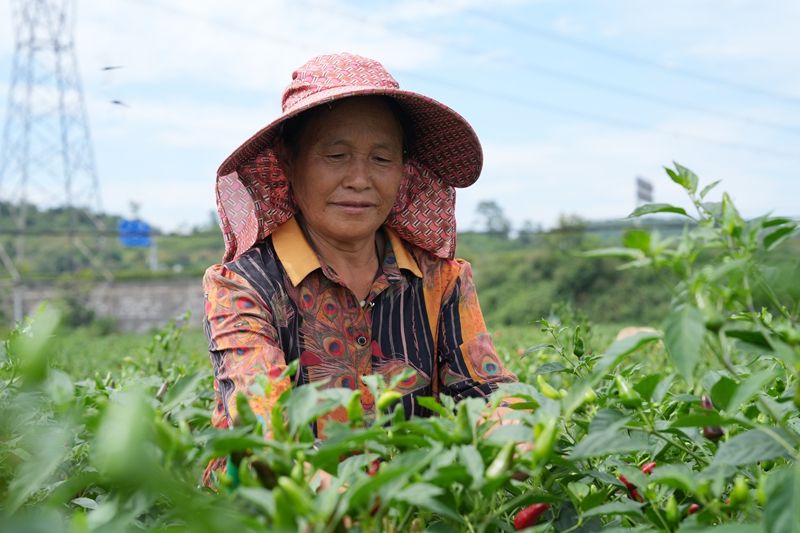
The villagers liu congress picked peppers from the base. Cai cheng jie-chung
High-yielding and steady performance stems from the testing of continuous deep-tilled techniques at the base and the optimization of planting patterns. In 2026, the base focused on the reduction efficiency goal for pepper cultivation, targeting three core field trials of fertility, planting density, membrane comparison and a standardized cropping system at all levels。
The scientific director of the zhouhou hau agricultural technology (gso) corporation, yuan song, presented the fertilisation experiment, which focused on soil fertility protection and efficient use, screening the best fertilization programme for local soil by comparing multiple groups of fertilizer mixes; the planting density experiment, which explored the best planting density and reduced seed input while safeguarding high yields, maximizing economic benefits; and the membrane experiment, which focused on the effects of field temperature, wetting and weeding in contrast to the different membrane, combined with the final production accounting, screening the best membrane support programme for local pepper cultivation to provide a scientific basis for scaling up。
Precision science in the selection of varieties is central to the long-term quality development of the pepper industry. The base adheres to the principles of “market orientation, suitability of production areas and adaptation to local conditions” and establishes a standardized species assessment system. In keeping with local industry characteristics, it is appropriate to adapt to multiple market demands, such as the processing of hot peppers, the production of dry peppers and the supply of fresh raw materials, in order to complement the production of traditional varieties with short boards that are unstable, resistant to disease and poor quality, and to introduce, on a merit basis, new and quality varieties that optimize local farming structures. At the same time, targeted screening of special varieties suitable for different regions, taking into account differences in climate soils, planting patterns and market outlets in different areas of pepper production in the north and the south。
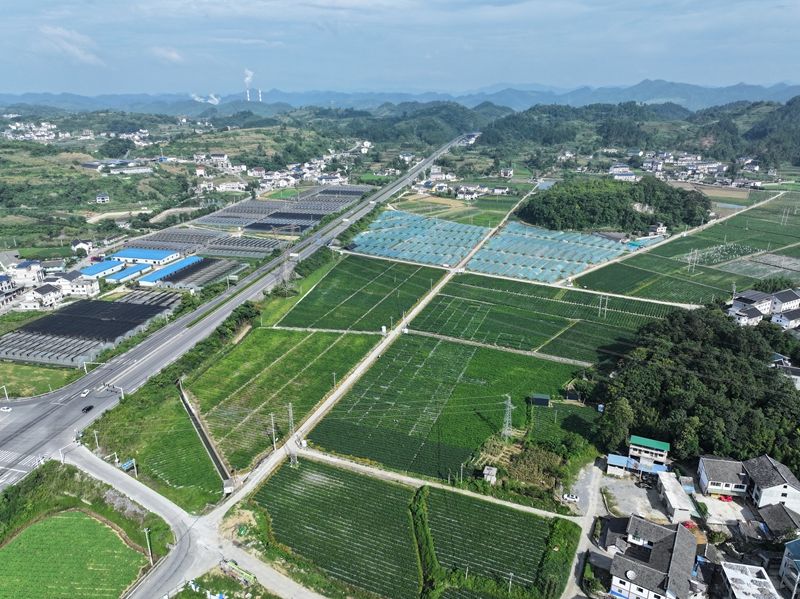
Pilot demonstration project on new technologies for new varieties of peppers in 2026. Cai cheng jie-chung
The base has established a scientifically sound extension system for regional variations in pepper varieties. “we conduct complementary field trials of selected high-quality varieties, first through small-scale demonstration planting tests for suitability, and the zore 18 is a high-quality variety that has been tested through large-scale trials.” yuan song indicated that the base invites growers, growers and industrial operators to observe the field performance of varieties, visualize their production, resistance and quality advantages, confirm their suitability before gradually scaling up, scaling up and effectively avoiding the market risks of blind seeding and blind planting。
At present, the base has developed a mature development path of “test-and-test demonstration, step-by-step”, a standardized model that effectively promotes the localization of good seed practices, contributes to the steady production of peppers and increases in yield, and provides replicable and replicable technical models for the standardized and scalable development of the chili industry。
“base integration, using advanced technologies such as water fertilizer integration, green controls and mechanized cultivation, optimizes the whole range of cultivation patterns, achieving multiple effects of higher yields, better quality and lower costs.” the technical director of the zhou hau agricultural technology (gso) corporation, by way of illustration, said that new technologies, the integrated application of new varieties had further magnified the variety, quality and industry advantages of compliant peppers, thereby increasing the core competitiveness of the local pepper industry。
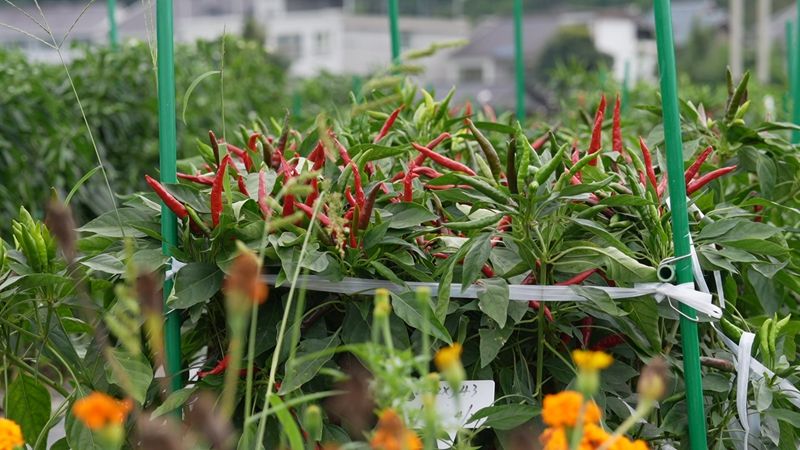
Other kinds of chili in the base. Cai cheng jie-chung
According to the information received, the base brings together high-quality varieties from the conformity, guizhou and all the western regions of the main chili production area, building a diverse, technically mature and well-suited industry model system that fundamentally addresses the industrial challenges of "what to grow, how to grow, how to grow well". At the same time, a bottom-recycling mechanism has been put in place for the production, harvesting and sale of peppers, with a view to securing the proceeds of the cultivation of peppers and establishing a solid foundation for the development of the industry。
Little peppers have become a characteristic rich and supporting industry for rural renewal. In the next step, compliance will build on the results and lessons learned from the piloting of the provincial demonstration base, continuously upgrading quality pepper varieties in order to spread high-quality, high-quality and efficient green farming technologies and continuously expanding the coverage of good practices. At the same time, it continues to extend the chili industry chain, upgrades the industrial value chain, promotes the standardization, scaling and upgrading of the whole city's chili production, activates the fire and red industry, boosts the production and enrichment of more pepper farmers and promotes the high-quality development of the compliant chili industry to new steps. Cai cheng ji, zou ling