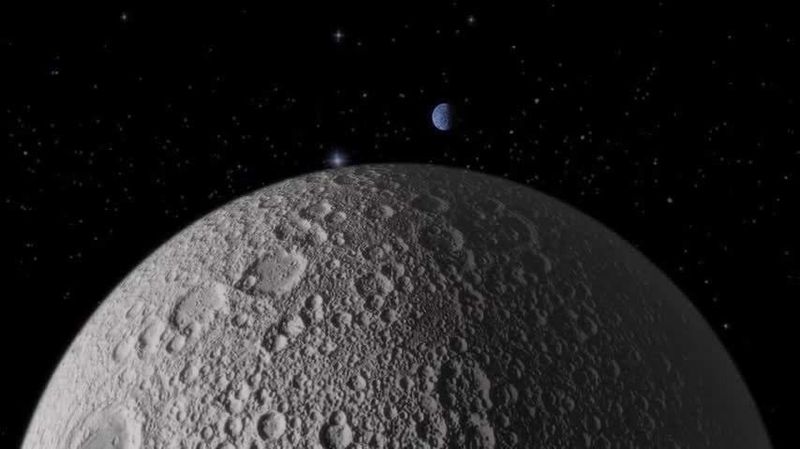
Officials of the national aeronautics and space administration (nasa) of the united states indicated that by 2030 human beings were expected to live and work on the moon。
According to external evaluations, human re-entry to the moon is getting closer and is also receiving attention. In addition to the critical technology required for manned landings, the health and safety of astronauts remains a top priority. How does an astronaut live on the moon? How can there be a constant source of fresh food? This will be an issue to be explored jointly by national space agencies and international organizations。
How hard is it to have a vibrant space garden
The sci-fi may remember the hard work of mark waterney, the master of andy will's novel, mars rescue, who tried to plant potatoes when he was trapped on mars alone. We also remember that, in the film mono moon, repairers stayed alone and by accident. Plantation in space is absolutely necessary if humankind is to have a lasting basis for survival outside the earth。
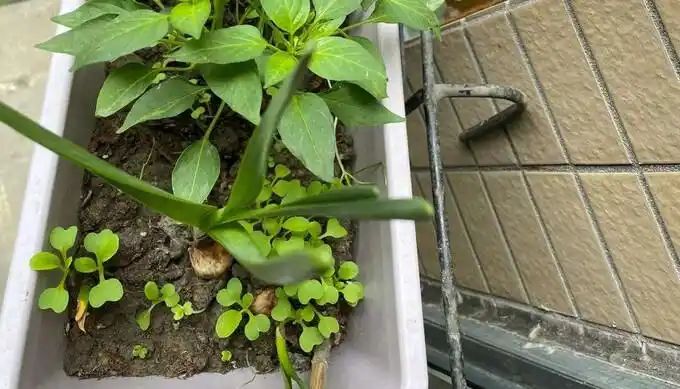
Previously, astronauts had been successful in eating space carrots, peppers and lettuce planted on iss, but many challenges remained to build a vibrant space garden。
The space environment is rich in carbon dioxide, lacks soil microorganisms, changes in gravity, exposure to strong radiation and high salinity liquid bodies. In order for plants to thrive in space and provide comprehensive and balanced nutrition for humankind, they need to be redesigned。
The renewable source of fresh food, compared to frozen dry and prefabricated foods, is a “good solution” for improving the health of astronauts by providing the necessary vitamins and minerals and increasing the variety and taste of meals, avoiding “food fatigue”, malnutrition and weight loss among astronauts。
At present, space plants grow in closed man-made environments, where low-energy led lamps, porous clay “soils” provide water, nutrients and oxygen to the roots; high-technology sensors and cameras monitor plant health. However, plants have not evolved out of the ability to grow in this environment and are not prepared to withstand changes in light, temperature, etc., which limits the full growth potential of plants。
As a result, scientists will adapt plant genetics to produce faster food crops, such as tomatoes, carrots, spinach and strawberries, to maximize their potential in closed and controlled environments。
Australia: lunar plantations, 2025
Australia will plant on the moon as early as 2025. The australian lunar horticultural development experiment (aleph-1) is designed to study whether plants can withstand not only the harsh surface of the moon but also thrive。
The types of plants sent to the moon will be carefully selected according to the speed at which they germinate and the tolerance of extreme temperature fluctuations experienced in space。
One of the plants under consideration by researchers is an australian-owned “restoration grass”, which can endure harsh conditions and survive in hibernation without any water for months。
Plant seeds and “restoration grass” will be transported to a specially designed module on the israeli genesis 2 spacecraft. The room will contain sensors, cameras and water. After landing on the surface of the moon, plant growth and overall health will be monitored for 72 hours and data and images will be transmitted back to earth。
Japan: companies preparing for the moon market
A number of japanese venture capital companies are also preparing for potential markets for manned landings。
The japanese space enterprise consulting firm digital blast, based in tokyo, has developed an artificial gravitational device for plants。
The device, called “amaz”, is 20 cm in diameter, 40 cm wide and weighs 5 kg, and it produces the same gravity in space as the earth or the moon。
Astronauts can place plants in three capsules, and machines rotate these capsules to produce gravity. Astronauts can change the rotation rate of each capsule, producing the same gravity as the earth for more than 100 laps per minute, and less than 50 laps of gravity as compared to the moon, instead of rotation as zero gravity。
The company plans to install and operate the equipment on iss in 2024。
In addition, in february this year, the japanese venture capital company towing, in collaboration with the construction company dalywood corporation, successfully used sand found on the moon to plant corsets。
Towing is using technology to heat up sand on the moon and convert it into material with many small bumps and dents that can provide habitats for microorganisms. The material is then turned into soil by adding microorganisms and human excreta。
United states: short tomato seeds to be sent to the space station
The 26th commercial cargo launch mission, carried out jointly on 26 november by nasa and the mask space exploration corporation spacex, delivered substantial supplies, a new solar array, short tomato seeds and a series of scientific experiments to the international space station。
According to the nasa official network, two important space biology studies and a physical science study will be conducted by the cargo dragon spacecraft, which will provide further insight into how astronauts survive and develop in deep space environments。
One of the experiments is to study the growth of short tomato seeds, which will grow in two different light treatments to measure the impact of light on fruit, as well as nutritional values and tastes. As a control experiment, such tomato seeds will also be planted on earth to measure the impact of zero gravity environments on their growth。
Space tomatoes will be planted in small bags known as plant pillows, which will be installed in the station's vegetable production system, known as the vegetable growing room. Astronauts often water and nurture plants as they grow and pollinate them。
Earlier this year, for the first time, american scientists successfully planted mustard mustard south, using the moon soil collected during the nasa “apolo” landing programme。
The exploration of space has brought thousands of innovations. It can be expected that, with the continuation of manned efforts to reach the moon, new areas of human achievement will soon come, and people will soon look not only in the sky but also at destinations outside the atmosphere and sow seeds of a new way of life。